

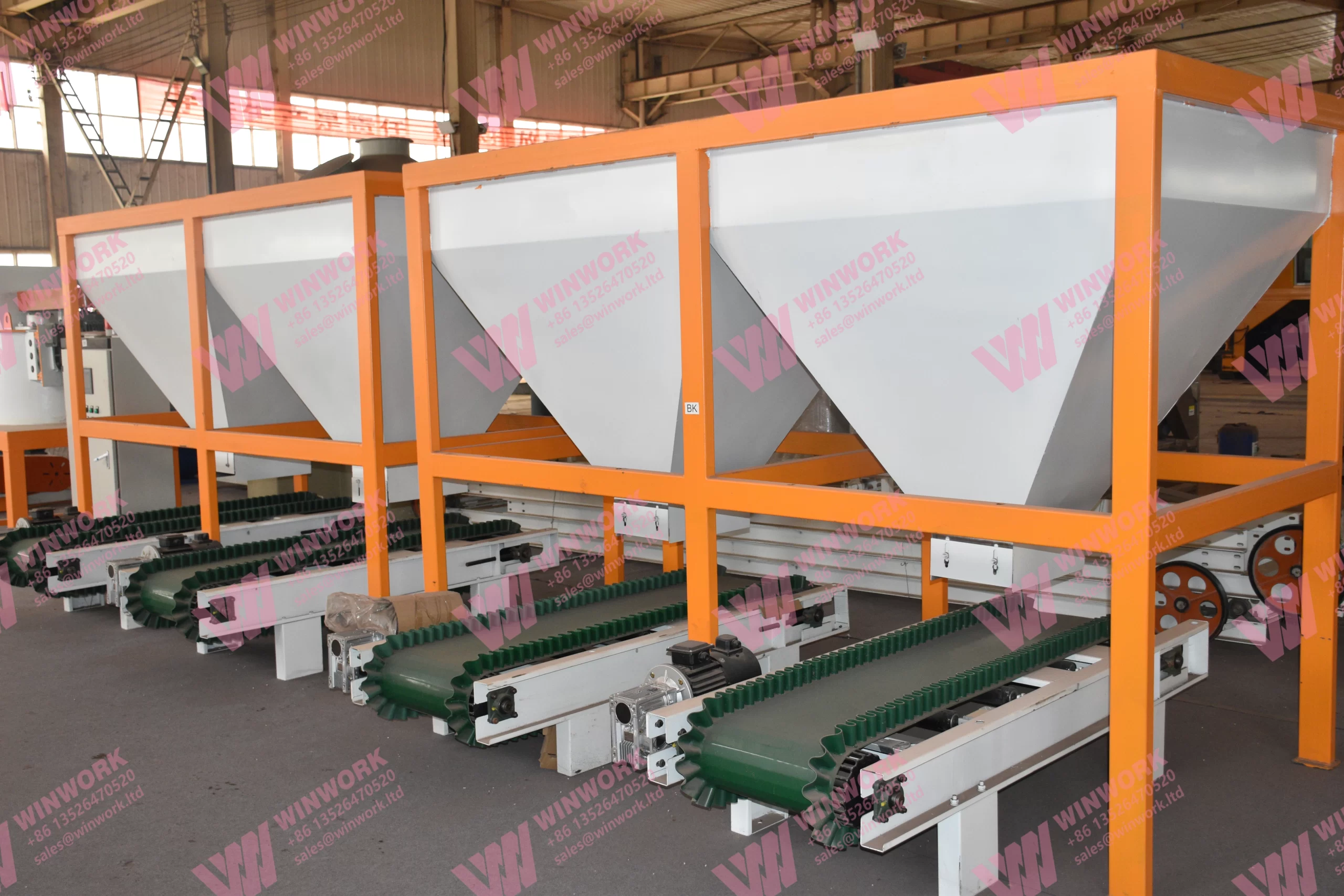
Fertilizer production often involves several raw materials that must be measured, combined, and processed according to a specific formulation. A plant manufacturing NPK fertilizer, for example, may handle urea, ammonium sulfate, monoammonium phosphate (MAP), potassium chloride, fillers, and other additives. Although these materials serve different purposes, they must enter the production process in carefully controlled quantities. A Multi-bin Batching System provides a practical way to organize this operation by storing different ingredients in separate bins and coordinating their feeding, weighing, and discharge according to a production recipe.
As fertilizer plants expand their product ranges, managing several raw materials becomes more complicated. Different fertilizer grades may require different ingredient ratios, and switching between formulations can interrupt production if material handling is not properly organized. Manual weighing and feeding may work for small-scale operations, but they become increasingly difficult to manage when production volumes and ingredient numbers increase.
A multi-bin batching system addresses these challenges by connecting material storage, automatic feeding, weighing, and transportation within one coordinated process. However, its value does not simply come from having multiple storage bins. The number of bins, feeding arrangement, weighing method, and connection with downstream equipment all need to match the actual production requirements. Understanding these factors helps fertilizer manufacturers select a suitable configuration rather than purchasing equipment based only on its appearance or nominal capacity.
Why Is Raw Material Batching Important in Fertilizer Production?
Raw material batching is one of the first important stages in fertilizer manufacturing because the proportions of different ingredients directly influence the formulation of the final product.In NPK fertilizer production, a multi-bin batching system helps combine nitrogen, phosphorus, and potassium sources according to the required nutrient ratio. If the amount of one ingredient changes significantly between batches, the finished fertilizer may not meet the intended formulation.
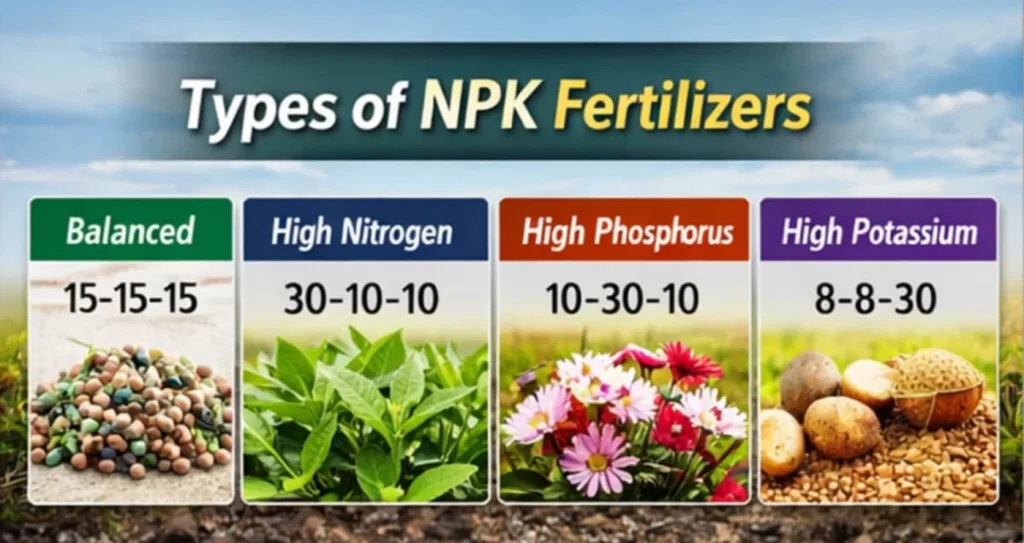
For example, a plant producing several NPK grades may use urea as a nitrogen source, MAP or DAP as a phosphorus source, and potassium chloride as a potassium source. Additional materials, such as fillers or trace element additives, may also be included. Each ingredient has a specific role, so the plant needs a reliable way to measure and deliver the required quantity of every material.
The difficulty is that fertilizer raw materials do not always behave in the same way. Urea granules, powdered phosphate materials, potassium salts, and fine mineral fillers may have different bulk densities, particle sizes, moisture sensitivities, and flow characteristics. Some materials move smoothly through a hopper, while others may stick to the walls, form bridges, or discharge unevenly. These differences can affect the feeding stability and weighing performance of a multi-bin batching system.
When workers handle all these materials manually, the process requires repeated weighing, recording, transferring, and checking. If several batches must be prepared within a limited period, manual operations can create delays. Material identification also becomes important because using the wrong ingredient or sending a material to the wrong mixing stage may lead to production problems.
A properly configured multi-bin batching system helps separate these operations. Each ingredient can be assigned to a designated storage bin, allowing the plant to manage different materials independently. Feeding devices control the discharge from each bin, while the weighing section measures the required quantities. The control system coordinates these actions according to the selected formulation.
Another important consideration is production consistency. A fertilizer plant may manufacture different grades during the same working day. Without an organized batching process, operators may need to adjust material quantities manually whenever the production formula changes. This increases the workload and makes production records more difficult to manage.
A multi-bin batching system can support recipe-based production when its control system includes suitable formula management functions. Operators can select an approved recipe, and the system can use the corresponding target quantities to organize the batching sequence. This arrangement helps reduce repeated manual input and makes it easier to maintain consistent operating procedures.
However, automatic batching does not mean that every material will automatically reach its target weight under all conditions. Feeder selection, material flow, load cell calibration, and equipment maintenance still influence the final result. For this reason, batching accuracy should be considered together with material characteristics and the overall production process.
What Is a multi-bin batching system?
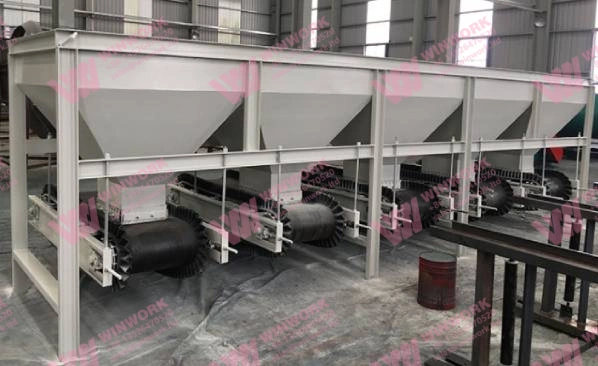
A multi-bin batching system is an industrial material storage, feeding, and weighing arrangement designed to handle several raw materials within one production process. Instead of placing all ingredients in a common storage area and weighing them separately by hand, the system assigns different materials to individual bins. Each bin supplies a designated ingredient, while the feeding and weighing equipment controls how much material enters the next stage.
The main purpose of a multi-bin batching system is to make the handling of multiple ingredients more organized. It allows fertilizer manufacturers to store frequently used raw materials in separate locations and deliver them according to a predefined formulation. Depending on the equipment design, the system may use a shared weighing hopper, multiple weighing units, or separate feeding and measuring arrangements.
A typical configuration includes several main components.
Storage bins are used to hold different raw materials before batching. The number and volume of bins depend on the ingredients used in production, their consumption rates, and the required storage time. For example, a plant using four major raw materials may need at least four dedicated storage positions. If additional fillers or minor additives are introduced, the configuration may require more bins.
The bin design in a multi-bin batching system should also consider the physical characteristics of different raw materials. Fine powders may require different discharge arrangements from free-flowing granules. If a material has a tendency to absorb moisture or stick to the bin walls, the storage and discharge structure should be designed to reduce material buildup and feeding interruptions.
Feeding devices control how materials leave the bins. Common options include screw feeders, belt feeders, vibrating feeders, and controlled discharge gates. The suitable option depends on the material’s particle size, flow behavior, required feeding rate, and the structure of the weighing equipment.
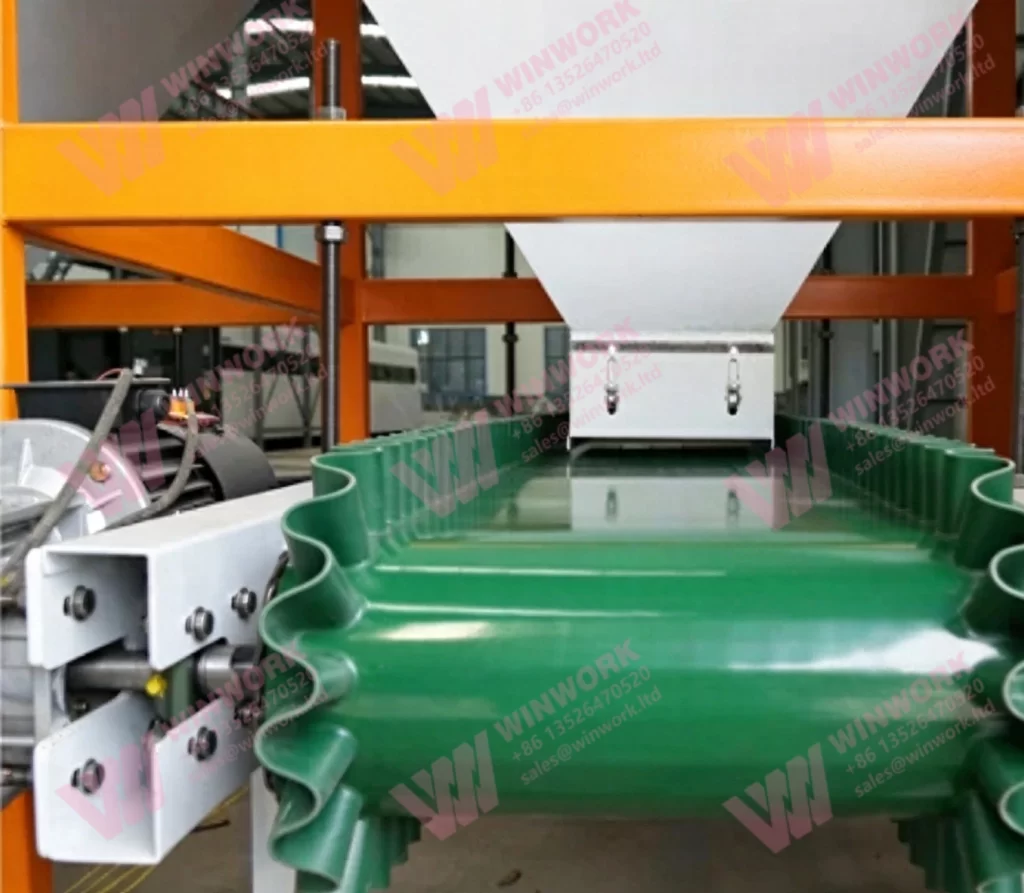
For instance, screw feeders are commonly considered when handling powders or materials that require controlled feeding. Belt feeders may be suitable for certain granular materials and larger feeding capacities. Vibrating feeders can be considered when a controlled flow is needed and the material properties allow their use. The final selection should be based on actual material testing and equipment requirements.
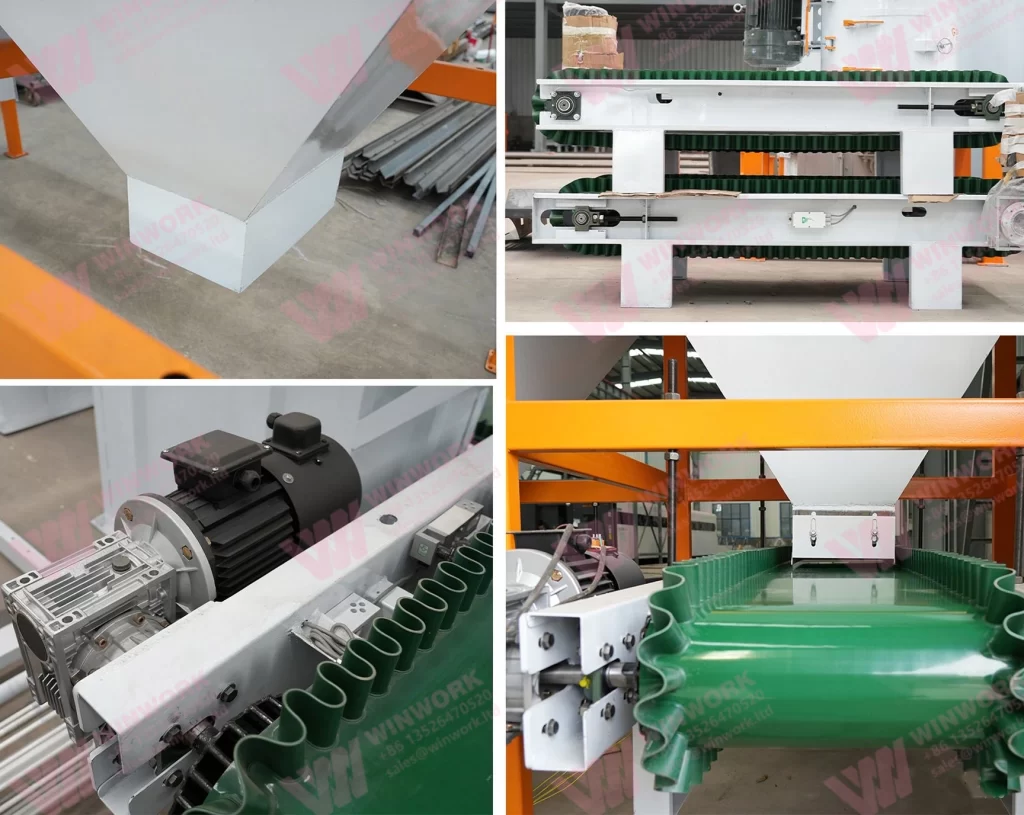
Weighing equipment measures the quantity of each ingredient. Load cells are commonly used to detect weight changes and send measurement signals to the control system. Depending on the multi-bin batching system configuration, ingredients may enter a common weighing hopper one by one or be measured through separate weighing units.
Conveyors and collection hoppers transfer the weighed materials to the next production stage. These components connect the batching area with the mixer or another receiving machine. Their dimensions and arrangement should match the discharge height, material characteristics, and required production capacity.
The electrical control system coordinates feeding, weighing, and discharge operations. It may include a control cabinet, weighing instruments, operating software, and a human-machine interface. More advanced configurations can support formula storage, batch records, alarm notifications, and automatic process control.
When these components work together, a multi-bin batching system becomes more than a group of storage hoppers. It forms a coordinated material-handling section that connects raw material storage with the mixing process.
The configuration can vary considerably between fertilizer plants. A small facility producing a limited number of fertilizer formulas may need only a few bins and a relatively simple weighing arrangement. A larger plant handling many ingredients and frequent product changes may require additional storage positions, more complex feeding equipment, and an integrated control system.
Therefore, manufacturers should evaluate the entire production requirement before deciding on the number of bins and equipment configuration.
How Does a multi-bin batching system Work?
The working process begins with raw material preparation and storage. Before production starts, each ingredient is delivered to its assigned bin. Operators should confirm the material name, storage position, and required quantity to avoid mixing up similar-looking ingredients. Clear labeling is particularly important when the plant handles several fertilizer grades or frequently changes production formulas.
Once the production order is selected, the control system uses the corresponding recipe to determine the target quantity of each ingredient. In a multi-bin batching system, the feeding devices are activated according to the programmed sequence or combination. The system then transfers materials from their respective bins to the weighing section.
A multi-bin batching system can use different arrangements to organize the weighing process. Some systems use one shared weighing hopper positioned beneath several storage bins. In this arrangement, the required materials are fed into the same weighing unit one after another. Other configurations use separate weighing units for different ingredients, allowing several materials to be measured through independent channels.
The appropriate arrangement depends on the batch size, number of ingredients, production rhythm, and required weighing performance. A shared weighing hopper may provide a relatively straightforward configuration for certain batch processes, while multiple weighing units may be considered when production requirements justify a more complex arrangement.
During feeding, the weighing equipment continuously monitors the amount of material entering the hopper. The measured weight is compared with the target value specified in the recipe. As the material approaches the required quantity, the control system may reduce the feeding rate or stop the feeder.
This process requires careful coordination because material does not always stop moving immediately when a feeder is switched off. Some particles may remain in the feeder outlet or continue falling into the weighing hopper. This additional material is sometimes referred to as material in flight. The equipment design and control settings of a multi-bin batching system should account for this factor to avoid repeated overfeeding.
After the target quantity is reached, the weighed material is discharged to a collection hopper, conveyor, or mixer feed point. The system then continues with the remaining ingredients until the complete batch has been prepared.
Consider an NPK fertilizer production process using four ingredients: urea, MAP, potassium chloride, and a filler. Each material is stored in a separate bin. When the operator selects the required formula, the control system identifies the target quantity for each ingredient. The feeders deliver the materials to the weighing section, and the measured quantities are transferred to the mixing machine.
The actual proportions depend on the fertilizer grade and production formula. The example simply illustrates how different materials can be managed within one batching process. In an actual project, the recipe should be determined by the required nutrient content and verified production requirements.
Formula management is particularly useful for plants manufacturing multiple fertilizer grades. For example, one production line may manufacture several NPK formulations during different shifts. Instead of manually entering every ingredient quantity each time, operators can select an approved recipe if the control system supports this function.
The system should also provide clear operating information. Operators need to know which formula is active, which bins are supplying materials, whether the target weights have been reached, and whether an alarm or feeding interruption has occurred. Batch records can help production teams review material consumption and investigate deviations.
For a broader explanation of how automated weighing and feeding are coordinated in industrial production, you can also read our guide to the automatic batching system. This article focuses on the overall role of automatic batching, while the present discussion explains how multiple storage bins are organized to handle different fertilizer ingredients.
Although the process can be automated, regular supervision remains necessary. Load cells should be calibrated, feeders inspected, and bin outlets checked for material buildup. Dust accumulation, moisture entering the storage area, and changes in raw material flow behavior may also affect operation.
A well-maintained multi-bin batching system helps establish a more repeatable feeding and weighing process, but its actual performance depends on the quality of the equipment, correct configuration, material properties, and daily operating practices.
How Does a multi-bin batching system Fit into an NPK Fertilizer Production Line?
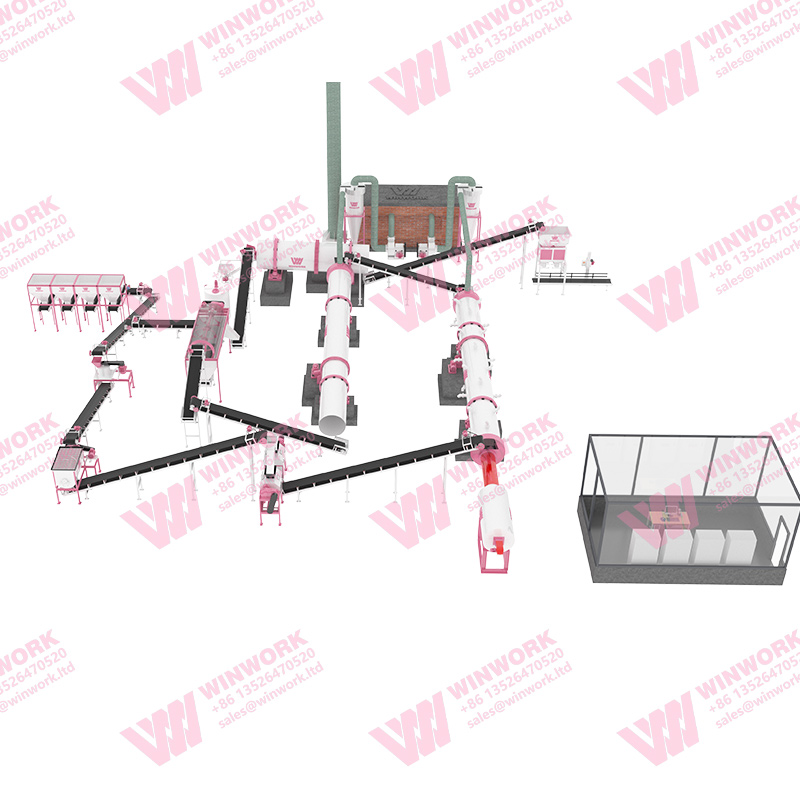
In a typical NPK fertilizer production line, the batching section is positioned between raw material storage and mixing. Before batching, materials may go through receiving, crushing, screening, or other preparation processes, depending on their original condition. After the required quantities are measured, they are transferred to the mixing machine for further processing.
The multi-bin batching system plays an important role at this connection point. It determines how much of each raw material enters the mixer and helps organize the delivery sequence. The mixer then distributes the different ingredients throughout the batch.
These two stages perform different functions. Batching controls ingredient quantities, while mixing works toward achieving a uniform distribution of those ingredients. Even when the weighing process is accurate, an unsuitable mixer, incorrect loading sequence, or excessive batch size may affect the final mixing result. Therefore, the multi-bin batching system and mixing sections should be planned together to ensure that material weighing and mixing operations work smoothly.
The connection between the batching system and mixer also needs practical consideration. The discharge opening, conveyor height, feeding direction, and mixer inlet position should match. If materials need to pass through several unnecessary transfer points, handling becomes more complicated and maintenance access may be restricted.
After mixing, the material may enter a granulation section if the selected fertilizer manufacturing process requires granules. Different granulation methods are suitable for different raw materials and production conditions.
For example, a drum granulator can be considered for certain compound fertilizer production processes that use suitable moisture and material conditions. A disc granulator may be selected for applications requiring a different granulation arrangement. A roller press granulator uses mechanical compression to form granules and may be suitable for certain dry granulation processes.
The selection of granulation equipment should not be based on the batching system alone. Material characteristics, fertilizer formulation, moisture conditions, required particle size, and expected output all influence the choice.
After granulation, the material may pass through drying, cooling, screening, and packaging equipment. These downstream machines complete the production process, but their functions should remain separate from those of the batching section. The main responsibility of a multi-bin batching system is to organize the storage, weighing, and delivery of raw materials before mixing.
When designing a complete production line, manufacturers should consider how every section connects. A batching unit with a high theoretical feeding capacity will not improve overall production if the mixer cannot receive and process materials at the same rate. Similarly, a mixer with sufficient capacity may remain underused if the batching process takes too long.
The production layout is another important factor. Storage bins may require considerable installation height, while conveyors and weighing hoppers need enough space for operation and maintenance. The design should provide access for workers to inspect feeders, clean equipment, calibrate weighing units, and replenish raw materials.
For an existing fertilizer plant, adding a multi-bin batching system requires an assessment of the available floor area, building height, current material routes, electrical supply, and mixer position. Existing equipment may need adjustments to accommodate the new system.
A properly integrated multi-bin batching system should match the working capacity of the mixer and the requirements of the downstream equipment. This helps reduce unnecessary waiting between production stages and creates a more organized material-handling process.
How to Choose the Right multi-bin batching system for Your Fertilizer Plant?
Choosing a suitable multi-bin batching system requires more than deciding how many storage bins to install. The equipment should be selected according to the plant’s raw material list, production capacity, batch size, weighing requirements, and existing production layout.
The first consideration is the number and type of raw materials. Prepare a complete ingredient list for all fertilizer formulas that the plant intends to manufacture. Identify which materials are used frequently, which are only required for specific products, and whether some ingredients can share storage positions under properly controlled operating procedures.
The number of bins should reflect the maximum number of different materials that need to be available for the planned production range. For example, a plant that regularly uses four major ingredients may begin its configuration assessment with four dedicated bins. If the plant also needs to handle several fillers or minor additives, additional bins may be necessary.
However, more bins do not automatically mean better performance. Every additional bin increases the requirements for storage space, feeding equipment, control points, and maintenance. The goal should be to provide enough independent storage positions for the actual production formulas without making the system unnecessarily complicated.
The second consideration is production capacity. Manufacturers should determine the expected output per hour and the required batch weight. A plant producing several small batches may need a different feeding and weighing arrangement from one operating with fewer, larger batches.
Cycle time is especially important. The total batching time includes material feeding, weighing, discharge, and the time required for the receiving equipment to become available. If the mixer is waiting for ingredients, the batching process may become a production bottleneck. If the batching unit prepares materials faster than the mixer can receive them, the system may require a suitable buffer or operating sequence.
The third consideration is weighing accuracy. Different ingredients may require different weighing ranges. Major ingredients usually account for a larger share of the formulation, while trace elements and minor additives may need to be measured in much smaller quantities.
The selected weighing equipment should match these requirements. Load cell capacity, weighing hopper design, feeder response, and control settings all influence the final result. Manufacturers should ask suppliers how weighing accuracy is defined, under what conditions it is tested, and whether the specified performance applies to all ingredients and batch sizes.
Material characteristics should also influence equipment selection. Fine powders may require different feeding arrangements from free-flowing granules. Materials that absorb moisture or tend to stick to hopper walls may need suitable storage and discharge designs. If bridging or uneven discharge occurs frequently, the plant may need to consider appropriate flow-assistance measures.
Dust control and cleaning arrangements are equally important. When different fertilizer ingredients are handled in separate bins, operators still need to prevent contamination during replenishment, maintenance, and material transfer. Inspection openings, cleaning access, and appropriate sealing can help maintain a more controlled working environment.
Another important factor is compatibility with the mixing equipment. The batching system must deliver materials at a suitable rate and through a suitable discharge position. The mixer capacity, inlet size, installation height, and operating cycle should be reviewed before equipment configuration is finalized.
For new fertilizer projects, these requirements should be considered during the initial production line design. For an existing plant, manufacturers should review the current equipment layout, available installation space, conveyor routes, and electrical control arrangements before recommending an upgrade.
Automation requirements also deserve attention. Some plants need only automatic feeding and weighing, while others may require recipe storage, batch records, alarm functions, and centralized monitoring. The appropriate level of automation depends on the number of fertilizer formulas, operating frequency, available workers, and production management requirements.
When requesting a quotation, fertilizer manufacturers should provide more than a target production capacity. A useful inquiry should include the raw material list, expected number of formulas, batch weight, hourly output, material characteristics, mixer specifications, and available installation space.
Photographs of the existing production area, equipment drawings, and a simple process flow diagram can also help the supplier understand the project. With this information, the equipment manufacturer can evaluate bin volumes, feeding arrangements, weighing configurations, and conveyor connections more accurately.
At WINWORK, fertilizer production equipment can be considered as part of a complete production solution rather than as isolated machines. When discussing a multi-bin batching system, it is important to understand how the equipment will work with the customer’s existing or planned mixing and granulation sections. This makes it easier to recommend a configuration based on actual production conditions instead of offering a standard arrangement that may not fit every plant.
Ultimately, the right multi-bin batching system should match the materials being handled, the required production capacity, and the equipment connected to it. A carefully planned configuration helps fertilizer manufacturers organize raw material storage, improve control over ingredient quantities, and establish a more coordinated production process.
If you are planning a new fertilizer production line or upgrading an existing batching section, WINWORK can help review your raw materials, production capacity, and equipment layout. Share your project requirements to discuss a suitable batching configuration for your fertilizer plant.
Get A Quote