

The Naming Trap Behind a Simple Equipment Inquiry
Every week, equipment suppliers receive inquiries from buyers looking for a drum dryer. At first, the request seems straightforward. A customer has wet wood chips, plans to produce wood pellets, and needs equipment to reduce moisture before pelletizing.
However, there is a common misunderstanding: not every machine called a drum dryer is designed for the same materials.
Some buyers search for a drum dryer and find equipment intended for slurry or other wet materials. Although the names sound similar, their internal structures and working conditions can be very different. A machine designed for slurry cannot automatically handle loose wood chips.
This misunderstanding can affect an entire production project. An unsuitable drying system may produce inconsistent moisture levels, reduce the effective feeding capacity of a pellet mill, and cause unnecessary operating problems. Excessive moisture can also make pellet formation more difficult and increase friction during operation.
That is why choosing the right rotary dryer for wood chips should be part of production line planning, rather than a decision made after purchasing the pellet mill.
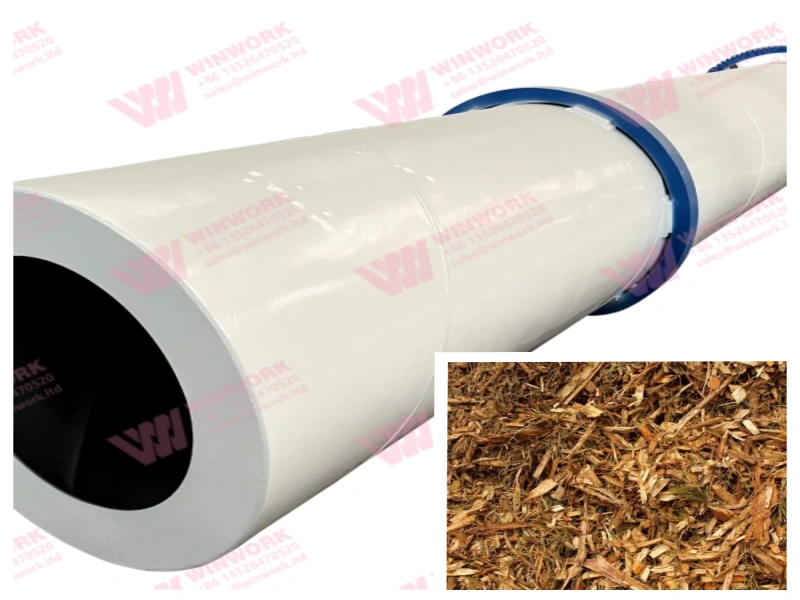
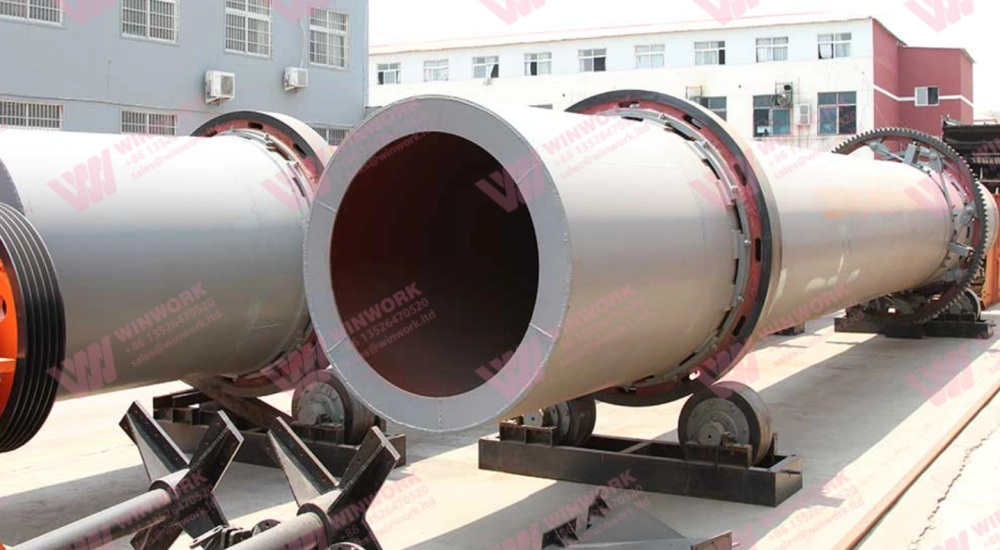
At WINWORK, we generally refer to this equipment as a rotary drum dryer. It is an inclined, continuously rotating drying system that uses hot air and material movement to remove moisture from solid biomass. It should not be confused with a slurry-processing drum simply because both machines have a cylindrical appearance.
For a wood pellet manufacturer, the important question is not whether a machine has a rotating drum. It is whether its structure, airflow, heating arrangement, and material-handling design suit the actual wood chips being processed.
When Wet Wood Chips Meet the Pellet Mill
Imagine a pellet plant receiving fresh wood chips from a local sawmill. Before pelletizing, the operator needs a rotary dryer for wood chips that can handle a mix of small chips, larger pieces, bark, and sawdust. Its moisture content can vary depending on the supplier, storage conditions, weather, and processing time.
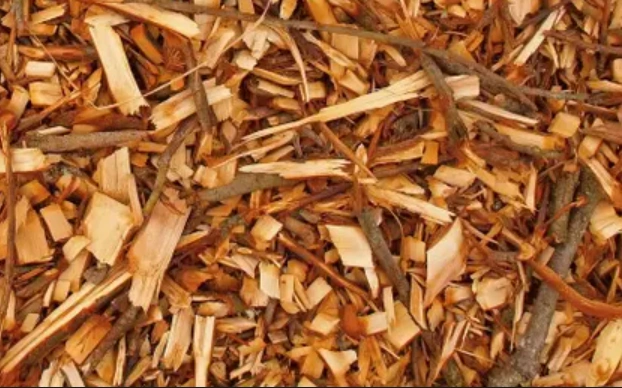
The production team might assume that the material can go directly into the pellet mill after crushing. This may work with sufficiently dry materials, but it is not a reliable approach when incoming moisture changes significantly.
A pellet mill needs raw material within a suitable operating moisture range, so the rotary dryer for wood chips must prepare the feed consistently. Material that is too wet may fail to form stable pellets, while material that is too dry may require additional moisture conditioning. The actual target depends on the wood species, particle size, pellet mill, and production requirements.
For some wood pellet projects, 12–18% moisture can be used as an initial reference when evaluating drying requirements. However, this is not a universal setting. The correct target should be confirmed through material testing and pelletizing trials.
This is where a properly configured rotary dryer for wood chips becomes important. Its job is to bring incoming material closer to the moisture range required by the next production stage.
In a rotary dryer for wood chips, wet chips enter an inclined rotating drum through a controlled feeding system. As the drum slowly rotates, internal lifting flights raise the material and allow it to fall through the hot air. This repeated movement increases contact between the wood chips and the drying medium.
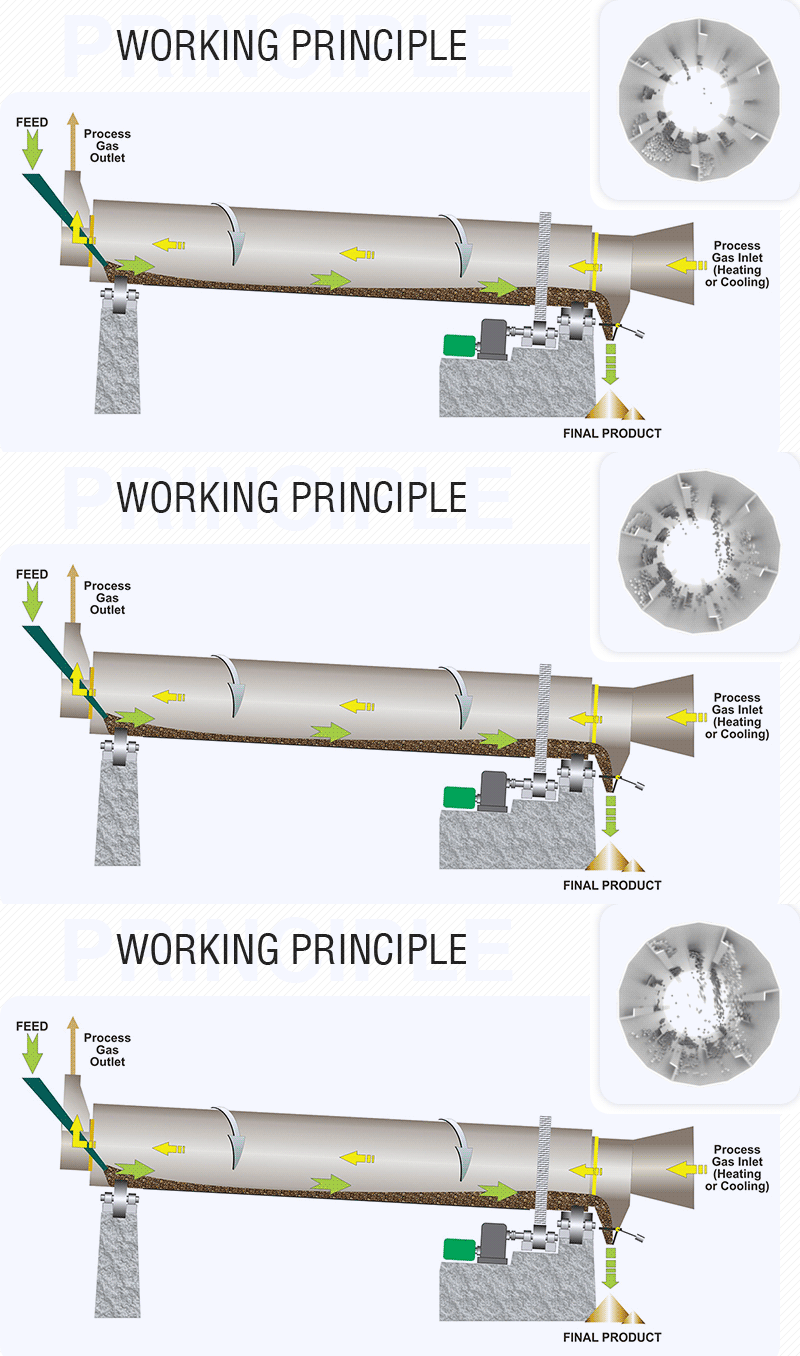
Meanwhile, the drum’s inclination and rotation gradually move the material toward the discharge end. During this process, heat transfers from the hot air to the wet material, allowing moisture to evaporate.
Depending on the project, the drying system can use parallel-flow or counter-current airflow. The appropriate arrangement depends on the material, temperature requirements, and process design. A rotary dryer for wood chips should therefore be configured according to the actual drying task rather than selected only by its external dimensions.
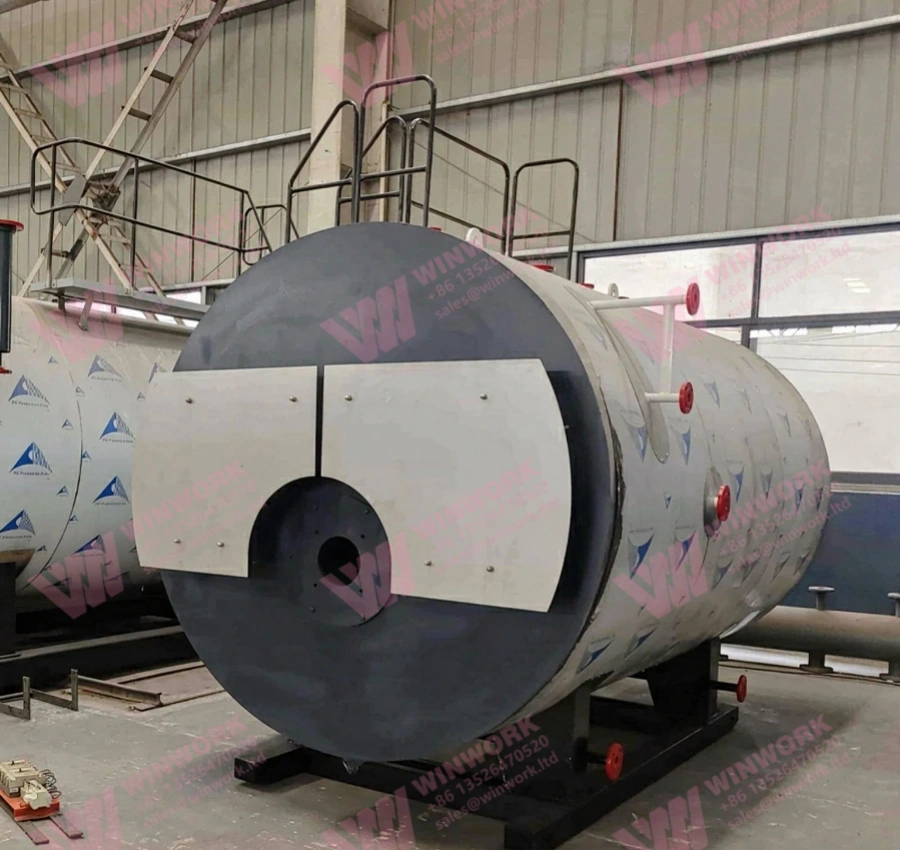
The heat source can also be selected according to local fuel availability. Where suitable biomass residues are available, a biomass-fired hot air furnace may be considered. Other projects may use natural gas, diesel, or another suitable fuel.
Exhaust air should pass through an appropriate dust collection system. Depending on site conditions and environmental requirements, this may involve cyclones, bag filters, or other dust-control equipment. A complete rotary dryer for wood chips installation should consider exhaust handling as part of the overall design, not as an afterthought.
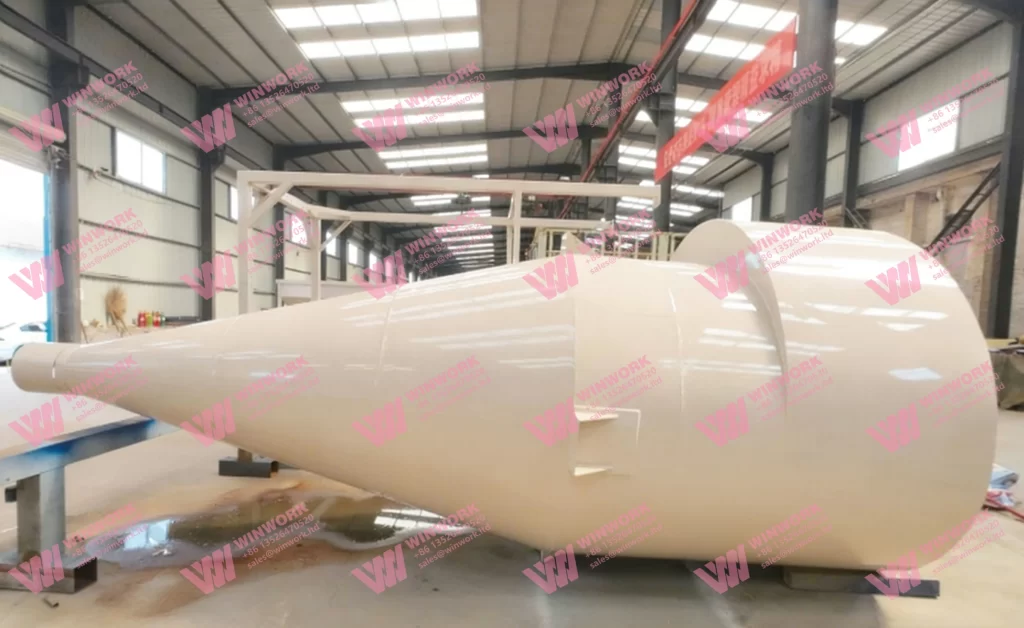
Using Dust Collector to Handle Workshop Dust
Once the wood chips reach the required condition, they can move to the next stage, which may include further size reduction, pelletizing, cooling, screening, and packaging.
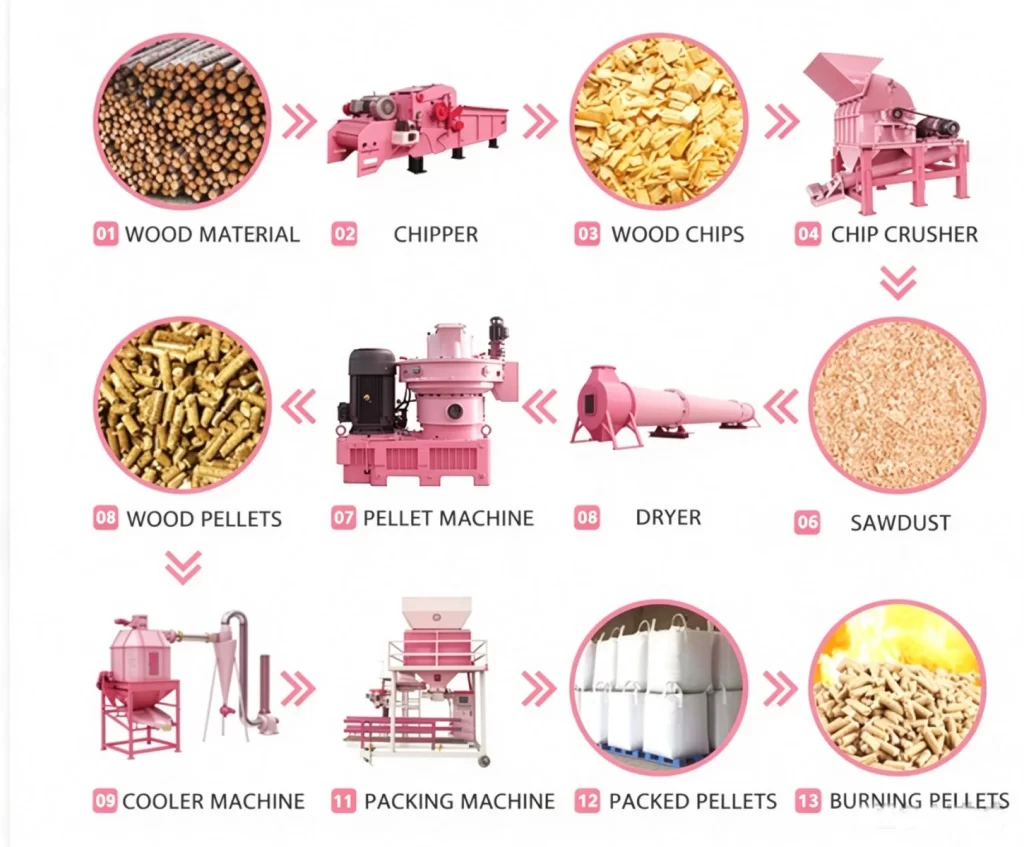
The key is to treat drying as one part of the complete production process. The performance of a rotary dryer for wood chips must match both the incoming material and the production requirements of the pellet mill.
Another common mistake is assuming that a standard mineral rotary dryer will automatically work well with biomass. Mineral materials and wood chips have different physical characteristics. Their bulk density, particle shape, flow behavior, and resistance to movement are not the same.
For example, an unsuitable lifting arrangement or excessive airflow may cause more fine particles to become airborne. If the material is handled too aggressively, unnecessary breakage may also occur. A biomass-oriented design should consider chip size, material condition, residence time, and the balance between material movement and drying efficiency.
This is why a rotary dryer for wood chips should be evaluated according to its suitability for biomass rather than simply compared with other rotary dryers by drum size.
What a Pellet Plant Operator Actually Needs from the Dryer
For a factory owner comparing a rotary dryer for wood chips, the biggest concern is rarely the definition of a rotary drum dryer. What matters is whether the machine can keep the production line running without creating additional problems.
Consider a plant operating for 10–16 hours a day. Even a relatively small difference in drying performance can become significant when equipment runs continuously.
If incoming material contains more moisture than expected, the rotary dryer for wood chips may need longer residence time or greater heat input. If the feeding system delivers material unevenly, some chips may leave the drum wetter than others. This variation can then affect the feeding conditions of the pellet mill.
A suitable rotary dryer for wood chips should therefore be evaluated according to actual operating conditions, not simply its theoretical capacity. The supplier needs to understand the incoming moisture, required final moisture, and expected hourly feed rate.
Energy consumption is another important consideration. The drying system needs enough heat to remove the required amount of moisture, but excessive heating does not automatically mean better production. Operators need to consider inlet temperature, exhaust temperature, airflow, feeding rate, and residence time together.
Insulation can help reduce unnecessary heat loss from the drum and associated equipment. A suitable temperature monitoring arrangement also makes it easier for operators to observe changes during production and adjust operating conditions when necessary.
Material compatibility also deserves attention when selecting a rotary dryer for wood chips. A plant may initially process sawmill chips but later want to use sawdust, bark, or selected coconut shell residues. Others may prefer natural gas or diesel. The right choice depends on fuel quality, combustion equipment, local regulations, and required heat output.
Material compatibility also deserves attention. A plant may initially process sawmill chips but later want to use sawdust, bark, or selected coconut shell residues. These materials do not necessarily behave in the same way inside a drying drum.
Before introducing additional raw materials into a rotary dryer for wood chips, the operator should check their moisture content, particle size, bulk density, and flow characteristics. A drying system designed around one material should not be assumed to handle every biomass residue without adjustment.
Maintenance is another part of long-term operation. Dust accumulation, worn lifting flights, damaged seals, bearing problems, and irregular feeding can all affect equipment performance. A practical installation should leave enough space for inspection, cleaning, lubrication, and replacement of wearing components.
At WINWORK, equipment configuration is considered in relation to the material and the complete production process. Depending on project requirements, a rotary dryer for wood chips can be supplied as an individual machine or integrated with feeding conveyors, a suitable hot air furnace, dust collection equipment, and downstream processing machinery.
For more information about the equipment structure and available configurations, visit our rotary drum dryer product page.
The purpose of this approach is straightforward: the drying equipment should fit the factory’s daily production requirements instead of forcing operators to reorganize the entire production process around an unsuitable machine.
How a Rotary Dryer for Wood Chips Fits Your Production Goals
Not every wood pellet project needs the same drying configuration.
Suppose one customer is choosing a rotary dryer for wood chips to process relatively dry material from an indoor workshop. Another purchases freshly processed wood chips from several outdoor suppliers. Although both factories plan to produce the same type of pellets, their drying requirements may be very different.
The first customer may only need limited moisture adjustment, depending on actual test results. The second may need a more substantial drying stage because incoming material changes with weather and storage conditions.
This is why the first step should always be understanding the raw material. Where does it come from? Is it fresh wood waste, sawmill residue, forestry waste, or a mixture of several sources? Does the moisture content remain relatively stable, or does it fluctuate throughout the year? Are the chips uniform, or do they contain considerable amounts of bark and fine particles?
These details help determine whether a rotary dryer for wood chips is necessary and what configuration should be considered.
When sizing a rotary dryer for wood chips, the next question is production capacity. A customer planning to produce 1 ton of pellets per hour has different requirements from a factory targeting 5 tons per hour. However, the dryer should not simply be selected according to the final pellet output.
The amount of wet material entering the dryer may be higher than the finished dry material leaving it because water is removed during the process. Therefore, the supplier needs to calculate the required capacity according to initial moisture content, target moisture content, and expected operating hours.
For example, a plant processing 2 tons of wet wood chips per hour at a relatively high moisture level may require a different dryer from a plant processing the same hourly weight of partially dried chips. This is an important point when calculating the capacity of a rotary dryer for wood chips.
The heat source and factory layout should also be discussed when planning a rotary dryer for wood chips. Is biomass fuel available nearby? Is there enough space for the furnace, drum, conveyors, and dust collector? Can the exhaust system meet local environmental requirements? Are there restrictions on equipment height, foundation construction, or transportation access?
These questions are often more useful than simply asking for the largest available model or the lowest equipment price.
A professional supplier should understand the complete process before recommending a machine. At WINWORK, project planning can consider the raw material, expected capacity, available installation space, and the connection between drying and pelletizing.
If the project involves more than one biomass material, providing samples or detailed material information can help the supplier evaluate an appropriate configuration. Where necessary, material testing and production trials should be considered before finalizing the equipment.
The goal is to build a drying system that works under real factory conditions, not simply to purchase a machine with an attractive specification sheet.
Before You Order a Drum Dryer for Your Pellet Plant
Some buyers ask whether they can skip drying and send wood chips directly to the pellet mill. The answer depends on incoming moisture content and the requirements of the pelletizing process. If the material is already within the suitable range, an additional drying stage may not be necessary. If moisture varies significantly, however, skipping drying can make production difficult to control.
Others ask whether an airflow dryer can replace a rotary system. It may be suitable for certain materials and capacities, but the choice depends on particle size, moisture level, throughput, available space, and operating conditions. Neither system should be considered universally better.
Can the same equipment dry organic fertilizer materials? Rotary drum dryers are also used in fertilizer manufacturing, but their configuration and operating conditions need to match the material being processed. Wood chips and fertilizer granules should not automatically share the same operating settings.
These questions should be answered before an order is placed. A rotary dryer for wood chips should be selected according to the actual material and production process, not simply because its name matches a search term.
If you are planning a wood pellet production project, start by preparing four basic details: your raw material type, initial moisture content, expected hourly output, and available fuel source. With this information, a supplier can make a more meaningful assessment of the drying requirements.
At WINWORK, we focus on matching drying equipment with the actual production process. Whether you need an individual machine or a complete biomass pellet production solution, the configuration should be based on your material and factory conditions.
Choosing the right rotary dryer for wood chips is not simply about avoiding the wrong drum dryer. It is about making sure that the drying stage supports stable pelletizing, practical energy consumption, and long-term production.
If you are evaluating a wood chip drying project, send your raw material details and capacity requirements to the WINWORK team. We can help assess a suitable rotary drum dryer configuration and discuss how it can fit into your wood pellet production line.
Get A Quote