

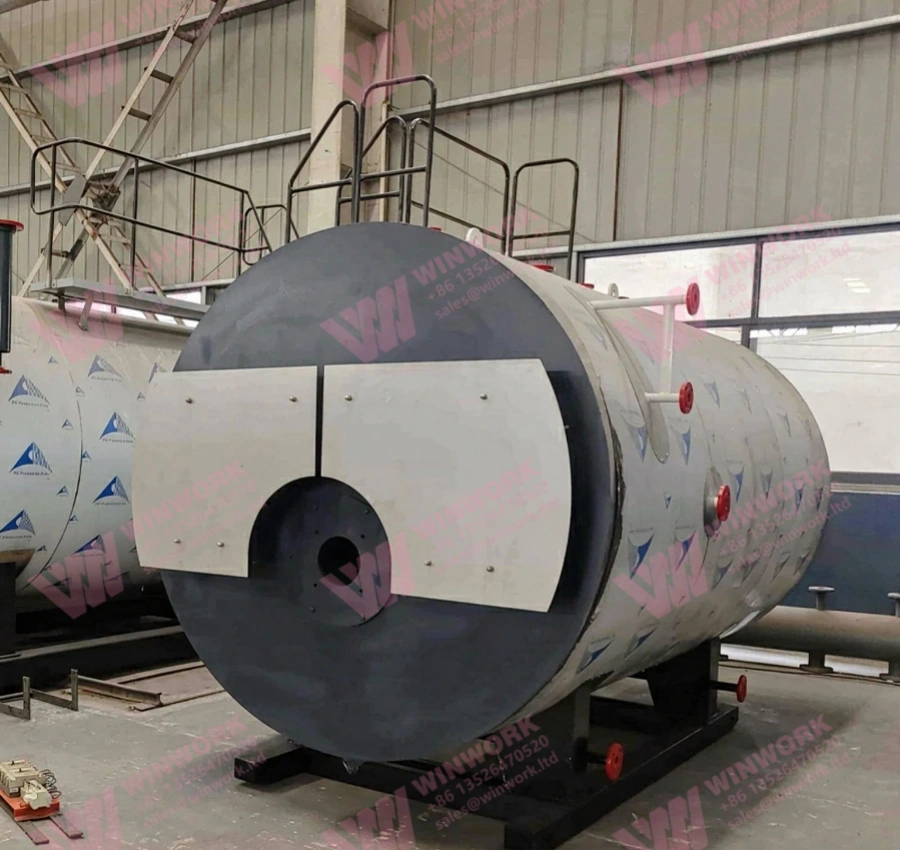
Introduction: Why Is Drying a Challenge in Organic Fertilizer Production?
In organic fertilizer production, controlling moisture is not always as simple as it looks. After fermentation, materials such as chicken manure, cow manure, pig manure, and compost may still contain considerable moisture. Even after crushing, mixing, and granulation, the material may not be dry enough for screening, packaging, and storage.
This creates several practical problems. Wet fertilizer granules may stick together inside conveyors, form lumps during storage, or cause difficulties during packaging. If the drying process cannot keep up with the granulation section, materials may accumulate between machines and interrupt continuous production.
An organic fertilizer rotary drum dryer is particularly useful when a fertilizer plant needs continuous drying rather than batch processing. It removes excess moisture through continuous contact between hot air and moving materials. However, choosing a dryer is not simply a matter of selecting a machine with a larger capacity. The initial moisture content, required final moisture, material characteristics, and production rate all affect the drying requirements.
This guide explains why drying problems occur, how rotary drum drying works, and how to estimate the drying capacity needed for an organic fertilizer plant.
What Happens When Organic Fertilizer Is Not Dried Properly?
Before selecting drying equipment, it is important to understand what happens when fertilizer retains too much moisture after processing.
Choosing an organic fertilizer rotary drum dryer requires understanding how much moisture the incoming material contains and what condition the finished product needs to reach.
Granules Stick Together During Storage
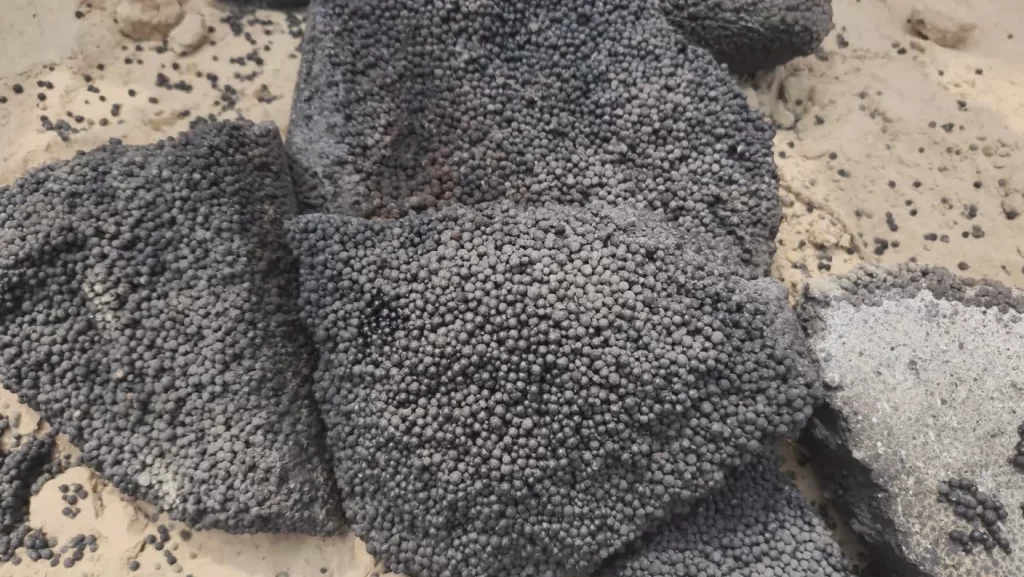
Freshly granulated organic fertilizer may contain more moisture than the finished product requires. When the granules are stored while still warm and damp, they may stick together and form lumps.
This can make it difficult for workers to discharge, transport, and handle the fertilizer. In some cases, bags may contain clusters of granules instead of a loose, uniform product.
Packaging Becomes More Difficult
Excess moisture can cause fertilizer to adhere to conveyor belts, hoppers, and other contact surfaces. Material may not flow smoothly into the weighing and packaging equipment.
For a plant packing 20–50 kg bags, inconsistent material flow can affect filling accuracy and reduce packaging efficiency. Operators may also need to stop the line more frequently to clean accumulated material.
Product Quality Becomes Inconsistent
If some granules are properly dried while others remain wet, the final product may have uneven moisture distribution.
This can affect screening, handling, and storage. For manufacturers supplying distributors or agricultural customers, consistent product condition is important for maintaining quality standards.
Storage and Transportation Become More Difficult
Fertilizer with excessive moisture may be more likely to cake during storage, particularly when bags are stacked for long periods or exposed to changing temperatures.
Drying does not solve every storage problem, because formulation, cooling, packaging, and storage conditions also matter. However, controlling moisture before packaging is an important part of producing a stable granular fertilizer.
Why Does Organic Fertilizer Drying Take Longer Than Expected?
When a drying machine cannot achieve the expected result, the problem is not necessarily caused by insufficient heating power. Several production factors may affect drying performance.
High Initial Moisture Content
The amount of water entering the dryer directly affects its workload.
For example, two plants may both process 5 tons of material per hour. However, if one plant feeds material at 25% moisture and the other feeds material at 40%, their water evaporation requirements will be very different.
The second plant needs to remove substantially more water, even though the wet feed capacity is identical.
The organic fertilizer rotary drum dryer must therefore be sized according to the actual water evaporation requirement, not just the hourly feed capacity.
Uneven Material Size and Distribution
Organic materials are not always uniform after fermentation. Some batches may contain fine particles, while others contain large lumps, fibers, or partially decomposed materials.
Large wet lumps take longer to dry internally than smaller particles. If the feeding system distributes materials unevenly, some sections of the drum may receive too much material while other sections remain underloaded.
A crusher or screening machine before drying may help improve material consistency, depending on the process arrangement. Proper pretreatment also helps an organic fertilizer rotary drum dryer handle materials more consistently and reduces the risk of uneven drying.
Poor Hot Air Distribution
Hot air needs to contact the material effectively to transfer heat and remove moisture.
If the airflow is poorly distributed, some materials may receive sufficient heat while others do not. Simply increasing the temperature is not always the right solution. Excessive heat may damage sensitive fertilizer components or affect granule quality.
The performance of an organic fertilizer rotary drum dryer depends on both heat transfer and material movement inside the drum. The airflow, temperature, feeding rate, and drum operation need to be considered together.
Incorrect Feeding Rate and Residence Time
If too much material enters the dryer at once, each particle may have less time to contact hot air.
A high feeding rate can therefore result in insufficient moisture removal. On the other hand, excessively low feeding rates may reduce equipment utilization.
The operating conditions of an organic fertilizer rotary drum dryer should be adjusted according to the material and required final moisture content, rather than relying on a fixed setting for every production batch.
How Does an Organic Fertilizer Rotary Drum Dryer Solve These Problems?
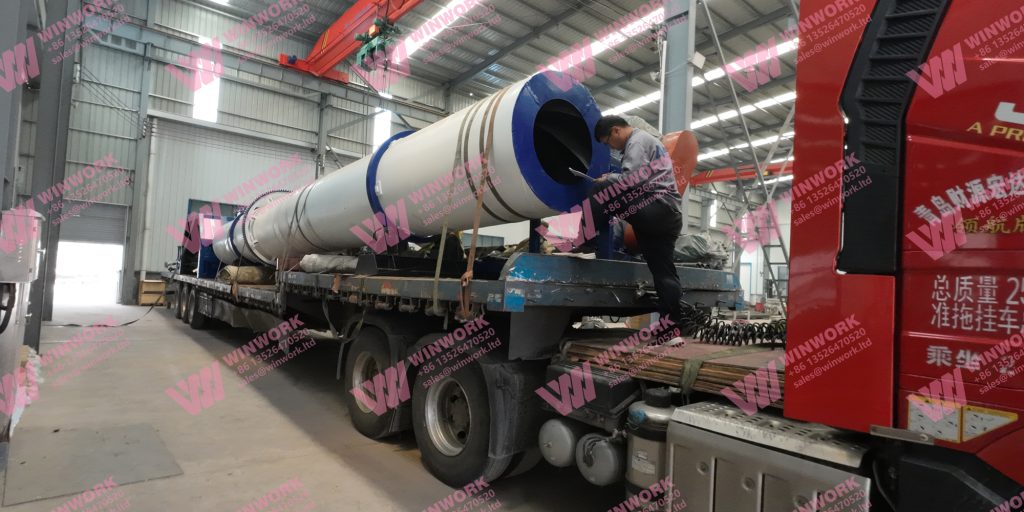
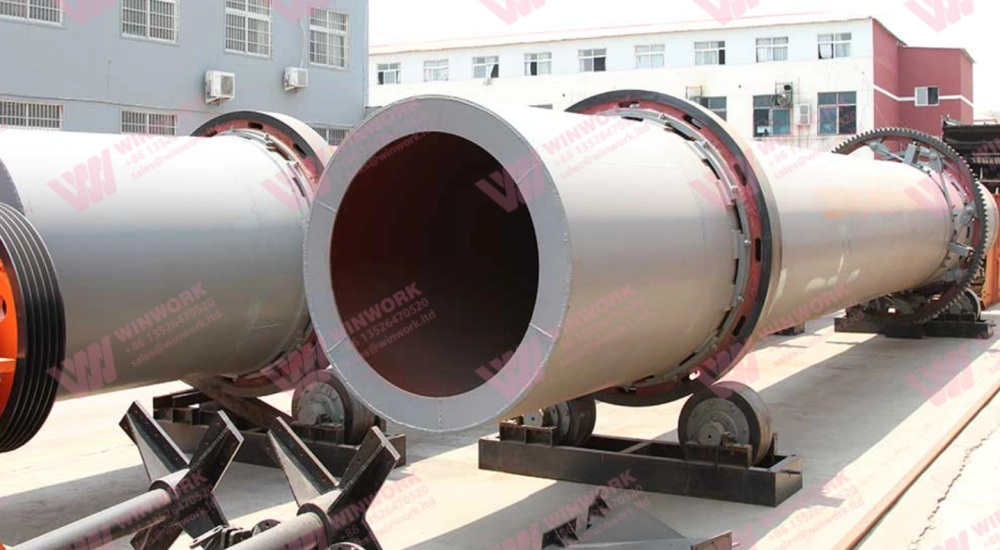
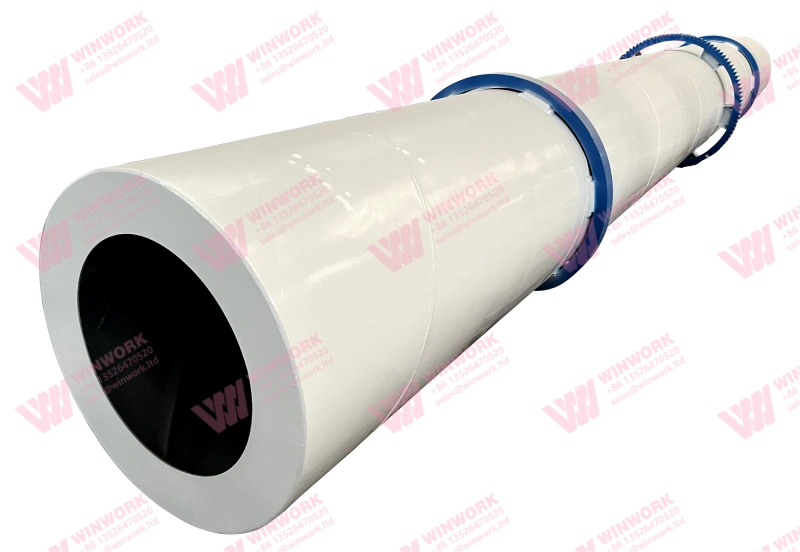
A rotary drum dryer uses a rotating cylindrical drum and a hot air system to reduce moisture in bulk materials. As the drum rotates, the material moves from the feeding end toward the discharge end while repeatedly being lifted and dropped.
An organic fertilizer rotary drum dryer uses continuous rotation to move bulk materials through the drying chamber while exposing them to hot air. This movement helps expose more of the material surface to the hot air.
Continuous Material Tumbling
The drum rotates at a controlled speed, allowing materials to move gradually through the machine.
Instead of remaining in one position, the material continuously changes its position during operation. This improves contact between the material and the drying air.
For fertilizer granules, continuous movement also helps prevent the entire feed from remaining in one compact mass.
Lifting Flights Improve Material Contact
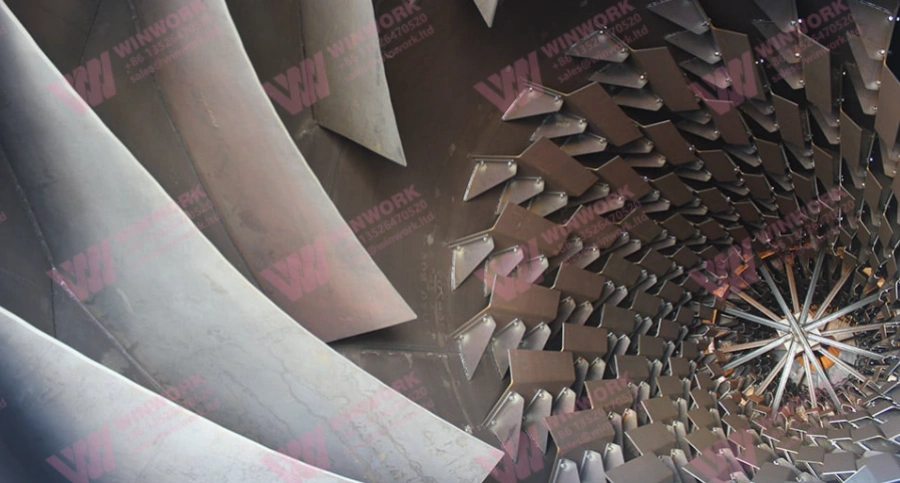
Inside the drum, lifting flights pick up materials as the cylinder rotates. The materials are then lifted and allowed to fall through the hot air.
This creates repeated contact between the material and the drying airflow.
The design and arrangement of the lifting flights should match the material characteristics. For example, sticky compost and relatively uniform fertilizer granules may require different internal arrangements.
The lifting flight arrangement is an important design consideration when purchasing an organic fertilizer rotary drum dryer for different organic materials.
Controlled Hot Air Supply
The heating system supplies the thermal energy required for evaporation.
Depending on the project, the heat source may involve coal, natural gas, biomass fuel, or another suitable heating arrangement.
The correct operating temperature depends on the material, moisture content, airflow, and product requirements. There is no single temperature suitable for every organic fertilizer.
Each organic fertilizer rotary drum dryer should be configured according to the material’s moisture content and required drying conditions.
Adjustable Operating Parameters
The drum speed, feeding rate, airflow, and heating conditions all influence the drying result.
If the discharged material remains too wet, operators should check the actual feed moisture, feeding stability, airflow, and residence time before simply increasing the heating temperature.
A properly configured dryer should be selected and adjusted based on actual production conditions.
How to Improve Drying Results for Different Organic Fertilizer Materials?
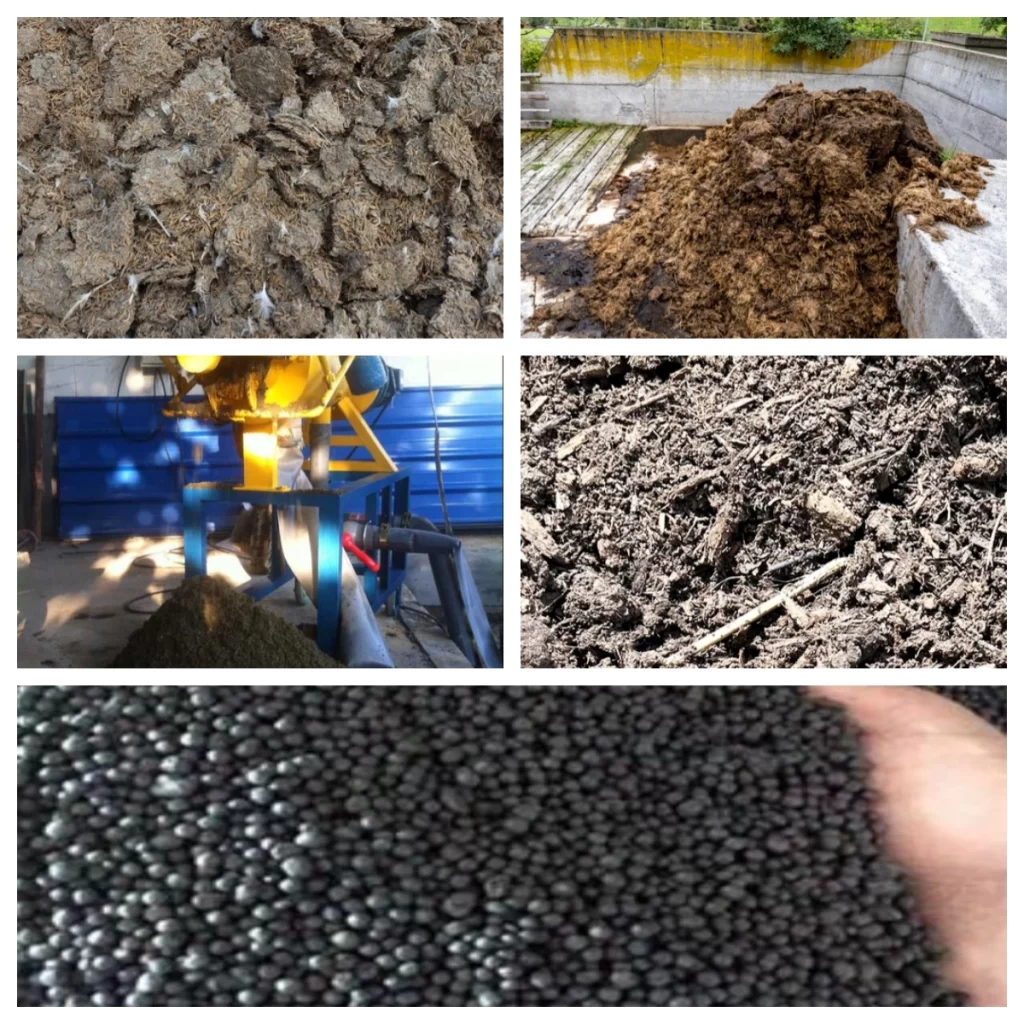
Different organic fertilizer materials have different physical properties. A drying arrangement that works for one material may not produce the same result with another.
Chicken Manure
Chicken manure compost may contain fine particles, fibers, and sticky lumps, depending on the fermentation and pretreatment process.
Before drying, operators should check whether the material contains large lumps and whether the feeding system can distribute it evenly. If the material is too sticky, additional crushing or conditioning may be needed.
For chicken manure compost, an organic fertilizer rotary drum dryer should be matched with the actual feeding condition and material consistency.
Cow Manure
Cow manure often contains more visible fibers and may have an uneven structure.
Long fibers can affect feeding and material movement. The material should be prepared according to the dryer design, and operators should pay attention to whether fibers accumulate inside the equipment.
Fiber content should also be considered when selecting an organic fertilizer rotary drum dryer for cow manure processing.
Pig Manure
Pig manure can vary significantly in moisture and consistency depending on the separation and fermentation processes.
If the material still contains excessive free water, mechanical dewatering before drying may reduce the amount of water that needs to be evaporated thermally.
Organic Compost
Compost may contain a mixture of fine particles, larger pieces, and partially decomposed material.
Screening or crushing before drying can help produce a more uniform feed. The required pretreatment depends on the compost condition and the final product specification.
Organic Fertilizer Granules
Granulated fertilizer requires a different approach from loose compost.
Fresh granules need to lose excess moisture without becoming excessively brittle or damaged. The drying temperature, airflow, and residence time should therefore be selected with granule strength and final product quality in mind.
Is Your Rotary Drum Dryer Capacity Matching Your Production Line
One common mistake during equipment purchasing is selecting a dryer based only on its nominal hourly capacity.
A more useful starting point is to calculate how much water needs to be removed from the incoming material.
Understand Wet Feed and Dry Product Capacity
Consider an organic fertilizer plant that processes 5 tons of wet material per hour.
Assume the material enters the dryer at 40% moisture and needs to reach 15% moisture after drying. Both moisture values are calculated on a wet basis.
The calculation is as follows:
- Wet feed capacity: 5 t/h
- Initial moisture: 40%
- Target moisture: 15%
- Dry solids: 3 t/h
- Final product weight: 3.53 t/h
- Water to evaporate: 1.47 t/h
The dry solids remain unchanged at 3 tons per hour.
The final product weight is:
3/(1-0.15)=3.53t/h
Therefore, the theoretical water removal requirement is:
5-3.53=1.47t/h
This means the drying system must evaporate approximately 1.47 tons of water per hour under the assumed conditions.
The required evaporation rate provides a useful starting point for selecting an organic fertilizer rotary drum dryer with suitable processing capacity.
This figure is not the rated throughput of the dryer. Actual equipment selection also depends on thermal efficiency, material properties, heat source, ambient conditions, and the required operating margin.
Match the Dryer with Upstream and Downstream Equipment
The dryer must work together with the other machines in the production line.
For example, if a granulator continuously produces 5 tons of wet granules per hour, the dryer needs to handle the corresponding feed rate and moisture load.
The downstream cooler and screening machine must also be able to process the discharged material.
If the dryer can process more material than the cooler, finished granules may accumulate between the two machines. If the dryer capacity is too low, the granulation section may need to slow down.
When planning an organic fertilizer rotary drum dryer, it is therefore important to evaluate the capacity of the complete production line rather than selecting each machine separately.
You can also review the organic fertilizer production line to understand how crushing, mixing, granulation, drying, cooling, screening, and packaging equipment work together.
What Should You Check Before Installing an Organic Fertilizer Rotary Drum Dryer?
Before purchasing equipment, prepare the following production information. These details help the manufacturer evaluate the drying requirements more accurately.
Before installing an organic fertilizer rotary drum dryer, buyers should confirm the heating source, material characteristics, and available factory space.
Raw Material and Moisture Analysis
Provide the type of material, its initial moisture content, particle size, and physical condition.
If the material changes significantly between batches, explain the expected moisture range rather than providing only one measurement.
Also specify the target moisture content after drying.
Heating Source and Fuel Availability
Check which heating sources are available at the factory.
Natural gas, coal, biomass, and steam-based systems have different equipment requirements and operating costs.
The choice should consider local fuel prices, supply stability, combustion arrangements, and environmental regulations.
Factory Layout and Installation Space

The dryer requires sufficient space for the main drum, feeding and discharging conveyors, heating equipment, and supporting systems.
Operators also need access to inspection points and maintenance areas.
The height of the workshop and the position of existing equipment should be checked before finalizing the layout.
Dust Collection and Exhaust Gas Treatment
Drying can generate dust, especially when processing small fertilizer particles or dry granules.
A suitable dust collection arrangement may include a cyclone separator and a bag filter, depending on the process design.
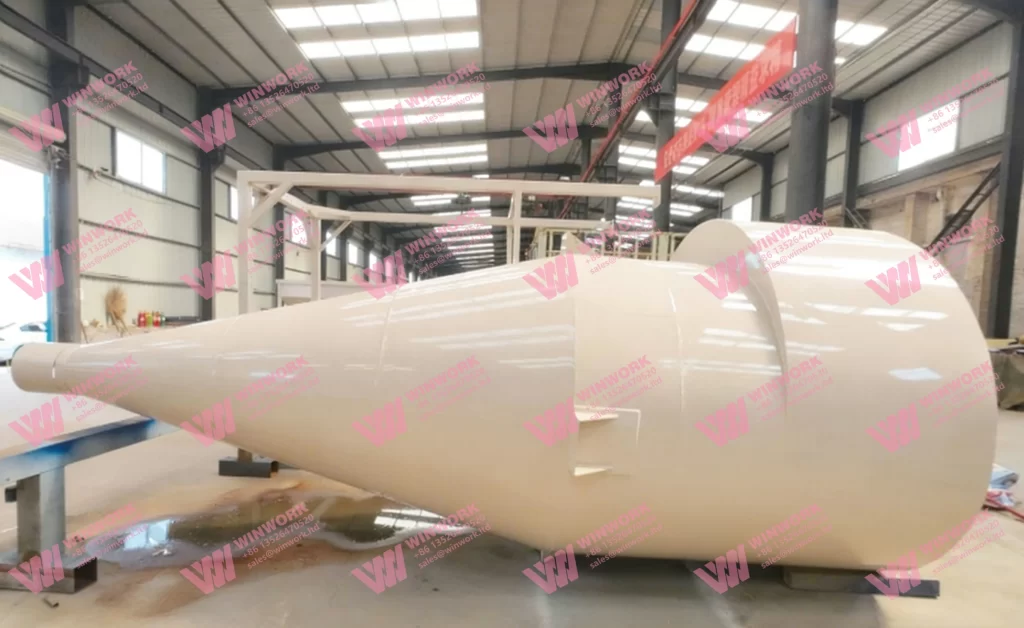
The exhaust gas system should also comply with local environmental requirements and the selected heating method.
For additional equipment options, manufacturers can also review the rotary drum dryer guide and related fertilizer screening equipment when planning the complete process.
Conclusion: Better Drying Starts with the Right Production Setup
Drying problems in organic fertilizer production are often connected to more than just heating capacity. Initial moisture, material size, feeding stability, hot air distribution, and residence time all affect the final result.
A properly selected organic fertilizer rotary drum dryer can help remove excess moisture and prepare fertilizer materials for cooling, screening, and packaging. However, the equipment must be matched to the actual material and production requirements.
Before requesting a quotation, prepare three important figures: hourly wet material capacity, initial moisture content, and target moisture content. These values provide a practical starting point for calculating the required water evaporation rate and evaluating the dryer configuration.
WINWORK can provide fertilizer processing equipment and production line solutions based on different raw materials and capacity requirements. Whether you are building a new organic fertilizer plant or upgrading an existing drying section, sharing your material details and production targets will help determine a more suitable equipment arrangement.
Get A Quote