

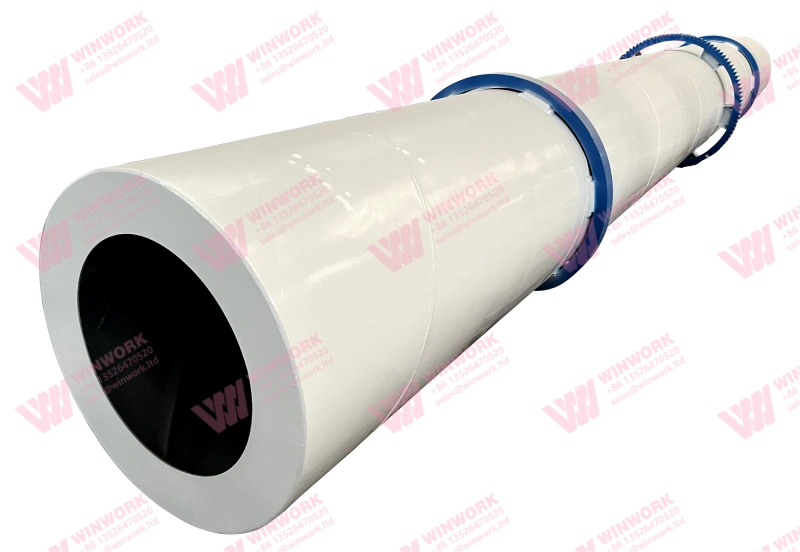
Why US Fertilizer Plants Need a Reliable Rotary Drum Dryer
Fertilizer production does not end when granules come out of the granulator. Freshly produced fertilizer often contains excess moisture, which can affect particle strength, storage conditions, screening efficiency, and final product quality. For fertilizer manufacturers in the United States, choosing a reliable drying system is an important step in maintaining consistent production.
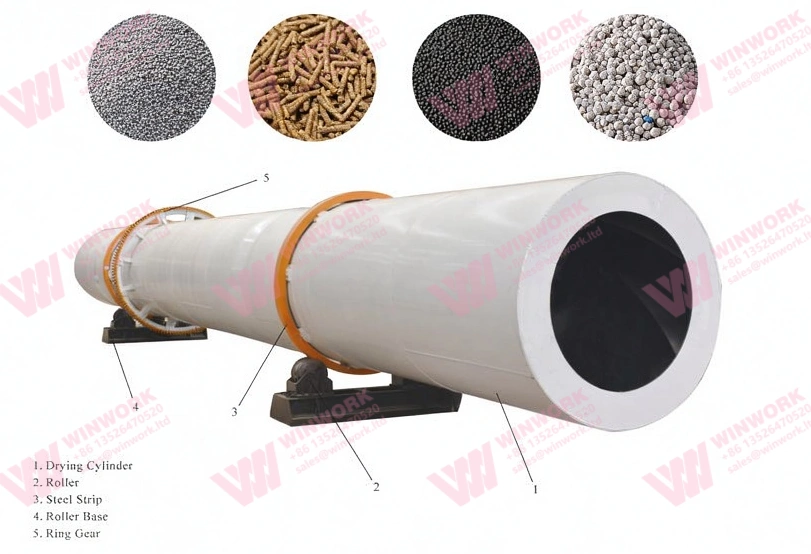
A rotary drum dryer in US fertilizer plants can help reduce excess moisture from organic fertilizer, compound fertilizer, and NPK fertilizer granules. Its rotating cylindrical drum continuously moves the material through a controlled hot-air environment. Internal lifting flights raise and distribute the granules, allowing more material surface to come into contact with the drying air.
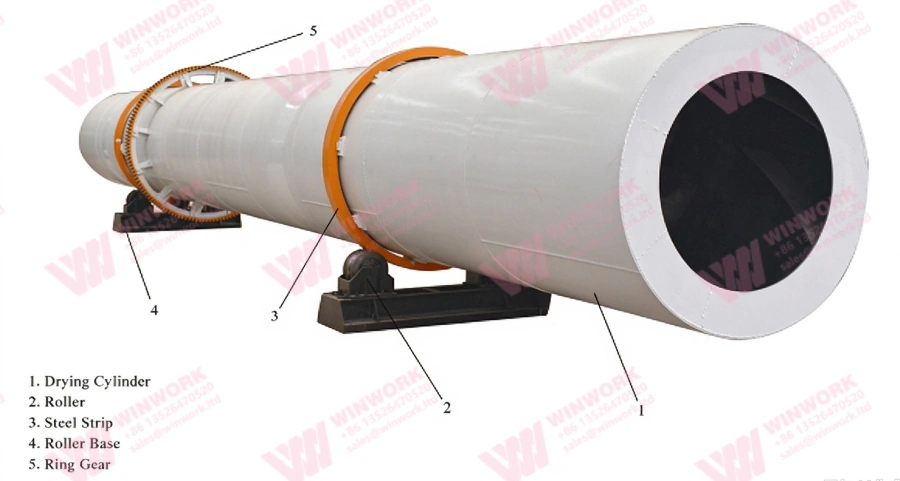
This continuous working process makes a rotary drum dryer in US fertilizer factories suitable for plants that need stable processing capacity. Compared with small batch drying equipment, an industrial rotary drum dryer can be integrated into a continuous production line, making it easier to coordinate granulation, drying, cooling, screening, and packaging.
For example, an organic fertilizer manufacturer processing poultry manure compost may need to reduce the moisture content of freshly granulated products before cooling and screening. An NPK fertilizer producer may have a similar requirement because granules with excessive moisture can stick together during handling and storage. In both cases, the drying system must be selected according to the incoming moisture level, material characteristics, required output, and target final moisture content.
American fertilizer plants also operate under different production conditions. Some facilities have large continuous production lines, while others process several fertilizer formulations in smaller batches. Their available energy sources, factory layouts, and local environmental requirements may also differ.
Therefore, purchasing a rotary drum dryer in US projects should involve more than comparing drum diameter, length, and advertised capacity. Buyers need to consider how the machine will work with the existing production process and the technical conditions of the actual facility.
A suitable drying system should also include the necessary auxiliary equipment. Depending on the project, this may include a hot-air furnace, feeding conveyors, induced draft fans, dust collectors, and downstream cooling equipment. These components work together to maintain stable material movement, airflow, and moisture removal.
The purpose is not simply to make fertilizer dry. It is to create a drying stage that supports the entire production line without introducing unnecessary bottlenecks.
Electrical and Energy Requirements for Rotary Drum Dryers in the US
Electrical compatibility is one of the first issues American buyers should confirm when purchasing a rotary drum dryer in US industrial facilities. A rotary drum dryer in US factories must be configured according to the electrical supply available at the installation site.
In American industrial facilities, 480V three-phase 60Hz power is a common arrangement. However, some factories use 240V or 208V three-phase systems, while the actual supply can vary according to the facility and equipment area.
The electrical configuration should cover the complete drying system, not only the main drum motor. Feeding conveyors, induced draft fans, hot-air furnace blowers, cooling equipment, and other auxiliary motors also need compatible electrical specifications.
Before manufacturing a rotary drum dryer in US projects, the buyer should provide the supplier with the available voltage, phase, frequency, motor power requirements, and preferred starting or speed-control arrangements. This information allows the manufacturer to select suitable motors, electrical components, and control equipment.
For a rotary drum dryer in US projects, the electrical control cabinet also deserves attention. Depending on the project specification, the cabinet may need appropriate circuit protection, overload protection, emergency stop arrangements, grounding provisions, and variable-frequency drives. These features help operators control equipment speed, coordinate auxiliary machines, and respond to abnormal operating conditions.
American buyers may also need to consider the National Electrical Code (NEC), NFPA 79 for industrial machinery electrical systems, and UL 508A when specifying industrial control panels. The applicable edition and acceptance requirements should be confirmed with the local Authority Having Jurisdiction (AHJ) and the project’s electrical contractor.
Energy selection is another important consideration. A fertilizer drying system needs a stable heat source, and the suitable option depends on local fuel availability, operating costs, and production requirements.
Natural gas is an option for facilities with a suitable gas supply. Propane may be considered where pipeline gas is unavailable or where the facility already uses LPG. Diesel can also be used in certain configurations, depending on burner design and project requirements. Biomass-based heating may be considered for suitable projects with an available and properly prepared biomass fuel supply.
When selecting a rotary drum dryer in US facilities, buyers should compare more than the purchase price of the heating system. They should also evaluate burner capacity, fuel consumption, temperature control, maintenance requirements, and the availability of fuel throughout the year.
The required heat input depends heavily on how much water must be removed. For example, a plant processing 10 metric tons of wet fertilizer per hour, with moisture reduced from 15% to 5% on a wet basis, needs to evaporate approximately 1.05 metric tons of water per hour. This is a useful preliminary calculation, but actual thermal demand also depends on material temperature, exhaust conditions, heat losses, and dryer efficiency.
A properly configured rotary drum dryer in US projects should therefore be selected through a combination of material analysis, heat-load calculation, and electrical review rather than relying on a standard machine specification.
Environmental Protection and Industrial Safety Requirements
Environmental protection is an important part of planning a rotary drum dryer in US fertilizer production projects. During drying, fine fertilizer particles may become airborne, while exhaust air carries moisture and potentially other process-related emissions. If the material contains organic components, odor may also need to be evaluated.
For this reason, a rotary drum dryer in US fertilizer plants should be planned together with an appropriate dust collection and exhaust system.
A cyclone dust collector can remove a portion of the larger particles from the exhaust stream. A baghouse filter can provide additional collection of finer dust, depending on the dust characteristics and system design. For a rotary drum dryer in US fertilizer plants, the two devices may be combined when the process requires multiple stages of dust separation.
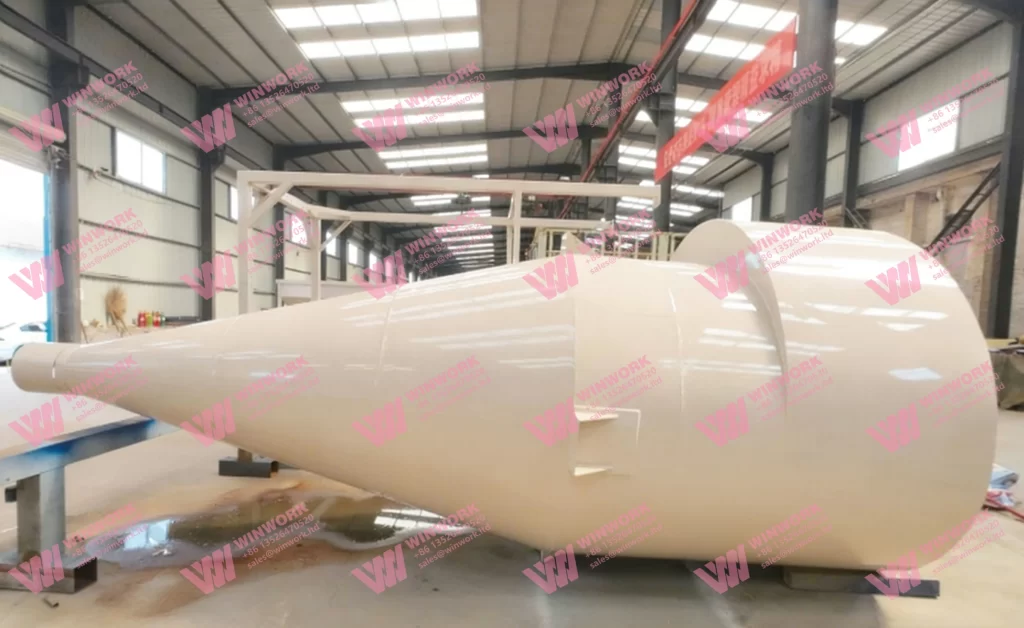
Using Dust Collector to Handle Workshop Dust
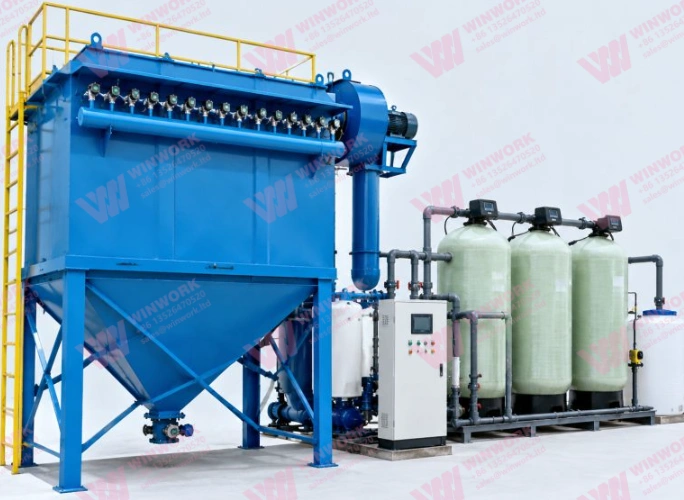
The induced draft fan is also important because it helps maintain the airflow required by the drying process and dust collection system. Its capacity should be matched to the dryer, ductwork, collector resistance, and operating conditions. Poorly balanced airflow can affect drying performance and dust-control efficiency.
Environmental permitting should be considered before equipment installation. Under the Clean Air Act framework, operating permits may be administered by state or local authorities, and the applicable requirements depend on the facility’s emissions and regulatory classification. Some projects may need preconstruction or other air permits before installation or operation.
This means that an American buyer should not rely on a general statement that a dryer is environmentally compliant everywhere in the country. Instead, the project should identify the state, county, air district, fuel type, process materials, and expected emissions. The dust collector, exhaust arrangement, and combustion system can then be selected with the applicable permit conditions in mind.
A rotary drum dryer in US projects should also be evaluated for workplace safety. Fertilizer dust does not all have the same combustion characteristics. Organic materials, such as certain compost components or agricultural residues, may present combustible dust risks when their fine particles become suspended in air. The actual hazard depends on material composition and dust properties.
Before deciding whether explosion venting, suppression, isolation, or other protective measures are necessary, the facility should conduct an appropriate dust hazard assessment. Grounding and bonding, housekeeping, temperature monitoring, and suitable dust collection arrangements may also be part of the risk-control plan.
For heated drying systems, operators should pay attention to hot-air temperature, abnormal temperature increases, burner operation, and material accumulation. Emergency shutdown arrangements and maintenance access should be considered during system design.
For American fertilizer producers, environmental and safety planning should not be treated as optional accessories added after the dryer has been manufactured. They should be considered when selecting the complete drying system, because the dryer, furnace, fans, dust collectors, and exhaust ducts operate as one connected process.
How to Choose a Rotary Drum Dryer in US for Different Industrial Conditions
A rotary drum dryer in US fertilizer facilities must be adapted to a wide range of climate conditions and industrial environments. A fertilizer plant in the Midwest may face very different installation conditions from a facility in Texas or a coastal state. These differences should be considered when planning a rotary drum dryer in US projects.
In colder parts of the Midwest and northern states, winter temperatures may affect outdoor equipment, exposed pipelines, electrical components, and maintenance operations. Depending on the installation, insulation may be needed for hot-air ducts and other heat-related components. Freeze protection may also be required for certain auxiliary systems.
In hotter southern states, high ambient temperatures can increase the thermal load on electrical enclosures and motors. Electrical cabinets may require suitable ventilation or cooling, while motors should be selected according to their installation environment and operating duty.
Coastal facilities may need additional attention to corrosion protection because humid and salt-laden air can accelerate deterioration of exposed metal surfaces. Appropriate coating systems, material selection, enclosure protection, and maintenance plans can help address these conditions.
However, climate is only one part of selecting a rotary drum dryer in US fertilizer projects, as material properties and production capacity are equally important.
When selecting a rotary drum dryer in US fertilizer projects, buyers should first identify the type of fertilizer being processed. Organic fertilizer, compound fertilizer, and NPK granules can have different moisture levels, particle sizes, bulk densities, and heat sensitivities. These differences influence the drum design, heat source, airflow, and residence time.
The next step is to determine the required processing capacity. Buyers should distinguish between the mass of wet material entering the dryer and the mass of finished dried product leaving it. They should also confirm whether the supplier’s capacity rating refers to wet feed or dried output.
For example, a factory producing 10 metric tons of wet granules per hour does not necessarily need a dryer rated at 10 metric tons of finished dry product per hour. The water removed during drying changes the final mass, so the supplier needs accurate feed and moisture information before recommending a model.
Initial moisture and target final moisture are particularly important. If a material enters the dryer at 18% moisture and must leave at 5%, the required evaporation load will be different from a material entering at 10%. Particle size, stickiness, heat sensitivity, and the required drying time also affect the final equipment configuration.
A rotary drum dryer in US installations should also be checked against the rest of the production line. Its feeding rate should match the granulator and upstream conveyors. Its discharge rate should be compatible with the cooler, screening machine, and packaging system. If one machine has a much lower capacity than the others, material may accumulate and interrupt production.
Before confirming an order, you should provide the supplier with the following information: material type, hourly processing capacity, initial moisture, target final moisture, available fuel, electrical supply, installation dimensions, and local environmental requirements.
These details help the manufacturer assess the actual drying load and recommend a machine that fits the production process rather than simply offering the largest available model.
International Certifications and Compliance Considerations for US Fertilizer Plants
When purchasing a rotary drum dryer in US projects from an overseas manufacturer, American buyers naturally want to understand how the supplier manages product quality, manufacturing consistency, and equipment safety. International certifications and third-party inspection records can help provide useful information, but each document must be understood according to its actual scope.
For example, ISO 9001 relates to a company’s quality management system. It demonstrates that the organization has established procedures for managing quality-related processes.
CE marking relates to applicable European Union product legislation. It indicates that the product is declared to meet the relevant requirements within the scope of the applicable legislation.
SGS and TÜV Rheinland are internationally recognized testing, inspection, and certification organizations. Their involvement should be described according to the actual certificate, inspection report, or testing service provided..
For American customers evaluating a rotary drum dryer in US projects, the next question is whether the machine can be configured and documented for the intended installation.
Depending on the equipment and project scope, buyers may need to review the NEC, NFPA 79, UL 508A, and relevant OSHA workplace safety requirements. Where a product requires third-party electrical safety certification or field evaluation, an appropriate Nationally Recognized Testing Laboratory (NRTL) may need to be involved. The exact requirement depends on the product category, installation, and local acceptance process.
This is why international manufacturing experience and American project adaptation should be presented as two related but separate strengths. A supplier may have a quality management system and applicable European product documentation while still needing to configure electrical components, control panels, and safety arrangements for a specific US installation.
At WINWORK, our equipment solutions can be discussed according to the customer’s material, production capacity, factory layout, and project requirements. The final electrical configuration, heating arrangement, dust collection system, and supporting components should be confirmed before manufacturing.
For customers planning a rotary drum dryer in US fertilizer facilities, we recommend reviewing the equipment specification, motor list, control cabinet details, process flow diagram, foundation requirements, and auxiliary equipment list before shipment. These documents make it easier for the buyer’s local electrical contractor, installation team, and project engineer to review the proposed configuration.
A reliable purchasing decision for a rotary drum dryer in US projects should be based on verifiable certificates, clear technical documentation, and project-specific engineering confirmation rather than certification logos alone.
Why Choose WINWORK for Your Rotary Drum Dryer Project in the US?
Selecting a supplier for a rotary drum dryer in US fertilizer projects is not only about finding a manufacturer that can produce a large rotating drum. American fertilizer producers also need a supplier who understands the relationship between drying capacity, material moisture, heating systems, dust collection, and the rest of the production line.
WINWORK focuses on fertilizer machinery and complete production solutions, including customized rotary drum dryer in US project configurations. Our equipment range includes rotary drum dryers, granulators, mixers, crushers, screening machines, conveying equipment, and related production line components.
For a rotary drum dryer in US projects, the first step is to understand the customer’s production conditions. We need to know what material will be dried, how much material enters the dryer every hour, what the initial moisture content is, and what final moisture level is required.
Based on this information, the drying capacity and supporting equipment can be evaluated. The customer can also discuss the available fuel, factory electrical supply, installation space, and environmental control requirements. This helps avoid selecting a machine based only on its nominal capacity.
You can learn more about WINWORK’s rotary drum dryer and its working principle, structure, applications, and supporting equipment. The final model and configuration should be confirmed according to the actual material and production conditions.
For American projects, electrical specifications and control arrangements can be discussed in advance. If the facility requires 480V three-phase 60Hz power, this information should be included in the technical specification before the motors and electrical components are selected. The same applies to dust collection, fuel selection, exhaust treatment, and other project-specific requirements.
We can also help customers plan the connection between the dryer and other fertilizer production equipment. A complete process may include granulation, drying, cooling, screening, and packaging. Matching the capacity of each stage helps maintain a more coordinated production flow.
Before placing an order, customers should confirm the applicable local electrical and environmental requirements with their project engineer or relevant authorities. WINWORK can then use the confirmed technical requirements as the basis for equipment configuration and manufacturing discussions.
If you are planning a fertilizer drying project in the United States, send us your material type, required hourly capacity, initial moisture, target moisture, available power supply, and preferred heating fuel. Our team can use these details to discuss a suitable rotary drum dryer and supporting equipment configuration for your project.
The goal is not simply to ship a machine overseas. It is to provide a fertilizer drying solution that fits the actual operating conditions of your plant and can be properly reviewed, installed, and integrated into your production process.
Get A Quote