

Introduction
Drying is an essential stage in many industrial production processes. Agricultural waste, fertilizer granules, mineral materials, biomass, and chemical products often contain moisture that must be reduced before they can be stored, transported, or processed further. Excessive moisture can affect material flow, granulation quality, storage stability, and the performance of subsequent production equipment.
Among the different industrial drying methods, direct heating is widely used because it allows hot gases to transfer heat directly to the material. This makes the drying process suitable for many bulk materials that can tolerate contact with hot air or combustion gases.
A direct heat dryer uses hot air or combustion gases as the heating medium. These gases enter the drying chamber and come into contact with the wet material, transferring heat while carrying away evaporated moisture. Rotary drum structures are commonly used in industrial applications because they allow continuous material movement and provide sufficient space for the drying process.
From fertilizer manufacturing to biomass processing and mineral production, direct heating plays an important role in reducing material moisture and preparing products for the next production stage.
This article explains how a direct heat dryer works, what materials are suitable for this drying method, and how it is used in different industrial production lines.
What Is a Direct Heat Dryer?
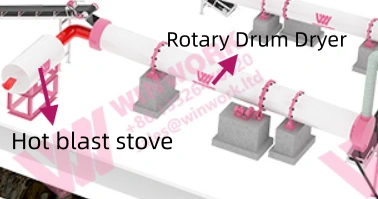
A direct heat dryer is an industrial drying machine in which hot air or combustion gases come into direct contact with the material being processed. Heat is transferred mainly through convection, allowing moisture on the material surface and inside its particles to evaporate.
Unlike indirect heating systems, which transfer heat through a metal wall or another heated surface, direct heating uses the hot gas itself to deliver thermal energy to the material.
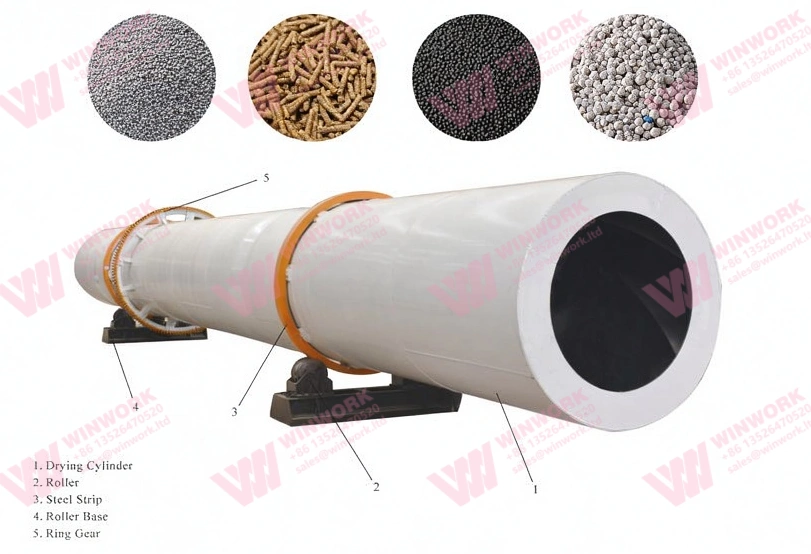
A typical rotary direct-heating system consists of several main components:
- Rotary drum: Provides the space where materials move and receive heat.
- Heating system: Supplies the hot air or combustion gases required for drying.
- Feeding device: Delivers wet materials into the drying chamber.
- Internal lifting plates: Lift and distribute materials as the drum rotates.
- Discharge section: Releases dried materials for subsequent processing.
- Dust collection system: Captures dust carried by the exhaust gas.
- Driving and supporting system: Keeps the drum rotating smoothly.
The structure can vary according to the material, required capacity, and production process.
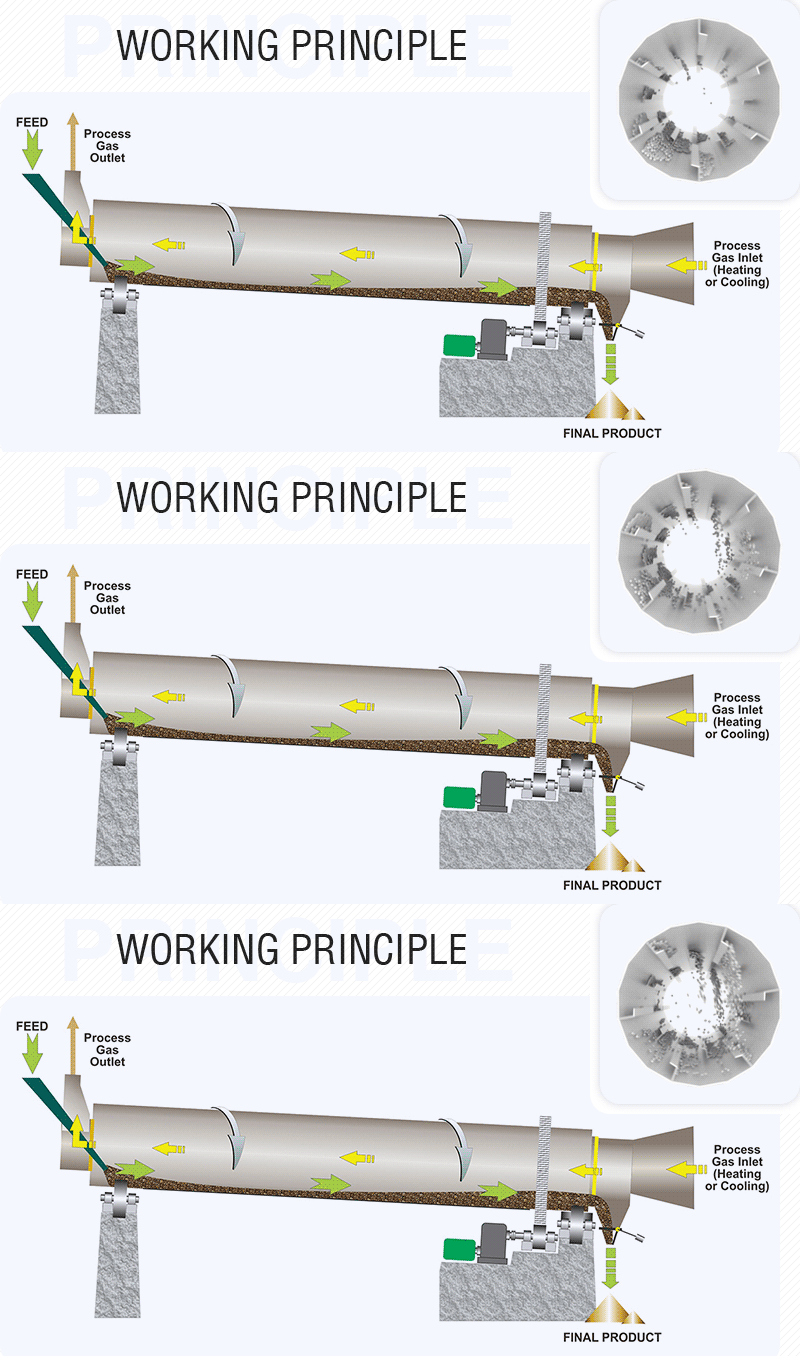
In a rotary drum design, wet material enters one end of the drum while hot gases flow through the drying chamber. As the drum rotates, internal lifting plates raise the material and allow it to fall through the hot gas stream. This repeated movement increases contact between the material and the heating medium.
A direct heat dryer is particularly useful for materials that can tolerate direct contact with hot gases and require continuous moisture removal. It is widely used for fertilizer granules, sand, minerals, biomass, and other industrial bulk materials.
For manufacturers looking for rotary drying equipment, the WINWORK rotary drum dryer page provides further information about rotary drying machinery and its applications in industrial fertilizer production.
How Does a Direct Heat Dryer Work?
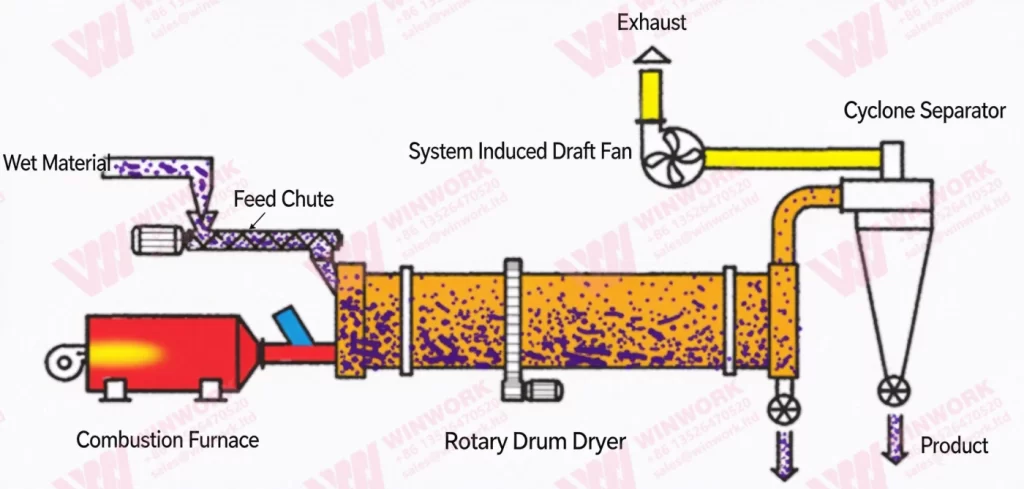
The working principle of a direct heat dryer is based on direct heat exchange between hot gases and wet materials. The heating medium enters the drying chamber and transfers energy to the material while removing the water vapor generated during drying.
Although different machines have different structures, the general process involves the following stages.
Material Feeding
Wet material is delivered into the drying drum through a feeding system. Depending on the production line, the feeding equipment may include a belt conveyor, screw conveyor, hopper, or other material-handling device.
The material should enter the drum at a relatively stable rate. If too much material is fed at once, the material layer may become too thick, preventing hot gases from contacting all particles evenly. If the feeding rate fluctuates significantly, the final moisture content may also become inconsistent.
For example, wet fertilizer granules need to be distributed evenly inside the drum. Excessive accumulation can cause some granules to remain insufficiently dried while others receive more heat.
Hot Gas Generation and Heat Transfer
The heating system generates hot air or combustion gases and directs them into the drying chamber.
As these gases pass through the drum, they contact the wet material and transfer heat through convection. The material absorbs thermal energy, increasing the temperature of its surface and gradually allowing internal moisture to move toward the surface.
The hot gas temperature and airflow rate influence the drying performance. Higher temperatures can increase the rate of moisture evaporation, but the operating conditions must remain within the material’s allowable temperature range.
The heating source may vary according to the industrial installation. Common arrangements include direct-fired burners and hot-air generators. The selected system needs to match the material characteristics, fuel availability, and production requirements.
Material Lifting and Movement
In a rotary drum dryer, the drum rotates continuously during operation. Internal lifting plates raise the material and distribute it through the hot gas stream.
As the material falls, it exposes new surfaces to the hot gases. This improves contact between the material and the heating medium and helps maintain continuous drying.
The drum’s rotation speed, internal lifting structure, inclination, and material feeding rate influence how long the material remains inside the dryer.
If the material moves through the drum too quickly, it may not reach the required moisture level. If it remains inside for too long, unnecessary heating may increase energy consumption or affect product properties.
Moisture Evaporation and Exhaust Gas Removal
As the material receives heat, moisture evaporates from its surface and gradually moves out from the internal structure of the particles.
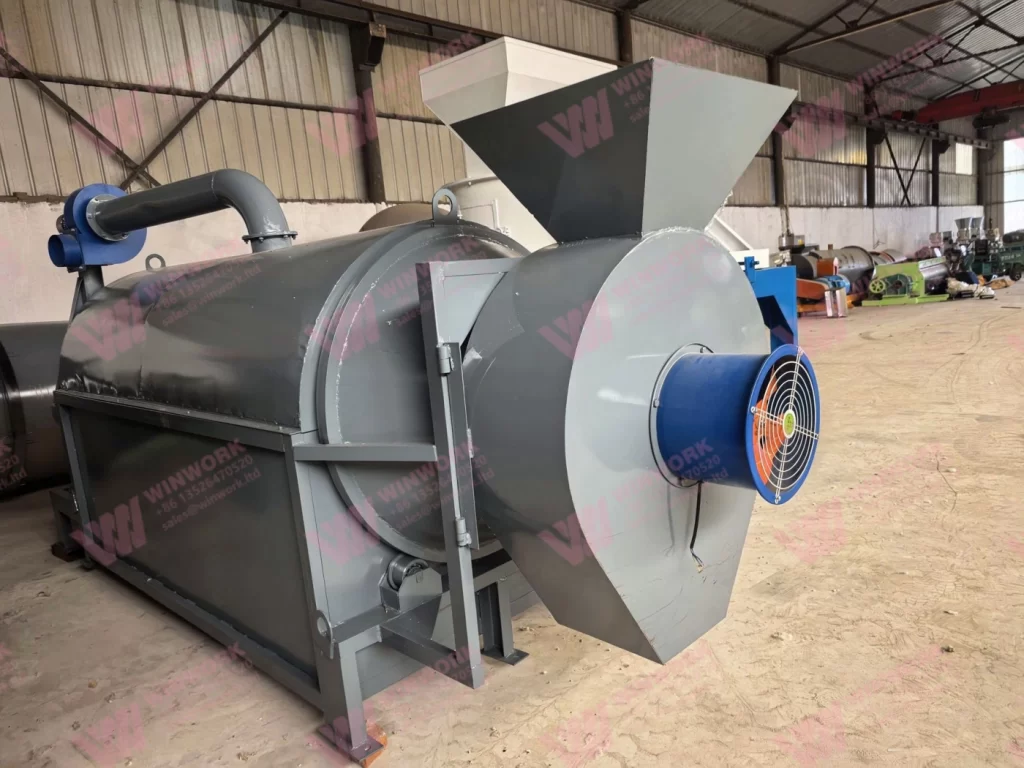
The hot gas stream carries the resulting water vapor toward the exhaust outlet. Depending on the material, the exhaust system may also need to remove dust and fine particles.
A dust collection system is particularly important when processing powdery materials or small granules. Cyclones, bag filters, or other suitable dust-control equipment may be installed to capture particles before the exhaust gas is released.
The final moisture content depends on the initial moisture level, material characteristics, gas temperature, airflow, residence time, and exhaust conditions.
Dried Material Discharge
After passing through the drying chamber, the material reaches the discharge section and leaves the drum.
Depending on the production process, the dried material may then enter a cooling machine, screening equipment, crushing system, mixer, or packaging machine.
For fertilizer production, for example, dried granules commonly need cooling before screening and packaging. Maintaining a stable drying process helps ensure that the following production stages receive material with more consistent moisture content.
What Materials Are Suitable for a Direct Heat Dryer?
A direct heat dryer is widely used for bulk materials that can tolerate direct contact with hot air or combustion gases. Its applications cover several industries, particularly where continuous drying and relatively efficient heat transfer are required.
However, suitability is not determined by industry classification alone. The material’s thermal stability, particle size, moisture content, chemical properties, and product quality requirements must also be considered.
Organic Fertilizer Materials
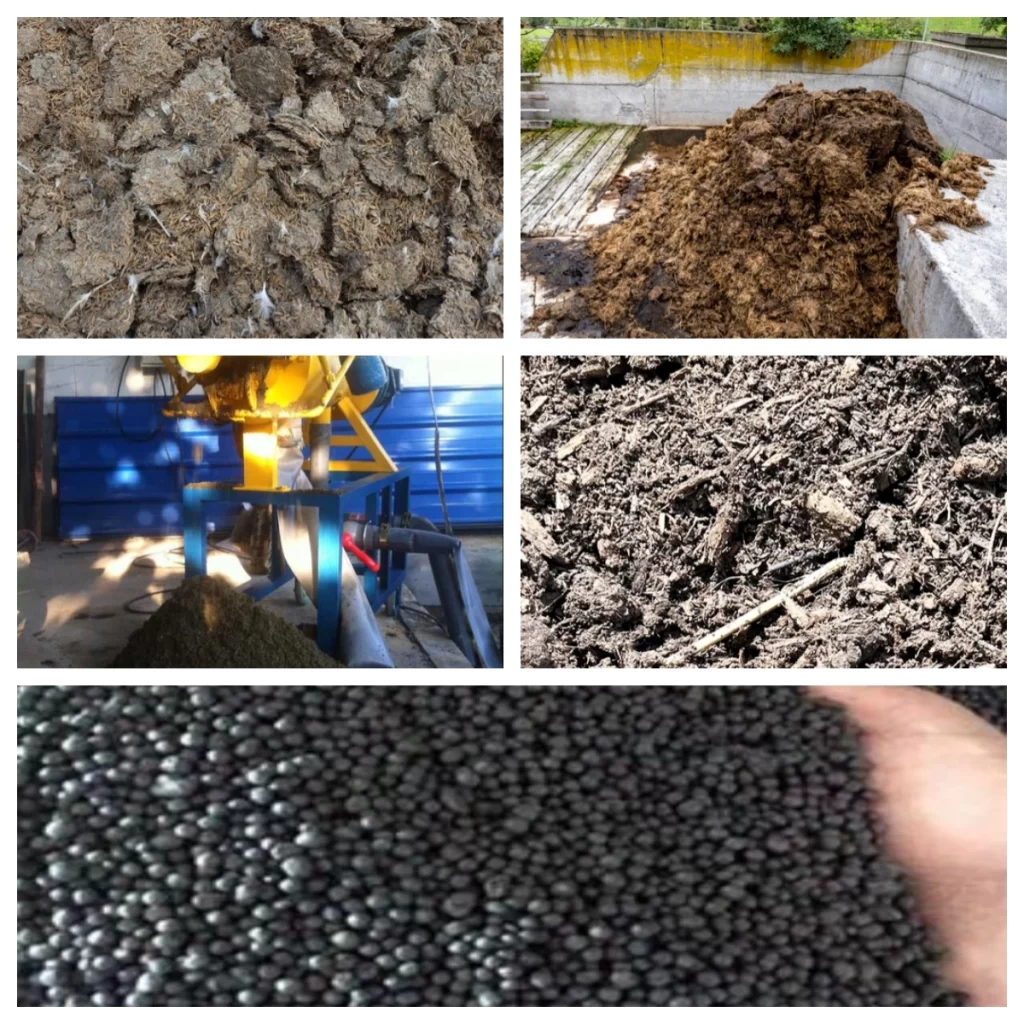
Organic fertilizer production uses various raw materials, including livestock manure, composted organic matter, crop residues, straw, and fermented agricultural waste.
These materials often contain considerable moisture after composting or fermentation. Before entering granulation or subsequent processing stages, some materials need additional drying to reach a suitable moisture level.
A direct heat dryer can be used for organic fertilizer materials that tolerate contact with hot drying gases. It is also commonly used to dry organic fertilizer granules after granulation.
For example, manure-based organic fertilizer granules may retain moisture after the granulation process. A rotary drum dryer helps remove excess water and prepares the granules for cooling, screening, and packaging.
The drying conditions need to be controlled according to the material’s organic composition and temperature tolerance. Excessive heating may affect certain organic components or cause changes in the physical properties of the granules.
NPK and Compound Fertilizer Granules

NPK fertilizer and compound fertilizer production are important applications of direct rotary drying.
After granulation, fertilizer particles usually contain moisture that needs to be reduced before cooling and screening. If the moisture content remains too high, granules may stick together, become difficult to screen, or develop storage problems.
A direct heat dryer uses hot gas to contact the fertilizer granules and remove excess moisture. As the drum rotates, the granules move through the drying chamber and repeatedly contact the hot gas stream.
The dried granules can then enter a cooling system before being screened into different particle-size ranges.
For compound fertilizer production lines, drying is closely connected with granulation, cooling, screening, and recycling. Stable drying helps maintain the physical condition of the finished granules and supports continuous production.
Biomass and Agricultural Waste

Biomass materials include sawdust, rice husks, straw, wood chips, plant fibers, and other agricultural residues.
Many of these materials contain high moisture levels when collected or processed. Drying is often necessary before they can be used for pellet production, briquetting, combustion, or other industrial applications.
A direct heat dryer can process many biomass materials because hot gases transfer heat directly to the material. The rotating drum also helps move and distribute the material throughout the drying chamber.
For example, sawdust used in biomass pellet production needs an appropriate moisture level to support stable pellet formation. Excessive moisture can affect pellet quality, while material that is too dry may also create processing difficulties.
The required drying conditions vary according to biomass type, particle size, initial moisture, and the requirements of the downstream equipment.
Sand and Mineral Materials
Sand, mineral powders, and other inorganic bulk materials are commonly processed using direct-heating equipment.
In construction material production, sand may need to be dried before mixing, storage, or further processing. In mineral processing, certain ores and mineral products also require moisture reduction before entering subsequent equipment.
A direct heat dryer transfers heat through contact between hot gases and the material. This allows continuous processing and is suitable for many mineral materials that can tolerate the required drying temperature.
For fine powders, however, airflow needs to be controlled carefully because small particles can become entrained in the exhaust gas. Appropriate dust collection equipment is necessary to reduce material loss and maintain cleaner exhaust conditions.
Other Industrial Bulk Materials
Direct-heating rotary dryers can also be used for selected industrial materials such as certain chemical raw materials, clay, and other solid products.
The key requirement is that the material must be compatible with direct contact with the heating medium. Materials that may react with combustion gases, require strict separation from the heating atmosphere, or have particularly sensitive thermal properties may need another drying method.
For suitable bulk materials, direct heating offers a practical way to achieve continuous moisture removal within an industrial production line.
Direct Heat vs. Indirect Heat Drying
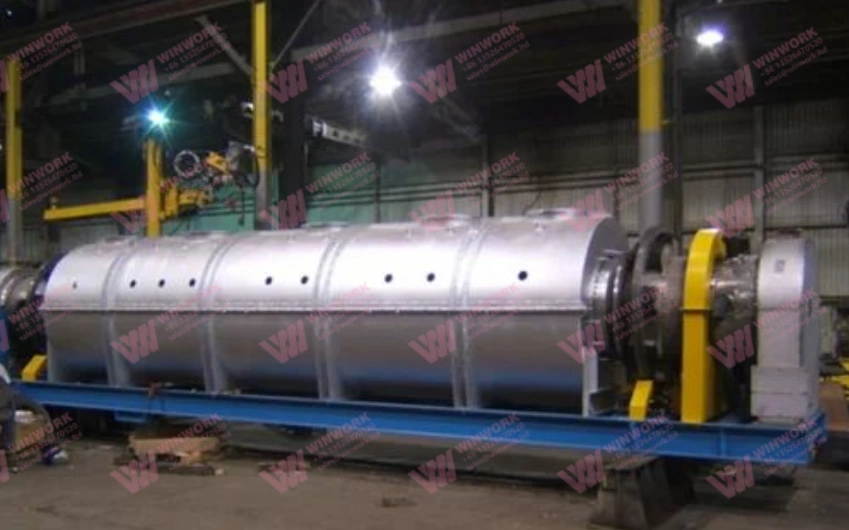
Direct and indirect heating are two common methods used in industrial drying. Their main difference is how heat is transferred to the material.
In a direct heat dryer, hot air or combustion gases enter the drying chamber and come into direct contact with the material. Heat is transferred mainly through convection, and the gas stream also carries away evaporated moisture.
In an indirect heat dryer, the heating medium is separated from the product. Heat passes through a drum wall, heating tubes, or another transfer surface before reaching the material.
The main differences are summarized below:
| Comparison | Direct Heating | Indirect Heating |
|---|---|---|
| Heat transfer | Direct contact with hot gases | Through heated surfaces |
| Gas and material contact | Hot gases contact the material | Heating medium is separated |
| Typical applications | Fertilizer granules, sand, biomass, and minerals | Selected chemicals, specialty solids, and materials requiring gas separation |
| Exhaust handling | Requires management of moisture and dust in exhaust gas | Requires suitable vapor removal and treatment |
| Process characteristics | Strong convective heat transfer | More separation between product and heating medium |
Neither method is suitable for every material. A direct heat dryer is commonly used when the material can tolerate contact with hot gases and continuous drying is required.
Indirect heating is more appropriate when the product needs to remain separated from combustion gases or when the drying atmosphere has specific requirements.
Industrial Applications of Direct Heat Drying Technology
Direct heating is widely used across industrial sectors because it provides direct contact between the heating medium and the material. This allows hot gases to transfer heat while carrying moisture away from the drying chamber.
Fertilizer Production Lines
Fertilizer manufacturing is one of the important application areas for rotary drum drying.
In an organic fertilizer production line, materials may undergo composting, crushing, mixing, granulation, drying, cooling, screening, and packaging. The drying stage reduces excess moisture in the granules before they enter subsequent processing equipment.
In NPK and compound fertilizer production, the drying process also plays an important role after granulation. Stable moisture control helps reduce sticking and supports the production of uniform fertilizer particles.
A direct heat dryer can be integrated into these production processes to provide continuous drying between granulation and cooling.
Biomass Processing Plants
Biomass processing plants handle materials such as sawdust, wood chips, rice husks, and agricultural residues.
Drying is often necessary before these materials enter pellet mills or other processing equipment. By reducing excess moisture, a direct heat dryer helps prepare biomass for further processing.
The drying system can operate as part of a continuous production line, with conveyors feeding wet material into the drum and transferring dried material to the next machine.
Construction and Mineral Processing
Construction and mineral industries use rotary dryers to process sand, aggregates, and selected mineral products.
These materials may need to be dried before entering mixing plants, storage systems, or other processing equipment. Direct contact with hot gases provides a practical way to transfer heat to suitable bulk materials.
In these applications, dust collection and exhaust management remain important because the drying gas can carry fine particles away from the drum.
Agricultural and Industrial By-Product Processing
Agricultural processing generates many by-products that can be reused in other industries. These include plant residues, fibers, husks, and other organic materials.
Some of these materials need moisture reduction before they can be used as fuel, feed ingredients, soil amendments, or industrial raw materials.
A direct heat dryer can help process suitable by-products continuously, making it easier to connect drying with other production stages.
Frequently Asked Questions
Q:How does a direct heat dryer remove moisture?
A:It uses hot air or combustion gases that come into direct contact with wet materials. Heat is transferred mainly through convection, causing moisture to evaporate. The exhaust gas then carries the water vapor out of the drying chamber.
Q:Which materials can be processed in a direct heat dryer?
A:Common applications include organic fertilizer granules, NPK fertilizer, compound fertilizer, biomass, sawdust, sand, and selected mineral materials. The material must be able to tolerate direct contact with the heating medium.
Q:Can a direct heat dryer be used for organic fertilizer?
A:Yes. Direct-heating rotary drum dryers are commonly used for organic fertilizer granules and other suitable organic fertilizer materials. The operating temperature and residence time should be controlled according to the material properties.
Q:Why is a rotary drum structure widely used for direct drying?
A:A rotating drum allows materials to move continuously through the drying chamber. Internal lifting plates distribute the material through the hot gas stream, increasing contact and supporting continuous industrial production.
Q:Does a direct heat dryer need a dust collection system?
A:In many applications, yes. Hot gases can carry fine particles out of the drying chamber, especially when processing powders or small granules. Cyclones, bag filters, and other dust collection equipment can help capture these particles.
Conclusion
A direct heat dryer is widely used in industrial production because it transfers heat through direct contact between hot gases and wet materials. Its working principle supports continuous moisture removal and makes it suitable for many bulk materials.
From organic fertilizer and NPK granules to biomass, sand, and mineral products, direct heating plays an important role in preparing materials for subsequent production stages.
Although indirect heating remains useful for materials that require separation from combustion gases, direct heating is a practical and widely applied drying method for materials that can tolerate direct gas contact.
Understanding the working principle and applications of a direct heat dryer helps manufacturers better understand its role in fertilizer production, biomass processing, construction materials, and other industrial drying processes.

Get A Quote