

A fertilizer manufacturer does not choose a dryer simply because one machine looks more advanced or has a lower purchase price. The real question is what kind of material needs to be dried, where the drying process fits into the production line, and what condition the material should reach before the next processing stage.
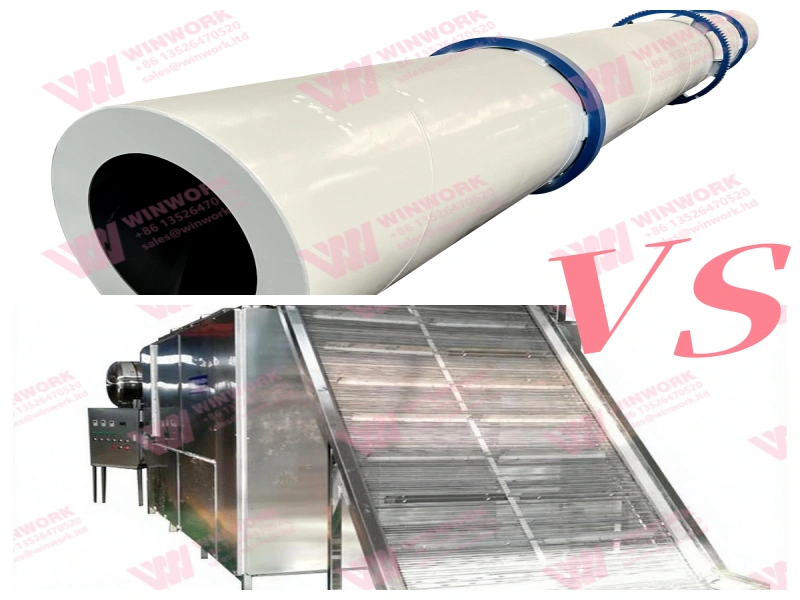
When comparing a rotary dryer vs belt dryer, it is important to understand their different material requirements and applications. The right choice in a rotary dryer vs belt dryer comparison depends on what enters the machine and what the next production step requires. A rotary drum dryer is commonly used to dry wet fertilizer granules after granulation, particularly in NPK and compound fertilizer production. A belt dryer, on the other hand, is frequently considered for drying poultry manure, livestock manure, digestate, and other organic materials before further processing.
This difference matters in a rotary dryer vs belt dryer comparison because drying freshly formed fertilizer granules is not the same as drying wet manure or fibrous organic waste. Each material requires a suitable feeding method, heat transfer process, and discharge condition. The materials behave differently, and the production requirements are not identical.
For manufacturers planning an organic fertilizer plant or an NPK production line, understanding the applications of a rotary dryer vs belt dryer can prevent unnecessary equipment investment. It also helps determine whether drying should take place before granulation, after granulation, or as part of a separate raw material treatment process.
Rotary Dryer vs Belt Dryer: Which Fertilizer Materials Are They Actually Used For?
In a rotary dryer vs belt dryer comparison, the first thing to consider is the material entering the dryer, because each dryer is suited to different material characteristics and production requirements.
A rotary dryer is commonly used for granular fertilizers that have just passed through a granulator. At this stage, the particles have already been formed, but they may still contain excess moisture from the addition of water, steam, or liquid binders during granulation.
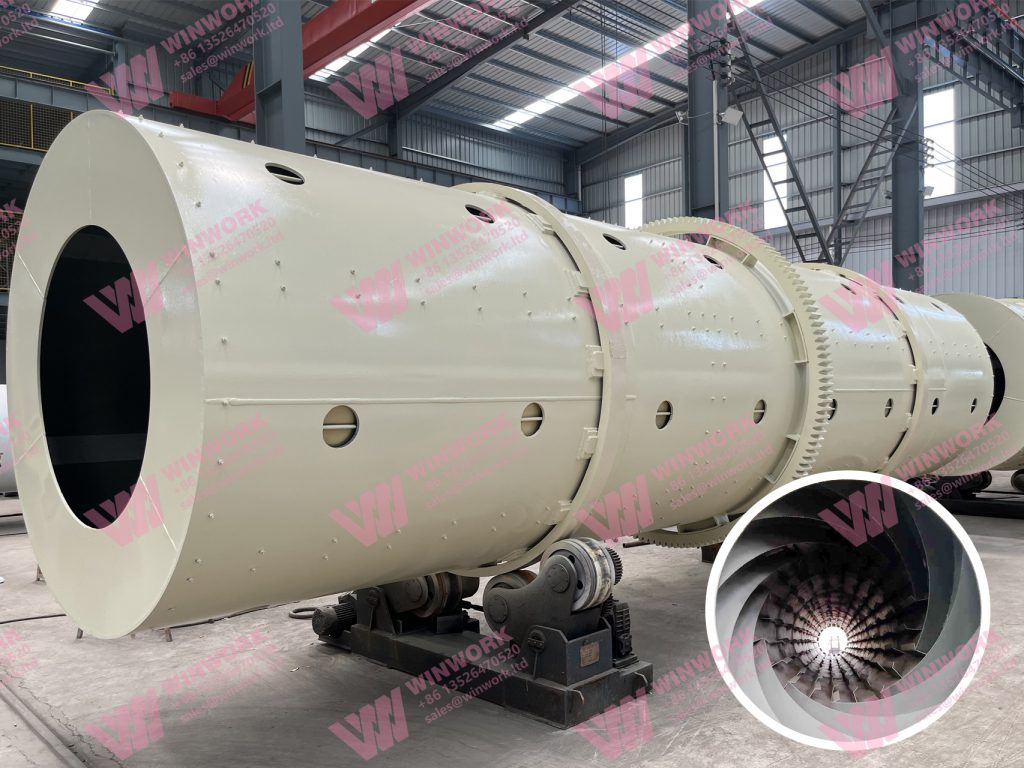
To better understand the rotary dryer vs belt dryer applications, consider an NPK fertilizer factory using a rotary drum granulation process. Urea, ammonium phosphate, potassium chloride, and other ingredients are first proportioned and mixed. The mixture then enters the granulator, where moisture and rolling action help form fertilizer granules.
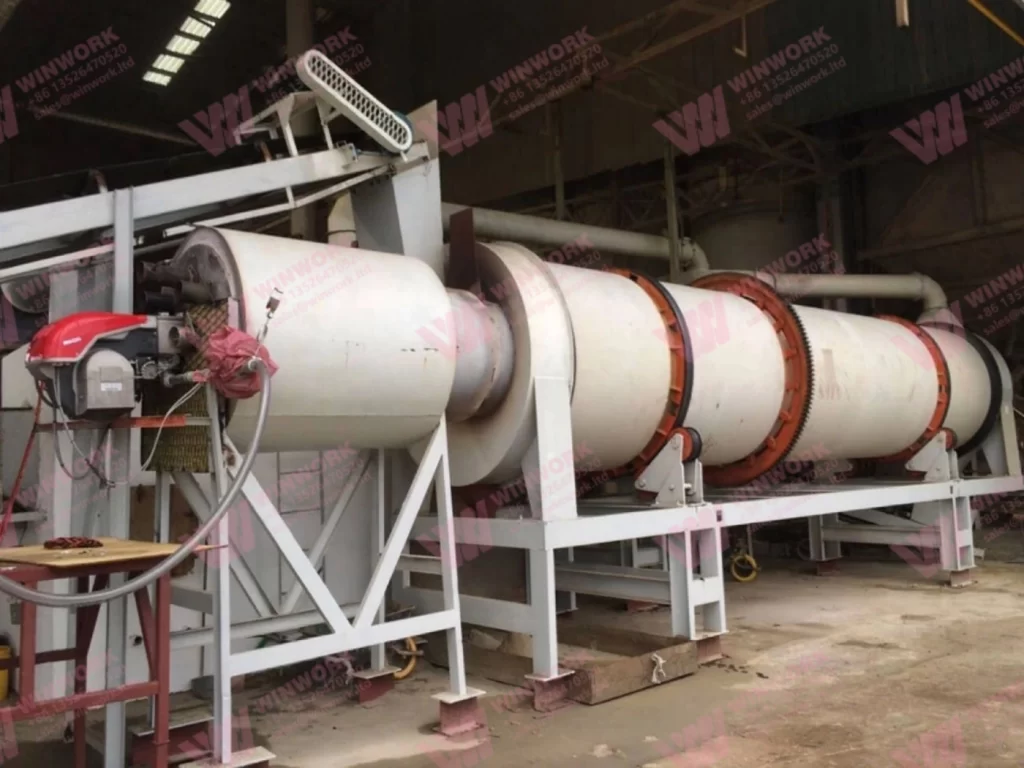
The newly formed granules are discharged from the granulator and transferred to a rotary dryer. Inside the rotating drum, lifting flights raise and release the particles, allowing them to contact the hot air repeatedly. After drying, the fertilizer normally moves to a rotary cooler, screening machine, and coating or packaging section.
In this application, the rotary dryer is not treating raw manure or loose organic waste. It is drying formed fertilizer granules so they can proceed to the finishing stages of production.
The same arrangement can be used in many wet-granulated compound fertilizer and organic fertilizer projects, provided the material properties and process conditions are suitable. The actual moisture level and drying temperature depend on the formulation and granulation method.
A belt dryer has a different role in a rotary dryer vs belt dryer comparison, particularly in organic fertilizer projects. One important example is poultry manure drying.
Fresh poultry manure contains a considerable amount of moisture. If a farm or fertilizer processor wants to convert this material into a more manageable solid product, it may first need to reduce the moisture content before storage, transportation, composting, or pellet production.
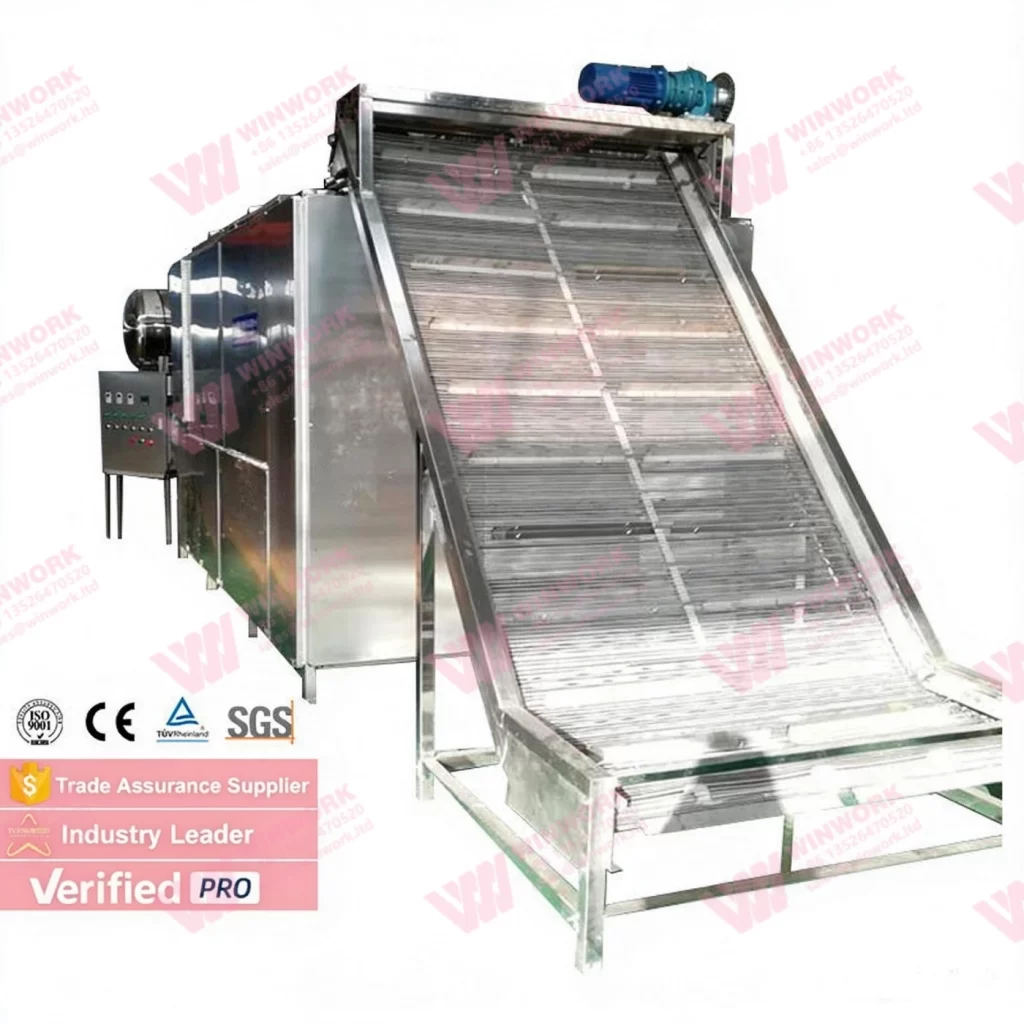
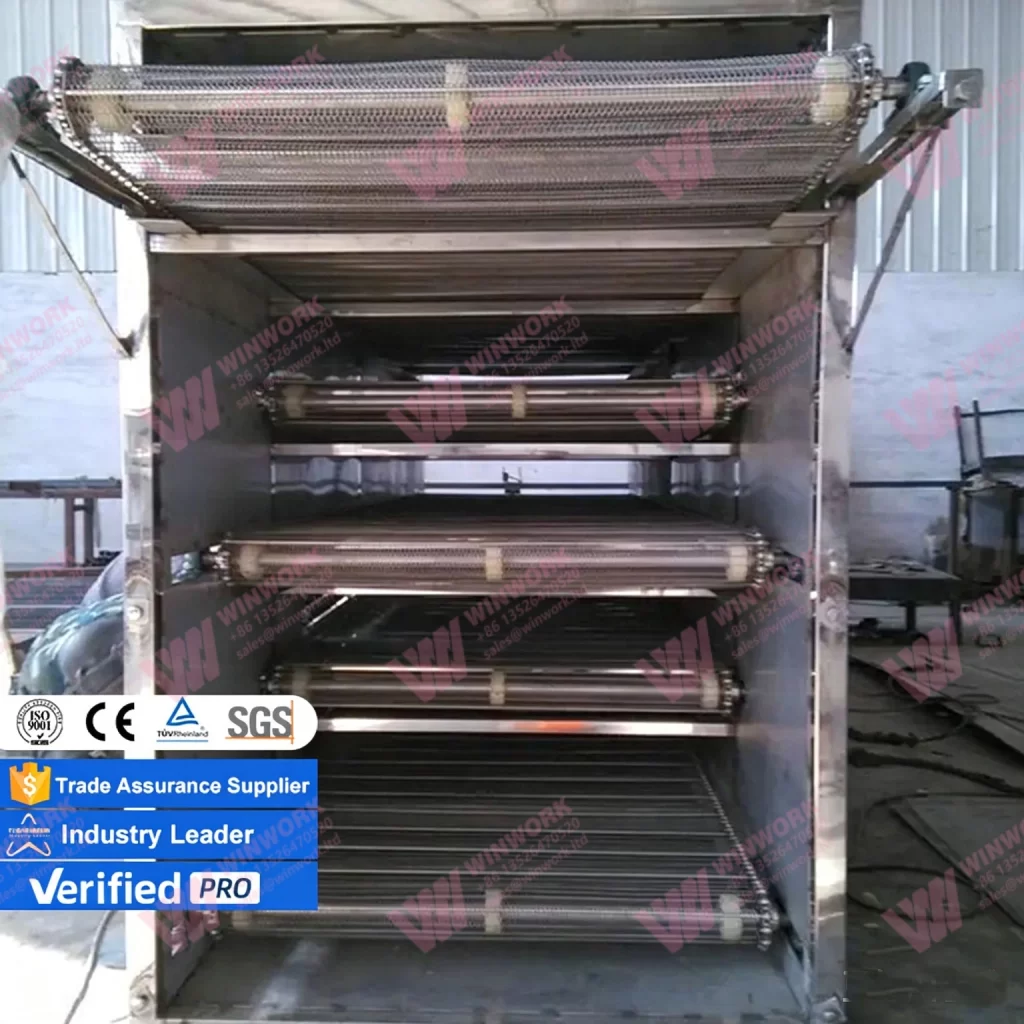
A belt dryer can receive the manure through a controlled feeding system. The material is spread across a moving perforated belt, and heated air passes through or across the material layer. As the belt moves through the drying chamber, moisture is gradually removed.
For instance, a poultry farm that collects manure every day may install a belt drying system near its manure collection area. The manure is fed onto the belt, dried continuously, and discharged as a lower-moisture solid. The dried material can then be transported to a fertilizer processing facility for further treatment, such as crushing, mixing, and pelletizing.
Another example is digestate from an anaerobic digestion plant. After solid-liquid separation, the solid fraction still contains moisture. A belt dryer can process this material using available waste heat from the biogas facility, depending on the system design. The dried digestate may then be used as an organic fertilizer raw material or processed further into pellets.
These are two practical examples of how a belt dryer can support fertilizer production. It is important to distinguish this application from drying finished fertilizer granules after granulation. In many conventional NPK production lines, the rotary drum dryer remains the more familiar choice for that particular stage.
Belt dryers can also process some coarse granular materials. Research on poultry litter drying describes belt systems handling relatively coarse particles, including material around 5–10 mm, when the belt openings and airflow are properly designed. However, particle size alone does not determine suitability. Moisture, shape, feeding stability, and the risk of material falling through the belt must also be considered.
Therefore, when evaluating a rotary dryer vs belt dryer, manufacturers should first identify whether they are drying organic raw materials, manure solids, or finished fertilizer granules. This single distinction can narrow down the equipment options considerably.
How Do the Two Dryers Affect Your Fertilizer Production Process?
In a rotary dryer vs belt dryer comparison, the more important question is how each machine affects the next production stage.
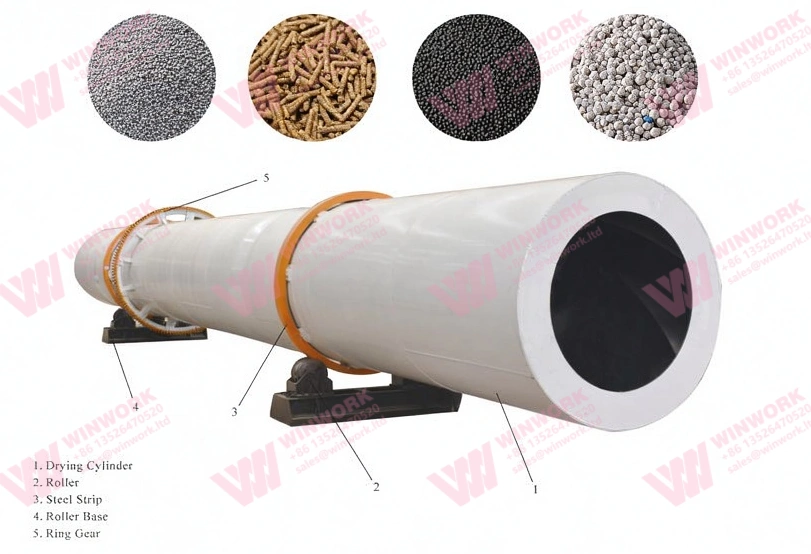
In a rotary dryer vs belt dryer comparison, a rotary dryer uses a rotating drum to move material through the drying chamber. Its internal lifting flights repeatedly raise and distribute the fertilizer particles. This helps expose different parts of the material to the drying air.
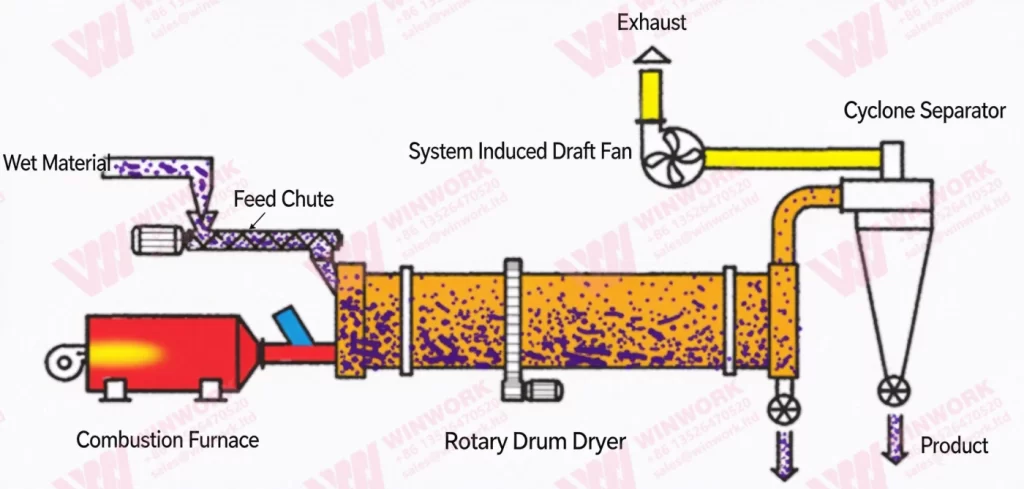
For wet NPK granules, this continuous movement can be useful because the particles need to move through the drum while exchanging heat and moisture with the air. The dryer can also be integrated with a hot air furnace, feeding conveyor, dust collection system, and downstream cooler.
However, granule strength must be considered. If newly formed fertilizer particles are too weak, excessive impact and abrasion may generate additional fines. The drum speed, lifting flight arrangement, feed rate, and residence time should therefore be matched to the actual product.
A belt dryer works differently. The material remains on the moving belt while hot air passes through or over the layer. This reduces the repeated tumbling associated with a rotary drum.
This arrangement is useful for materials such as separated poultry manure and digestate solids that can be distributed into a relatively uniform layer. Instead of relying on repeated lifting and dropping, the drying process depends on belt speed, material depth, airflow, and the temperature of the drying zones.
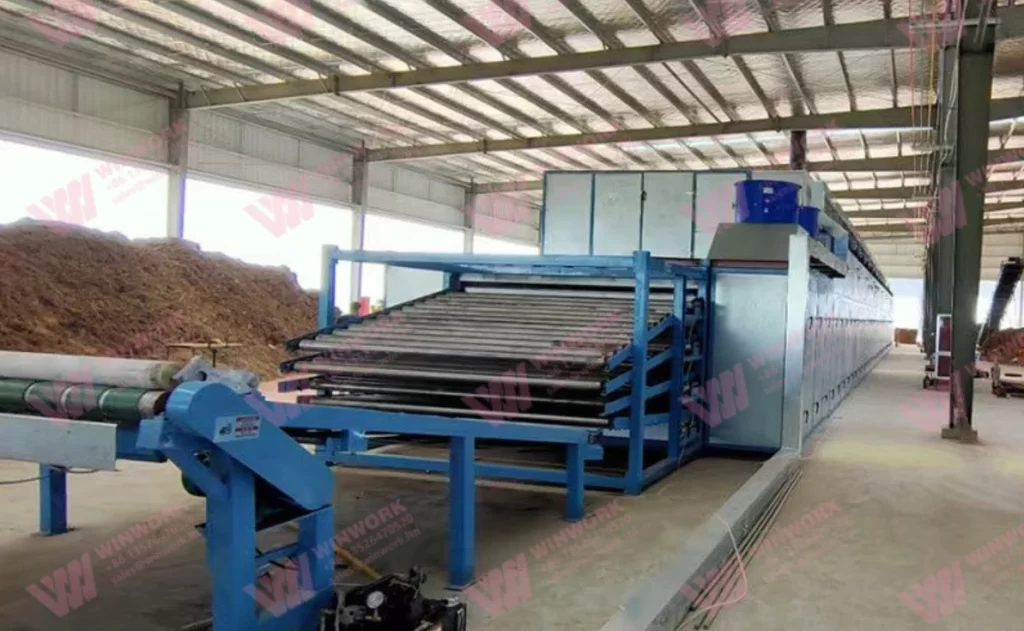
For example, imagine a fertilizer processor receiving several tons of separated livestock manure every day. The material needs to be dried before it can be stored or mixed with other ingredients. A belt dryer can provide a continuous treatment route, provided the manure can be fed evenly and the available heat supply matches the required evaporation rate.
However, belt drying also has limitations. If the manure is too sticky, it may attach to the belt or form uneven layers. If the material contains large lumps, the drying air may not reach the center of every lump effectively. A suitable pretreatment or feeding arrangement may therefore be necessary.
The difference becomes even more important when considering the final product.
For an NPK plant, the target is usually a stable fertilizer granule with an acceptable moisture level, suitable strength, and consistent particle size. The dryer must work with the granulator and cooler to achieve these requirements.
For a manure-processing plant, the first target may simply be to reduce the moisture content of the raw material to make handling, storage, transportation, or further processing easier. Granulation may happen later, or the dried material may be sold in another suitable form.
This means the rotary dryer vs belt dryer decision should depend on the production objective, not just the incoming moisture content.
Temperature control is another important consideration. Organic materials may contain nitrogen compounds and other components that can be affected by excessive heat. The drying temperature should be selected according to the material composition, final product requirements, and emissions-control arrangements.
For poultry manure and digestate, exhaust air management also deserves attention. Drying may release moisture, dust, and ammonia-containing gases. Depending on the material and local environmental requirements, dust collection, air treatment, or an exhaust gas scrubbing system may be necessary.
For granular compound fertilizers, the main process concerns may instead include product temperature, particle strength, dust generation, and the moisture level required before cooling and storage.
The equipment should therefore be selected as part of a complete process design rather than as an isolated machine.
What Will Each Dryer Cost You During Daily Production?
In a rotary dryer vs belt dryer comparison, purchase price is only one part of the investment. For a fertilizer manufacturer, operating cost depends heavily on how much water must be removed, the available heat source, the production schedule, and the maintenance requirements of the equipment.
When comparing a rotary dryer vs belt dryer, manufacturers should begin with a moisture balance rather than motor power alone.
Consider a factory processing 10 tons of wet material per hour. The incoming moisture content is 25%, and the required final moisture content is 10%. Both figures are measured on a wet basis.
The dry solids entering the dryer are:
10 × (1 − 25%) = 7.5 tons per hour.
At a final moisture content of 10%, the finished material weighs:
7.5 ÷ (1 − 10%) = 8.33 tons per hour.
Therefore, the amount of water removed is approximately:
10 − 8.33 = 1.67 tons per hour.
This calculation applies to either drying method. It tells the manufacturer how much moisture must be evaporated, but it does not establish which machine will consume less energy. Actual energy use depends on the dryer design, incoming material temperature, exhaust conditions, heat recovery, air leakage, and other process factors.
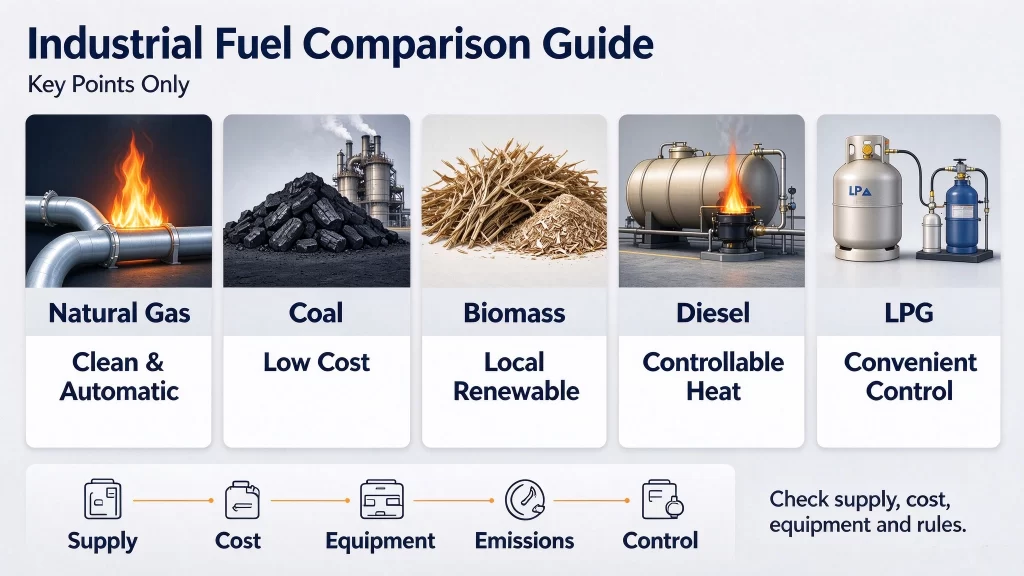
For a rotary dryer, the heat source is commonly connected to a hot air furnace or burner system. Fuel consumption depends on the amount of water removed and the efficiency of the complete heating and drying arrangement. Fans, drum drives, feeding conveyors, and dust collectors also contribute to electricity consumption.
In a rotary dryer vs belt dryer cost comparison, a belt dryer may use hot air from a furnace, boiler, or recovered heat source. In some manure and digestate projects, waste heat from a biogas combined heat and power system may be available. Using this heat can improve project economics, but only if the temperature, supply stability, and heat quantity meet the drying requirements.
This is one reason why a belt dryer may be attractive for a farm or biogas facility that already has a usable source of waste heat. The decision is not simply that a belt dryer is always cheaper to operate. Its economic advantage may come from the way it is integrated with the existing energy system.
Maintenance is another factor in a rotary dryer vs belt dryer comparison.
A rotary dryer requires inspection of its drum support rollers, drive components, seals, internal lifting flights, and feeding and discharge areas. Abrasive materials, uneven loading, or poor maintenance can increase wear.
A belt dryer requires inspection of the conveyor belt, rollers, tensioning system, bearings, air circulation equipment, and material feeding system. Material sticking to the belt can increase cleaning frequency and interrupt operation.
Production losses should also be included in the calculation. For a rotary dryer, excessive particle breakage may increase the amount of fines requiring separation or recycling. For a belt dryer, uneven feeding or insufficient airflow may result in inconsistent moisture levels and the need for additional drying.
A useful purchasing comparison is the total operating cost per ton of finished product. This should include fuel, electricity, labor, maintenance, cleaning, and reasonable allowances for production losses.
The comparison must use the same feed material, moisture reduction target, and production schedule. Otherwise, the results may be misleading. A belt dryer processing poultry manure should not be compared directly with a rotary dryer processing NPK granules as if they were performing the same job.
For manufacturers, the better question is which drying system provides the lowest practical cost for their own production process while meeting the required product quality.
How Should You Choose the Dryer for Your Fertilizer Factory?
The best way to make a rotary dryer vs belt dryer decision is to start with the material and work backward from the final product.
If your factory produces wet NPK or compound fertilizer granules, a rotary dryer is a logical option in a rotary dryer vs belt dryer comparison. The typical arrangement places the dryer directly after the granulator and before the cooler. This allows the wet granules to be dried before final screening, coating, and packaging.
For example, a factory producing granular NPK fertilizer from urea, DAP, and potassium chloride may use a rotary drum granulator followed by a rotary drum dryer and cooler. The drying system is designed around the granule output, initial moisture, required final moisture, and production capacity.
For organic fertilizer granules, the same type of arrangement may be considered when wet granulation creates particles that need further drying. However, the raw material composition, granule strength, and moisture characteristics should be checked before confirming the equipment.
If your project starts with poultry manure, livestock manure, or separated digestate, a belt dryer is worth considering in a rotary dryer vs belt dryer comparison. In this case, the dryer is usually part of the raw material treatment stage.
For example, a poultry manure processing facility may separate solids from liquid, spread the solid material across a belt dryer, and use the dried output for composting, blending, or pellet production. A biogas plant may use a similar approach for digestate solids, especially where suitable recovered heat is available.
These examples show why the two machines should not always be treated as direct substitutes. One may be drying newly formed fertilizer granules, while the other may be preparing organic raw materials for the next stage of production.
Before contacting an equipment supplier, prepare the following information:
- Material type: NPK granules, organic fertilizer, poultry manure, livestock manure, or digestate.
- Initial moisture content: The actual moisture level of the material entering the dryer.
- Target moisture content: The required moisture level after drying.
- Processing capacity: The amount of wet material to be treated per hour or per day.
- Particle condition: Particle size, shape, strength, and whether the material is sticky or fibrous.
- Heat source: Natural gas, coal, biomass, steam, or recovered waste heat.
- Production arrangement: Whether the dryer will connect to an existing line or become part of a new plant.
These details help the supplier determine the required evaporation capacity, feeding method, drying area or drum dimensions, heating system, and auxiliary equipment.
If the material is difficult to dry, a sample test is especially useful. It can reveal whether the material forms lumps, sticks to the belt, breaks during tumbling, or requires a longer drying time than expected.
The rotary dryer vs belt dryer decision should ultimately depend on material characteristics and production requirements. Choosing a machine because it is common in the industry does not guarantee that it will work well for every fertilizer project.
Why Consider a WINWORK Rotary Drum Dryer?
After a rotary dryer vs belt dryer comparison, manufacturers drying wet fertilizer granules may find a rotary drum dryer more suitable.
A rotary drum dryer for fertilizer production needs to match the granulator output, incoming moisture, target moisture, and available heat source. Its drum dimensions, internal lifting flights, rotation speed, and feeding arrangement all influence the drying process.
In a typical NPK or compound fertilizer production line, the rotary dryer is installed after granulation. The wet granules enter the drum, contact the hot air during continuous movement, and then move to the cooling stage. The complete arrangement may also include a hot air furnace, feeding and discharge conveyors, dust collection equipment, and a rotary cooler.
WINWORK provides rotary drum dryer equipment for fertilizer production applications. When selecting a suitable configuration, manufacturers should provide information about their material, production capacity, moisture requirements, and existing equipment.
You can learn more about the equipment here: WINWORK Rotary Drum Dryer.
A rotary dryer vs belt dryer comparison does not mean that one machine is always better than the other. A belt dryer may be a suitable choice for drying poultry manure or digestate before further processing, while a rotary drum dryer is commonly considered for drying wet NPK and compound fertilizer granules after granulation.
The right investment is the machine that matches the material entering the dryer, the product leaving it, and the rest of the production line. That is a much more useful basis for choosing drying equipment than comparing two machine names alone.
Get A Quote