

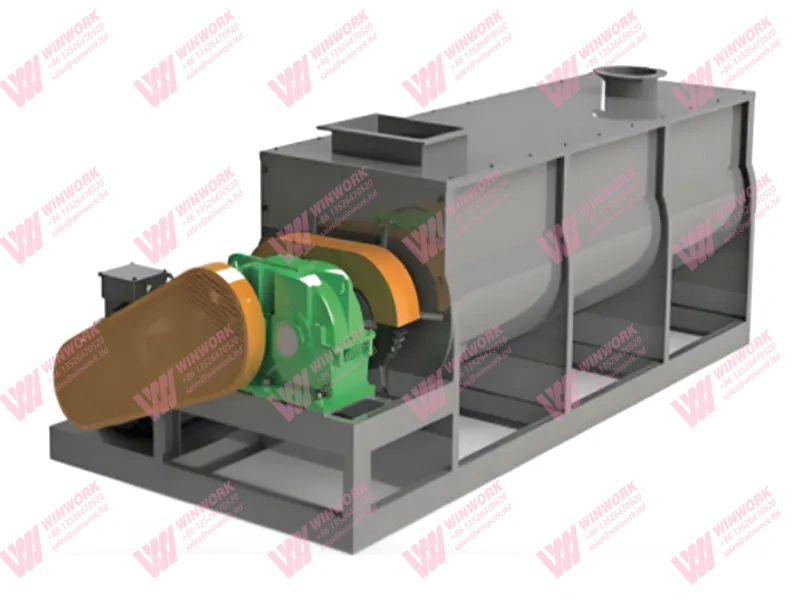
Introduction
If you’re in the agricultural game, you’ve felt the ground shift. International trade wars, shipping crises, and sudden export bans are making fertilizer a political football. The days of simply ordering a container of NPK from overseas are fading fast. So, how do you secure your harvest when the world is closing its borders?
The answer isn’t in a warehouse—it’s on your factory floor. The single most critical step toward fertilizer self-sufficiency is partnering with a professional mixer manufacture. This isn’t about buying a cheap barrel with a motor; it’s about investing in a precision-engineered system that transforms your local trash into the treasure that feeds your crops.
What Export Standards Really Mean for a Mixer Manufacture
When we talk about a mixer manufacture that “meets export standards,” we aren’t just talking about a paint job and a shipping crate. We’re talking about a deep commitment to quality that impacts every aspect of your production. We all know that the restrictions are hard and uneasy now, so it is more and more difficult to import fertilizer from other countries. This is a chance for smarter that they can build their own plant and be the fertilizer supplier by themselves.It is golden time to start the plant and earn your money.
Material Integrity: A true export-grade mixer uses high-quality stainless steel (like 304 or 316) or high-manganese steel for the mixing chamber. This isn’t just metal; it’s the difference between a machine that corrodes from fertilizer salts in two years and one that lasts a decade. A reputable mixer manufacture will provide Material Test Reports to prove the steel grade.
International Certifications: Look for ISO 9001 (Quality Management) and CE Marking (European Safety Compliance). These certifications aren’t just stickers; they represent a mixer manufacture’s commitment to consistent processes and operator safety. They ensure the electrical components won’t short-circuit and the welds won’t crack under pressure.
Engineering Precision: Dimensional accuracy and dynamic balancing are non-negotiable. A machine built to these specs vibrates less, consumes less energy, and operates safely around the clock. This is the hallmark of a professional mixer manufacture.
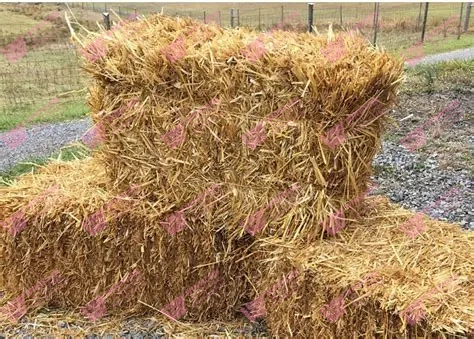
The Self-Sufficiency Playbook: Why You Need a Mixer Now
You may be hear the granulators most and the second may be the crusher, so you can think these two machines are important, and mostly ignore the mixer, now i will show you that the mixer is as important as the granulator.
In a world of restricted fertilizer imports, your only option is to produce locally. But you can’t just throw raw manure, straw, and potash into a granulator and expect a premium pellet. The process starts with homogenization—blending diverse raw materials into a uniform, consistent powder. This is where a specialized mixer manufacture becomes your lifeline.
We provide the technology to blend:
Diverse Raw Materials: From fibrous crop stalks to wet sludge and crystalline urea.
Microbial Agents: Ensuring probiotics are distributed evenly so every pellet is biologically active.
Trace Elements: Making sure every granule has the exact same NPK ratio.
Without a high-quality mixer from a trusted mixer manufacture, your final fertilizer will be lumpy, inconsistent, and rejected by buyers—both international and local.
Engineering the Solution: Our Mixing Technology
We aren’t just sellers; we are a mixer manufacture dedicated to solving the unique problems of the fertilizer industry. Our machines are built differently:
The Double-Shaft Paddle Mixer: This is the workhorse of any serious fertilizer line. Unlike a ribbon mixer that just stirs, the paddle mixer uses counter-rotating shafts to create a fluidized zone, turning the material over itself in seconds. This ensures 99.5% homogeneity. It is the signature product of a serious mixer manufacture.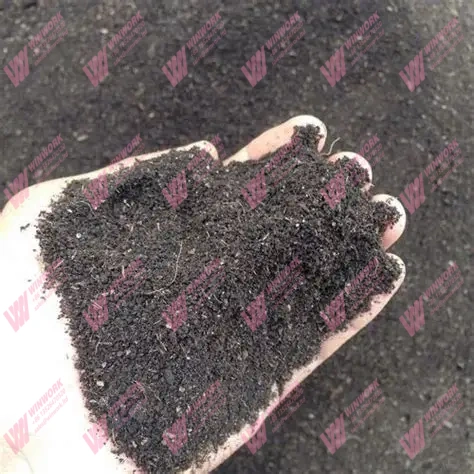
The Horizontal Ribbon Mixer: For lighter, fluffier materials like biochar or coco coir, the ribbon mixer is ideal. It moves material both radially and axially, ensuring a gentle yet thorough blend without destroying the structure of the ingredients.
Customized Solutions: A one-size-fits-all approach is a recipe for failure. A responsive mixer manufacture analyzes your specific raw material (moisture content, density, particle size) and recommends the optimal machine with the right motor power and blade configuration.
Model Showcase
A twin shaft mixer is a device that uses two symmetrically arranged mixing shafts for material mixing, especially suitable for mixing dry hard, semi dry hard, viscous and other materials. It can be used for the production of organic and compound fertilizers, especially popular in high-yield fertilizer industries.
We can provide customized one twin shaft mixer for you to meet all your needs.
BB fertilizer mixer is mainly used formixing and blending of doped fertilizer, compound fertilizer, nitrogenfertilizer,magnesium fertilizer, phosphorus fertilizer, urea, etc. It can also be used for mixing operations of chemical raw materials,mining,dry powder,etc.
Small and flexible
The equipment takes up little space and requires little investment. It can be made into fully automatic, semi-automatic and manual according to the needs of users.
Low energy consumption
The equipment is simple and practical, and the motor power of the whole set of equipment is about 20kw. There is no complicated process of conventional equipment, which greatly reduces the cost.
We can customize a BB fertilizer mixer for you to meet any of your needs.
Horizontal mixer is a new generation of mixing equipment of our company, with high mixing uniformity and less residue, which is suitable for mixing materials such as compound fertilizer and additives.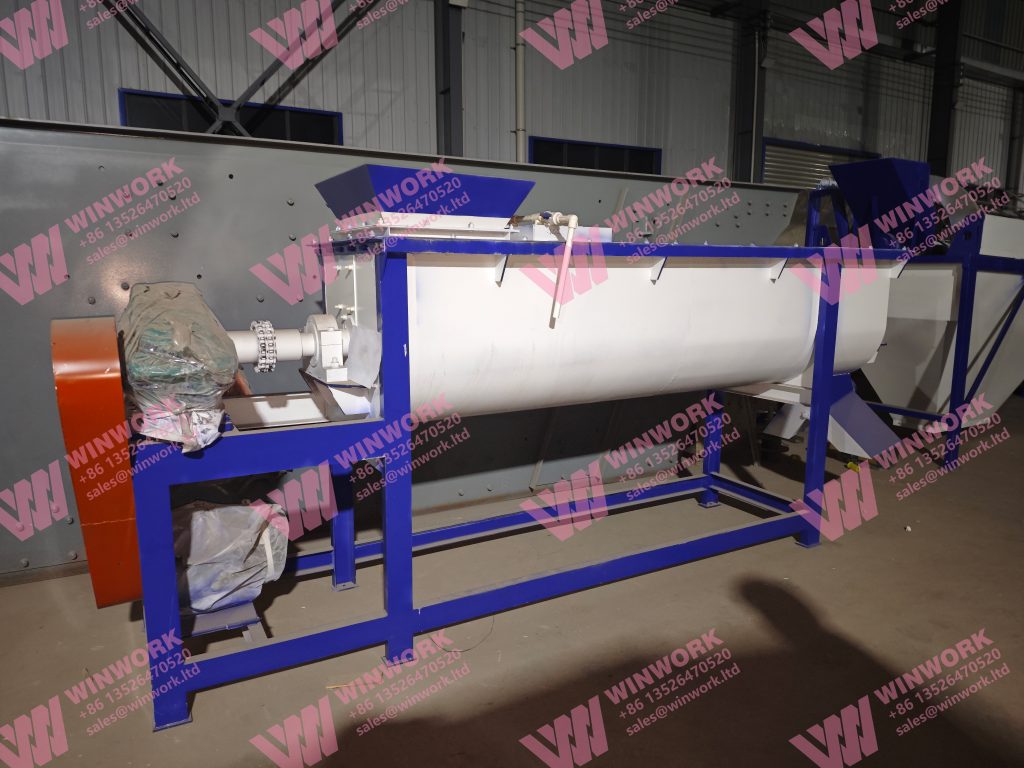
High efficiency and energy saving
The horizontal mixer adopts a horizontal mixing shaft to fully mix the materials during the mixing process, which not only ensures the uniformity of the mixed materials, but also can complete a large amount of material mixing work in a short time, meeting the needs of large-scale production.
Compact structure
The horizontal mixer has a compact structure and a small footprint, which is suitable for various on-site conditions, especially for occasions with limited space.
Easy and safe operation
The operation interface of the horizontal mixer is simple and intuitive. Users can quickly get started and perform daily operations without complex training, reducing operation and later maintenance costs.
Real-World Impact: The Sunrise Farms Turnaround
Sunrise Farms, a cooperative in Southeast Asia, was in a bind. Import restrictions had doubled their fertilizer costs, threatening their palm oil crop.
The Problem: They had mountains of empty fruit bunches and caked urea, but no way to process them into a uniform mix.
The Solution: They partnered with our mixer manufacture team, who installed a double-shaft paddle mixer designed specifically for high-moisture, fibrous materials.
The Result: Within three months, they were producing 40 tons of high-quality compound fertilizer per day. They achieved 100% self-sufficiency and even began exporting surplus pellets to neighboring countries. “Finding a mixer manufacture that understood our EFB material was the turning point,” said the Operations Director.
FAQ: Your Questions About Choosing a Mixer Manufacture Answered
Q1: Why can’t I just use a concrete mixer for my fertilizer?
A: Concrete mixers are designed for high-slump, wet materials and have poor mixing efficiency for powders. They create “dead zones” where material doesn’t mix. A proper mixer manufacture designs machines with specific blade angles and speeds to achieve 99%+ homogeneity, which is critical for fertilizer quality.
Q2: What kind of after-sales support should I expect from a mixer manufacture?
A: You should expect more than just a warranty card. A reliable mixer manufacture provides installation supervision, commissioning (testing the machine with your material), operator training, and—most importantly—a readily available inventory of spare parts (like blades and seals) for quick dispatch.
Q3: How do I verify if a mixer manufacture is truly “export standard”?
A: Ask for their certification documents (ISO, CE) and verify them through the issuing body. Also, ask for references from other international clients. A trustworthy mixer manufacture will be transparent about their quality control processes and happy to share their success stories.
Q4: My raw material is very wet and sticky. Can any mixer handle this?
A: Most cannot, but a specialized mixer manufacture can. You need a double-shaft paddle mixer with a special anti-stick blade design and a robust gearbox to handle the high torque required for wet materials.
Q5: What is the typical lead time for a high-quality export mixer?
A: Lead times vary based on customization. Standard models might be ready in 20-30 days, while fully customized solutions from a dedicated mixer manufacture could take 45-60 days to ensure the engineering and material quality meet export standards.
Conclusion
The era of cheap, readily available imported fertilizer is colliding with geopolitical reality. The path forward is clear: local production, powered by smart technology. By choosing a mixer manufacture that prioritizes export-quality standards, durability, and material-specific engineering, you are doing more than buying a machine. You are building a fortress of food security around your farm or business. Don’t let import restrictions dictate your harvest. Take control of your production line and turn your local resources into global-quality fertilizer. And now you can have a better understanding of the mixers.
For more details, please feel free to contact us.
Email: sales@lanesvc.com
Contact number: +8613526470520
Whatsapp: +8613526470520


Get A Quote