


Introduction
If your plants look sickly, your yields are disappointing, and certain nutrients seem mysteriously unavailable despite fertilizing, your soil might be too acidic. Acidic soils—those with a pH below 6.0—cause aluminum and manganese toxicity, tie up phosphorus, and make it hard for roots to take up calcium and magnesium. Farmers have battled this problem for generations, often reaching for lime to raise the pH. But there’s another powerful tool you might already have: manure. Knowing how to apply manure to improve acidic soil can transform poor ground into a thriving garden or field without relying solely on chemical amendments.
Why Manure Works on Acidic Soil
To understand how to apply manure to improve acidic soil, you need to know what’s happening beneath the surface. Manure isn’t just a source of nitrogen, phosphorus, and potassium—it’s also rich in organic matter. When you incorporate well-composted manure into acidic soil, several things occur:
Organic Matter Buffers pH – Humus formed from decomposed manure helps moderate soil acidity, making the environment less hostile to plant roots.
Calcium and Magnesium Content – Many manures, especially from cattle and horses, contain these base cations that help neutralize acid over time.
Microbial Activity Boost – Organic matter fuels beneficial soil microbes that can influence nutrient availability and even promote gradual pH adjustment.
Improved Structure – Better soil structure enhances water infiltration and root penetration, allowing lime and manure nutrients to work more effectively.
This is why learning how to apply manure to improve acidic soil is a game-changer for farmers battling sour ground.
However,How to Apply Manure to Improve Acidic Soil? It is a good question and then you can try it to see if it is useful.
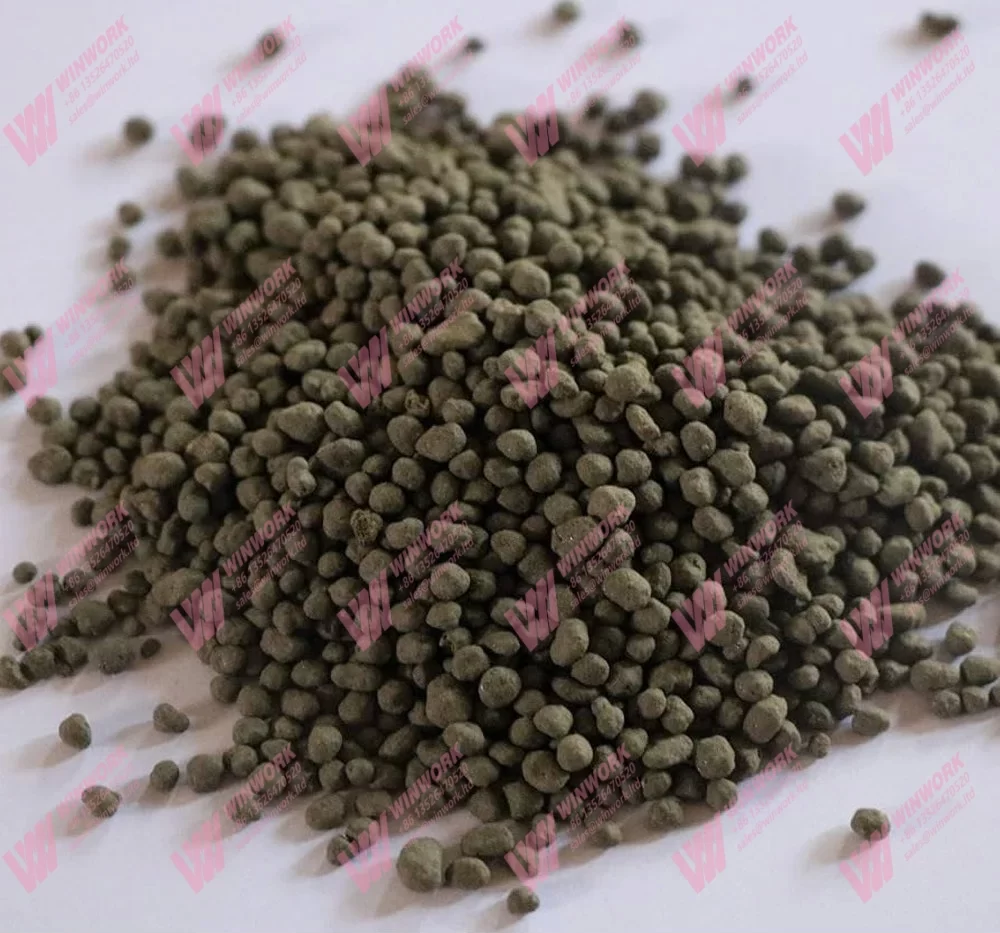
Is Manure Suitable for Acidic Soil?
Yes—but with caveats. Raw manure can sometimes be too high in ammonium nitrogen, which may temporarily acidify soil further in the short term. That’s why the key is using composted manure that has stabilized its nitrogen content. Well-aged composted manure provides the benefits without the harsh side effects. Poultry manure is particularly rich in lime-like minerals, making it especially helpful, though it must be composted thoroughly to prevent root burn.
So, if you’re wondering how to apply manure to improve acidic soil, the answer is: composted manure, applied correctly, is not only suitable—it’s one of the best all-natural ways to sweeten your land.
How to Apply Manure to Improve Acidic Soil: Step-by-Step
Applying manure to acidic ground isn’t just a matter of dumping it on the surface. To get the pH-balancing benefits, follow these steps for how to apply manure to improve acidic soil:
Test Your Soil – Before adding anything, get a soil test to confirm pH and identify nutrient deficiencies. Aim for a target pH of 6.5–7.0 for most crops.
Choose Composted Manure – Use well-aged, fully composted manure to avoid excess ammonia and potential root burn.
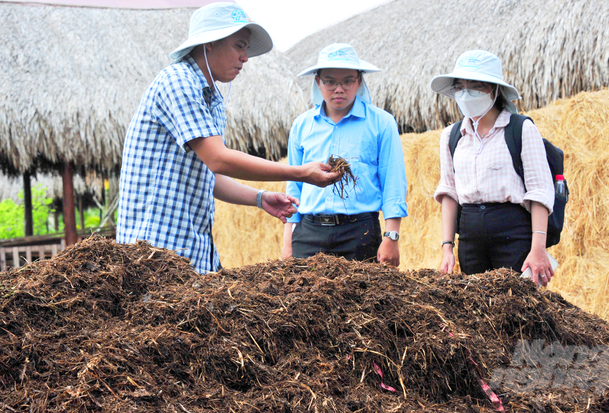
Apply in Fall or Early Spring – This gives the organic matter time to integrate and start influencing pH before planting.
Incorporate into the Top 6–8 Inches – Till or spade the manure into the soil so it contacts as much soil as possible. Surface application is less effective for pH adjustment.
Combine with Lime if Needed – For severely acidic soils, manure alone may not raise pH quickly enough. Use lime according to soil test recommendations, and manure will enhance its effectiveness.
Reapply Annually – Organic matter decomposes over time, so regular applications maintain the buffering effect.
Following these steps is the most reliable method for how to apply manure to improve acidic soil.
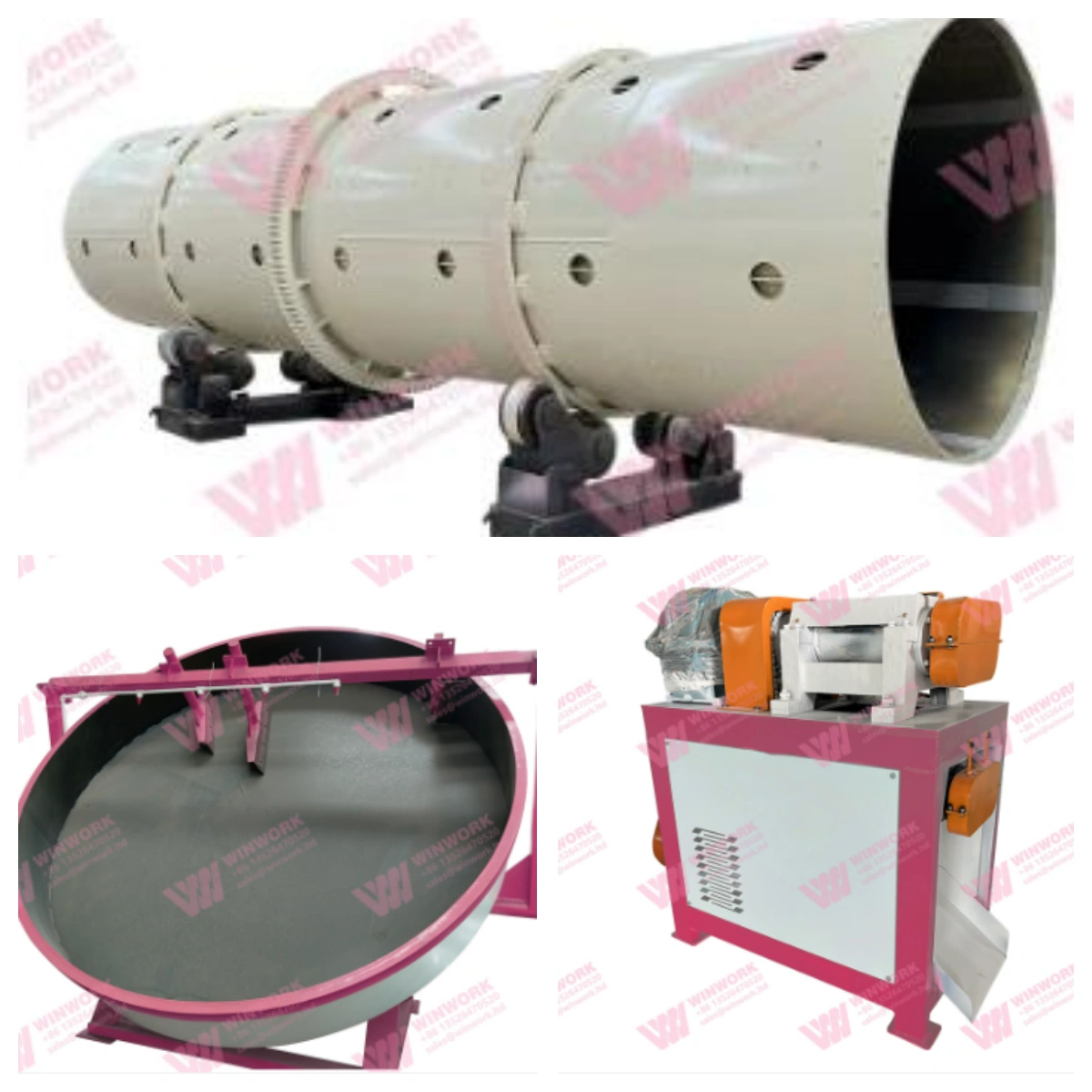
The Equipment You Will Like Much
May be you can ask what kind of machine you can buy, the expensive one you will be afraid of wasting money but the cheapest one you will afraid of worse quality, so it is a question of how to buy the good machine. Then i would like to share you some machines in need.
Vertical crusher is a kind of high-efficiency and energy-saving crushing equipment, specially designed for all kinds of medium and low hardness materials, widely used in mining, chemical industry, cement, building materials and other industries. The equipment has a compact structure, covers an area of small, simple operation, easy maintenance, with a large ratio of crushing, low energy consumption, uniformity of the material size and other characteristics. Vertical crusher is especially suitable for fine crushing of brittle materials, which is the ideal choice for realizing efficient pulverizing operation. It is a good way to tell you Apply Manure to Improve Acidic Soil.
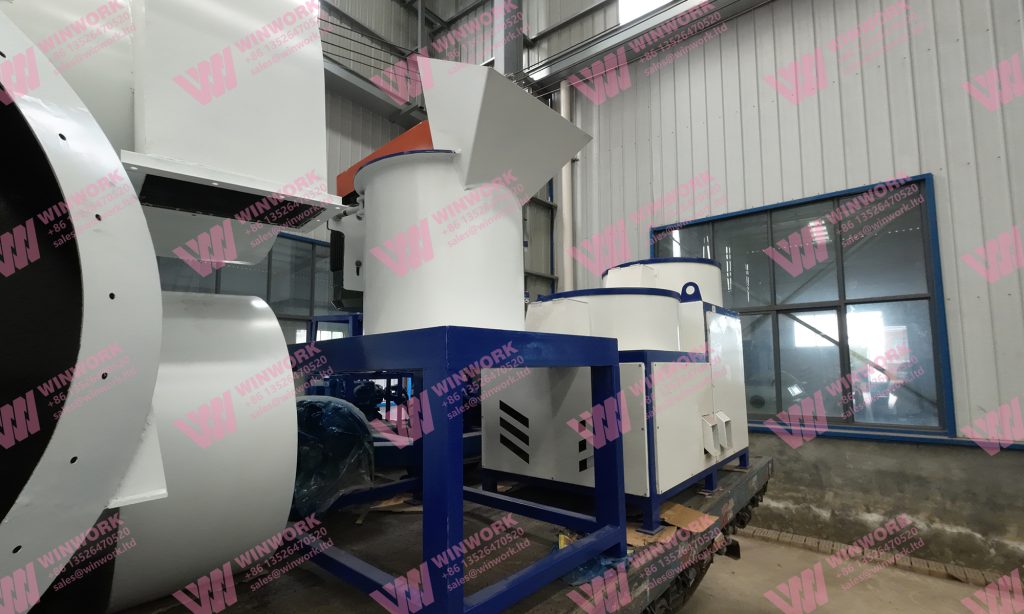
It is a good way to tell you Apply Manure to Improve Acidic Soil. The Wheeled Type Compost Turner is an advanced composting equipment designed for the aerobic fermentation of organic waste, agricultural residues, sludge, and other materials. Featuring a robust wheel-based mobility system and a powerful turning mechanism, this machine ensures efficient material mixing and aeration, promoting rapid composting and high-quality end products. It is ideal for large-scale composting operations and is essential in organic fertilizer production line and compost making line. It is a good way to tell you Apply Manure to Improve Acidic Soil.
The drying machine, Drying stage:
Material input: the material enters the drying section from the inlet of the rotary strand drying and cooling machine. The drying section usually adopts the downstream or countercurrent heat transfer method, the heat is provided by the heating source (such as hot air furnace or burner), and the hot air is in direct contact with the material to evaporate the moisture in the material.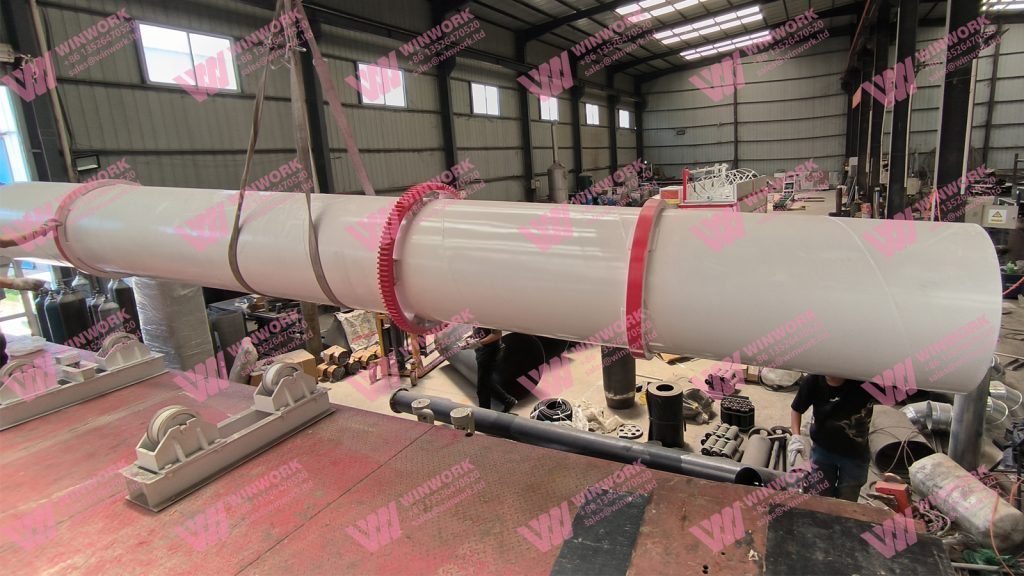
Drying process: the material in the drying section with the rotation of the equipment is constantly turned and lifted, the material in the role of gravity slowly moving forward, and at the same time with the full contact of the hot air, and gradually complete the drying process. By adjusting the temperature and time of the drying section, different drying requirements of materials can be realized. It is a good way to tell you Apply Manure to Improve Acidic Soil.
The Benefits of Applying Manure to Improve Acidic Soil
When you master how to apply manure to improve acidic soil, the rewards go beyond pH adjustment:
Higher Crop Yields – Plants access more nutrients and grow stronger.
Improved Nutrient Availability – Phosphorus, calcium, and magnesium become usable again.
Enhanced Microbial Life – Beneficial bacteria and fungi thrive in organically enriched soil.
Reduced Need for Lime Alone – Manure extends the effect of liming, letting you use less.
Better Water Retention – Organic matter helps soil hold moisture, critical in dry spells.
Real Farm Example
The Carters grow blueberries and strawberries on land naturally acidic due to pine tree cover. For years, they struggled with poor growth despite lime applications. After researching how to apply manure to improve acidic soil, they began spreading composted cow manure in late fall and tilling it in. Over three seasons, soil tests showed pH creeping up to 6.4, and yields increased by 35%. “Manure did what lime couldn’t do alone—it fixed the soil and fed the plants,” says owner Mark Carter.
FAQ: Your Questions About How to Apply Manure to Improve Acidic Soil Answered
Q1: Can I use fresh manure to improve acidic soil? How to Apply Manure to Improve Acidic Soil.
A: It’s not recommended. Fresh manure can acidify soil temporarily and may burn plants. Always compost first.
Q2: How long does it take for manure to affect soil pH?
A: You’ll see gradual improvement over 6–12 months. Annual applications speed progress.
Q3: How much manure should I apply per acre? How to Apply Manure to Improve Acidic Soil.
A: Typically 5–10 tons of composted manure per acre, but follow soil test recommendations.
Q4: Does all manure have the same effect on acidity?
A: No. Poultry manure tends to have more lime-like minerals, but all composted manure helps.
Q5: Can manure replace lime completely?
A: For mildly acidic soils, maybe. For very acidic soils, combine manure with lime for best results.
Q6: Will manure make my soil too alkaline?
A: Unlikely. Organic matter buffers rather than drastically shifts pH.
Q7: How do I know if my manure is fully composted?
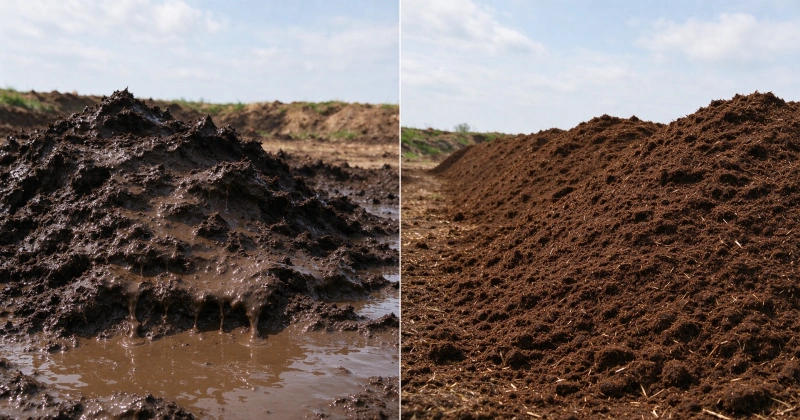
A: It should be dark, crumbly, and earthy-smelling, with no ammonia odor.
Q8: Should I apply manure before or after liming?
A: You can do either, but incorporating both at the same time ensures even mixing.
Q9: Can I use manure on acid-loving plants like blueberries?
A: Yes, but in moderation. Blueberries prefer slightly acidic soil, so monitor pH closely.
Q10: Where can I get composted manure suitable for acidic soil?
A: Local farms, composting facilities, or your own operation. Ensure it’s well-aged and tested if possible.
Conclusion
Acidic soil doesn’t have to limit your farm’s potential. By learning how to apply manure to improve acidic soil, you tap into a natural, sustainable way to raise pH, boost nutrients, and build healthier ground. The right composting, timing, and incorporation methods—along with simple equipment—make this approach both effective and affordable. It is a good way to tell you Apply Manure to Improve Acidic Soil.
For more details, please feel free to contact us.
Email: sales@lanesvc.com
Contact number: +8613526470520
Whatsapp: +8613526470520

Get A Quote