

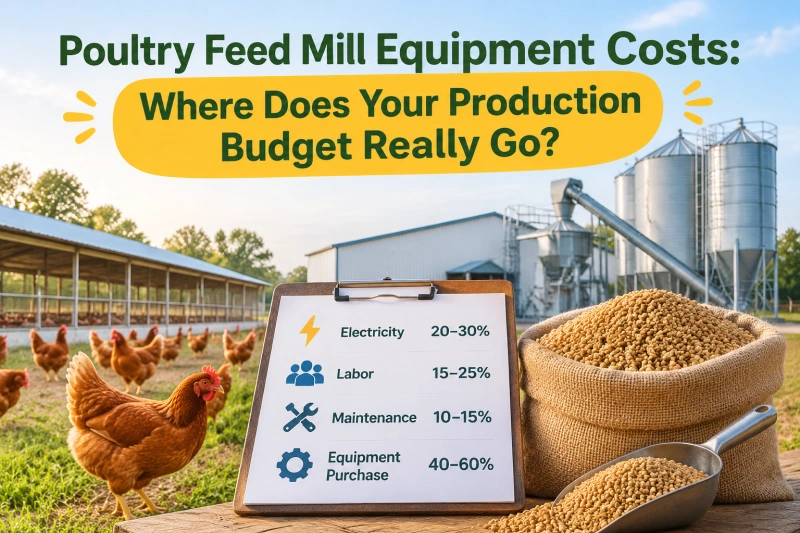
When I first started looking at equipment for a poultry feed mill, I thought the biggest decision would be choosing the right machines and finding a supplier with a reasonable quotation. However, after looking more closely at the production process, I realized that the purchase price was only one part of the investment.
The real challenge is understanding where the money goes before, during, and after production starts. Electricity, labor, replacement parts, production efficiency, and unexpected downtime can all affect the final cost of making feed.
If you are planning to build a poultry feed mill or expand an existing facility, I want to share how I would evaluate poultry feed mill equipment costs from the perspective of someone responsible for running a production operation. Instead of focusing only on the price of individual machines, I will look at the decisions that can make a difference to your long-term budget.
What Made the Purchase Prices of Different Suppliers So Different?
When I compared equipment quotations for poultry feed mill equipment costs, one thing became obvious: two suppliers could offer what appeared to be similar production lines but provide very different prices.
At first, I found it difficult to understand the difference. Later, I realized that the quotations did not always cover exactly the same things.
Some suppliers quoted mainly for the core processing machines. Others included additional equipment, electrical control systems, installation guidance, or other services. If I compared only the final figures, I could easily misunderstand which offer provided better value.
I would now check several factors before judging a quotation.
Production capacity is one of the first things I would examine. A small feed mill producing a few tons per hour does not need the same machine specifications as a larger facility. Higher capacity requirements may mean larger motors, different machine structures, and a different overall configuration.
Equipment specifications also matter when calculating poultry feed mill equipment costs. Machines designed for different materials, processing requirements, or operating conditions may have different prices, even when their names are similar.
Automation level is another factor affecting poultry feed mill equipment costs. A system with more automatic weighing, batching, and control functions may require a higher initial investment. However, whether that extra investment is worthwhile depends on the scale of the operation and the labor available.
I would also check the supply scope carefully. Does the quotation include electrical control equipment? Is installation guidance provided? What about spare parts and after-sales support?
My advice is simple: do not compare two quotations until you understand what each one actually includes. When evaluating poultry feed mill equipment costs, a lower quotation does not automatically mean a better purchase.
If you are currently requesting quotations, have you checked whether the suppliers are offering the same production capacity and supply scope?
How Poultry Feed Mill Equipment Costs Affect Daily Operating Expenses
Before production starts, it is easy to focus most of your attention on poultry feed mill equipment costs, especially the initial equipment investment. Once the mill is running, however, regular operating expenses become much more noticeable.
I would divide these expenses into four main categories.
Electricity consumption
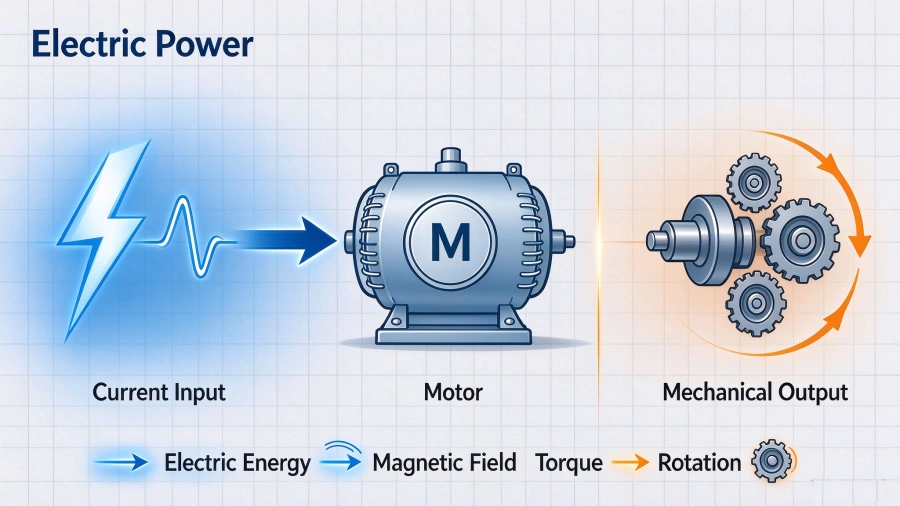
Grinding, mixing, and pelleting all require electricity. The actual consumption depends on the machine specifications, material characteristics, operating conditions, and production load.
I would not judge electricity costs by motor power alone. A machine with a larger motor does not necessarily consume that amount of electricity continuously. What matters more is the actual energy used during production.
For a more useful comparison of poultry feed mill equipment costs, I would record electricity consumption over a representative production period and calculate the kilowatt-hours required per ton of finished feed.
Labor expenses
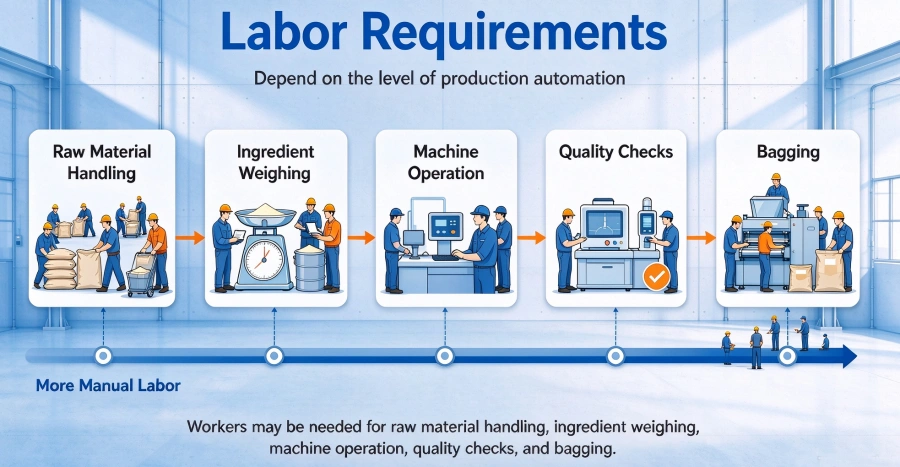
Labor requirements depend on how much of the production process is automated. Workers may be needed for raw material handling, ingredient weighing, machine operation, quality checks, and bagging.
For a small operation, a simpler system may be sufficient. As production increases, however, manual handling can become more difficult to manage.
I would consider labor costs together with daily output rather than simply choosing the most automated option.
Wear parts and maintenance

Some machine components experience regular wear during operation. For example, hammer mill hammers and screens need inspection, while pellet mill dies and rollers may require maintenance or replacement.
The service life of these parts also affects poultry feed mill equipment costs over time. It depends on the materials being processed, machine settings, operating hours, and maintenance practices. I would not rely on a universal replacement schedule. Instead, I would keep maintenance records and inspect components according to their actual condition.
Unexpected downtime
This is an expense that is easy to overlook when preparing an investment budget.
When a machine stops unexpectedly, the cost is not limited to repairing it. Production may be delayed, workers may have to wait, and scheduled deliveries could be affected.
That is why I would include maintenance planning and access to suitable spare parts when assessing poultry feed mill equipment costs. Preventing avoidable downtime is part of managing the production budget.
Which of these expenses do you think would have the greatest effect on your own operation?
Why Didn’t My Actual Production Output Match the Machine’s Rated Capacity?
One lesson I would emphasize to anyone planning a feed mill is that poultry feed mill equipment costs should be evaluated alongside actual production capacity. The rated capacity of one machine does not represent the output of the entire production line.
For example, imagine that a pellet mill is rated for a certain hourly output. It may seem reasonable to expect the whole plant to produce at that rate. But what happens if the grinding section cannot prepare enough material to supply it?
The pellet mill may have to wait, reducing its actual operating time.
The opposite situation can also occur. If the pellet mill produces material faster than the cooling or screening section can handle, the downstream process may become a bottleneck.
This is why I would evaluate the capacity of each processing stage rather than choosing equipment based on the largest number shown in a product specification.
Raw material characteristics also influence actual output and should be considered when evaluating poultry feed mill equipment costs. Different ingredients may require different grinding conditions. Feed formulas, particle size requirements, and pellet diameters can affect processing performance as well.
For instance, producing a fine mash feed and manufacturing pellets with a specific diameter do not necessarily require identical processing settings.
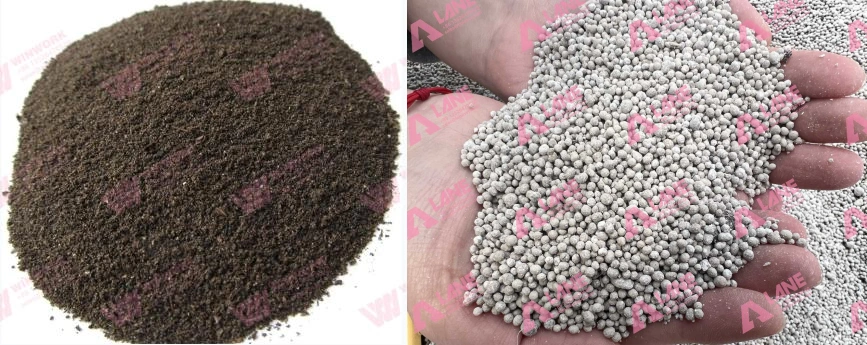
When comparing poultry feed mill equipment costs, I would ask suppliers to explain the expected production capacity under clearly defined conditions. I would want to know the assumed raw materials, feed type, and finished product specifications.
A machine’s maximum rated output is useful information, but stable production of qualified feed is a much more meaningful measure for planning an investment.
Where Would I Spend My Equipment Budget First?
If I were planning a feed mill again, I would not distribute the budget evenly across every machine. When planning poultry feed mill equipment costs, I would first identify which parts of the process have the greatest effect on the final feed quality and production capacity.
For me, grinding, mixing, and pelleting would deserve particular attention.
Grinding affects particle size, which influences the consistency of the material entering the next processing stage. Mixing is important because ingredients need to be distributed evenly throughout the feed. Pelleting determines whether the finished product meets the required pellet specifications.

I would be careful about reducing the budget in these areas simply to obtain a lower initial quotation.
At the same time, I would not automatically choose the most expensive or highly automated system. The right level of automation depends on the actual production scale, labor availability, and investment plan.
For a smaller feed mill, some manual operations may be acceptable. A larger facility may benefit more from automatic weighing, batching, and centralized control.
I would also avoid removing necessary equipment just because it does not directly increase the rated output of the main processing machine. A production process needs to operate continuously and maintain the required product quality.
My approach would be to define the required output and feed specifications first, then decide which equipment configuration can meet those requirements within the available budget.
This is also how I would approach poultry feed mill equipment costs when planning a new project: invest in the functions that matter to production instead of paying for features that the operation does not need.
How Would I Compare the Long-Term Costs of Two Equipment Options?
Suppose I received two quotations for a poultry feed mill. One supplier offered a lower initial price, while the other proposed a different configuration at a higher price.
Which one would I choose?
I would not make that decision based on the quotation alone. Instead, I would compare poultry feed mill equipment costs over the same operating period, including both the initial investment and ongoing expenses.
My evaluation would include:
- Initial equipment investment
- Electricity consumption
- Labor requirements
- Maintenance and replacement parts
- Losses caused by unexpected downtime
A simple way to organize the calculation is:
Total Cost = Initial Investment + Operating Costs + Maintenance Costs + Downtime Losses
I would also calculate the cost per ton of qualified feed:
Cost per Ton = Total Cost ÷ Total Qualified Feed Output
The word “qualified” is important here. Producing more tons does not necessarily mean better performance if the finished feed does not meet the required specifications.
For a fair comparison, I would use the same raw materials, product requirements, operating hours, and evaluation period for both options. Otherwise, the figures may give a misleading impression.
For example, a lower-priced machine might require more manual work or have higher maintenance requirements. Another option might cost more initially but better match the intended production volume.
I would not assume either option is automatically better. I would compare the figures using realistic operating assumptions.
This is the approach I find most useful when reviewing poultry feed mill equipment costs: look beyond the purchase price and consider how much it will cost to produce each ton of acceptable feed.
If two options have similar initial prices, would you focus more on the purchase quotation or the expected cost per ton over time?
What Would I Check Before Investing in a Poultry Feed Mill Again?
If I were starting another feed mill project, I would spend more time defining the production requirements before contacting equipment suppliers.
I would prepare the following information first.
Raw materials: What ingredients will be used? Will the main materials be corn, soybean meal, wheat, or a combination of different ingredients? Their characteristics and proportions can affect the processing requirements.
Feed products: Will the mill produce mash feed, pellet feed, or both? What pellet diameter and finished product specifications are required?
Production capacity: How many tons per hour do I need? How many hours will the plant operate each day? Is future expansion part of the plan?
Factory conditions: What floor space and building height are available? Is the electrical supply suitable for the planned machines? Are there any restrictions on equipment installation?
Supplier support: What exactly is included in the supply scope? Is installation guidance available? Can the supplier provide operating instructions, spare parts, and maintenance support?
I would also ask suppliers to explain how their proposed equipment configuration matches my raw materials and production targets. A quotation is more useful when I understand the reason behind each major specification.
For anyone researching poultry feed mill equipment costs, my biggest recommendation is to start with the production plan rather than a budget number alone.
I would rather spend time confirming the raw materials, feed specifications, target output, and factory conditions than rush into purchasing machines that may not fit the actual operation.
If you are planning a new poultry feed mill or upgrading an existing one, prepare these details before requesting a quotation. With your raw material information, target capacity, and feed requirements clearly defined, it becomes much easier to evaluate a suitable equipment configuration and understand where your investment will go.
If you are planning to build a new poultry feed mill or upgrade an existing production line, I recommend defining your raw materials, target capacity, and feed specifications before choosing your equipment. These details will help you compare different solutions and avoid spending money on machines that do not fit your actual production needs.
If you are looking for a suitable poultry feed production solution, WINWORK can help you evaluate your project requirements and configure equipment based on your raw materials, feed type, production capacity, and available budget. Visit WINWORK to learn more about poultry feed processing equipment and production line solutions, or contact the team to discuss your project.
Get A Quote