

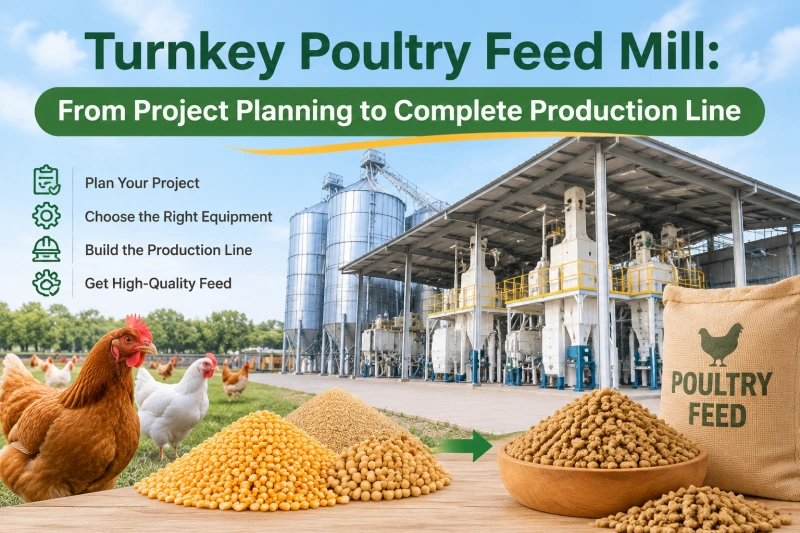
Building a poultry feed factory involves more than purchasing several machines. Before production begins, important decisions need to be made: Which raw materials will be used? What types of poultry feed will be produced? How much feed should the factory produce per hour? Will the finished products be mash, pellets, or crumbles?
A turnkey poultry feed mill brings these processing stages together in one coordinated production system. Its configuration depends on the raw materials, feed formulas, required capacity, workshop conditions, and investment budget. For example, a plant producing mash feed does not need exactly the same equipment as a plant manufacturing pellets or crumbles.
The key is to connect each processing stage properly. Grinding affects mixing and pelleting, conditioning influences pellet formation, and cooling affects the final product before storage. A well-planned turnkey poultry feed mill should cover the entire process, from raw material receiving to finished feed packaging.
From Project Requirements to a Customized Feed Mill Design
The first step in planning a turnkey poultry feed mill project is to define the production requirements, because these requirements determine the basic configuration of the entire production system. Capacity is important, but it should not be the only factor used to select equipment.
Production capacity and working hours
A turnkey poultry feed mill may be designed for 3 T/H, 5 T/H, or 10 T/H, depending on the daily production target and available working hours. However, hourly output should be considered together with the daily production target and operating schedule.
For example, a factory producing 40 tons of feed per day will have different equipment requirements if it operates for 8 hours instead of 16 hours. The production schedule also affects storage capacity, batching arrangements, and the operating cycle of each machine.
Another point is that the rated capacities of individual machines are not always identical. Grinding, mixing, pelleting, cooling, and packing equipment each have their own processing limits. If the mixer or packing machine cannot keep up with the pellet mill, production may be interrupted.
Raw materials and feed formulas
Corn, wheat, soybean meal, rice bran, fish meal, minerals, vitamins, and other additives are common poultry feed ingredients. Their particle sizes, moisture levels, bulk densities, and physical properties all influence equipment selection.
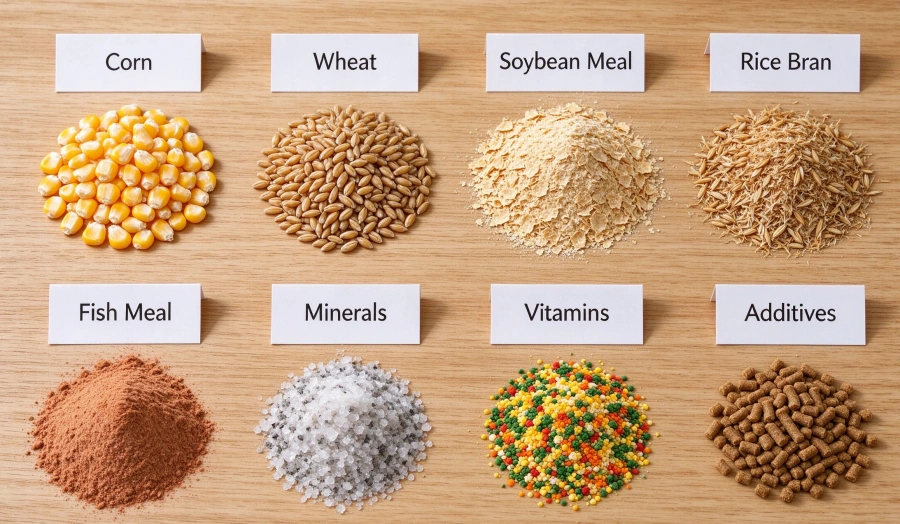
For example, corn with particles that are too large may need to pass through a hammer crusher. However, some purchased ingredients may already have a suitable particle size. Grinding every material without checking its condition can increase electricity consumption and processing time unnecessarily.
Feed formulas also affect the equipment configuration. Broiler, layer, and chick feed may contain different ingredient proportions and require different processing conditions. The grinding, batching, mixing, and pelleting systems should therefore be selected according to the intended formulas.
Final feed products
The processing route changes according to the type of feed being manufactured.
For a better understanding of the different processing stages, see this chicken feed production line guide.
- Mash feed: Ingredients go through cleaning, necessary grinding, batching, and mixing before packaging.
- Pellet feed: Mixed materials are conditioned, pelleted, cooled, screened, and packaged.
- Crumble feed: Pellets are first produced and then passed through a crumbler to obtain smaller particles.
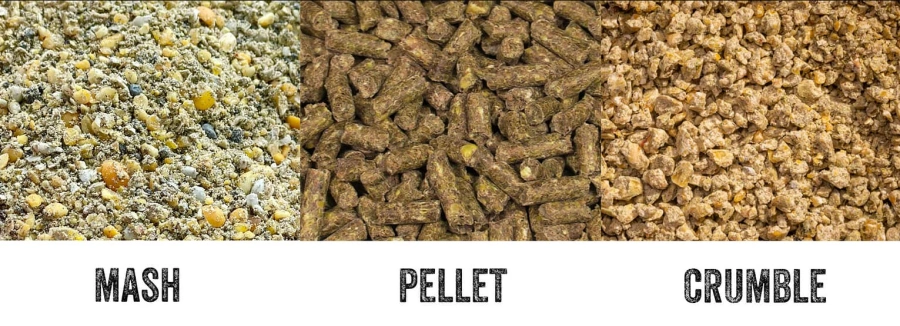
These differences affect the equipment list and workshop layout. Once the processing route is confirmed, a flow chart can show how materials move through the factory. A workshop layout then helps determine machine positions, conveying routes, operating space, and maintenance access.
A practical turnkey poultry feed mill should consider these details before equipment installation. This reduces unnecessary purchases and helps avoid major layout changes later.
How Are the Main Machines Configured in a Turnkey Poultry Feed Mill?
The machines form the core of a turnkey poultry feed mill. Each machine has a specific processing task, but its performance also depends on the condition of incoming materials and the capacity of the next processing stage.
Raw material cleaning equipment
Cleaning equipment removes impurities before ingredients enter the processing system. A vibrating screen separates unwanted materials according to particle size, while a magnetic separator removes iron-based metal impurities.
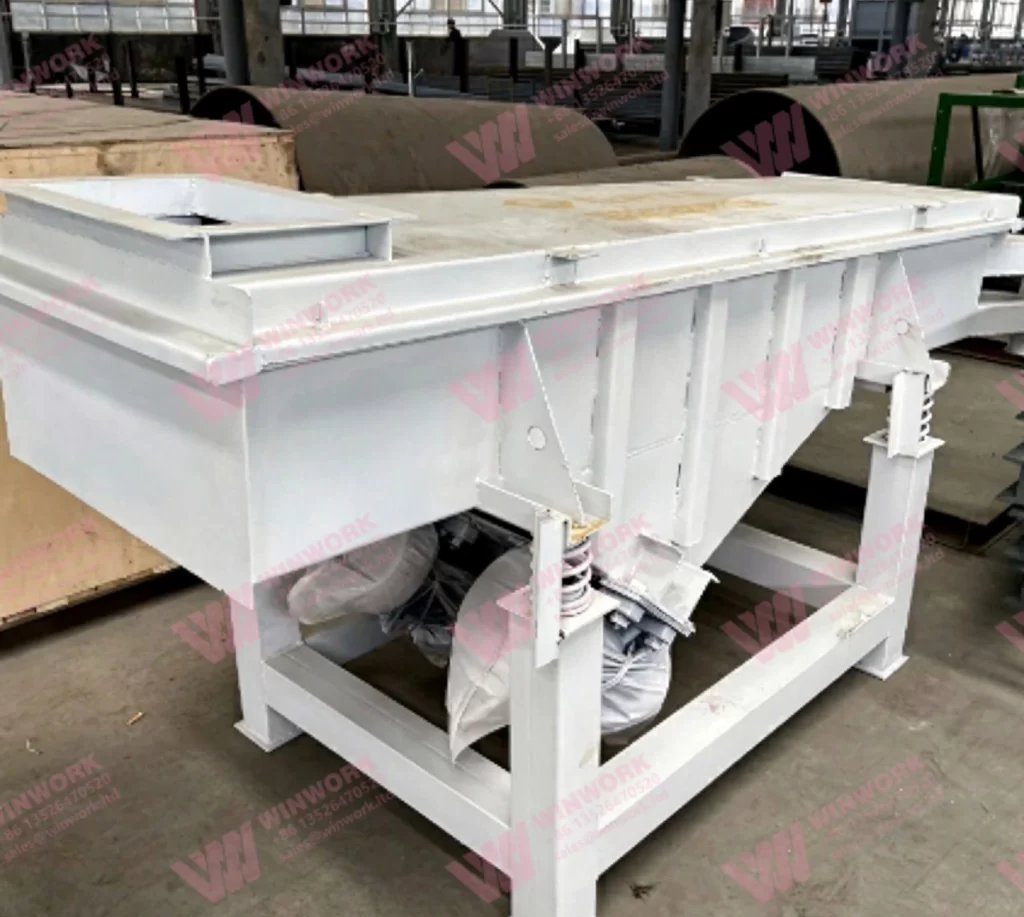
This stage helps protect downstream equipment. Metal fragments entering a hammer crusher or granulator can damage internal components and interrupt production. The cleaning system should therefore be selected according to the actual condition of the incoming materials.
For factories using bulk grain, the cleaning section can also connect with receiving hoppers, elevators, and storage bins to create a continuous material-handling route.
Hammer crusher for feed grinding
In a turnkey poultry feed mill, a hammer mill reduces the particle size of grains and other suitable ingredients before they enter the batching and mixing stages. Inside the machine, rotating hammers strike the material until it becomes small enough to pass through the screen. Screen aperture is one of the main factors determining the final particle size.

A smaller screen opening generally produces finer material, but it may also reduce throughput and increase energy consumption. A larger opening allows more material to pass through and usually produces coarser particles.
The appropriate screen size depends on the feed formula and the poultry’s growth stage. Some chick feed formulas may require finer grinding, while other formulations can use relatively coarse particles.
When selecting a hammer mill, consider the screen aperture, hammer arrangement, rotor condition, motor power, and raw material characteristics. Grinding should meet the feed requirements without using more energy than necessary.
Batching and weighing system
After cleaning and necessary grinding, ingredients enter the batching section of the turnkey poultry feed mill, where each material is weighed according to the feed formula. The system weighs different materials according to the feed formula.
Major ingredients such as corn and soybean meal usually require larger weighing ranges. Vitamins, minerals, and other minor additives need more precise measurement because even small deviations can affect formula consistency.
A typical batching system includes storage bins, weighing hoppers, sensors, and conveying equipment. The number and size of bins depend on the number of ingredients and the production schedule.
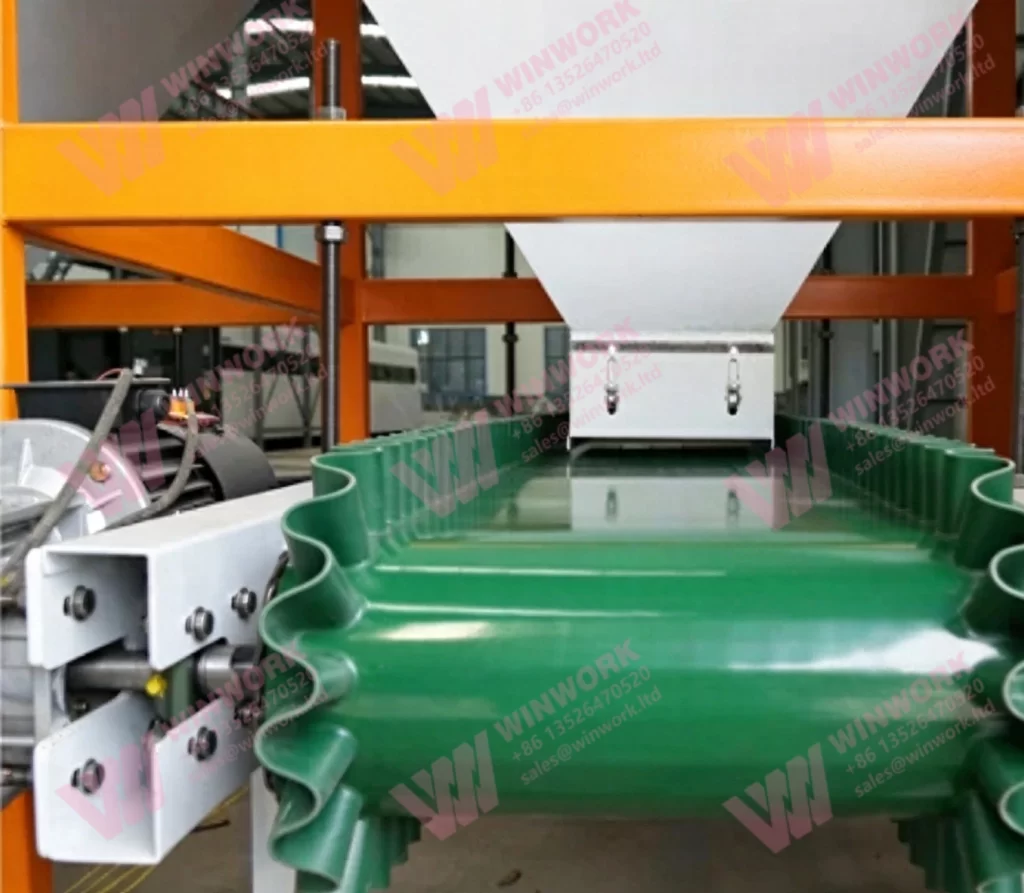
For a turnkey poultry feed mill producing several formulas, the control system should also support recipe selection and management. Accurate weighing helps maintain consistent ingredient proportions between batches.
Feed mixer
After batching, ingredients enter the mixer. Its purpose is to distribute different materials evenly so that each batch has a consistent composition.
Common options include ribbon mixers and paddle mixers. The choice depends on material characteristics, batch capacity, mixing uniformity requirements, and production output.
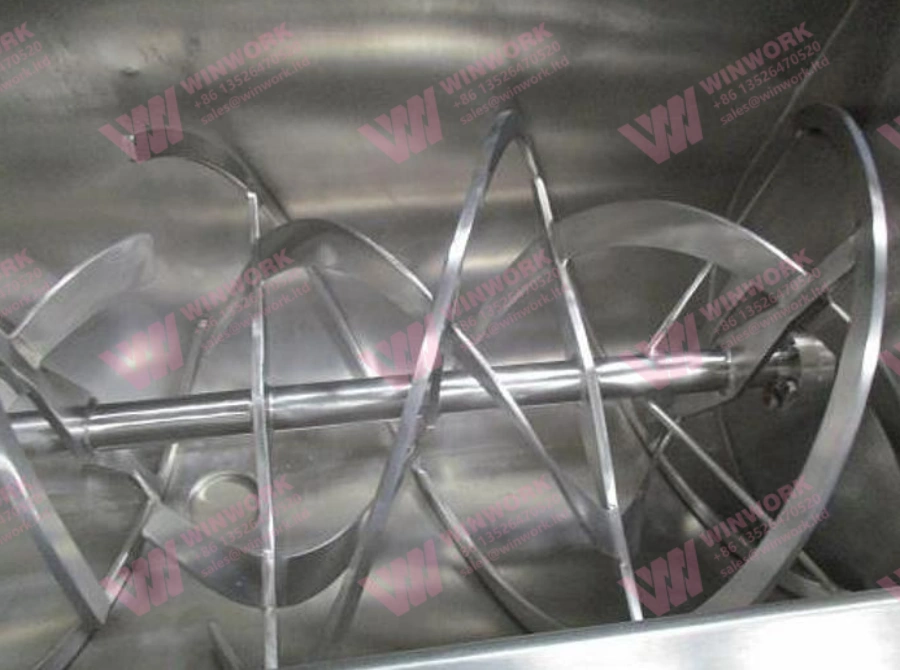
Mixing time is not simply a matter of making the process longer. Materials need sufficient time to achieve an even distribution, but excessive mixing time reduces production efficiency. Loading volume is also important. Overloading limits material movement, while insufficient loading may reduce mixing efficiency.
For formulas containing small quantities of additives, premixing them with part of the carrier material can help distribute them more evenly throughout the batch.
The mixer must also work in coordination with the batching system. If each batch takes too long to mix, downstream equipment may have to wait. Batch size and mixing cycle should therefore be included in the overall equipment calculation.
Conditioner and ring die pellet mill
Pellet production requires additional processing after mixing. The mixed material first enters a conditioner, where steam adjusts its temperature and moisture before the material moves into the pellet mill.
Proper conditioning softens the material and can improve binding during compression. Steam quality, material flow, conditioning time, and moisture control all influence pellet formation.
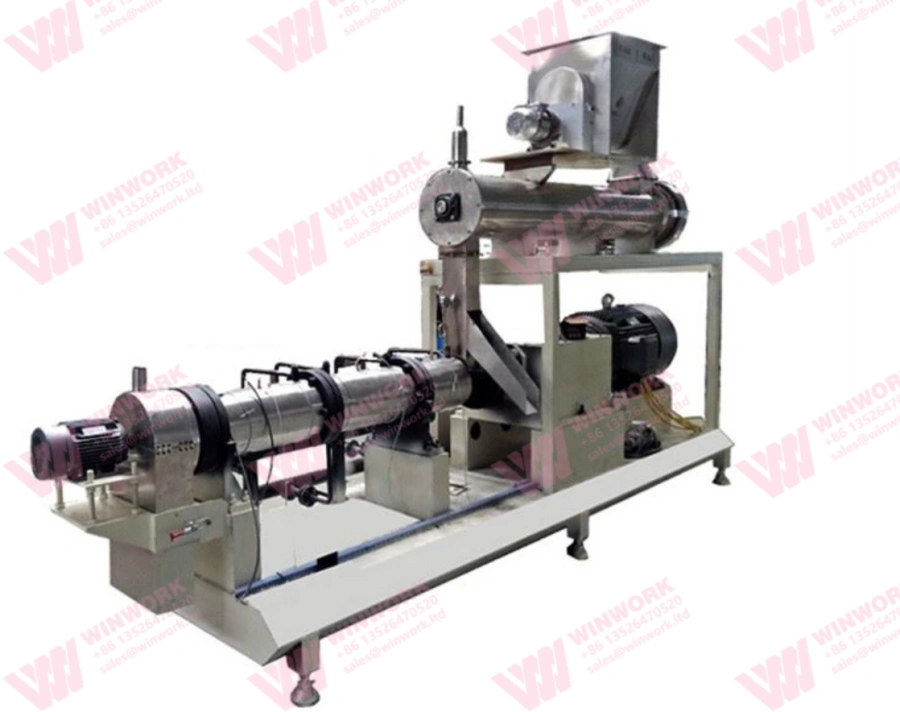
The conditioned material then enters a ring die pellet mill. Rollers press the material against the rotating ring die, forcing it through the die holes. The resulting strands are cut into pellets of the required length.
Two important ring die specifications are hole diameter and compression ratio. Hole diameter determines pellet diameter, while compression ratio affects the resistance experienced by the material as it passes through the die.
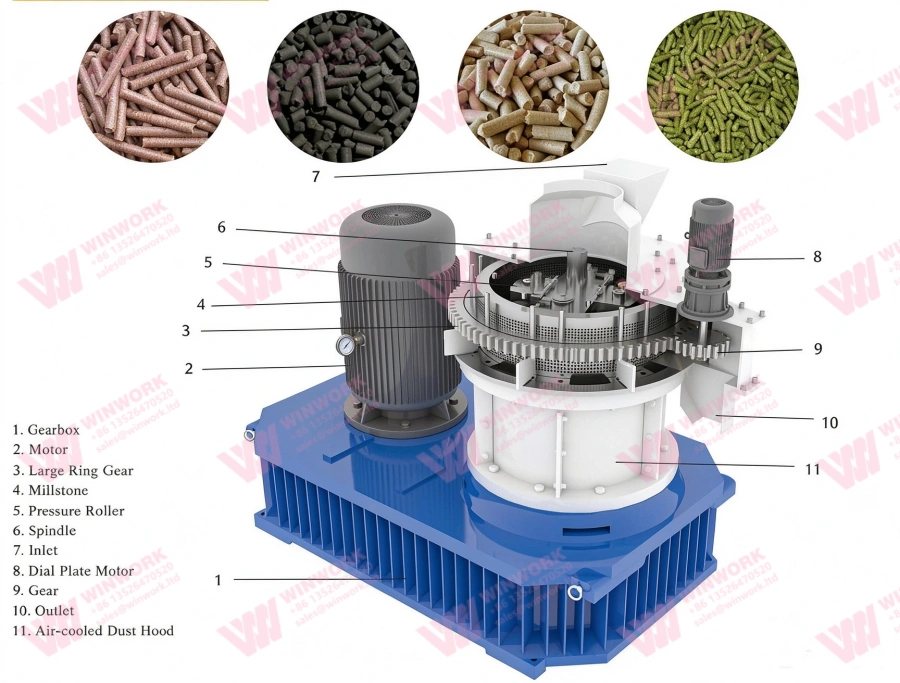
Different feed formulas may require different die specifications. Corn-based materials, fiber-rich ingredients, and formulas with higher mineral content may behave differently during pelleting.
In a turnkey poultry feed mill, pellet quality cannot be judged by the pellet mill alone, because grinding size, ingredient composition, mixing uniformity, and conditioning all affect the final result. Grinding size, ingredient composition, mixing uniformity, conditioning, moisture, and operating settings all affect the final result.
If pellets break easily, the cause may be insufficient conditioning, unsuitable moisture, uneven particle size, or an inappropriate die specification. Checking the entire processing route is more useful than immediately assuming that the pellet mill is the problem.
Counterflow cooler, crumbler, and vibrating screen
Pellets leaving the pellet mill are relatively hot and contain moisture from the conditioning process. They need to be cooled before storage and packaging.
A counterflow cooler moves cooling air in the opposite direction to the falling pellets, helping reduce product temperature and moisture. Insufficient cooling may lead to condensation in bags or storage areas, while unsuitable airflow can affect cooling performance.
For feed products requiring smaller particles, a crumbler breaks larger pellets into smaller pieces. This is particularly useful for chick feed, where smaller particles are more suitable for young poultry.
A vibrating screen then separates acceptable pellets from fines and oversized particles. Depending on the process design, suitable fines can be returned to the production system for further processing.
The processing capacities of these machines should match the pellet mill. If cooling or screening capacity is insufficient, finished material may accumulate and interrupt continuous production.
Automatic weighing and packing machine
The final stage is weighing and packing finished feed. Common bag sizes include 10 kg, 25 kg, and 50 kg, depending on the target market and distribution method.
Packing capacity should match the output of the upstream processing stages. If the production line delivers feed faster than the packing machine can handle it, finished material will accumulate in the storage hopper.
When selecting packing equipment, consider the weighing range, bag-clamping method, sewing or sealing system, and required packing speed. In a turnkey poultry feed mill, packaging is part of the overall capacity plan rather than an isolated final purchase.
How to Match Every Machine to the Required Production Capacity
The efficiency of a turnkey poultry feed mill depends on whether its equipment is properly coordinated, rather than simply on the rated capacity of individual machines. Selecting machines with identical rated capacities does not automatically guarantee the expected output.
For example, a 5 T/H pellet feed line needs a coordinated equipment system. The grinding section must supply enough material for batching and mixing. The mixer must complete each batch within a reasonable cycle, while the pellet mill processes the conditioned material. Cooling and packing equipment must then handle the corresponding finished output.
Capacity matching is essential because a bottleneck in any section can reduce the output of the entire turnkey poultry feed mill.
When planning a turnkey poultry feed mill, the processing route also needs to account for product variety. If both mash and pellet feed are required, cleaning, grinding, batching, and mixing sections may be shared before the material enters separate processing routes. This can reduce unnecessary duplication while supporting different finished products.
Raw material characteristics also influence actual capacity. Materials with higher fiber content or more difficult processing properties may behave differently from ordinary grain-based formulas. Machine output can therefore vary with the ingredients and operating conditions.
Before finalizing the equipment configuration, the process flow, machine specifications, conveying equipment, storage bins, and packing requirements should be evaluated together. This makes it easier to identify possible bottlenecks and maintain a continuous production process.
Installation, Commissioning and Five-Year After-Sales Support of WINWORK
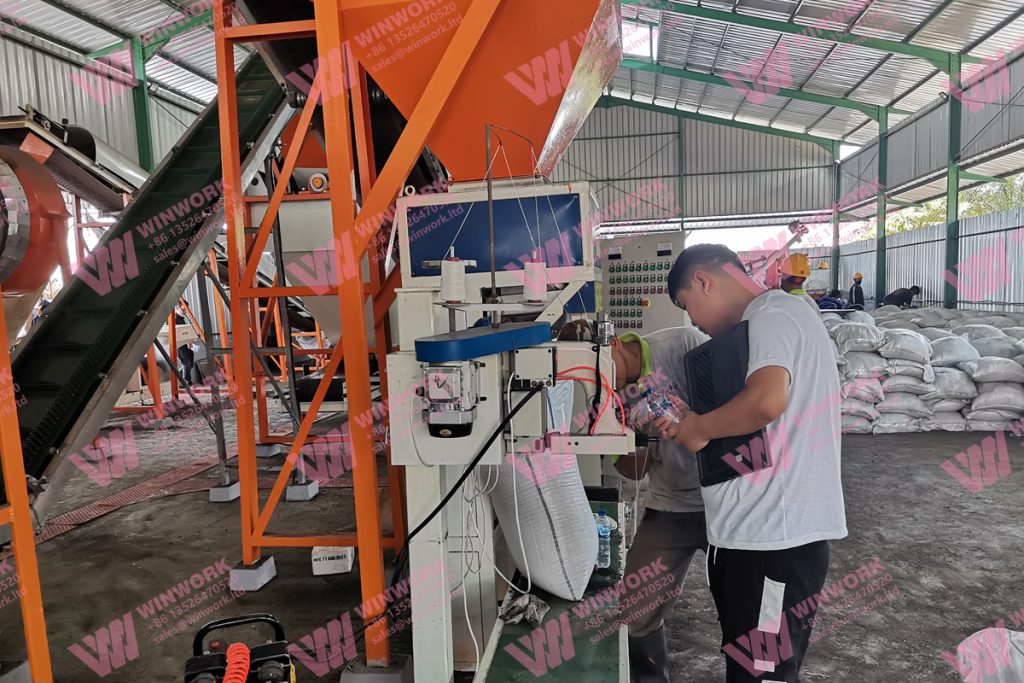
During turnkey poultry feed mill commissioning, each section is checked to confirm that the machines operate correctly and work together as planned. Installation, commissioning, operator training, and technical support are also important for normal operation.
Before shipment, the equipment list and layout should be confirmed. Drawings show machine positions, foundation requirements, connection points, and material flow. During installation, particular attention should be paid to machine alignment, electrical connections, conveying equipment, and safety guards.
Commissioning checks whether each section operates correctly and whether the machines work together. Important checks include motor rotation, feeding consistency, weighing accuracy, mixer operation, steam supply, pellet mill adjustment, and cooler airflow.
After production begins, questions may arise about grinding size, mixing time, pellet formation, ring die selection, or cooling performance. These issues should be checked against the actual raw materials and operating conditions.
An after-sales communication group involving engineers provides a direct channel for discussing operating problems. Photos and videos of the equipment can help engineers understand the situation and provide more specific technical guidance. The equipment comes with five-year after-sales support, giving the production team continued access to technical assistance as it becomes familiar with the system.
For a complete turnkey poultry feed mill, after-sales support should be considered part of the project rather than a service that begins only when a machine breaks down.
What Information Is Needed to Design Your Turnkey Poultry Feed Mill?
A practical proposal requires more than a machine list or hourly capacity. The following information helps determine whether the equipment configuration fits the actual production conditions.
- Project location: Where will the factory be built? Local conditions and available utilities may affect the project design.
- Production capacity: How much feed is required per hour or per day? How many hours will the factory operate?
- Raw materials: Which ingredients will be used? Will they arrive in bulk or in bags?
- Feed types: Will the factory produce broiler, layer, chick feed, or several different products?
- Finished products: Is mash, pellet, or crumble feed required? What pellet diameter and bag sizes are needed?
- Workshop conditions: Is a building already available? If so, what are its length, width, and height?
- Automation requirements: Is a semi-automatic system sufficient, or is a higher level of automation preferred?
- Project budget: How much is available for equipment and supporting facilities?
Not every detail needs to be finalized before planning begins. An initial process flow can be developed from the available information, while equipment specifications and technical parameters can be confirmed during further discussions.
A successful turnkey poultry feed mill is not defined by the number of machines on its equipment list. The final turnkey poultry feed mill design should reflect the actual production requirements, rather than follow a standard equipment configuration.What matters is whether the equipment matches the raw materials, feed formulas, production targets, and workshop conditions. From project planning and machine configuration to commissioning and after-sales support, every stage should contribute to one coordinated production system.
For more details, please feel free to contact us.
Email: sales@lanesvc.com
Contact number: +8613526470520
Whatsapp: +8613526470520
Get A Quote