

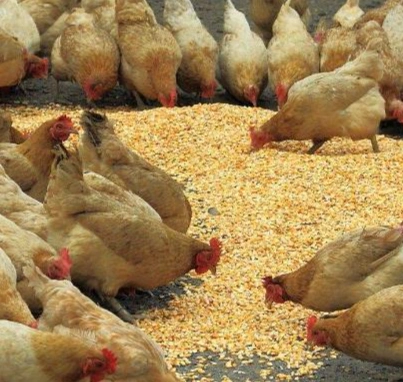
When people think about a chicken feed factory, they may imagine a fixed Chicken Feed Production Line in which every raw material is crushed, mixed, pelleted, cooled, and packed.
A Chicken Feed Production Line should be designed around the feed formula, raw material characteristics, required production capacity, and final feed form. Some producers may need mash feed that can be mixed and packed directly, while others may want pellets for easier handling, storage, and transportation.
The same principle applies to crushing. Not every raw material has to be crushed before mixing or pelleting. If corn and other ingredients already have a suitable particle size, they may be able to enter the next processing stage directly. Crushing becomes necessary when the raw material particles are too large or when a smaller and more uniform particle size is required.
This flexible approach is important when planning a feed production project because the best chicken feed production line is not necessarily the one with the most machines. It is the one that provides the right processing steps for the actual product.
From Feed Formula to the Right Processing Route
The starting point of a chicken feed production line project is the formula.Before selecting equipment, producers need to understand what type of feed they want to make and what ingredients will be used.
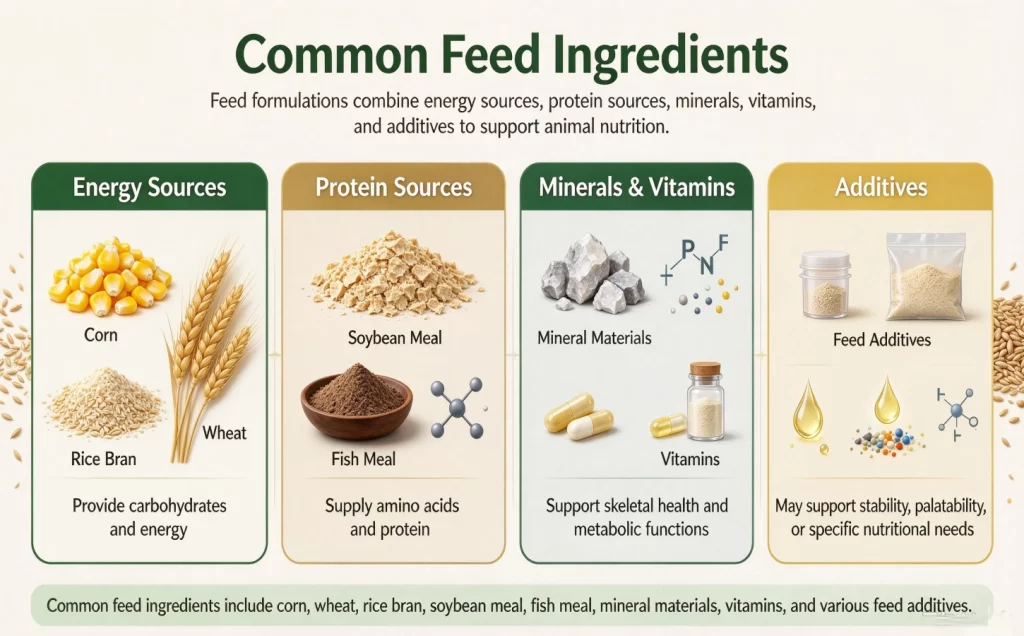
Common chicken feed ingredients include corn, wheat, rice bran, soybean meal, fish meal, minerals, vitamins, and other feed additives. The proportions of these ingredients can vary according to the type of poultry feed being produced.
Broiler feed, layer feed, and chick feed, for example, may have different nutritional requirements. The formula can therefore influence not only the ingredients but also the way those ingredients need to be processed.
The final form of the feed is one of the first decisions to make. Some producers may choose mash feed, while others may require pellets. Mash feed can be suitable for certain farms and applications where the feed does not need to be compacted into pellets. In this case, the production process can focus on accurate dosing and uniform mixing before the finished feed is packaged.
For producers who need pelleted feed, additional processing is required. The mixed feed needs to be prepared for pelleting, formed into pellets, cooled, screened, and then packaged.
This means that a chicken feed production line should not be considered a fixed combination of machines. Instead, it should be configured according to the actual production route.
Raw material characteristics are another important factor. Different ingredients may have different particle sizes, moisture levels, hardness, and density. These differences determine whether additional preparation is needed before mixing or pelleting.
For example, if corn or another grain already has a suitable particle size, it may not need to pass through a separate crushing process. If the particles are too large, however, crushing may be necessary to create a more suitable material for the next stage.
The chicken feed production line should therefore begin with the question: What does the material need before it can become the final product?
Preparing and Mixing Feed Ingredients
Once the feed formula and raw material conditions have been considered, the next step in a chicken feed production line is preparing the ingredients for accurate and uniform processing.
Crushing is an optional preparation step rather than an unavoidable stage. When raw materials are too large, a hammer mill or another suitable crusher can reduce their particle size. Smaller and more uniform particles can make mixing easier and may also improve the consistency of the final pellets when pelleting is required.
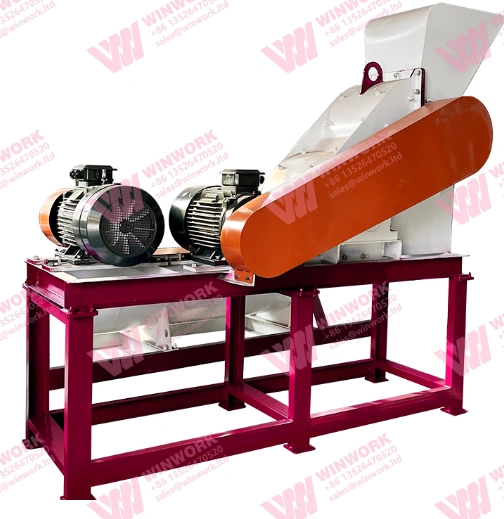
However, crushing should not be performed simply because a chicken feed production line contains a crusher.If the raw materials already meet the required particle size, an unnecessary crushing step may add equipment, energy consumption, and processing time without providing a clear benefit.
This is particularly important for grains such as corn. Depending on how the raw material is supplied and the required feed specifications, the material may already be small enough to proceed directly to mixing or the following processing stage.
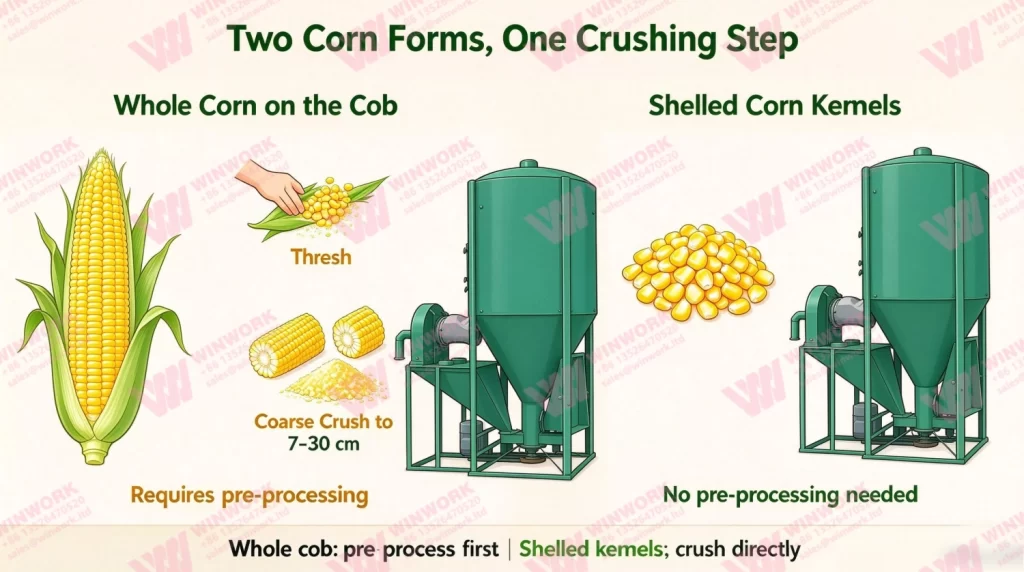
For some projects, crushing and mixing can also be combined in one machine. A crushing and mixing machine can reduce the size of suitable raw materials while also mixing the ingredients in the same unit. This type of equipment can be useful for small and medium-scale projects or applications where a relatively simple equipment configuration is preferred.
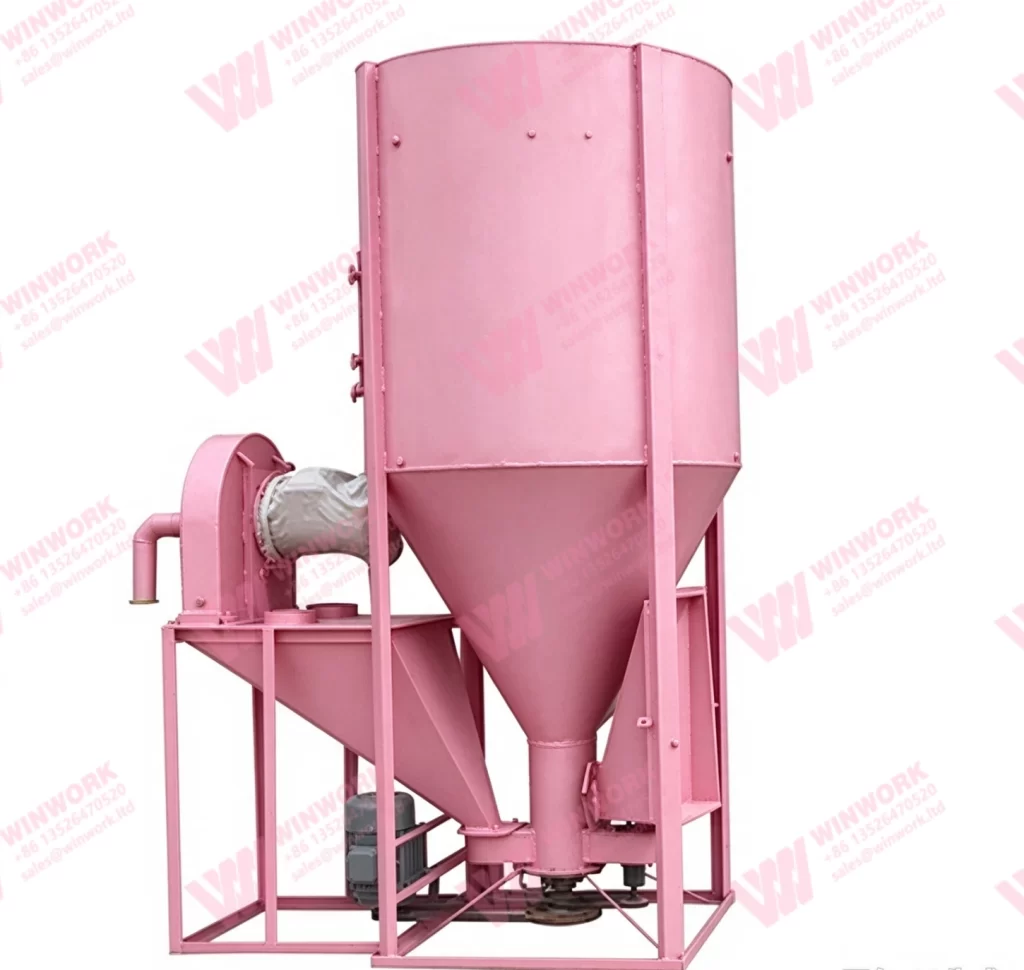
By combining two processing functions, the equipment can help reduce the number of separate machines and simplify the overall layout.
Accurate batching is still important regardless of whether crushing is required. Different ingredients need to be added according to the feed formula. Major ingredients may account for most of the batch, while vitamins, minerals, and additives may only represent a small proportion.
A suitable weighing and dosing system helps ensure that each ingredient is added at the required ratio.
After dosing, the ingredients need to be mixed sufficiently to create a uniform feed mixture. A feed mixer distributes different materials throughout the batch so that the final feed has a more consistent composition.
The actual equipment configuration of a chicken feed production line can therefore vary. A project may use separate crushing and mixing machines, or a crushing and mixing machine may perform both functions depending on the raw materials, capacity, and project requirements.
When Does a Chicken Feed Production Line Need Pelleting?
One of the most important decisions in designing a chicken feed production line is whether the final product needs to be pelleted.
Not every chicken feed product needs to become pellets. Mash feed can be produced when the customer requires a mixed feed product rather than a compacted pellet. In this type of project, the production process may finish after the ingredients have been accurately dosed and thoroughly mixed, followed by packaging.
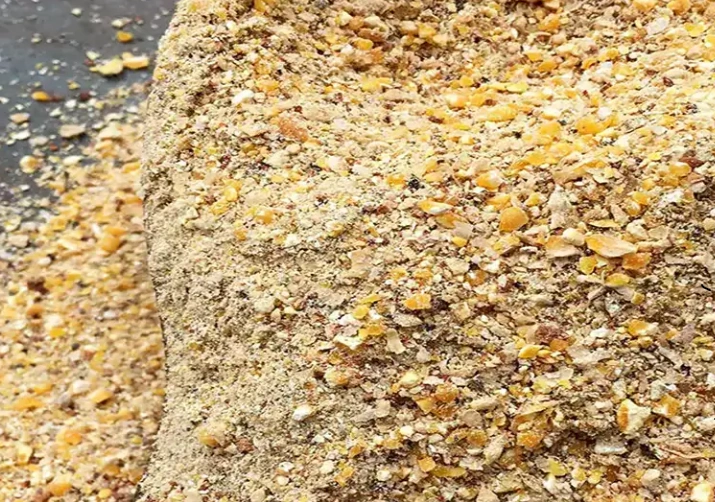
For producers who want pellets, the process continues beyond mixing.
The decision to pellet may be related to the desired product form, handling requirements, transportation, storage, and the specific application. Pellets can provide a more compact and uniform product, which may be convenient for commercial feed production and distribution.
The need for crushing also depends on the pelleting requirements. Pelleting does not automatically mean that every ingredient must first be finely crushed. If corn and other raw materials already have a suitable particle size, they may be able to proceed to mixing and later pelleting without a separate crushing stage.
When the raw material particles are too large, however, crushing can help create a more appropriate feed mixture before pelleting.
This is why equipment selection for a chicken feed production line should start with the raw materials and finished product rather than with a predetermined machine list.
For a pelleted feed project, the general process may be:
Raw Material →Batching→ Necessary Crushing → Mixing → Pelleting → Cooling → Screening → Packaging
For a mash feed project, the process may be simpler:
Raw Material → Batching → Necessary Crushing → Mixing → Packaging
In some small-scale projects, crushing and mixing may also be combined:
Raw Material → Crushing & Mixing → Packaging
The actual chicken feed production line can therefore be relatively simple or more complete depending on what the producer wants to manufacture.
How Pelleting Changes the Feed Product
When pellets are required, the mixed feed in a chicken feed production line needs to go through an additional processing stage. The purpose is to transform the loose feed mixture into compact particles with a defined size and shape.
Conditioning prepares the mixed feed before pelleting. Steam and controlled moisture may be introduced to adjust the material’s temperature and moisture level. Proper conditioning can help the material enter the pellet mill more effectively and support the formation of stable pellets.
The exact conditioning requirements depend on the feed formula, raw material characteristics, moisture content, and target pellet specifications.
The pellet mill then compresses the prepared feed through a die. Mechanical pressure forms the material into continuous strands, which are cut into pellets. The required pellet diameter is related mainly to the die opening, while the pellet length can be adjusted through the cutting system and operating conditions.
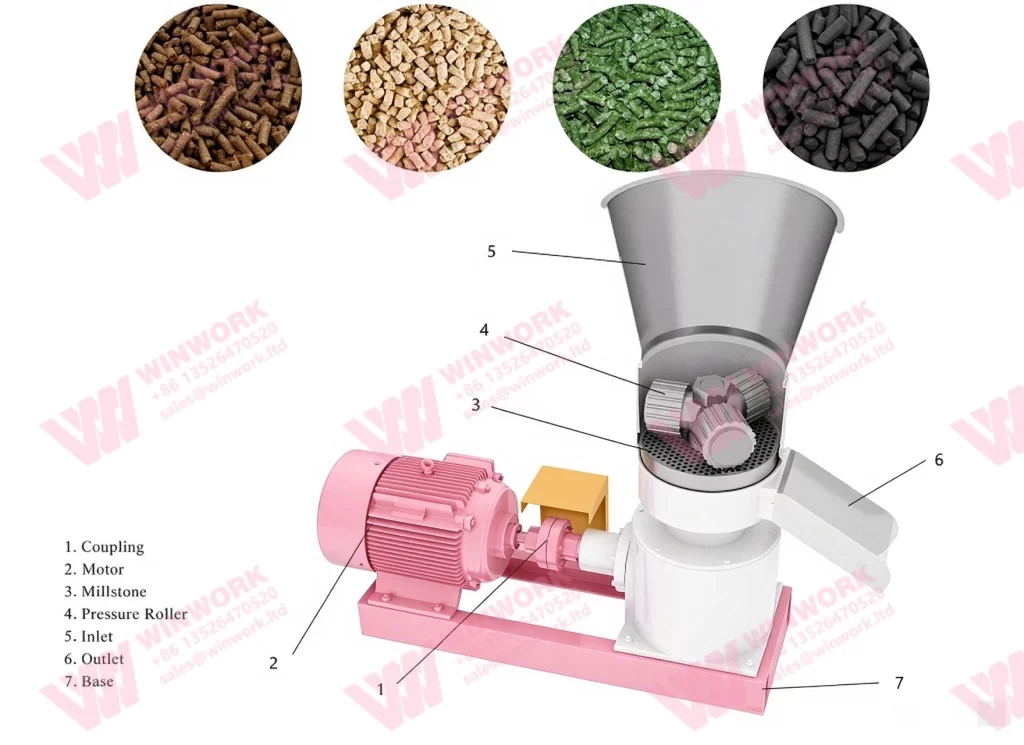 Importantly, pellet quality is not determined by the pellet mill alone. The condition of the raw materials, mixing uniformity, moisture, conditioning, and operating parameters can all influence the final pellets.
After pelleting, the newly formed pellets are generally hot and may contain more moisture than desired for storage. They therefore need additional processing.
Cooling helps bring the pellets to a more suitable condition for storage and handling. A counterflow cooler can reduce pellet temperature and help stabilize moisture.
Screening then separates pellets according to size. Qualified pellets can move forward to packaging, while excessive fines or oversized particles can be separated according to the production process and, where appropriate, returned for further processing.
This creates a more controlled final product without requiring every particle leaving the pellet mill to have exactly the same size.
For producers who require pellets, these additional stages form the second part of the production route. The final equipment configuration depends on the required capacity and pellet specifications.
Packaging and the Final Feed Product
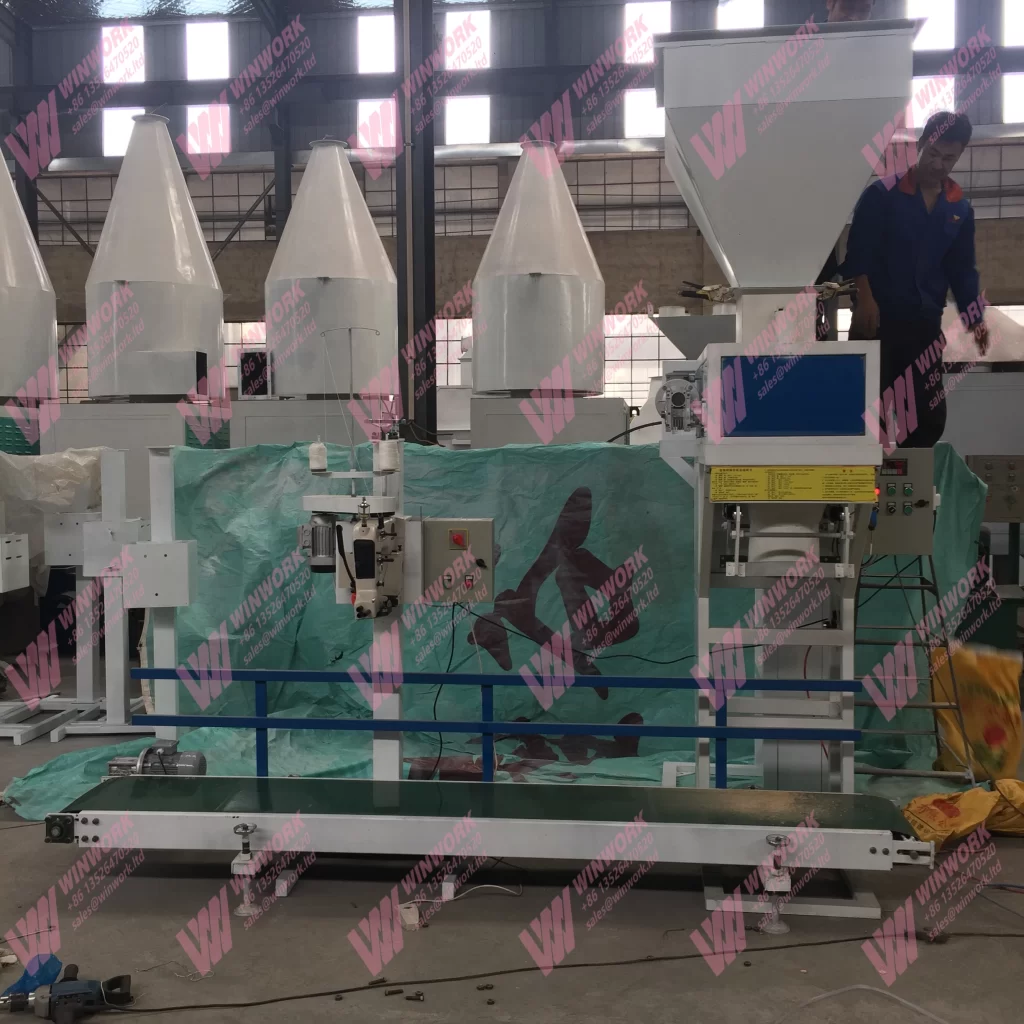
Whether the final product is mash feed or pellets, packaging is the final stage of a chicken feed production line where the processed feed becomes a finished commercial product.
Accurate weighing is important before packaging. Different markets and customers may require different bag sizes, so the weighing and bagging system should be selected according to the intended product and production capacity.
For pellet feed, packaging normally comes after cooling and screening. For mash feed, packaging can take place after the feed has been sufficiently mixed.
This difference demonstrates why there is no single production route suitable for every poultry feed project.
The packaging system also needs to match the upstream production capacity. If the production line produces feed faster than the packaging system can handle, finished material may accumulate and create a bottleneck. A balanced system should allow material to move smoothly from processing to packaging.
For larger projects, automatic weighing, bagging, sewing, conveying, and control systems can be integrated into the production process. Smaller projects may use simpler or semi-automatic equipment.
The objective is not to make every project fully automatic. The objective is to select a packaging system that matches the actual production requirements.
How to Choose the Right Chicken Feed Production Line
A suitable chicken feed production line should begin with the product rather than the equipment.
The first question when planning a chicken feed production line is what type of feed the producer wants to sell or use. If mash feed is sufficient, there may be no need to invest in a complete pelleting system. If pellets are required, additional conditioning, pelleting, cooling, and screening equipment will need to be considered.
The second question is whether the raw materials need crushing. Producers should look at the actual particle size of the corn, grains, soybean meal, and other ingredients before deciding whether a crusher is necessary.
If the raw materials are already small enough, they may be able to bypass separate crushing. If they are too large, crushing can be added to the process. In some projects, a crushing and mixing machine can combine these functions and provide a more compact solution.
The third consideration is production capacity. The equipment should be matched from the beginning to the required output. A small farm project and a commercial feed factory may have completely different requirements.
The fourth consideration is the final feed specification. If pellets are required, pellet diameter, length, moisture, hardness, and other characteristics should be considered when configuring the production process.
Finally, the level of automation should be determined according to the project scale, labor availability, operating preferences, and budget.
A typical chicken feed production line production route may therefore look like this:
For Mash Feed:
Feed Formula → Raw Material Preparation→ Batching → Necessary Crushing → Mixing → Packaging
For Pelleted Feed:
Feed Formula → Raw Material Preparation→ Batching → Necessary Crushing →Mixing → Conditioning → Pelleting → Cooling → Screening → Packaging
For Small or Medium Projects Using Combined Equipment:
Feed Formula → Crushing & Mixing → Packaging
The most suitable chicken feed production line is not necessarily the longest one. It is the production system that includes the processing steps the product actually needs.
By evaluating the feed formula, raw materials, required capacity, final feed form, pellet specifications, and automation level before selecting equipment, producers can avoid unnecessary processing steps while ensuring that the final feed meets their requirements.
If you are planning a chicken feed production line project, providing information about your raw materials, feed type, required capacity, desired feed form, and pellet size if applicable can help determine a suitable processing route and equipment configuration.
For more details, please feel free to contact us.
Email: sales@lanesvc.com
Contact number: +8613526470520
Whatsapp: +8613526470520
Get A Quote