


Introduction
Fruit growers often depend on commercial fertilizers to provide crops with the nutrients they need throughout the growing season. For a small orchard, purchasing finished fertilizer may be the simplest option. However, when orchard size increases, fertilizer demand can become a significant and recurring operating requirement.
This raises an interesting question: Can fruit growers produce their own High K Fertilizer?
For large orchards, agricultural contractors, farming cooperatives, and local fertilizer suppliers, small-scale fertilizer production may be an option worth evaluating. Instead of purchasing all fertilizer as a finished product, a business with stable demand may consider producing fertilizer locally according to its own formula, raw materials, and production requirements.
This does not mean that every fruit grower should build a fertilizer plant. The decision depends on factors such as annual fertilizer demand, available raw materials, production capacity, investment plans, and the intended use of the finished product.
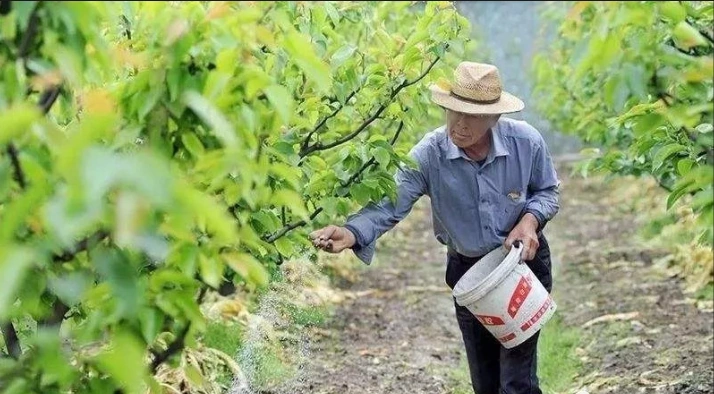
Why Do Fruit Growers Need High K Fertilizer?
Potassium is one of the major nutrients required by plants, and fruit production can create substantial nutrient requirements. For growers, the goal is not simply to purchase a fertilizer with a high potassium content, but to provide a suitable nutrient supply based on crop requirements and production conditions.
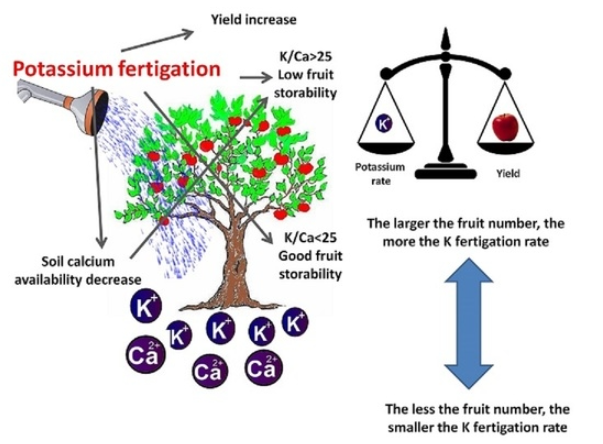
High K Fertilizer for Fruit Trees
High K Fertilizer for Fruit Trees is commonly associated with fertilizer formulations containing a relatively high proportion of potassium. Potassium plays an important role in many plant processes and is particularly relevant when growers are managing crops for fruit development and quality.
For commercial orchards, fertilizer requirements can become substantial because the same production operation may contain thousands of trees and require repeated nutrient applications. The total amount of fertilizer used over an entire growing season can therefore be much more important than the amount used for an individual plant.
The exact fertilizer formula should depend on factors such as crop type, soil conditions, existing nutrient management practices, and local agricultural recommendations. A production line should therefore be planned around a defined fertilizer formula rather than assuming that one formulation is suitable for every orchard.
When Does Buying Fertilizer Become a Bigger Cost?
Purchasing finished fertilizer is convenient because growers do not need to manage raw materials, production equipment, or fertilizer processing. For operations with relatively low consumption, this approach may remain practical.
The situation can become different when fertilizer demand grows significantly.
A commercial orchard may move from occasional purchases to a regular purchasing cycle:
More trees → More fertilizer → More purchases → More transportation → More storage
In addition to the fertilizer itself, businesses may need to consider delivery schedules, warehouse space, handling, and inventory management.
High K Fertilizer and Recurring Orchard Demand
For a commercial orchard, the important question is not only how much High K Fertilizer is needed for one application. It is also how much fertilizer is required throughout the year.
A grower can begin by reviewing historical purchasing records and estimating annual fertilizer consumption. If the demand is stable and substantial, it may be reasonable to compare the current purchasing model with the possibility of local fertilizer production.
This comparison should consider the complete project rather than fertilizer purchase price alone. Raw materials, labor, electricity, transportation, storage, production capacity, and equipment investment can all affect the overall economics of a production project.
The purpose is not to assume that self-production is automatically cheaper. Instead, it is to determine whether local production is an option worth evaluating for a particular business.
When Does Small-Scale Fertilizer Production Make Sense?
Small-scale production is not necessarily designed for every fruit grower. A small household orchard with limited fertilizer consumption may have little reason to establish its own production facility.
The situation can be different for businesses with consistent fertilizer demand or access to multiple agricultural customers.
High K Fertilizer for Large Fruit Orchards
Large commercial orchards may be one group that can consider small-scale fertilizer production. If an orchard purchases High K Fertilizer for Fruit Trees repeatedly and in significant quantities, the business already has an established fertilizer demand.
Agricultural contractors may also have an opportunity to consider local production if they provide services to multiple farms or orchards. Farming cooperatives can potentially evaluate shared production facilities, while local fertilizer suppliers may consider production for nearby agricultural markets.
However, the right approach depends on the individual project. Before investing in a production line, it is important to understand the expected fertilizer volume, target products, available raw materials, factory conditions, and production goals.
What Can You Produce With a Small Fertilizer Line?
High K Fertilizer for Fruit Trees
A small fertilizer production line can be designed around a specific High K Fertilizer for Fruit Trees formula. Depending on the selected raw materials and production process, the line may be configured to produce fertilizer with different nutrient ratios and physical characteristics.
This can be useful when fertilizer requirements change between crops, seasons, or customers.
However, a production line does not necessarily have to manufacture only one fertilizer product.
NPK and Compound Fertilizer Products
A properly planned fertilizer production line can potentially support multiple fertilizer formulations, including NPK fertilizer, compound fertilizer, and customized nutrient blends.
For example, a producer may manufacture a high-potassium fertilizer for fruit trees during one production period and produce another NPK formulation for a different crop or customer during another period.
Similarly, producers interested in manufacturing different compound fertilizer products can evaluate a flexible
This flexibility can increase the practical value of a fertilizer production project because the line can be designed around current demand while leaving room for future product development.
How Is High K Fertilizer Produced?
Raw Materials and Granulation for High K Fertilizer
The production process depends on the fertilizer formula, raw materials, desired granule size, and product requirements. A typical process may include:
Raw Materials → Batching → Crushing → Mixing → Granulation → Screening → Drying/Cooling → Packaging
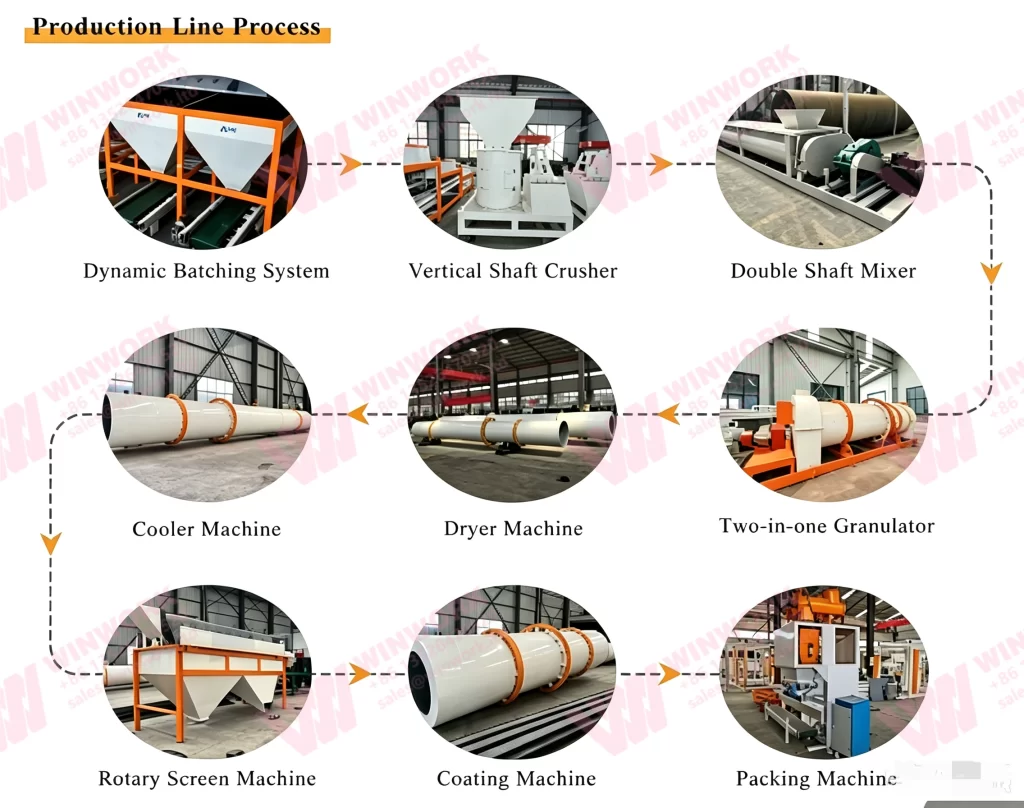
Not every fertilizer project requires exactly the same process. Some raw materials may not need crushing, while some formulations may require additional drying, cooling, or other processing steps.
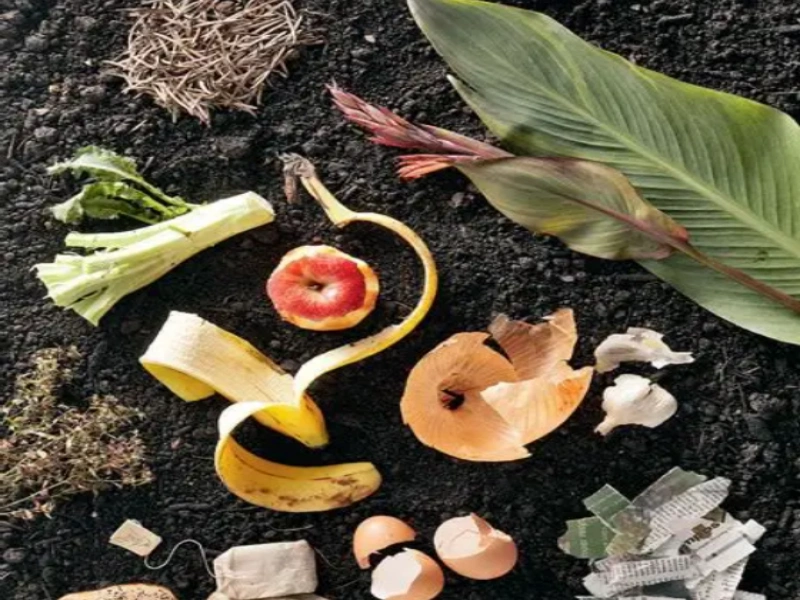
The first stage is raw material preparation. Depending on the formula, materials may include potassium-containing materials together with nitrogen, phosphorus, filler, or other nutrient sources.
The materials are then accurately batched according to the target formula. Crushing may be required when raw materials contain oversized particles or need to reach a suitable particle size before mixing.
After batching and preparation, the materials are mixed to achieve a relatively uniform fertilizer blend.
Granulation is the stage where the prepared material is converted into fertilizer granules. The appropriate granulation method depends heavily on the characteristics of the raw materials and the desired product.
After granulation, screening can separate oversized and undersized particles from qualified fertilizer granules. Depending on the process, drying and cooling may also be required before the final product is packaged.
The important point is that the production process should be designed around the fertilizer formula and raw materials. Equipment selection comes after these production requirements have been established.
What Should You Consider Before Building a Small Fertilizer Production Line?
High K Fertilizer Formula, Raw Materials, and Capacity
Before building a fertilizer production line, the first step is to define the target product.
For High K Fertilizer, the required nutrient ratio should be determined first. The producer then needs to identify suitable raw materials and confirm whether those materials are readily available and suitable for the planned process.
Production capacity is another important factor.
Instead of selecting a machine based only on its maximum theoretical output, it is better to estimate actual fertilizer demand. Consider annual consumption, operating days, working hours, seasonal demand, and possible future expansion.
For example, a project serving one orchard may require a different capacity from a production line supplying several farms or local fertilizer customers.
The same principle applies when producing multiple NPK or compound fertilizer formulations.
Product Requirements and Available Space
Physical product requirements should also be defined before the production line is designed.
These may include:
- Target granule size
- Product nutrient ratio
- Granule strength
- Moisture requirements
- Packaging size
- Daily or hourly production capacity
- Degree of automation
- Raw material storage
- Finished fertilizer storage
- Available workshop space
A production line should fit the actual project conditions rather than forcing the project to adapt to a standard machine configuration.
This is why fertilizer production projects are often better approached as complete production solutions instead of individual equipment purchases.
From Fertilizer Demand to Your Own Production Line
Start With Your High K Fertilizer Demand
If you are considering producing your own High K Fertilizer for Fruit Trees, start with a simple question:
How much fertilizer do you currently purchase each year?
From there, the project can be evaluated step by step:
Annual fertilizer demand → Target formula → Available raw materials → Required capacity → Production process → Production line
This approach helps connect the fertilizer requirement with the machinery requirement.
For example, if a commercial orchard has stable annual fertilizer demand, the producer can first determine the required High K Fertilizer formula and annual volume. The next step is to evaluate available raw materials and determine the appropriate production capacity.
If the business also plans to manufacture other NPK or compound fertilizer products, this should be considered during the initial line design.
Is Small-Scale Production Right for Your Business?
Different businesses may have different reasons for evaluating a small fertilizer production project.
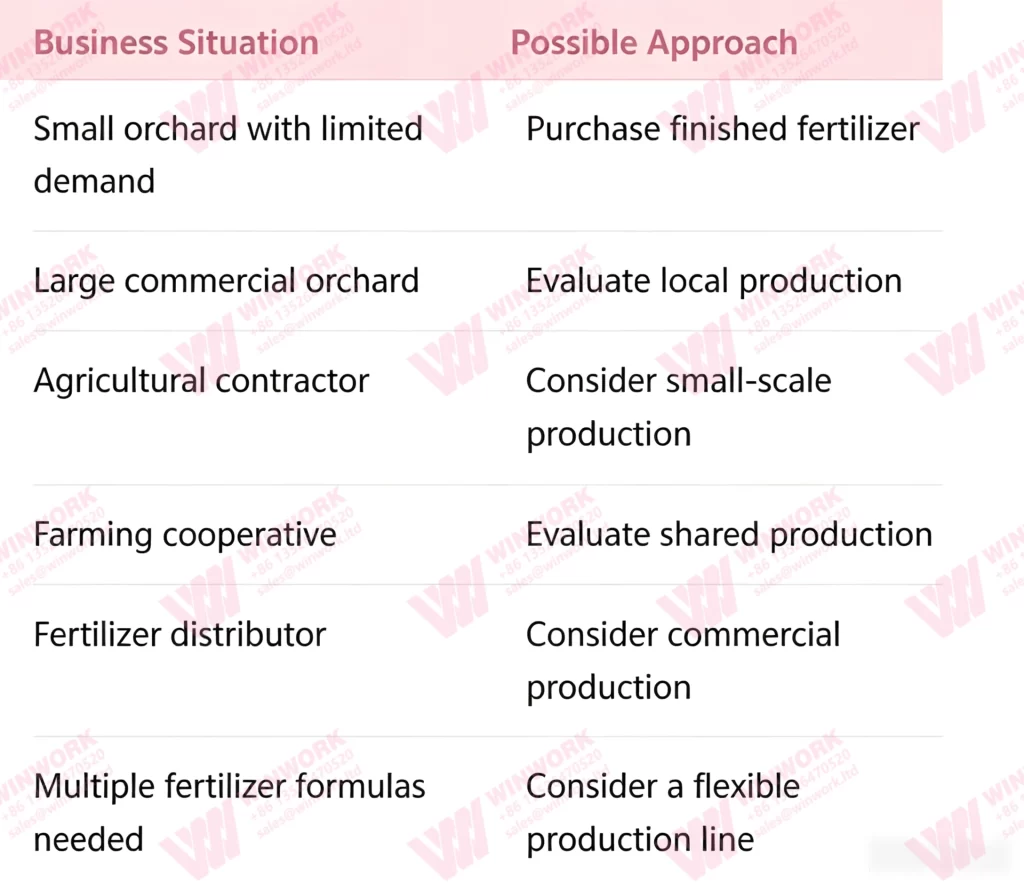
This table is not a fixed rule. Actual feasibility depends on fertilizer demand, raw materials, production requirements, investment capacity, and local operating conditions.
For some businesses, purchasing finished fertilizer may remain the most practical option. For others, producing fertilizer locally may be worth evaluating.
Frequently Asked Questions About High K Fertilizer
1.What Is High K Fertilizer for Fruit Trees?
High K Fertilizer for Fruit Trees refers to fertilizer formulations with a relatively high potassium content designed for agricultural applications where higher potassium availability is required. The exact nutrient ratio depends on the crop, soil, growth stage, and agronomic requirements.
2.Can Fruit Growers Produce Their Own High K Fertilizer?
Yes, fruit growers can evaluate their own fertilizer production when they have sufficient and stable demand, suitable raw materials, available space, and a practical production plan. Small-scale production may be considered particularly for large commercial orchards and agricultural businesses.
3.What Raw Materials Are Used for High K Fertilizer?
The raw materials depend on the target fertilizer formula. A production project may use potassium-containing materials together with nitrogen sources, phosphorus sources, fillers, or other nutrient materials. The exact formulation should be determined before equipment selection.
4.Can a Small Fertilizer Line Produce Different NPK Formulas?
A suitably designed production line can potentially produce different NPK and compound fertilizer formulations. The actual flexibility depends on the raw materials, fertilizer formulas, production process, and equipment configuration.
5.What Capacity Is Suitable for a Small Fertilizer Plant?
There is no single capacity suitable for every project. Capacity should be calculated from actual fertilizer demand, operating schedules, seasonal requirements, and possible future expansion.
6.Can the Production Line Be Customized?
Yes. A fertilizer production line can be planned around specific raw materials, fertilizer formulas, target capacity, granule requirements, workshop conditions, and automation requirements.
Conclusion
So, can fruit growers produce their own High K Fertilizer?
For growers and agricultural businesses with stable fertilizer demand, suitable raw materials, and clear production goals, small-scale fertilizer production can be an option worth evaluating.
The process should begin with fertilizer demand rather than machinery. First determine the required High K Fertilizer for Fruit Trees formula, raw materials, and production capacity. Then evaluate the appropriate production process and equipment configuration.
A well-planned fertilizer line can also potentially produce NPK fertilizer, compound fertilizer, and other formulations, giving the producer more flexibility as fertilizer requirements change.
If you are considering producing High K Fertilizer for Fruit Trees, NPK fertilizer, or other compound fertilizers, WINWORK can help develop a fertilizer production solution based on your specific raw materials, capacity, formula, and production requirements.
For more details, please feel free to contact us.
Email: sales@lanesvc.com
Contact number: +8613526470520
Whatsapp: +8613526470520
Your choice is the best recognition for us!
Get A Quote