


As a senior technical consultant with over a decade of experience in the organic fertilizer production industry, I have assisted countless small and medium-sized agricultural producers, environmental protection enterprises, and new agricultural factories in optimizing their fertilizer production systems. In recent years, driven by the global green agriculture trend and strict environmental protection policies, organic fertilizer has completely replaced traditional chemical fertilizers in many planting scenarios by virtue of its advantages of improving soil structure, activating soil nutrients, and reducing agricultural pollution. More practitioners are beginning to focus on the standardized organic fertilizer manufacturing process, hoping to turn agricultural waste, livestock manure, and organic residues into high-value ecological fertilizers through scientific and efficient production methods.

Many new entrants mistakenly believe that organic fertilizer production is simple stacking and natural fermentation, which leads to unstable fertilizer quality, low nutrient content, and easy mold and odor of finished products. In fact, the mature organic fertilizer manufacturing process is a systematic, standardized, and mechanized industrial system. From raw material screening to finished product packaging, every link has strict technical standards and operational specifications. Mastering the complete manufacturing process is the core premise of producing qualified, high-efficiency, and market-competitive organic fertilizer products.
Overview of the Complete Organic Fertilizer Manufacturing Process
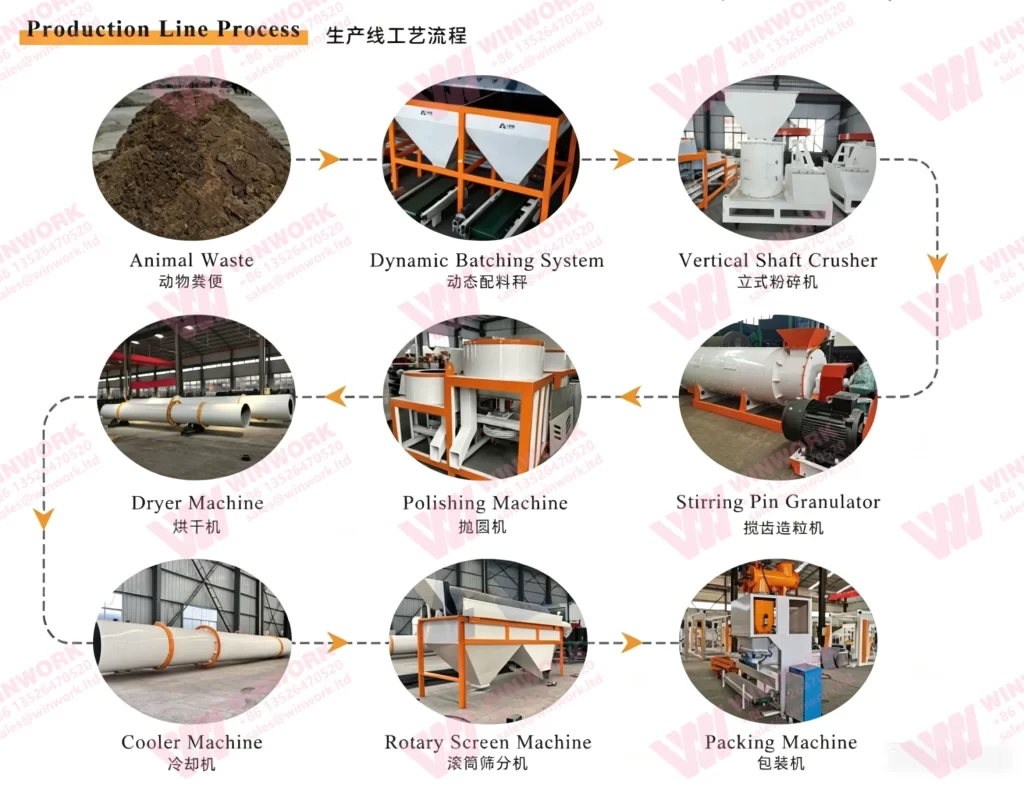
The complete industrial organic fertilizer manufacturing process can be divided into seven core links: raw material collection and pretreatment, proportioning and mixing, high-temperature aerobic fermentation, aging and curing, fine crushing and screening, granulation and shaping, drying cooling and finished product packaging. Each link is closely connected, and the process effect of the previous link directly determines the quality and yield of the subsequent link. Traditional small-scale workshop production relies on manual operation, which has problems such as low efficiency, unstable carbon-nitrogen ratio, incomplete fermentation, and uneven finished particle size. Modern standardized production relies on matched professional equipment to realize automated and standardized operation of the entire organic fertilizer manufacturing process.
Step 1: Raw Material Collection and Scientific Pretreatment
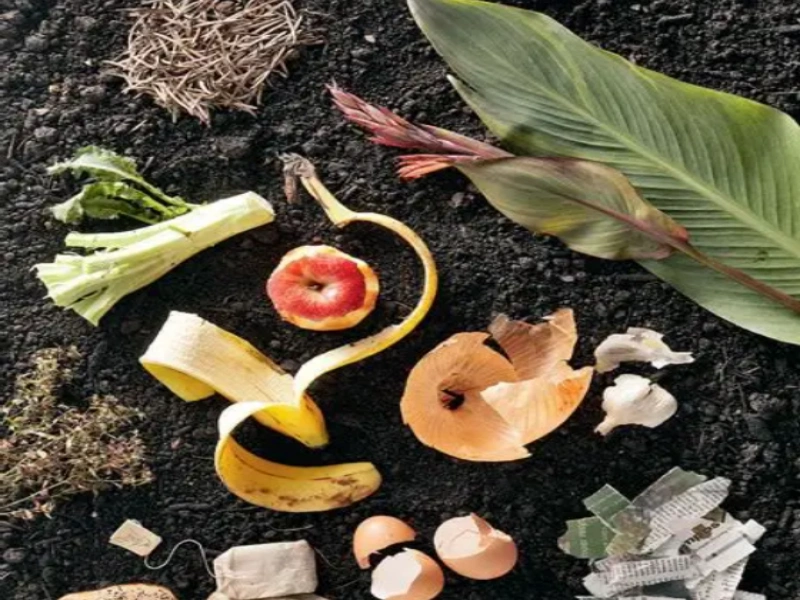
High-quality raw materials are the foundation of high-grade organic fertilizer, and pretreatment is the first key step of the organic fertilizer manufacturing process. The mainstream raw materials for organic fertilizer production include livestock and poultry manure, crop straw, mushroom residue, kitchen organic waste, peat soil, and humic acid raw materials. These raw materials often have problems such as excessive moisture, large particle size, mixed impurities, and unbalanced carbon-nitrogen ratio, which must be pretreated before formal fermentation.
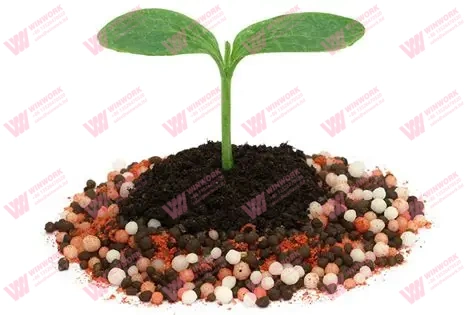
Achieve Carbon Neutrality on Farms
In addition, moisture control is crucial for theorganic fertilizer manufacturing process. The optimal moisture content of fermentation raw materials is 55%-65%. Excessive moisture will cause the material pile to harden, breed harmful bacteria, and produce pungent odor; too low moisture will inhibit microbial activity and prolong the fermentation cycle. For raw materials with excessive moisture such as fresh livestock manure, solid-liquid separation treatment is required to quickly adjust the moisture to the standard range and create a suitable fermentation environment.
Step 2: Precision Proportioning and Uniform
Scientific proportioning is the key to ensure balanced nutrients of organic fertilizer and smooth fermentation, and it is an indispensable link in the standardized organic fertilizer manufacturing process. Different raw materials have different carbon-nitrogen ratios. For example, livestock manure has a high nitrogen content and low carbon content, while straw and sawdust have a high carbon content and low nitrogen content.
Step 3: High-Temperature Aerobic Fermentation (Core Link)
Fermentation is the core and most critical part of the entire organic fertilizer manufacturing process, which determines whether the organic fertilizer is harmless, mature, and effective. The mainstream industrial production adopts aerobic high-temperature fermentation, which is far more efficient and environmentally friendly than traditional anaerobic natural stacking fermentation.
Step 4:Fine Crushing and Impurity Screening
After fermentation, small amounts of large, agglomerated particles and incompletely degraded impurities may still remain within the material.
To improve the fineness and uniformity of finished products and lay a foundation for subsequent granulation molding, fine crushing and precise screening operations are required. This link is an important guarantee for improving the grade of organic fertilizer in the organic fertilizer manufacturing process.
Step 5: Granulation Molding and Precision Processing
Powder organic fertilizer is simple to produce but has disadvantages such as easy dusting, inconvenient transportation and application, and low utilization rate. Therefore, most commercial high-grade organic fertilizers adopt particle molding treatment, which is an upgraded processing link of the organic fertilizer manufacturing process and greatly improves the market value of products.
Step 6: Drying, Cooling and Automatic Packaging
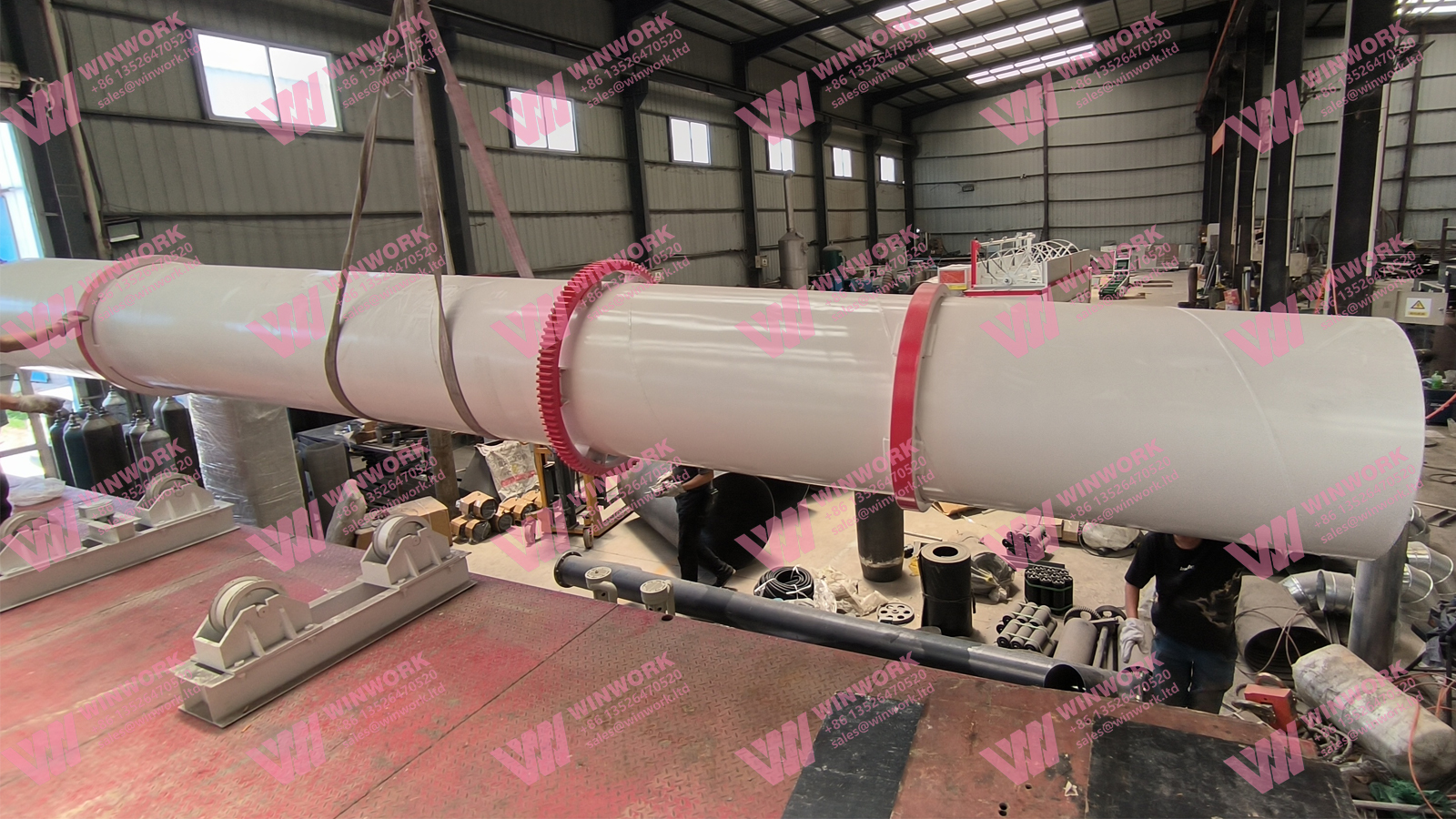
Freshly granulated fertilizer particles have high moisture content and soft texture, which are easy to deform and mildew. Therefore, drying and cooling treatment is required. The materials are evenly dried by professional drying equipment to control the moisture content of finished products within the national standard range, and then cooled by cooling equipment to reduce the material temperature to room temperature, which avoids heat accumulation and mildew during packaging and storage.
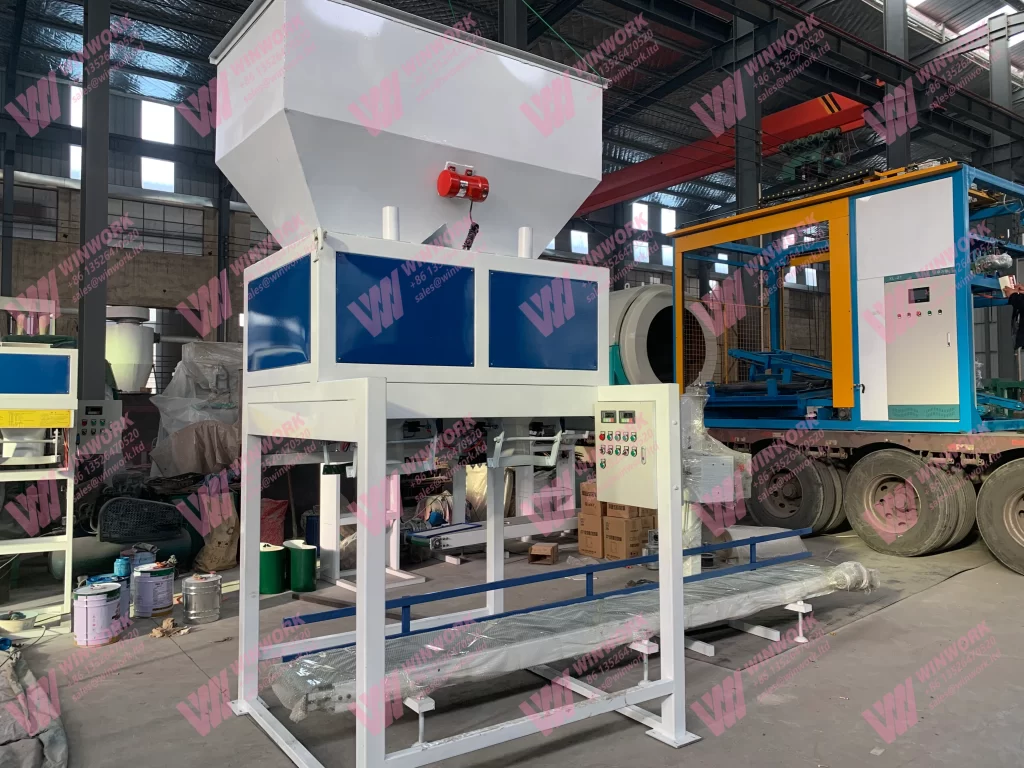
Finally, the qualified finished particles are automatically weighed, bagged, sealed and coded by automatic packaging equipment. The whole process realizes standardized and automated production, effectively improving product packaging uniformity and production efficiency, and completing the whole organic fertilizer manufacturing process.
How Professional Equipment Optimizes the Organic Fertilizer Manufacturing Process
From the above full-process analysis, we can find that every link of the organic fertilizer manufacturing process has strict technical requirements, and manual operation can no longer meet the needs of large-scale, standardized and high-quality production. The core of modern organic fertilizer industrialization is to rely on professional supporting equipment to solve the pain points of traditional production, such as low efficiency, unstable quality, high labor cost and serious environmental pollution.
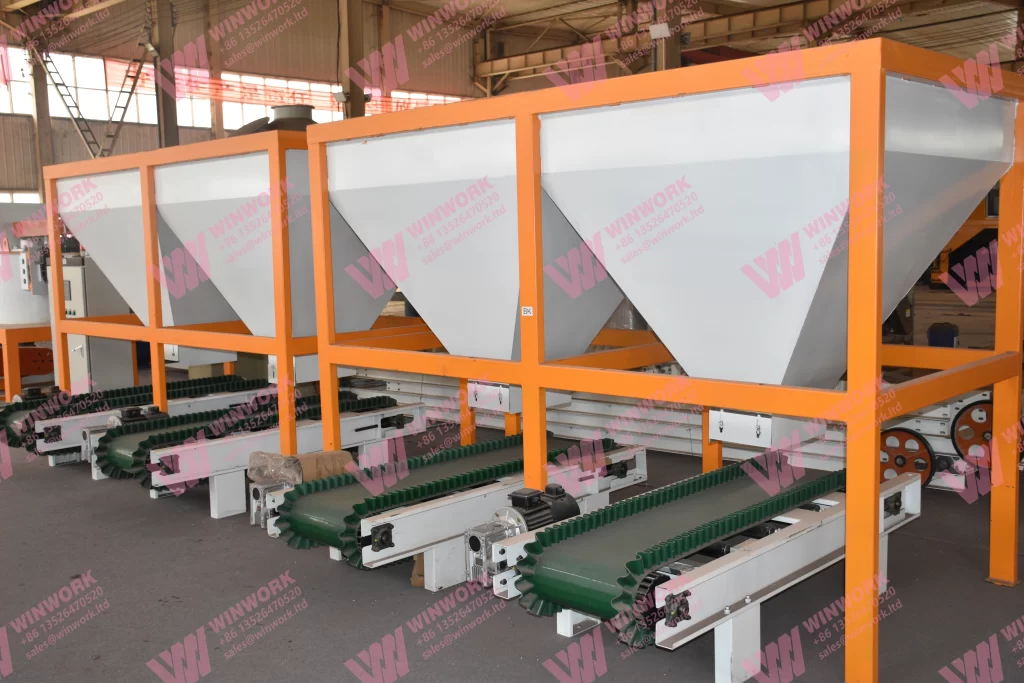
Specialized crushing and solid-liquid separation equipment enables rapid material pulverization and moisture adjustment, ensuring raw materials precisely meet fermentation standards and eliminating issues such as material waste and substandard fermentation often caused by manual processing. Automated batching equipment ensures the precise proportioning and uniform blending of various raw materials and microbial strains, fundamentally resolving the problem of nutrient imbalance in the fertilizer.
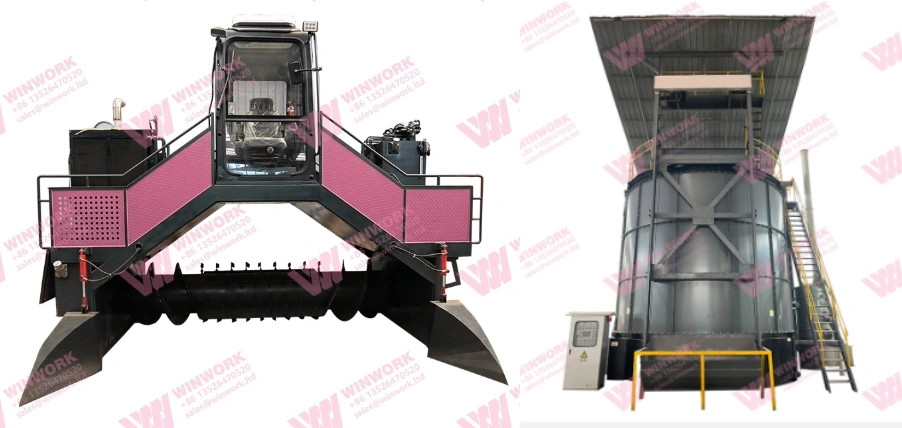
In the core fermentation link, there are two mature and optional fermentation solutions for theorganic fertilizer manufacturing process: compost turning fermentation and fermentation tank fermentation, which can be flexibly selected according to customers’ production scale, plant area, and local environmental protection standards. Professional compost turning equipment is suitable for large-scale, open-space production. It realizes regular and quantitative turning and oxygen supply according to the fermentation cycle, accurately controls fermentation temperature and oxygen content, makes material fermentation more thorough and uniform, and shortens the production cycle by 30%-50%. In contrast, the organic fertilizer fermentation tank is ideal for small and medium-sized factories with limited site and strict environmental requirements. It features fully enclosed fermentation, centralized deodorization, less floor space, and is free from seasonal climate restrictions. Both fermentation equipment solutions support environmentally friendly and high-efficiency fermentation, covering diverse production demands of different enterprises.
In the fine processing and finished product stage, integrated equipment such as crushers, rotary screens, granulators, dryers and automatic packaging machines realize continuous and automated operation of the whole process. It not only greatly reduces manual intervention and production labor costs, but also ensures the uniformity and stability of finished fertilizer particle size, moisture and nutrients, making the product fully compliant with market access standards.
Conclusion
For production enterprises of different scales, we can support customized complete production line solutions. From small-scale portable single equipment to large-scale fully automatic integrated production lines, all links of the organic fertilizer manufacturing process can be precisely matched, helping enterprises quickly realize standardized production, improve product market competitiveness, and realize resource recycling and green production.
The matureorganic fertilizer manufacturing process is a standardized, systematic and mechanized industrial system, and every technical link determines the final quality of organic fertilizer products. With the continuous upgrading of green agriculture and environmental protection industry, the traditional extensive manual production mode has been eliminated, and standardized mechanical production has become the mainstream trend of the industry. By sorting out the full organic fertilizer manufacturing process and matching professional supporting equipment for each link, enterprises can effectively improve production efficiency, stabilize product quality, reduce production costs, and gain a firm foothold in the increasingly competitive organic fertilizer market. Mastering process standards and selecting matched equipment are the two core keys to the sustainable development of organic fertilizer processing enterprises.
Should you have plans for an organic fertilizer production line, welcome to browse our website and discover further details.
Get A Quote