

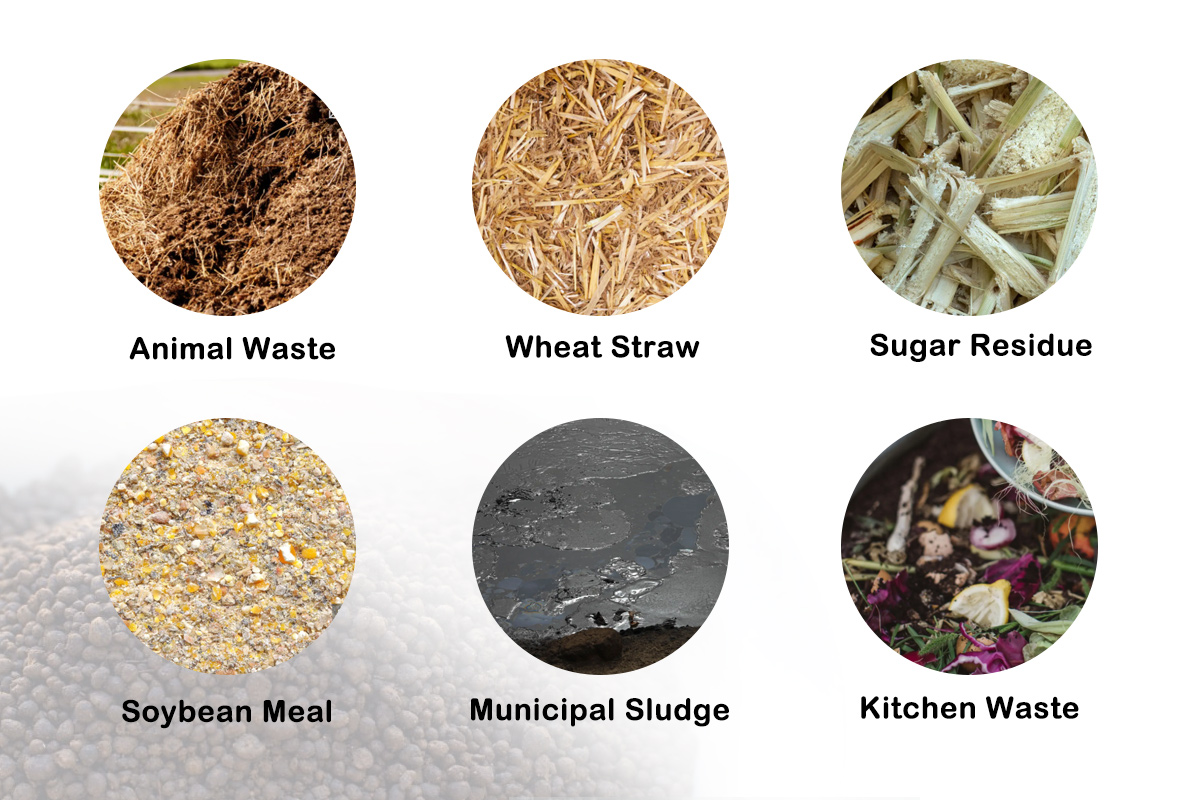
The demand for sustainable fertilizer solutions is growing as agriculture moves toward more efficient resource utilization and environmentally responsible production. At the same time, farms and livestock operations are generating large amounts of manure, crop residues, compost and other organic materials.
Turning these materials into Organic Granular Fertilizer provides a practical way to combine organic waste recycling with commercial fertilizer production.
However, producing quality fertilizer granules is not simply a matter of putting organic material into a granulator. Different raw materials have different moisture levels, particle sizes, fiber contents and physical properties. Therefore, choosing the right organic fertilizer granulator is one of the most important decisions when planning a fertilizer project.
This article explains which granulation machines can be considered for different organic materials and how to select a suitable solution.
What Is Organic Granular Fertilizer?
Organic Granular Fertilizer is fertilizer made from processed and stabilized organic materials and formed into relatively uniform particles.
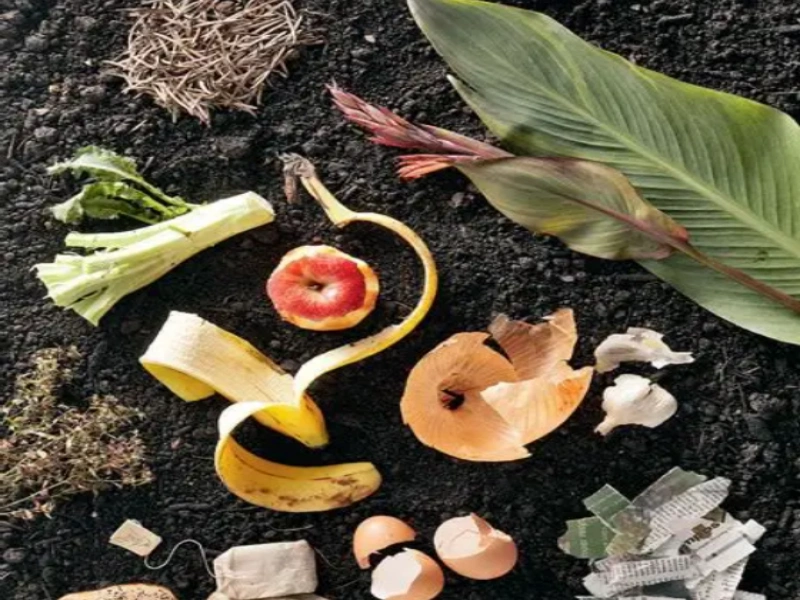
Common raw materials include livestock manure, poultry manure, compost, crop residues, mushroom waste and other biodegradable organic materials.
These raw materials can be processed into Organic Granular Fertilizer after proper fermentation, crushing, mixing, and granulation.

Methane Emission Reduction
Compared with loose powdered fertilizer, granular products are generally easier to handle, transport, store and apply.
Granules can also provide a more consistent commercial product, making them suitable for farms, agricultural cooperatives, fertilizer manufacturers and organic waste recycling projects.
The important point is that the final granule quality depends not only on the granulator itself but also on the preparation of the raw material before granulation.
Which Raw Materials Can Be Used for Organic Granular Fertilizer?
One of the advantages of organic fertilizer production is the wide range of available raw materials, making Organic Granular Fertilizer production possible for different agricultural and organic waste resources.
Livestock and Poultry Manure
Common manure-based materials include:
- Chicken manure
- Cow manure
- Cattle manure
- Pig manure
- Sheep manure
- Horse manure
Fresh manure normally contains high moisture and should be properly fermented or composted before further processing.
After fermentation, the material becomes more stable and can be crushed, mixed and prepared for granulation.
Agricultural Residues
Crop residues are another important source of organic fertilizer materials.
Examples include:
- Corn stalks
- Rice straw
- Wheat straw
- Crop residues
- Agricultural biomass
These materials are usually more fibrous than manure and may require effective crushing before entering the granulation process.
Compost and Mushroom Waste
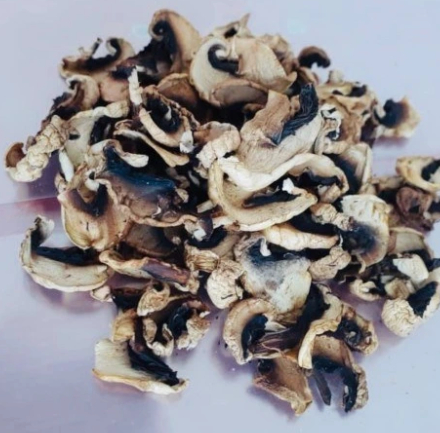
Finished compost and mushroom residue can also be processed into granular organic fertilizer.
Because these materials can have relatively uniform particle sizes after composting and crushing, they may be suitable for disc granulation or other appropriate granulation technologies.
Mixed Organic Waste
Some commercial projects use several organic materials together.
For example:
Chicken manure + crop residues + compost + other organic materials
The advantage of a mixed formula is that different materials can complement each other.
However, the more complex the raw material, the more important it becomes to evaluate moisture, particle size, stickiness and formulation before selecting the granulator.
Why Does Raw Material Determine the Choice of Granulator?
There is no single granulation machine that is ideal for every organic material.
The performance of an organic granular fertilizer granulation machine depends on several factors, including:
- Moisture content
- Particle size
- Fiber content
- Material cohesiveness
- Organic matter characteristics
- Required production capacity
- Desired granule size
- Final fertilizer formulation
For this reason, fertilizer manufacturers should select equipment according to the actual material rather than choosing a granulator based only on its rated capacity.The right equipment selection is essential for producing high-quality Organic Granular Fertilizer efficiently.
The following machines are commonly considered for different organic fertilizer applications.
Disc Granulator for Compost and Manure-Based Materials
A disc granulator is one of the commonly used machines for producing Organic Granular Fertilizer from prepared organic materials.
The machine uses a rotating inclined disc to continuously roll and agglomerate the fertilizer material.
Small particles gradually form larger particles during the rolling process.

What Materials Are Suitable for a Disc Granulator?
A disc granulator can be considered for relatively well-prepared materials such as:
- Fermented chicken manure
- Fermented cow manure
- Finished compost
- Mushroom compost
- Organic fertilizer powder
- Mixed organic fertilizer materials
The material should normally have appropriate moisture and particle size before entering the granulator.
If the feedstock contains large fibers or lumps, a crushing process should be used first.
Advantages of a Disc Granulator
A disc granulator has several advantages for organic fertilizer applications.
Its structure is relatively straightforward, and the disc angle can be adjusted according to the production requirements.
It can also be integrated with downstream drying, cooling, screening and packaging equipment to form a continuous production system.
For small and medium-sized fertilizer projects, a disc granulator can be an attractive option because of its relatively flexible operation and simple process configuration.
For customers producing Organic Granular Fertilizer from composted manure or prepared organic fertilizer mixtures, this type of machine is worth considering.
Stirring Teeth Granulator for High-Moisture Organic Materials
Some organic fertilizer materials are more difficult to process because they have relatively high moisture or strong cohesiveness.
In these applications, a stirring teeth granulator can be considered as an alternative granulation solution.
This type of granulator uses strong stirring and mechanical action to help form fertilizer particles.
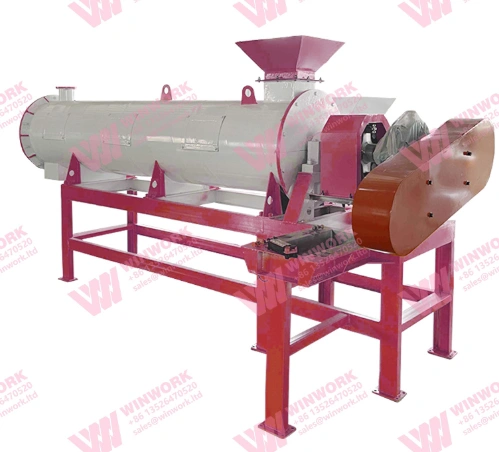
Which Materials Can Use a Stirring Teeth Granulator?
It can be considered for materials such as:
- High-moisture fermented manure
- Livestock manure mixtures
- Organic compost
- Organic waste mixtures
- Other relatively moist organic fertilizer materials
The exact equipment configuration should still be determined according to the material test and actual production requirements.
One important advantage is that the process can be designed together with a suitable crusher and mixer.
For example:
High-Moisture Organic Waste → Crushing → Mixing → Stirring Teeth Granulation
This approach is especially useful when the raw material is difficult to handle with a conventional dry granulation process.
Rotary Drum Granulator for Larger Fertilizer Projects
For larger commercial projects, a rotary drum granulator may be considered.
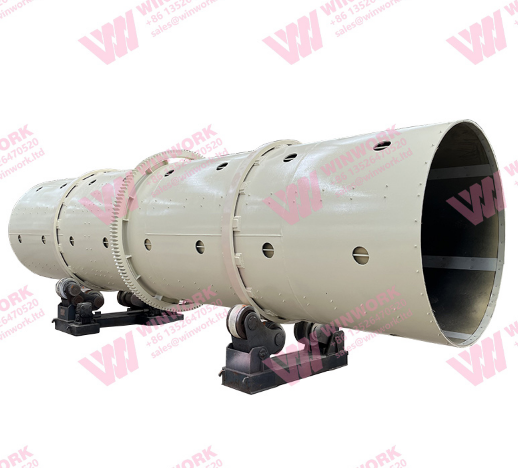
Unlike a small standalone granulation system, a rotary drum granulator is commonly integrated into a continuous fertilizer production line.
It can work together with feeding, mixing, drying, cooling, screening and conveying systems.
This makes it suitable for fertilizer manufacturers that require continuous production and a more integrated process.It can therefore be considered for commercial production of Organic Granular Fertilizer where continuous processing is required.
Typical applications include:
- Large organic fertilizer plants
- Commercial compost fertilizer projects
- Mixed organic fertilizer production
- Large-scale agricultural waste recycling
The final equipment configuration should be determined according to the required capacity, raw material properties and product specifications.
How to Choose the Right Organic Fertilizer Granulator?
Choosing an organic fertilizer granulator should start with the raw material.The right granulation equipment is important for achieving consistent Organic Granular Fertilizer quality.
1. Check the Raw Material
First determine whether you are processing:
- Manure
- Compost
- Crop residues
- Mushroom waste
- Mixed organic waste
- Other organic materials
Different materials require different preparation and granulation conditions.
2. Check Moisture Content
Moisture is one of the most important factors in fertilizer granulation.
Fresh manure may contain too much moisture for direct granulation.
In this situation, fermentation, drying or other pretreatment may be required.
High-moisture materials may also require specialized crushing and granulation equipment.
3. Consider the Required Capacity
A small farm producing fertilizer for its own use has different equipment requirements from a commercial fertilizer manufacturer.
The production capacity may affect the choice of granulator as well as the design of the feeding, drying, cooling, screening and packaging systems.
4. Consider the Desired Granule Size
The final product may require a specific particle size depending on the customer’s market and application.
Therefore, granulation equipment should be selected according to the required particle characteristics rather than simply the machine’s nominal capacity.
Other Equipment in an Organic Granular Fertilizer Production Line
Although granulation is the core of the process, other equipment is also necessary for a complete commercial project.
Composting Equipment
Composting equipment helps convert manure, crop residues and other organic waste into stable organic material suitable for further processing.
Crushing Equipment
A crusher reduces oversized particles and breaks up lumps after fermentation.
For high-moisture organic materials, a suitable semi-wet material crusher can be considered.
Mixing Equipment
A mixer helps combine different organic materials and additives more uniformly before granulation.
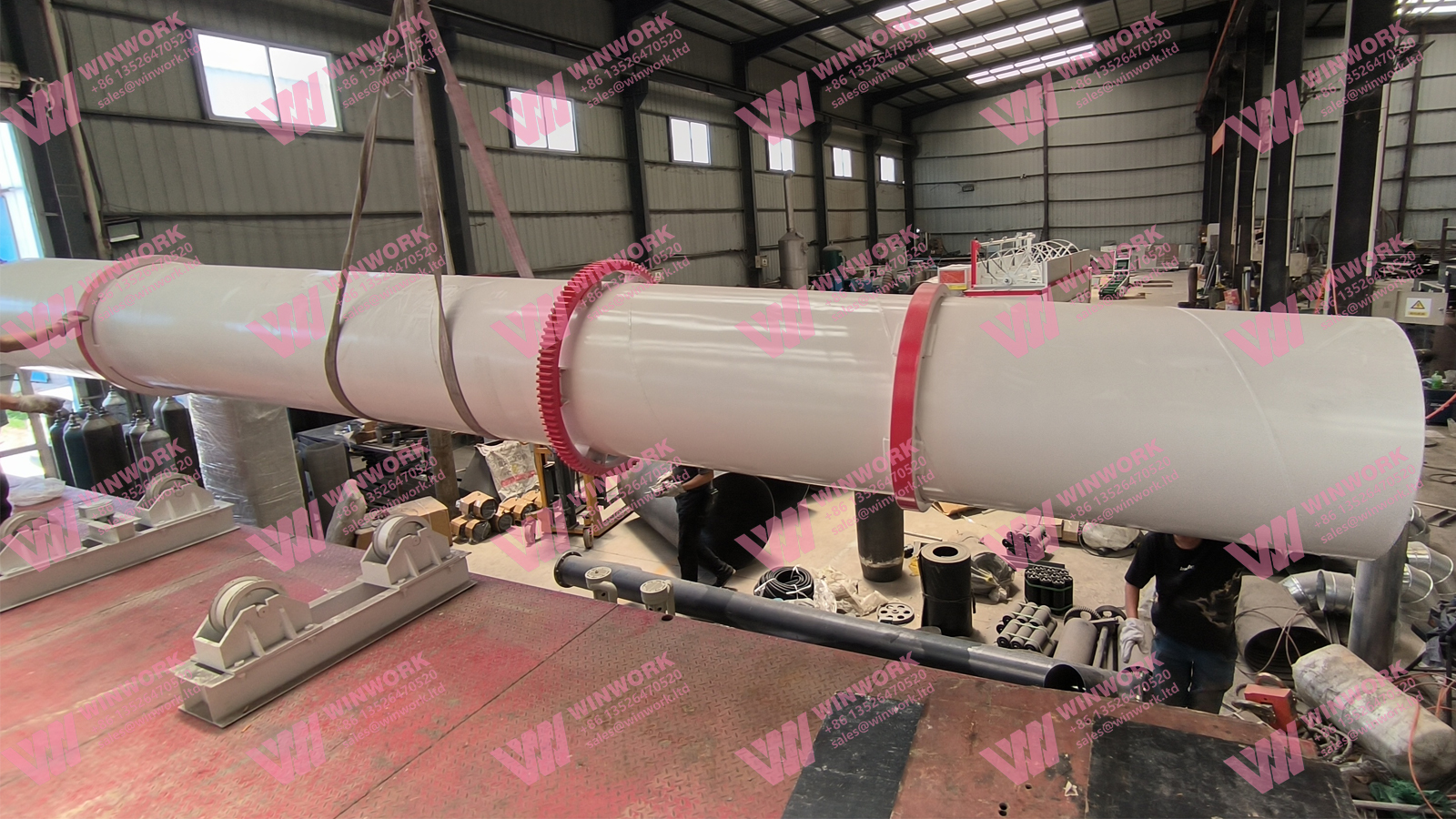
Drying and Cooling Equipment
After granulation, fertilizer particles may contain excess moisture and heat.
Drying and cooling equipment helps prepare the granules for screening and storage.
Screening Equipment
A screening machine separates qualified particles from oversized or undersized materials.
Unqualified material can often be returned to the production process.
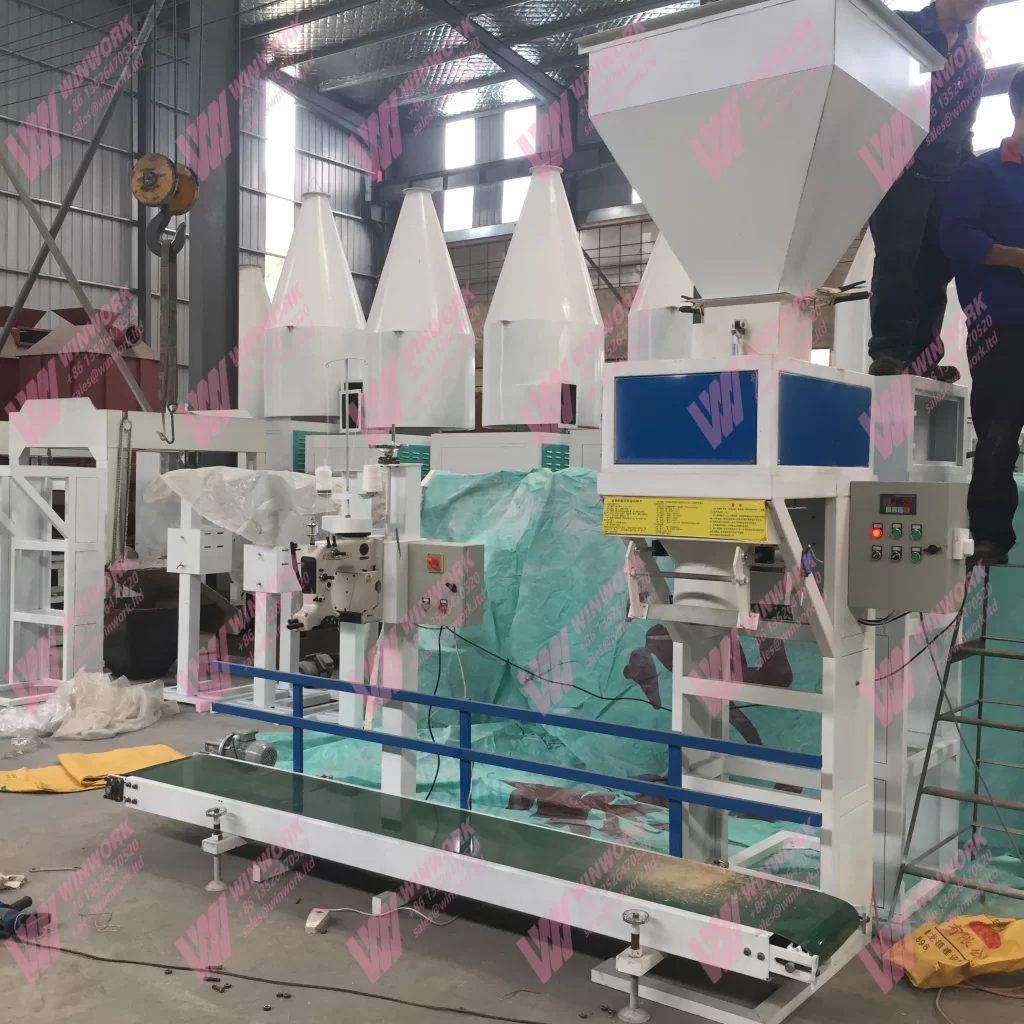
Packaging Equipment
The final product can then be weighed, filled and packed for transportation and sale.
This means that a complete fertilizer project is not simply a granulator—it is an integrated processing system.
From Organic Waste Recycling to Granular Fertilizer Production
Modern fertilizer manufacturing is increasingly connected with the circular economy.
Instead of treating livestock manure, agricultural residues and other organic waste only as materials that need disposal, these resources can be processed and converted into useful agricultural products.
A typical resource recovery process can look like this:
Organic Waste → Composting → Crushing → Mixing → Granulation → Drying → Screening → Finished Fertilizer
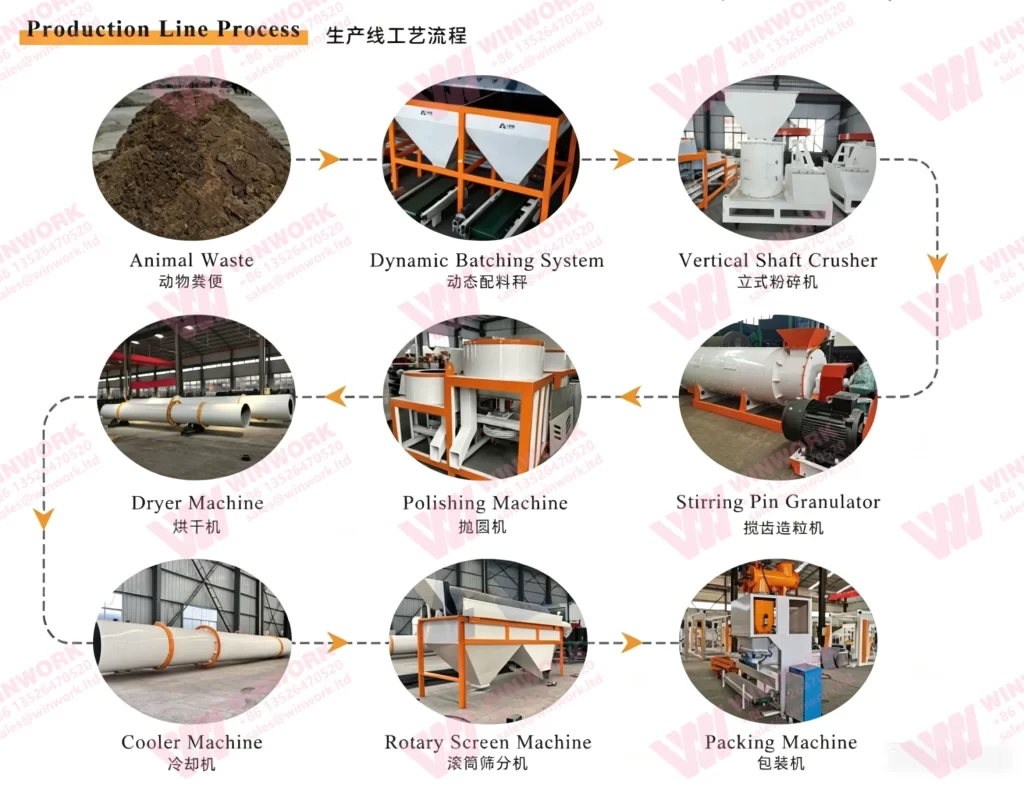
This approach allows fertilizer production and environmental management to work together while creating a sustainable source of Organic Granular Fertilizer from organic waste.
For projects dealing with large quantities of organic waste, additional environmental equipment may also be required for dust collection, odor management or harmful gas treatment.
This is where experience in both fertilizer machinery and environmental equipment can provide an advantage.
Conclusion
Producing Organic Granular Fertilizer is an effective way to connect sustainable agriculture with organic waste resource recovery.
The key to successful granulation is understanding the characteristics of the raw material and selecting the right equipment accordingly.
Whether the project uses chicken manure, cow manure, compost, crop residues or mixed organic waste, the appropriate granulation technology can help create a more consistent and marketable fertilizer product.
WINWORK provides organic fertilizer equipment and customized production line solutions, from composting and material preparation to granulation, drying, screening and packaging.
If you are planning an organic fertilizer project, send us your raw material type, moisture content, required capacity and desired fertilizer granule size. WINWORK can recommend a suitable granulation solution and production line configuration for your project.
WINWORK – Whosale fertilizer production machine in China
Get A Quote