

Introduction: The Journey Starts at the Mine
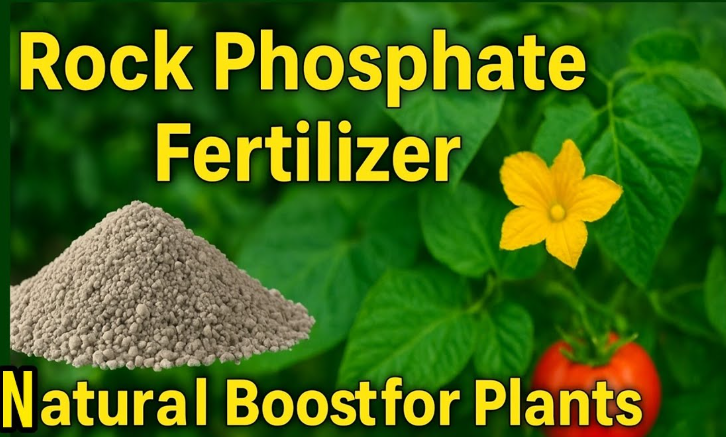
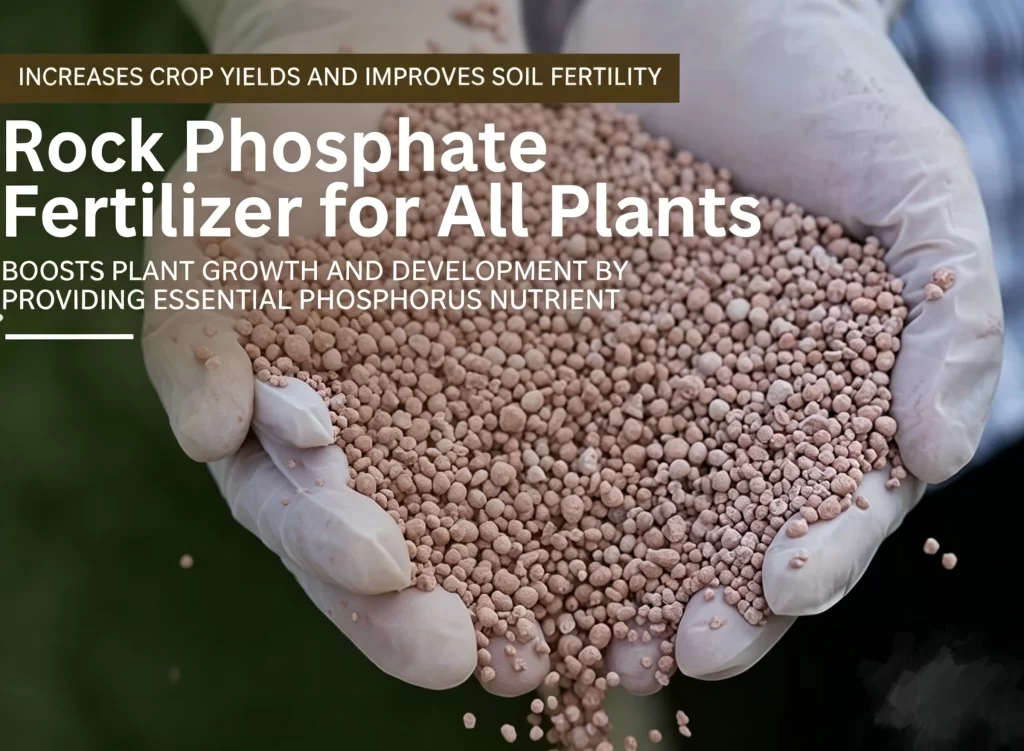
When farmers see a bag of organic rock phosphate fertilizer, they see a finished agricultural product. But long before that fertilizer reaches the field, its journey begins with phosphate-bearing rock extracted from the ground.
Organic Rock Phosphate Fertilizer
Between the mine and the field, the material may go through size reduction, formulation, mixing, granulation, drying, screening, packaging, transportation, and finally application.
That journey matters because the value of organic rock phosphate fertilizer is not determined by the mineral source alone. Raw material properties, formulation, particle size, processing conditions, storage, and soil characteristics can all affect how the finished product is handled and used.
So, what actually happens between the mine and the field?
1. From Phosphate Rock to a Usable Raw Material
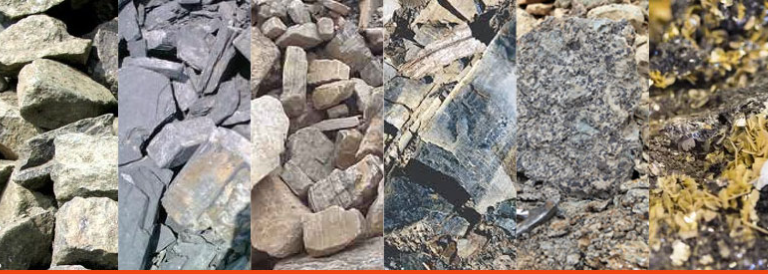
Rock phosphate is a naturally occurring phosphorus-bearing mineral. It is mined from phosphate deposits and can serve as a phosphorus source in fertilizer formulations.
However, material extracted from a mine is a raw material rather than a ready-made fertilizer product.
Before it can become organic rock phosphate fertilizer, the material may need to be prepared for consistent downstream processing. Particle size, moisture, mineral composition, and the presence of other materials can influence how the rock phosphate behaves during mixing and granulation.
The first goal is therefore not simply to make the material smaller. It is to create a feedstock that can move predictably through the next stages of production.
Understanding the Raw Material
Rock phosphate can vary in physical and chemical characteristics depending on its source. For fertilizer manufacturers, this means that the same production process may not perform identically with every raw material.
Organic Rock Phosphate Fertilizer
Before designing a production process, manufacturers should consider:
- Raw material particle size
- Moisture content
- Mineral composition
- Impurities
- Desired final fertilizer form
- Target production capacity
These factors provide the foundation for the rest of the production process.
2. Preparing Rock Phosphate for Fertilizer Production
Particle size is one of the first practical considerations.
Large or irregular pieces can be difficult to blend uniformly and may not behave consistently during granulation. A controlled particle size provides a more predictable starting point for producing organic rock phosphate fertilizer.
Moisture is another important consideration. Too much or too little moisture can change how particles interact, particularly when a wet granulation process is used.
For this reason, raw material preparation should always be considered together with the intended formulation and granulation method.
The Crusher: Preparing the Material Before Mixing
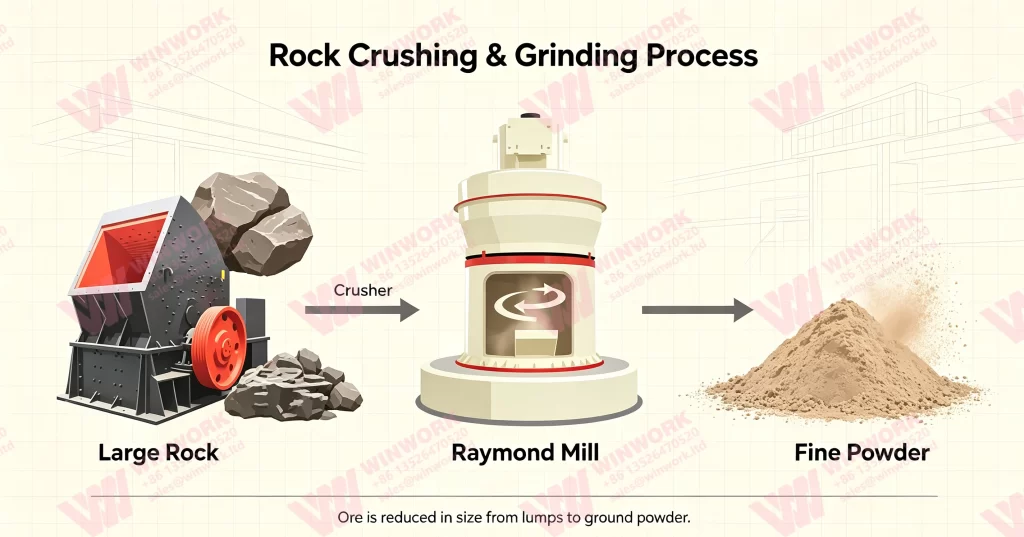
Freshly mined phosphate rock is usually too large to enter the fertilizer production process directly. It first passes through large-scale crushing equipment at the mining stage to reduce the rock to smaller pieces. The crushed material is then fed into a Raymond mill, which further grinds it into fine phosphate rock powder.
This powder provides the basic raw material for producing organic rock phosphate fertilizer before it moves into the formulation and granulation stages.
Organic Rock Phosphate Fertilizer
3. Building the Right Fertilizer Formulation
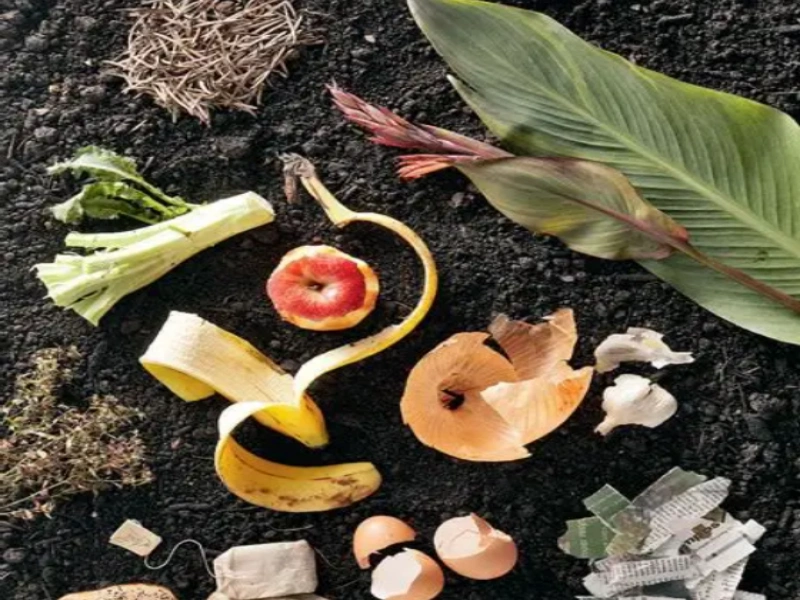
Rock phosphate provides phosphorus, but organic rock phosphate fertilizer may contain other organic materials, nutrients, conditioners, or binding materials depending on the intended formulation.
Depending on the target product, manufacturers may combine rock phosphate with organic materials, nitrogen sources, potassium sources, micronutrients, conditioners, or binders.
The formulation determines what the finished fertilizer is designed to deliver. It can also affect granulation behavior, moisture requirements, granule strength, and final particle size.
This is why organic rock phosphate fertilizer should not be viewed simply as ground phosphate rock placed into a bag. A commercial fertilizer product is the result of combining suitable raw materials and processing them into a consistent form.
The Mixer: Bringing Different Ingredients Together
Once the raw materials have been prepared, they need to be distributed as uniformly as possible.
A fertilizer mixer helps blend rock phosphate with other ingredients before granulation. This is particularly important when several raw materials are being used to create a balanced fertilizer formulation.
Uneven mixing can lead to inconsistent material entering the granulator. A more uniform feed gives the downstream process a better starting point and can support more consistent granules.
WINWORK’s fertilizer production equipment includes horizontal mixing equipment, which can be incorporated into fertilizer production systems according to the material and process requirements.
4. Organic Rock Phosphate Fertilizer: Powder or Granules?
One of the most important product decisions is whether the fertilizer should remain in powder form or be converted into granules.
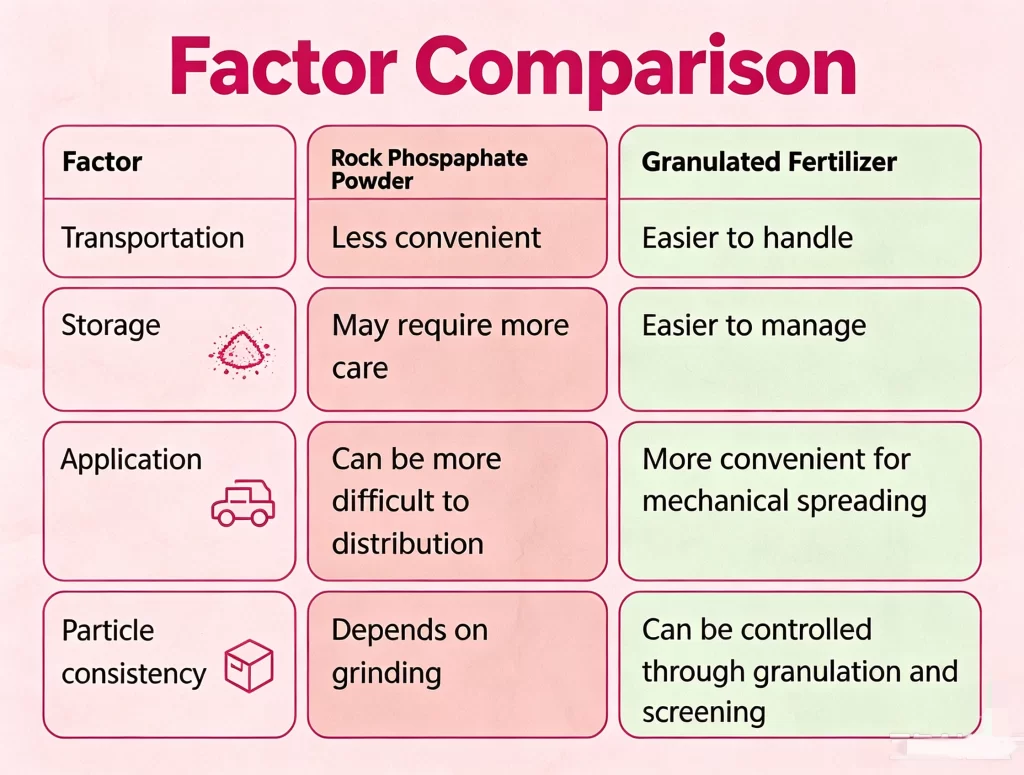
Rock phosphate powder can be useful in certain applications and formulations, but fine materials can be more difficult to handle. Dust, transportation, storage, and uniform field application can become practical concerns.
Granulated organic rock phosphate fertilizer offers a different handling profile.
Granules are generally easier to convey, package, store, and apply mechanically. A controlled particle size can also make the finished product easier to manage in commercial fertilizer operations.
Organic Rock Phosphate Fertilizer
This does not mean that granules are automatically better for every application. The appropriate product form depends on the intended use, formulation, production process, and market requirements.
For manufacturers targeting a commercial granular product, however, granulation can provide an important bridge between raw material processing and practical fertilizer application.
5. Turning Rock Phosphate Powder into Granules
For manufacturers producing a granular product, granulation is the stage where prepared powder is transformed into a defined particle form.
The granulation process brings particles together through mechanical action and, depending on the process, controlled moisture or other binding conditions.
The objective is to create granules with suitable size, shape, strength, and stability.
The Granulator: Where Powder Becomes a Fertilizer Product
The fertilizer granulator is one of the most important machines in a granular fertilizer production process because it determines how prepared material is transformed into particles.
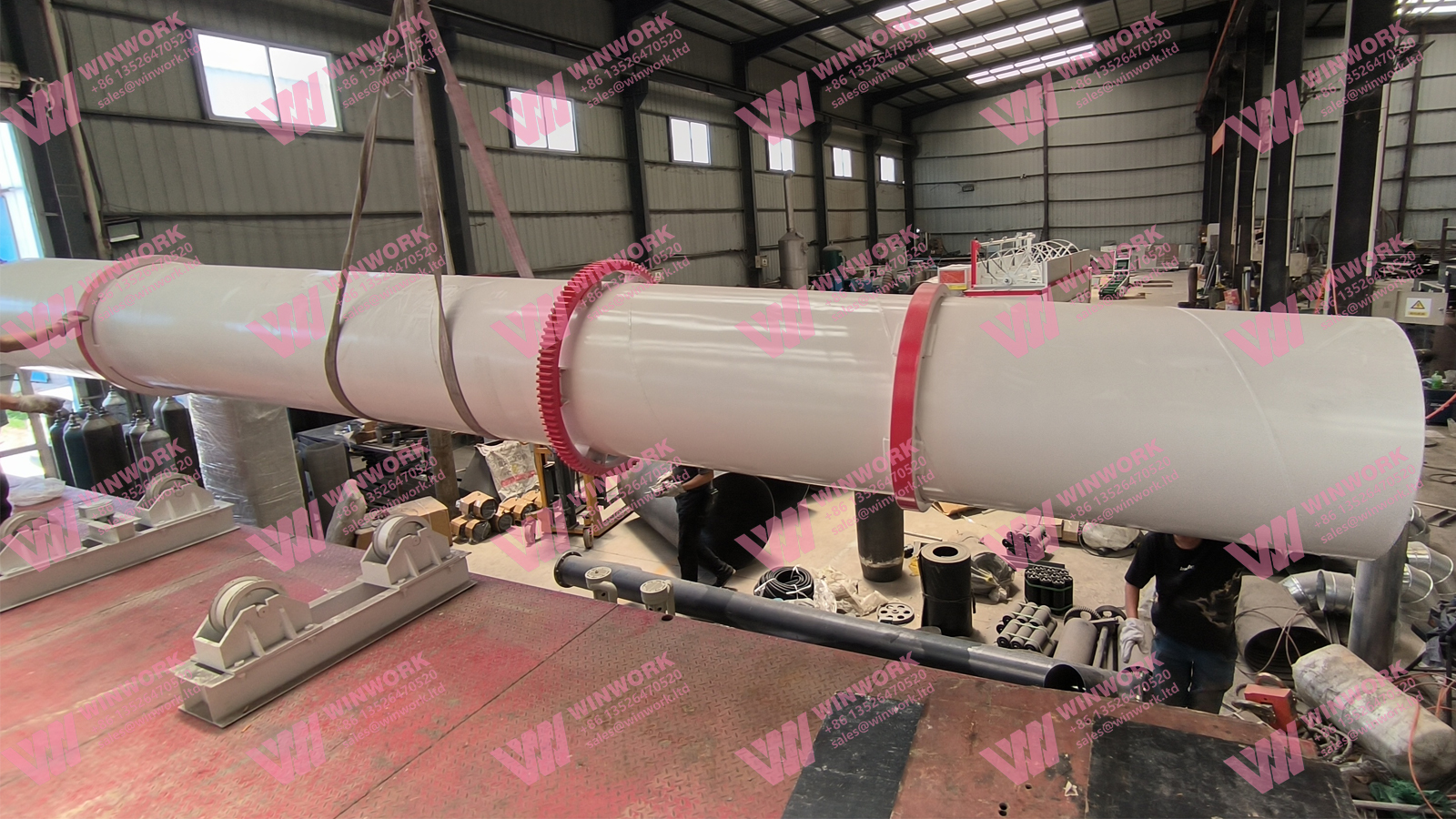
We offers several granulation technologies, including a Rotary Drum Granulator and other granulator configurations. Its organic fertilizer production information describes granulation as the stage where processed powder is formed into compact granules.
For a rock phosphate-based formulation, the choice of granulator should be based on several factors:
- Raw material characteristics
- Formulation
- Moisture conditions
- Desired granule size
- Production capacity
- Final product requirements
Rather than choosing equipment based only on its name or rated capacity, manufacturers should consider how the machine performs with their actual materials.
For example, Rotary Drum Granulator uses wet granulation, where water or steam helps the fine fertilizer material agglomerate as the drum rotates. The continuous rolling and mixing gradually forms uniform granules, making the processed rock phosphate material easier to dry, screen, package, and handle.
The granulation stage therefore represents more than a change in appearance. It changes the physical form of the fertilizer and can make the product easier to handle throughout the rest of the supply chain.
6. Why Granulation Is Only Half the Job
Producing granules is not the final step.
Freshly formed particles may contain moisture and may vary in size. They therefore need additional processing before they are ready for storage, transportation, and distribution.
Drying and Cooling
Depending on the granulation process, freshly formed fertilizer granules may contain a certain amount of moisture.
Drying can reduce excess moisture, while cooling brings the temperature of the granules down after drying. Together, these stages can help improve storage and handling characteristics.
For organic rock phosphate fertilizer, the objective is not simply to make the granules dry. The production process should create a product that remains stable during conveying, packaging, transportation, and storage.
The Screener: Separating the Right Granules from the Rest
For organic rock phosphate fertilizer,a fertilizer screening machine helps separate properly sized granules from oversized or undersized material before packaging.
A granulator does not naturally produce every particle at exactly the same size. Some particles may be too large, while others may be smaller than the target specification.
Our production-line configurations include rotary screening equipment for separating granules by size. In a commercial fertilizer line, screening helps create a more consistent final product before packaging.
Depending on the production setup, oversized or undersized material can be returned for further processing rather than being treated as finished product.
This makes screening an important quality-control stage rather than simply an optional final step.
7. What Determines the Quality of the Final Fertilizer?
The quality of organic rock phosphate fertilizer is the result of multiple factors rather than one machine or one raw material characteristic.
Raw Material Quality
Manufacturers need to understand the mineral composition and physical properties of the rock phosphate they are processing.
Formulation
The combination of ingredients influences nutrient composition, moisture requirements, and processing behavior.
Particle Size
Particle size matters both before and after granulation. A controlled feed can support more stable processing, while consistent finished granules can improve handling and application.
Moisture Content
Excessive moisture can affect storage and cause sticking, while insufficient moisture during some granulation processes can make particle formation more difficult.
Granule Strength
A commercial fertilizer must withstand conveying, packaging, transportation, and handling without excessive breakage.
Storage Stability
A product that looks good immediately after production still needs to remain in acceptable condition until it reaches the customer and, eventually, the field.
In other words, a successful organic rock phosphate fertilizer product is not created at a single point in the production line. Its quality is built progressively from raw material preparation through final packaging.
8. From the Factory to the Field
Once the fertilizer has been processed, screened, and packaged, its journey continues through storage and transportation before it reaches the farm.
Packaging protects the product from environmental exposure and makes handling more practical. Transportation conditions can also affect product quality, especially if granules are exposed to moisture or excessive mechanical stress.
At the field level, application method becomes important.
Powder and granulated products behave differently during spreading, so the product form should match the intended application equipment and farming practice.
This is one reason why manufacturers should think about the final application before choosing the production process for organic rock phosphate fertilizer.
The production line does not exist in isolation. It is part of a larger chain connecting the raw material, fertilizer manufacturer, distributor, farmer, and soil.
9. Is Organic Rock Phosphate Fertilizer Suitable for Every Field?
There is no single fertilizer product that behaves identically in every soil.
Soil pH is an important consideration for rock phosphate because it influences phosphorus availability. Soil biology, organic matter, crop requirements, and other soil properties can also affect how phosphorus becomes available to plants.
For this reason, organic rock phosphate fertilizer should be considered as part of a broader nutrient-management strategy rather than as a universal solution.
Soil Conditions Matter
Acidic soils may provide conditions that favor the dissolution and availability of phosphorus from some rock phosphate materials.
In neutral or alkaline soils, phosphorus availability may require greater consideration when selecting a phosphorus source.
Crop requirements also vary. A fertilizer strategy designed for one crop or soil may not be appropriate for another.
Soil testing can therefore help growers and agronomists understand existing nutrient levels and soil conditions before selecting a phosphorus source or application strategy.
The same principle applies to manufacturers. A product designed for one market may require a different formulation, particle size, or production configuration from a product designed for another.
10. The Journey from Mine to Field
The path from phosphate rock to finished fertilizer can be summarized simply:
Phosphate Rock → Size Reduction → Formulation & Mixing → Granulation → Drying & Cooling → Screening → Packaging → Transportation → Field Application
Every stage has a purpose.
The crusher prepares the raw material.
The mixer creates a more uniform formulation.
The granulator turns prepared material into a manageable product form.
Drying and cooling help stabilize the granules.
The screening machine separates the desired particle size from off-size material.
Packaging prepares the product for the market.
By the time organic rock phosphate fertilizer reaches the field, it is no longer simply a mineral extracted from the ground. It has become a processed fertilizer product with defined physical and handling characteristics.
Conclusion: From Mineral Resource to Fertilizer Product
So, what happens between the mine and the field?
Quite a lot.
Organic rock phosphate fertilizer begins with a natural phosphorus-bearing mineral, but the finished product depends on what happens after the material leaves the mine.
Raw material preparation, formulation, mixing, granulation, drying, cooling, screening, packaging, transportation, and soil conditions all have a role to play.
For fertilizer manufacturers, this means the right production approach starts with the raw material and ends with the intended field application.
Equipment should be selected according to material characteristics, formulation, production capacity, and final product requirements rather than according to a one-size-fits-all approach.
When these factors are considered together, organic rock phosphate fertilizer can move from a mineral resource to a practical, market-ready fertilizer product designed for specific agricultural needs.
For more details, please feel free to contact us.
Email: sales@lanesvc.com
Contact number: +8613526470520
Whatsapp: +8613526470520
Your choice is the best recognition for us!
Get A Quote