

Introduction: Why Are More Poultry Feed Mills Choosing Automation?
Producing poultry feed involves several connected operations, including raw material handling, grinding, batching, mixing, conditioning, pelletizing, cooling, screening, and packaging. When these processes rely heavily on manual work, employees must repeatedly move materials, measure ingredients, operate individual machines, and handle finished bags. As production increases, these tasks can become a source of delays and additional labor costs.
This is why poultry feed plant automation is becoming an important consideration for feed mill investors. A well-designed poultry feed plant automation system connects the main production stages through conveyors, automatic weighing systems, centralized controls, and packaging equipment. Instead of treating every machine as a separate operation, the factory can manage material handling, processing, and packaging as one coordinated production system.
However, automation does not mean that a factory operates without people. Workers are still needed to receive raw materials, monitor production, operate critical equipment, and manage packaging. The difference is that fewer employees need to perform repetitive manual tasks.
To understand the practical value, this article compares manual and automated production in a 5 T/H poultry feed plant and explains how automation changes the entire production process.
For investors planning a new feed mill, poultry feed plant automation also provides a practical way to plan labor requirements, equipment capacity, and production flow before construction begins.
Manual vs. Automated Poultry Feed Production: What Is the Difference?
A 5 T/H feed mill needs to process approximately five tons of feed per hour. The production target remains the same whether the factory uses more manual operations or a higher level of automation. What changes is how materials move between machines and how much work employees must perform.
In a traditional production setup, some equipment may already be mechanized, such as hammer mills and pellet machines. However, workers may still need to carry raw materials, measure ingredients, transfer intermediate products, and manually stack finished bags.

With poultry feed plant automation, these repeated tasks can be handled by connected equipment. An automated poultry feed plant uses automatic conveyors to transfer materials, batching systems to measure ingredients according to preset formulas, and packaging equipment to reduce manual handling at the end of the line. This arrangement allows workers to focus on equipment monitoring and essential production tasks instead of repeated manual operations.
The following table gives a planning comparison for a 5 T/H plant:
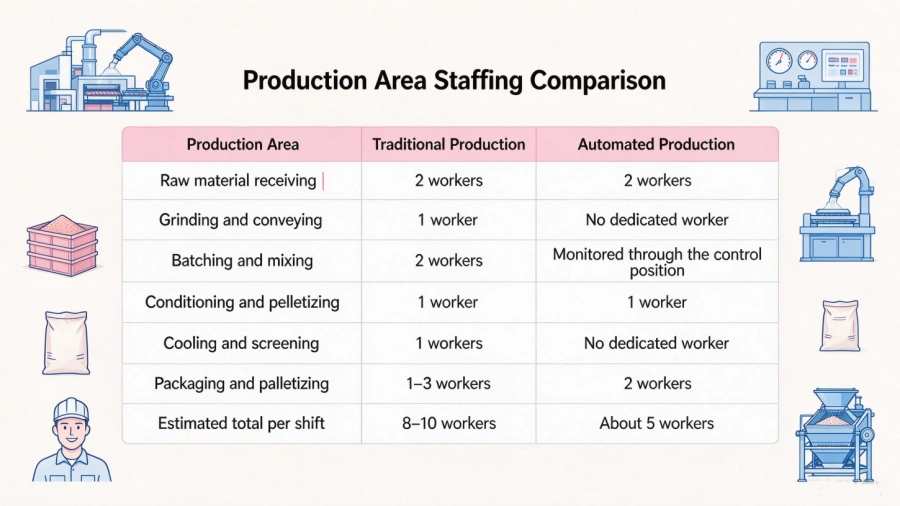
These figures are planning estimates rather than fixed industry standards. In a traditional poultry feed plant, workers spend more time on manual weighing, material transfer, and bag handling. By comparison, a poultry feed plant automation system uses automatic conveying, batching, packaging, and palletizing equipment, while the central operator monitors the main processing stages. The actual number of workers depends on raw material delivery methods, equipment configuration, and packaging requirements.
For the automated arrangement, the five workers can be allocated as follows:
- Two workers in raw material receiving: They handle unloading, forklift feeding, bag opening when necessary, and raw material supply.
- One central control and production operator: This person monitors the PLC system, checks batching and mixing operations, and supervises conditioning and pelletizing.
- Two workers in packaging: One handles bag placement and filling, while the other manages sewing, finished bag handling, and coordination with the palletizer.
Grinding, conveying, cooling, and screening do not each require a dedicated operator when the equipment is properly connected and operating automatically. Workers still need to respond to alarms, blockages, cleaning requirements, and abnormal conditions.
The comparison shows why poultry feed plant automation can reduce the number of people required for repetitive work. By connecting material handling, processing, and packaging equipment, an automated poultry feed plant can reduce manual intervention without eliminating the need for skilled operators. Instead, a smaller team can manage a more connected production process.
How Does Automation Work in a 5 T/H Poultry Feed Plant?
The real value of poultry feed plant automation becomes clearer when following the material from the receiving area to the finished product. In a properly designed 5 T/H automated poultry feed plant, each production stage feeds the next one through connected conveying and processing equipment, reducing unnecessary manual transportation.
Raw material receiving and conveying
Corn, wheat, soybean meal, and other feed ingredients first enter the receiving area. In a manual setup, workers may need to move bags and transfer materials into the production system. An automated arrangement can use a receiving hopper, forklift feeder, belt conveyors, and bucket elevators to move bulk materials toward storage and processing equipment.
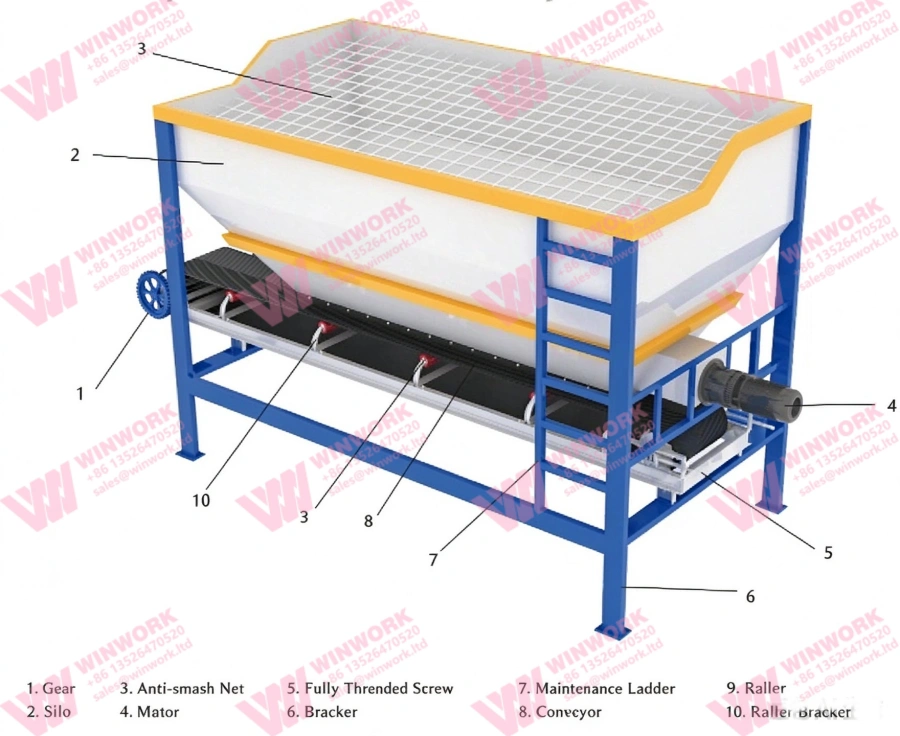
A pre-cleaning screen and magnetic separator can remove unwanted materials before grinding. The bucket elevator is one example of equipment used for vertical bulk material transfer.
The exact feeding arrangement depends on how raw materials arrive. Bulk delivery can reduce manual handling, while bagged ingredients may still require workers to open bags and feed the hopper. For this reason, poultry feed plant automation should be planned according to the factory’s actual raw material supply conditions rather than relying on a standard feeding arrangement.
Grinding, batching, and mixing
After cleaning, ingredients move to a hammer mill for size reduction. The ground materials are then transferred to batching bins. An automatic batching system weighs each ingredient according to the selected feed formula, and a feed mixer combines them into a uniform mixture.
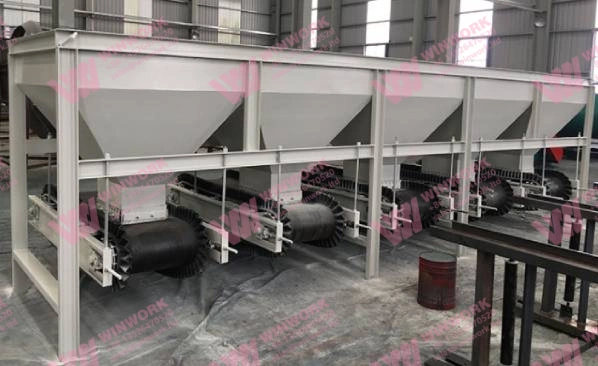
This is an important stage for poultry feed plant automation because accurate ingredient measurement directly affects formula consistency. In an automated poultry feed plant, the batching system can follow preset ingredient ratios and reduce repeated manual weighing, making it easier to manage different poultry feed formulas.Instead of manually weighing every batch, operators can enter or select the required formula through the control system.
For smaller feed processing operations, a combined grinding and mixing machine may also be considered. A feed grinding and mixing machine designed for materials such as corn, wheat, soybeans, and other grains.
For a 5 T/H continuous production line, however, the equipment capacity and batch cycle must be checked carefully. A compact combined machine should not be assumed to match the throughput of a large continuous system.
Conditioning and pelletizing
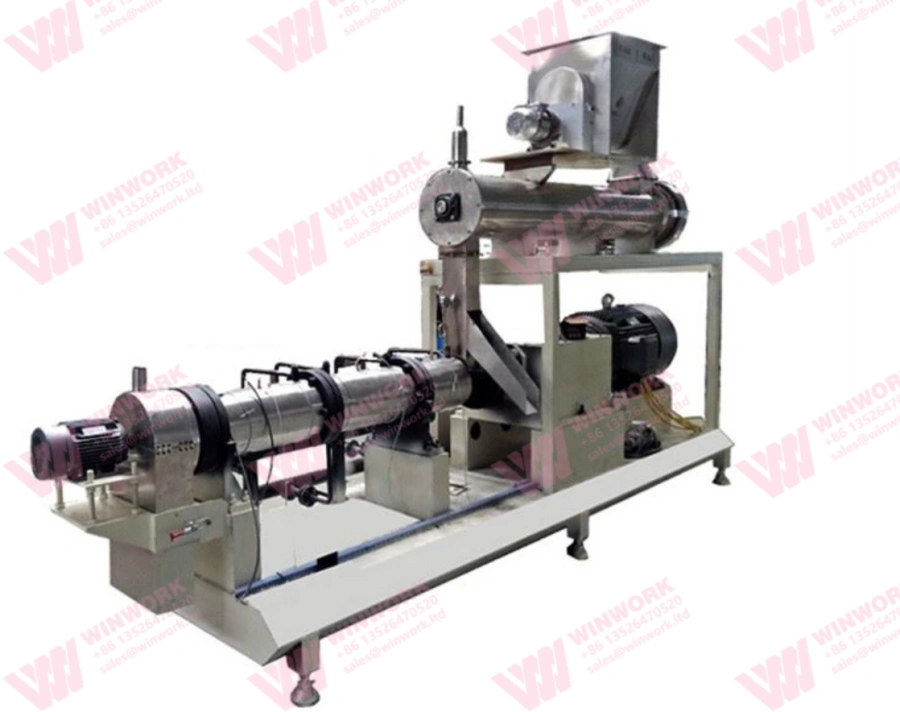
The mixed feed enters a conditioner, where steam is added to adjust the material’s temperature and moisture before pelletizing. The conditioned material then enters a ring die pellet mill, which presses it into feed pellets.
The operator monitors the steam supply, conditioner performance, feeder rate, and pellet mill operation. These parameters need to match the feed formula and the required pellet size. Automation helps coordinate the equipment, but it does not replace proper process adjustment or routine inspection.
Cooling and screening
Fresh pellets leave the pellet mill at an elevated temperature and need to be cooled before storage and packaging. A counterflow cooler reduces pellet temperature, while a vibrating screener separates acceptable pellets from fines and oversized particles.
If the plant produces feed for young chicks, a crumbler can be added to break larger pellets into smaller pieces. The finished product then moves into a storage bin before packaging.
Automated conveying between these stages reduces repeated manual handling. Depending on the plant layout, equipment such as a screw conveyor can help transfer bulk materials through enclosed routes.
Automatic packaging and palletizing
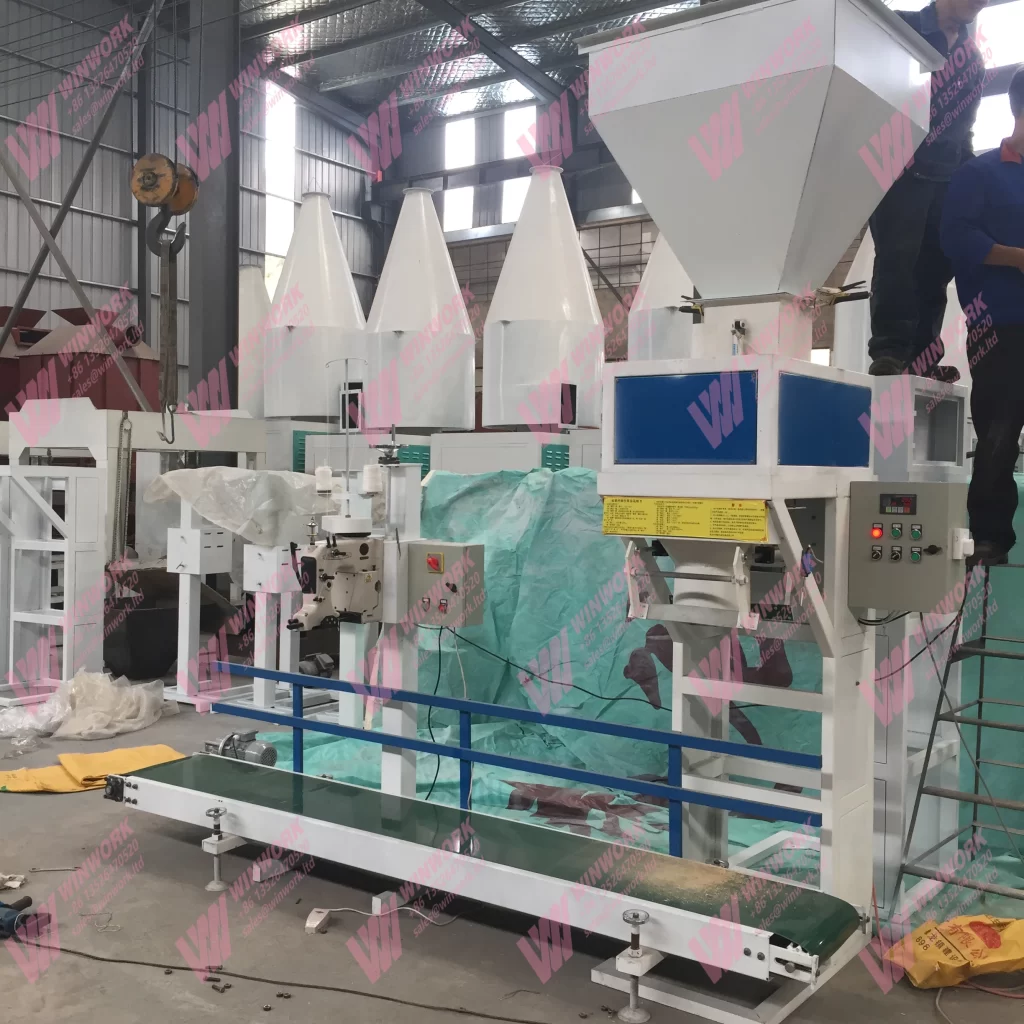
The final stage is where labor requirements can become particularly visible. A weighing and packaging machine fills bags to the preset weight, after which a sewing machine closes each bag. A conveyor transfers the finished bags to an automatic palletizer, which stacks them onto pallets.
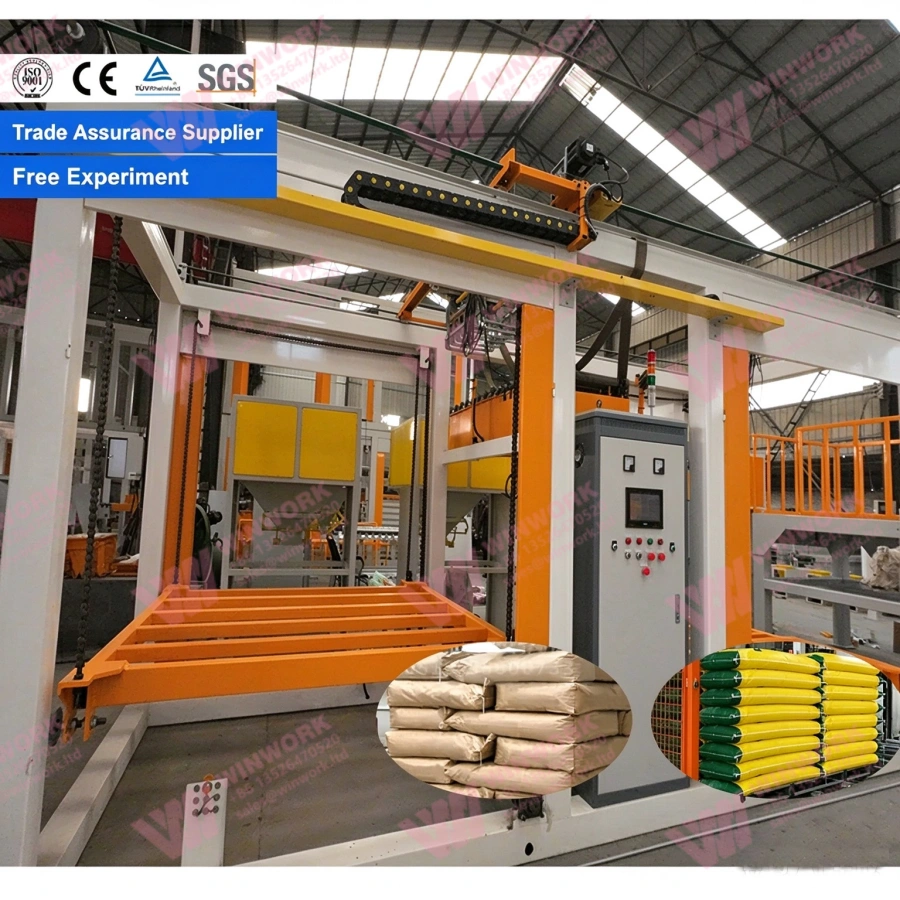
For example, when producing 5 tons per hour with 50 kg bags, the line needs to handle approximately 100 bags per hour. That means the packaging and sewing equipment must be selected to maintain a suitable operating speed, with enough capacity to avoid creating a bottleneck.
Automatic palletizing can reduce manual bag stacking. However, the plant still needs a plan for pallet supply and forklift transportation. The packaging team may handle simple pallet coordination, while a forklift moves completed loads to the warehouse.
This is how poultry feed plant automation connects individual machines into a continuous production system rather than simply adding more equipment. When receiving, grinding, batching, pelletizing, cooling, and packaging are properly coordinated, an automated poultry feed plant can maintain a smoother material flow from raw ingredients to finished feed.
Which Equipment Makes Poultry Feed Plant Automation Possible?
Poultry feed plant automation depends on the coordination of several equipment groups. A machine may operate automatically on its own, but a complete poultry feed plant automation system requires material transfer, processing capacity, and control signals to work together. This is what allows individual machines to operate as part of one production line.
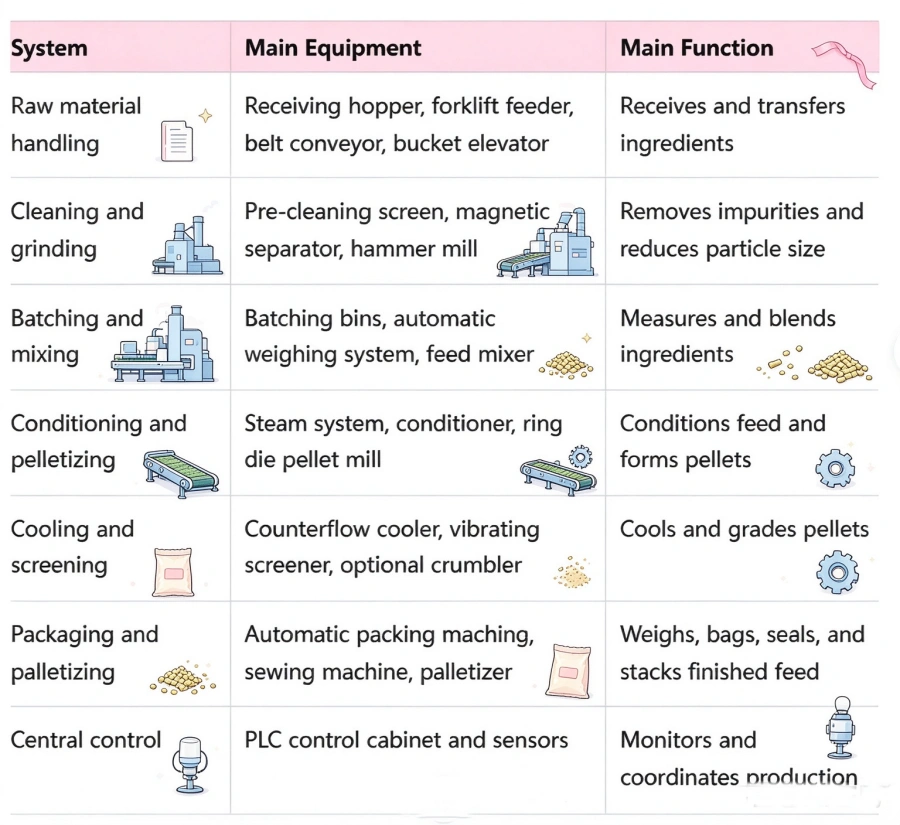
The layout of an automated poultry feed plant should be designed around the required output, raw material characteristics, building dimensions, and finished feed specifications. When planning poultry feed plant automation, conveyors should match the capacity of the machines they connect. Batching equipment must support the required formula and weighing accuracy, while packaging equipment must handle the selected bag size and hourly output.
Conveyors should match the capacity of the machines they connect. Batching equipment must support the required formula and weighing accuracy. Packaging equipment must handle the selected bag size and hourly output.
Not every machine listed above needs to be purchased from the same supplier. More importantly, equipment originally designed for fertilizer or other bulk materials should not automatically be assumed suitable for animal feed. Contact materials, cleanability, dust control, cross-contamination prevention, and feed safety requirements must be checked before selection.
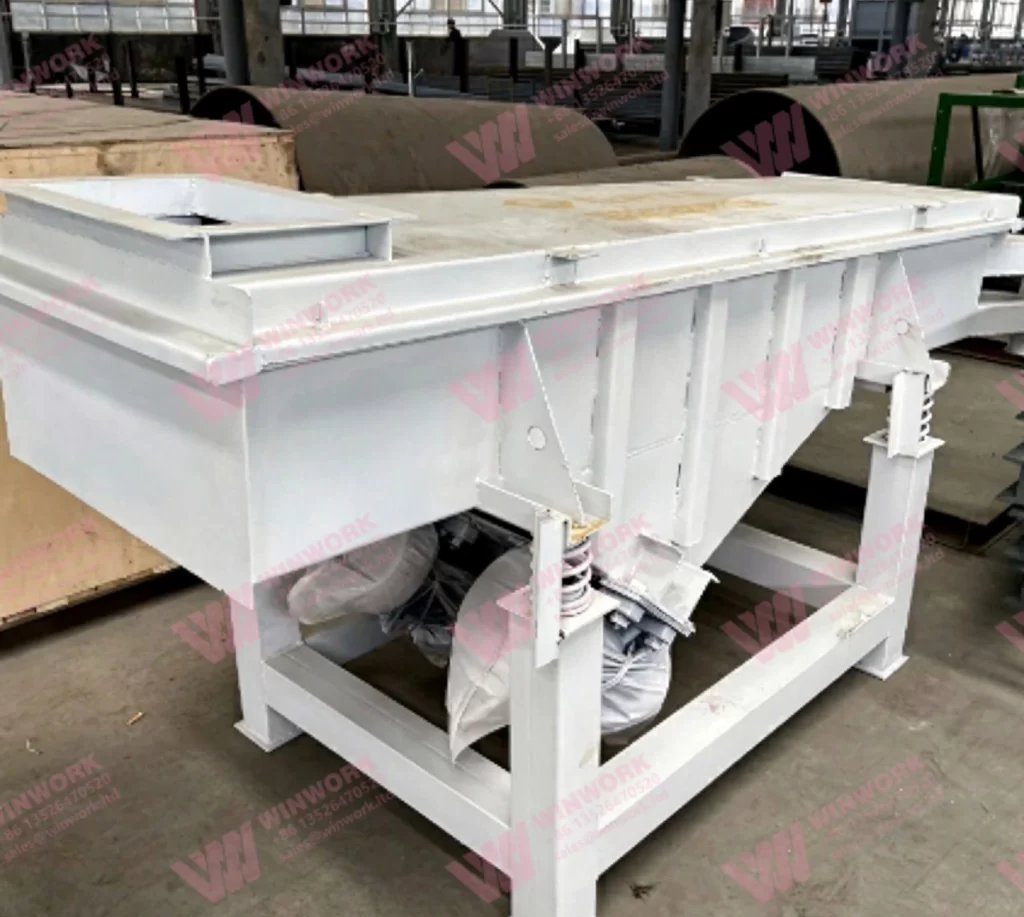
For example, a vibrating screen machine can illustrate the general screening principle, but its screen design, contact materials, and performance must be confirmed for the intended feed application.
Is Poultry Feed Plant Automation Worth the Investment?
The decision should not be based only on the number of workers saved. A factory also needs to consider production stability, equipment investment, energy consumption, maintenance, and the cost of downtime.
Lower labor requirements: In the planning example, an automated 5 T/H line uses about five direct production workers per shift, compared with an estimated eight to ten in a more manual setup. The difference can reduce recurring labor costs, especially when the plant operates multiple shifts.
More consistent batching: Automatic weighing reduces dependence on repeated manual measurement. Once the formula and operating parameters are set correctly, the system can help maintain more consistent ingredient proportions from batch to batch.
Smoother material flow: Conveyors and elevators reduce the need to move materials manually between machines. This can reduce waiting time and help prevent one processing stage from interrupting another.
More efficient packaging: Automatic weighing, filling, sewing, and palletizing reduce repetitive lifting and bag handling. This is particularly useful when the plant produces many bags every hour.
Easier production management: A centralized control system gives operators a clearer view of equipment status, operating parameters, and alarms. It can make daily production management more organized, although operators still need training and a clear response procedure.
The initial investment in an automated system is usually higher than in a basic manual setup. Before making a decision, investors should compare equipment costs with local wages, shift schedules, expected annual operating hours, energy consumption, maintenance costs, and the cost of replacing or repairing components.
The most suitable poultry feed plant automation solution is not necessarily the one with the most machines. It is the system that matches the plant’s actual production target and avoids unnecessary labor or equipment capacity.
Conclusion: Build a More Efficient Poultry Feed Plant
A 5 T/H poultry feed plant does not need a separate worker for every machine. With connected conveying equipment, automatic batching, centralized monitoring, continuous pelletizing, and automatic packaging and palletizing, a smaller production team can manage the main operations.
In the planning example discussed here, a more manual setup requires an estimated eight to ten workers per shift, while the automated arrangement can operate with about five direct production workers per shift. Actual staffing depends on raw material delivery, packaging methods, plant layout, and the level of automation.
Successful poultry feed plant automation starts with understanding the production process and matching each machine to the required capacity. Before choosing equipment, consider your raw materials, feed types, target output, bag size, available space, and labor costs. A complete production line should be designed around these requirements rather than a standard equipment list.
WINWORK provides machinery and production-line solutions across several industrial sectors, including feed equipment, packaging equipment, and material handling systems. You can learn more about WINWORK’s company background and engineering services when evaluating a production-line project.
For a practical proposal, share your required capacity, raw material list, feed types, and packaging specifications with the engineering team. These details help determine the appropriate equipment configuration and automation level for your plant.
Get A Quote