

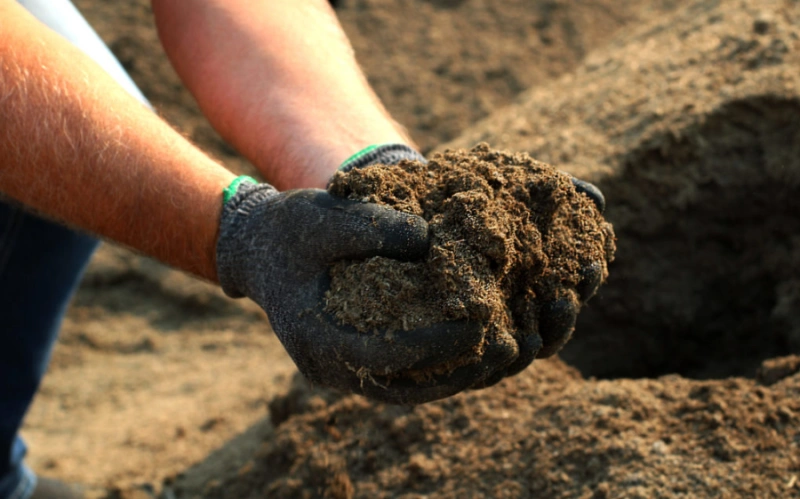
Livestock manure is a daily challenge for many farms, but it can also become a valuable resource when handled properly. For US farmers who want to improve waste management and explore organic fertilizer production, the right equipment and processing workflow can make a significant difference.
An automated manure management system connects manure collection, transportation, solid-liquid separation, and preparation for further treatment in a coordinated workflow. Instead of treating manure only as waste that needs to be removed, farms can consider how suitable organic materials may be converted into compost and processed into marketable fertilizer products.
The key is to connect manure handling with the next stage of organic fertilizer production. By planning the entire process from the beginning, farm owners can make better equipment decisions, reduce unnecessary handling, and create opportunities to use organic resources more efficiently.
What Is an Automated Manure Management System?
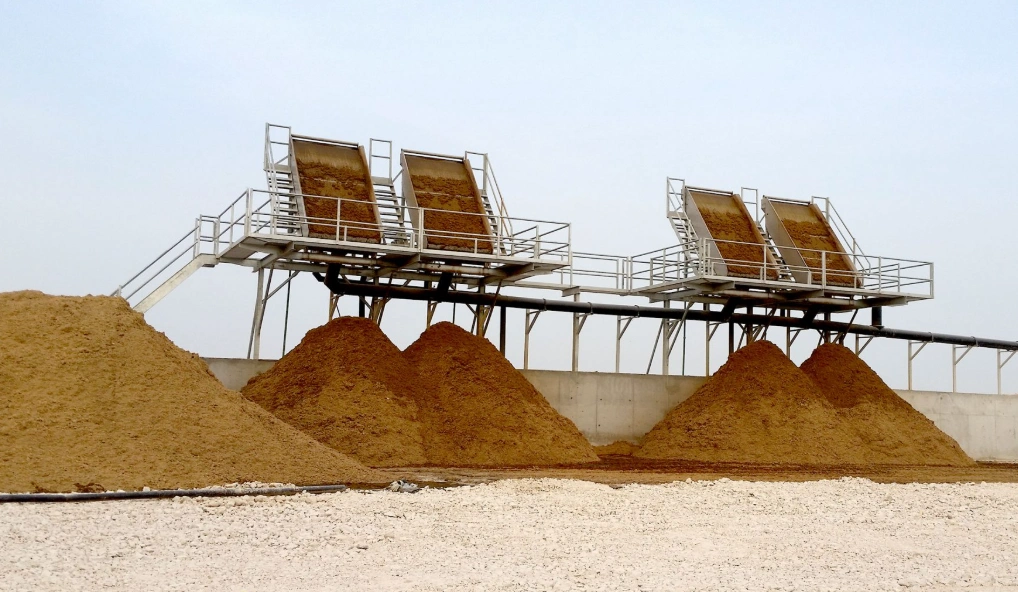
An automated manure management system uses mechanical equipment and automatic controls to collect livestock manure, move it through designated processing stages, separate solids from liquids when necessary, and prepare the material for storage, treatment, or further use. By combining scrapers, conveyors, pumps, separators, and control panels, an automated manure management system reduces repeated manual handling and coordinates manure movement between processing stages.
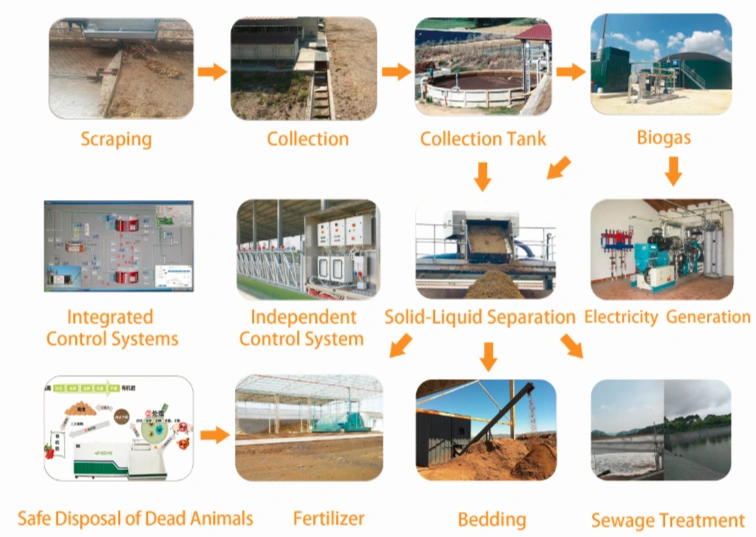
A typical system can include the following equipment:
- Manure collection equipment: Automatic barn scrapers or other collection devices remove manure from livestock housing and move it toward a collection channel or storage point. The appropriate method depends on the barn layout, livestock type, and manure consistency.
- Conveyors and transfer pumps: Conveyors transport relatively solid manure, while pumps move liquid manure or slurry through pipes. Selecting the correct transfer equipment helps prevent blockages, excessive handling, and interruptions in the processing line.
- Solid-liquid separation equipment: A manure separator processes suitable slurry to divide it into a solid fraction and a liquid fraction. The solid fraction may be sent for composting or other treatment, while the liquid fraction requires appropriate storage, treatment, or nutrient-management plan.
- Storage and process-control equipment: Tanks, designated storage areas, sensors, and control panels help operators manage material accumulation and coordinate equipment operation. Depending on the installation, controls may automate starting, stopping, alarms, or selected process adjustments.
The complete workflow usually follows this sequence: manure collection → transfer → solid-liquid separation, if required → storage or further treatment → final use. Not every farm needs every component. For example, a poultry farm collecting relatively dry litter may need a collection and conveying arrangement, while a dairy farm handling wet manure slurry may benefit from pumping and solid-liquid separation before further processing.
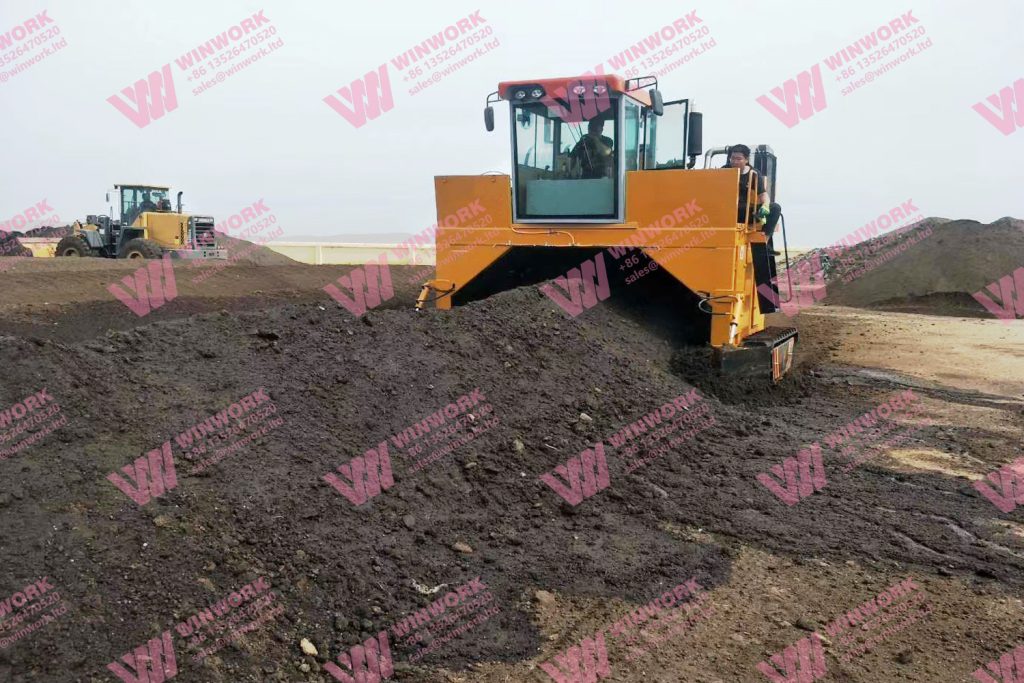
For farms planning to produce organic fertilizer, the important distinction is that manure collection and separation are only the initial stages. The solid material must be assessed for moisture, composition, and suitability for treatment. When composting is appropriate, the material may need to be blended with carbon-rich materials such as straw or other suitable bulking agents to improve its structure and moisture balance. A crawler compost turner can then turn the composting material to improve aeration and help maintain more consistent conditions.
After composting and stabilization, additional equipment may be required to crush lumps, mix ingredients, granulate the material, screen finished particles, and package the product. These operations form part of an organic fertilizer production line, which can be planned according to the raw materials and the intended fertilizer product.
In practical terms, an automated manure management system handles the movement and initial processing of manure; an organic fertilizer production line handles the subsequent conversion of suitable treated materials into a finished fertilizer product. Understanding this distinction helps farm owners choose equipment based on their actual production goals rather than purchasing machines that cannot work effectively together.
Why US Farms Are Turning Manure into Organic Fertilizer
Livestock farms generate organic materials that require regular collection, storage, and management. A properly planned automated manure management system can help organize manure movement, reduce repeated handling tasks, and make better use of available storage and processing areas.
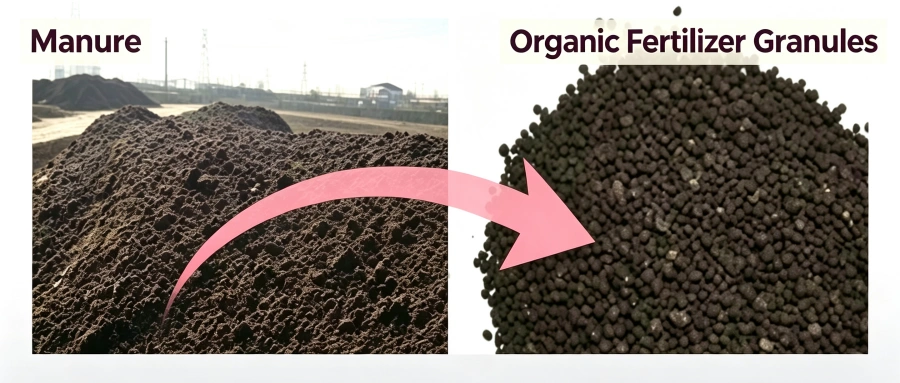
Converting suitable manure into organic fertilizer offers another way to manage these materials. After appropriate treatment, organic matter can be used as a soil amendment or as a raw material for further fertilizer processing. The best option depends on the manure’s characteristics, the intended application, and local requirements.
For some farms, using processed organic materials on their own land may help make better use of available nutrients. Other operations may explore producing compost or packaged organic fertilizer for sale, provided they can meet the relevant quality, handling, and regulatory requirements.
An automated manure management system supports organic fertilizer production by organizing manure collection, transfer, and preliminary processing before composting begins. Collection, transportation, and separation become part of a planned workflow that feeds into composting and subsequent processing.
Before investing in equipment, farm owners should estimate the amount of manure available, identify suitable bulking materials, and decide whether the final product will be used on the farm or prepared for commercial distribution. These decisions influence the required production capacity and equipment configuration.
How Manure Becomes a Raw Material for Organic Fertilizer
Turning manure into a useful fertilizer product involves more than collecting it and placing it in a machine. The material must be prepared and treated according to its characteristics and intended use.
1. Collection and transportation
The first stage is to collect manure and move it to a suitable handling area. Depending on the farm layout and material consistency, the process may involve scrapers, conveyors, pumps, loaders, or other equipment. At this stage, an automated manure management system should match the collection method and transfer equipment to the manure’s moisture level, consistency, and daily volume.
2. Solid-liquid separation
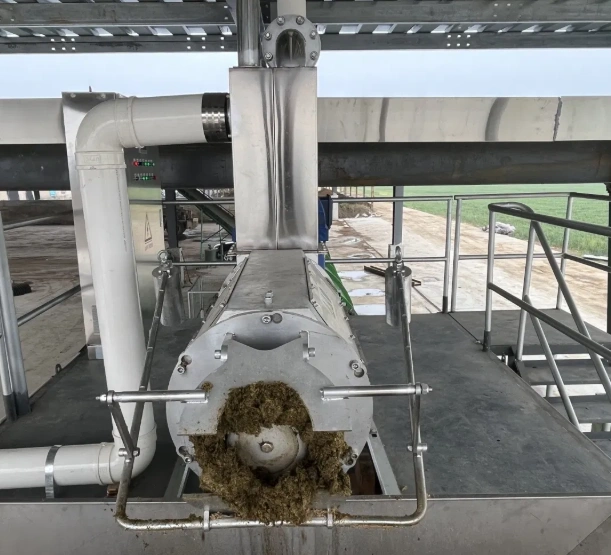
When manure contains substantial liquid, separation may help produce a solid fraction and a liquid fraction. The solid material may be suitable for further composting after its condition is assessed. The liquid fraction requires an appropriate storage, treatment, or utilization plan based on its composition and local requirements. An automated manure management system may use solid-liquid separation to improve handling, but both fractions still need an appropriate treatment or utilization plan before their intended use.
3. Composting and stabilization
Suitable solid organic materials can be mixed with bulking agents such as straw or other plant residues when needed. Composting helps organic matter decompose under managed conditions. Temperature, moisture, aeration, and processing time must be controlled appropriately, and the process should be validated for its intended purpose.
A crawler compost turner may be useful in suitable windrow composting operations because it turns and mixes the material. For an automated manure management system linked to windrow composting, the turner should be selected according to the composting area’s dimensions, material characteristics, and required processing capacity.
4. Crushing, mixing, and granulation
After composting and appropriate preparation, the material may be crushed to reduce large particles. Mixing can help create a more uniform feedstock, and granulation may be used when the desired product is granular organic fertilizer rather than loose compost or powder.
Not every project requires granulation. Some farms may prefer compost for direct soil application, while others may need a more uniform product that is easier to store, transport, and package.
5. Screening and packaging
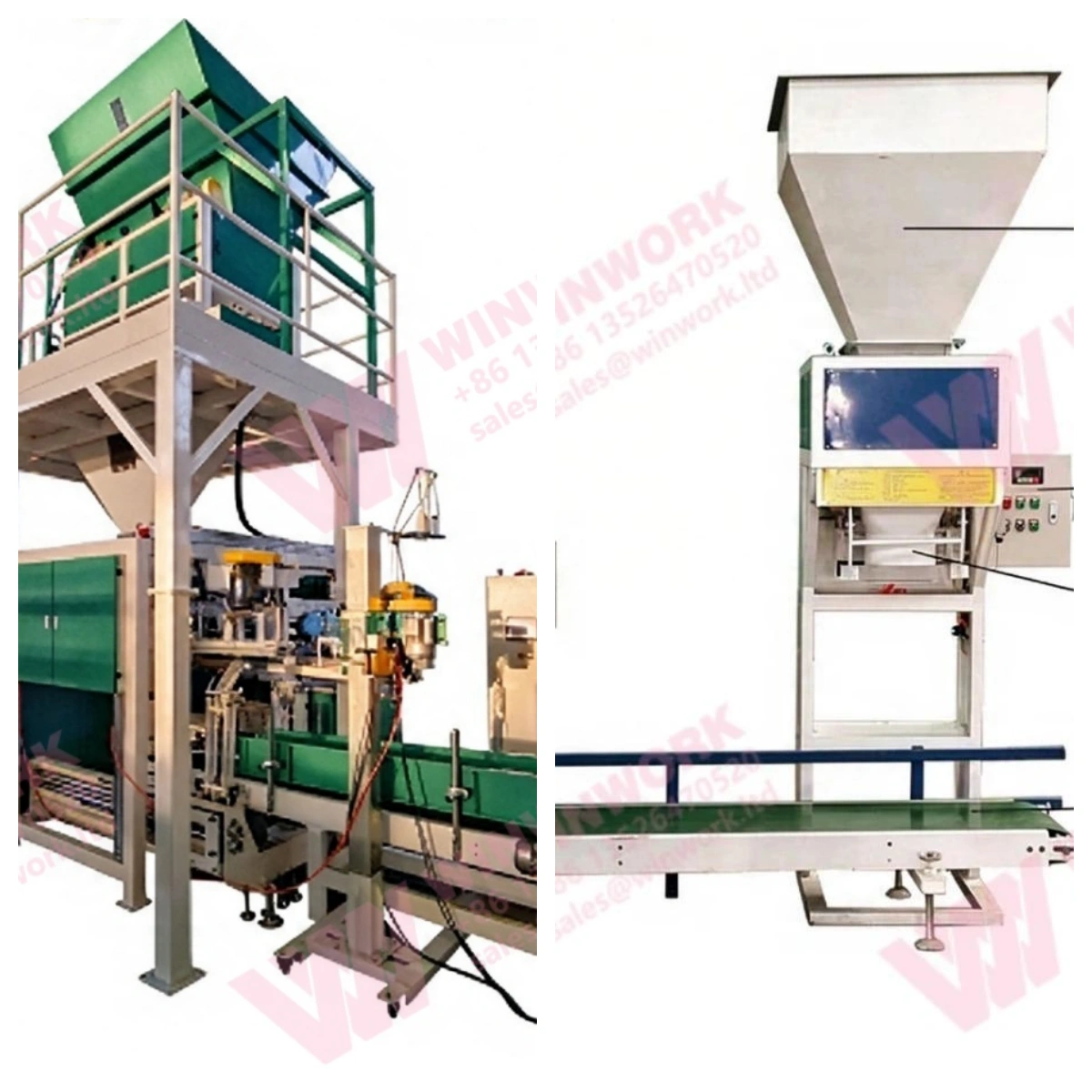
Screening separates particles by size and helps improve product consistency. If granules are being produced, drying and cooling may also be required, depending on the process and product specifications. Packaging equipment can then prepare the finished product for storage or distribution.
An effective automated manure management system supports the beginning of this chain, while the downstream equipment determines how the treated organic material is converted into the final product.
Equipment Needed for Organic Fertilizer Production
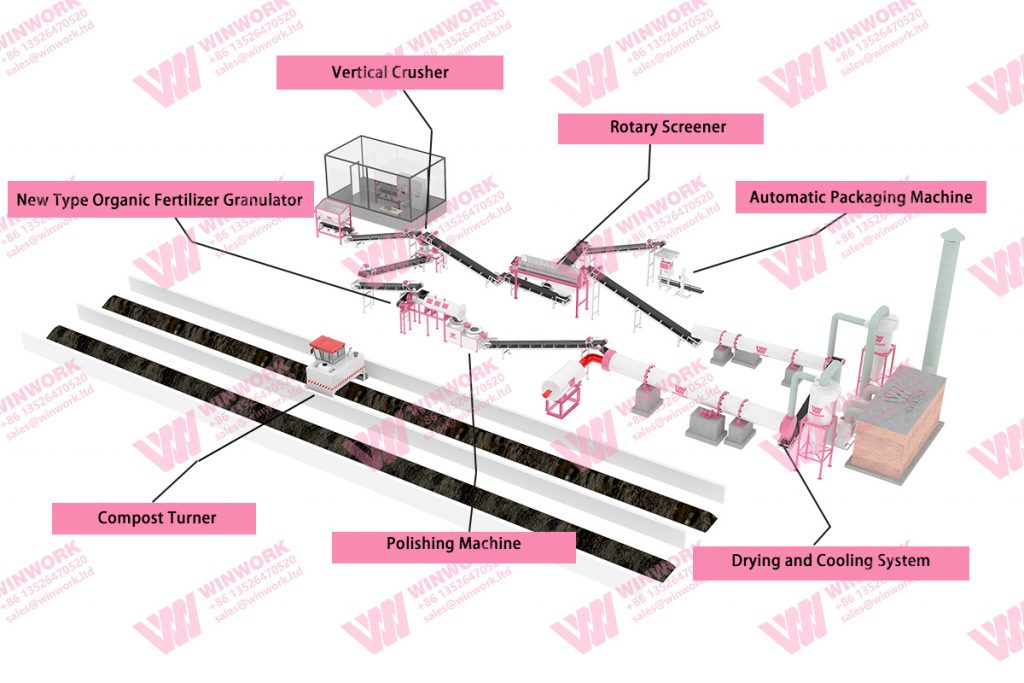
The equipment required depends on whether a farm wants to manage manure only, produce compost, or manufacture finished organic fertilizer. An automated manure management system can be developed in stages, allowing farms to prioritize essential handling equipment before investing in additional composting or fertilizer-processing machinery.
For a compost-focused operation, the priority may be collection equipment, suitable storage, composting areas, and turning equipment. If the goal is to produce fertilizer powder, the workflow may also need crushing, mixing, screening, and packaging machines.
For granular organic fertilizer, the line may include a crusher, mixer, granulator, dryer, cooler, screening machine, and packaging equipment. The exact combination depends on the raw material, moisture level, required output, and final product specifications.
A complete organic fertilizer production line can connect several of these stages into one coordinated process. Such lines can be configured according to production needs rather than assuming that every farm requires the same machinery.
WINWORK provides fertilizer production equipment and customizable production-line solutions. For farms moving from manure handling toward fertilizer manufacturing, the important step is to match equipment capacity and process design with the available raw materials and planned output.
Farm owners can also review organic fertilizer production solutions to understand how treated manure and other suitable organic materials may move through composting, crushing, mixing, granulation, screening, and packaging.
How to Choose a System for a US Farm
Choosing an automated manure management system begins with the farm’s actual operating conditions, not with a machine catalog. When evaluating an automated manure management system, farm owners should compare daily manure volume, moisture content, handling requirements, available space, and the intended fertilizer product.
First, identify the livestock type and the amount of manure produced each day. A larger volume does not automatically mean that one large machine is the best choice. Material consistency, peak handling periods, and the available operating time also matter.
Second, assess the manure’s moisture content and composition. Wet slurry, separated solids, poultry litter, and manure mixed with bedding can require different handling methods. These differences influence whether the project needs pumps, conveyors, separation equipment, composting equipment, or additional material preparation.
Third, decide what the farm wants to produce. If the main goal is easier manure handling, a basic handling and separation setup may be sufficient. If the farm plans to sell compost or manufacture granular fertilizer, the project must also account for composting, product preparation, quality control, and packaging.
Finally, consider available space, labor, maintenance, utilities, and the requirements that apply to the intended use of the finished material. A system that looks efficient on paper may not be practical if it creates bottlenecks elsewhere in the process.
Before requesting a quotation, prepare basic information about the raw material, estimated daily volume, moisture level, site conditions, and target product. This gives equipment suppliers a clearer basis for recommending a suitable configuration.
Common Mistakes When Converting Manure into Organic Fertilizer
One common mistake is selecting machinery before understanding the raw material. An automated manure management system designed for wet dairy manure, for example, may require different collection, pumping, and separation equipment from a system handling relatively dry poultry litter.
Another mistake is treating separation as the final step. Solid-liquid separation can help with handling, but the separated material may still require further treatment before it is appropriate for the intended application.
Some projects also underestimate the importance of composting conditions. Poor aeration, unsuitable moisture, or inadequate processing can affect the quality and consistency of the finished material. Farms should use a process appropriate to the feedstock and intended use rather than relying on a fixed timetable for every batch.
A further issue is buying downstream equipment before confirming the production goal. Granulation, drying, and packaging add value in some operations, but they also add equipment requirements and operating costs. A farm that only needs compost for its own land may not need a full granule production line.
The most practical approach is to design the process as a connected system. An automated manure management system should support the overall goal of the project, whether that is improving daily handling, preparing organic material for composting, or supplying raw material to a fertilizer production line.
From Manure Management to Organic Fertilizer Production
For US livestock farms, manure management and organic fertilizer production do not have to be separate plans. By connecting an automated manure management system with suitable composting and fertilizer-processing equipment, farms can plan a practical route from livestock manure handling to organic fertilizer production.
The first step is to understand the material and establish a reliable handling process. The next is to determine whether composting, powder production, or granulation best fits the farm’s needs. Equipment can then be selected to connect each stage without adding unnecessary complexity.
WINWORK helps customers explore fertilizer machinery and production-line configurations based on their materials, capacity, and product requirements. If you are planning to move from manure handling to organic fertilizer manufacturing, start by defining your raw materials, expected throughput, and final product. These details provide a practical foundation for discussing an appropriate production solution.
Get A Quote