

Introduction
Tired of the back-breaking labor and inconsistent weights of manual bagging? The Automatic quantitative fertilizer packing machine is here to change the game. This news feature dives deep into how this powerhouse equipment eliminates human error, skyrockets production speed, and ensures every bag meets strict quality standards. Discover why upgrading to an Automatic quantitative fertilizer packing machine is the smartest move for any fertilizer enterprise looking to boost profits and efficiency.
The End of the Shovel and Scale Era
For decades, fertilizer packaging was synonymous with sweat, dust, and the constant worry of “short-weighting” or “over-filling” bags. It was a bottleneck in an otherwise efficient production line. But the agricultural industry is undergoing a massive shift. The hero of this story is the Automatic quantitative fertilizer packing machine.
What Exactly is an Automatic Quantitative Fertilizer Packing Machine?
In plain English, an Automatic quantitative fertilizer packing machine is a smart system that weighs and fills bags without needing a human to hold the bag or read the scale. Think of it as a highly disciplined robot that never gets tired, never gets distracted by a phone call, and never makes a math error.
The core function relies on a high-precision load cell (a digital scale) connected to a computer brain (PLC). When you set the target weight—say, exactly 50.0 kg—the machine opens a gate to let fertilizer flow in fast. As it gets close to the target, it slows down to a trickle to ensure it hits that 50.0 kg mark perfectly. Once done, it signals the sewing or sealing unit. This seamless loop is what makes the Automatic quantitative fertilizer packing machine an indispensable asset for modern factories.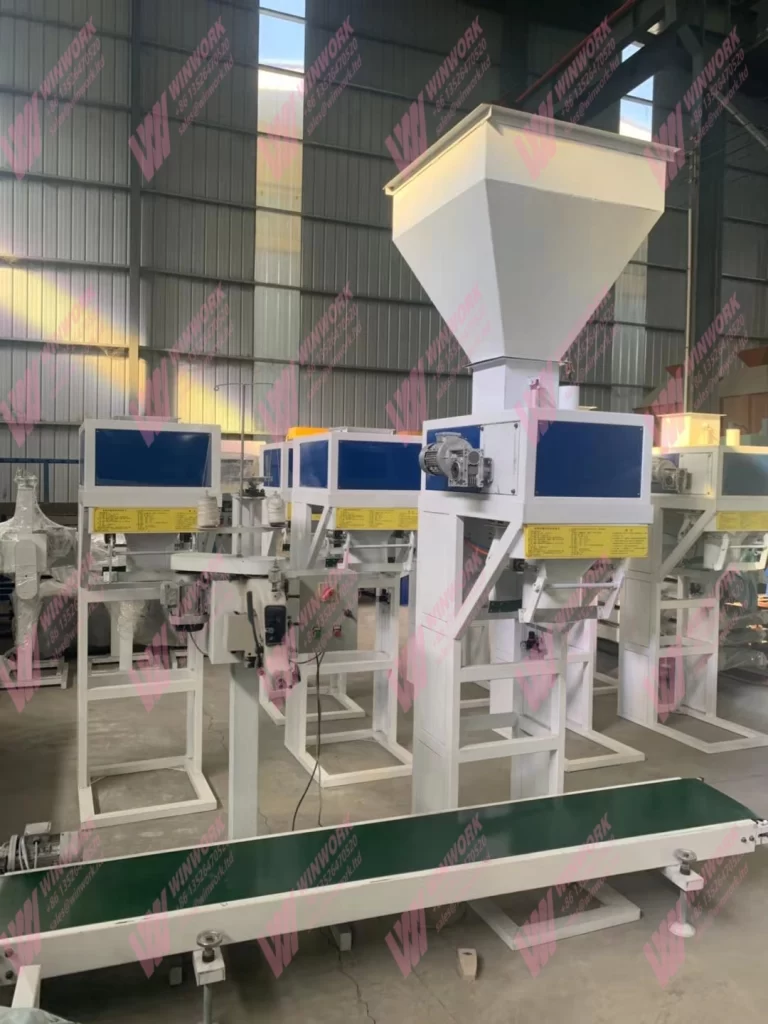
The Competitive Edge: Why Automation Wins
You might ask, “My workers have been doing this by hand for years, why change now?” Here is the down-to-earth reality of why the Automatic quantitative fertilizer packing machine outperforms manual labor every time:
Precision That Pays for Itself
Human error is costly. And the precision by human is uncontroled, there will be wrong sometimes. If a worker consistently overfills a bag by just 100 grams, and you pack 1,000 bags a day, you are giving away 100 kilograms of free fertilizer daily. That is pure lost profit. Conversely, under-filling leads to fines and angry customers. An Automatic quantitative fertilizer packing machine maintains an accuracy rate of up to ±0.2%. It pays for itself by saving material alone.
Speed That Smokes the Competition
A tired worker might pack 200 bags in an 8-hour shift. A single Automatic quantitative fertilizer packing machine can pack 400 to 600 bags in the same timeframe, often faster. It doesn’t need lunch breaks, bathroom breaks, or shift changes. It keeps running, keeping your inventory moving out the door and onto trucks.
The Health and Safety Factor
Fertilizer dust is corrosive and harmful to lungs. So it is unhealthy for a person always do this. Manual bagging exposes workers to clouds of dust daily. An Automatic quantitative fertilizer packing machine is often equipped with dust collection ports and enclosed systems. This keeps the air cleaner for your staff and reduces the wear and tear on the machine itself caused by abrasive dust.
Labor Cost Reduction
Instead of hiring five people to shovel, weigh, and sew, you only need one operator to monitor the Automatic quantitative fertilizer packing machine. That operator can oversee multiple lines, drastically cutting your payroll while increasing output.
The Anatomy of the Beast: Key Equipment Components
To understand the value, you need to know what makes up a complete Automatic quantitative fertilizer packing machine system. It’s not just one box; it’s a symphony of parts working together.
The Feeding System
This is the gateway. It includes a storage hopper and a feeding mechanism (like a belt or screw auger). Its job is to control the flow of fertilizer into the weighing bucket. For an Automatic quantitative fertilizer packing machine to work efficiently, the feeder must be able to switch from “fast mode” to “dribble mode” instantly.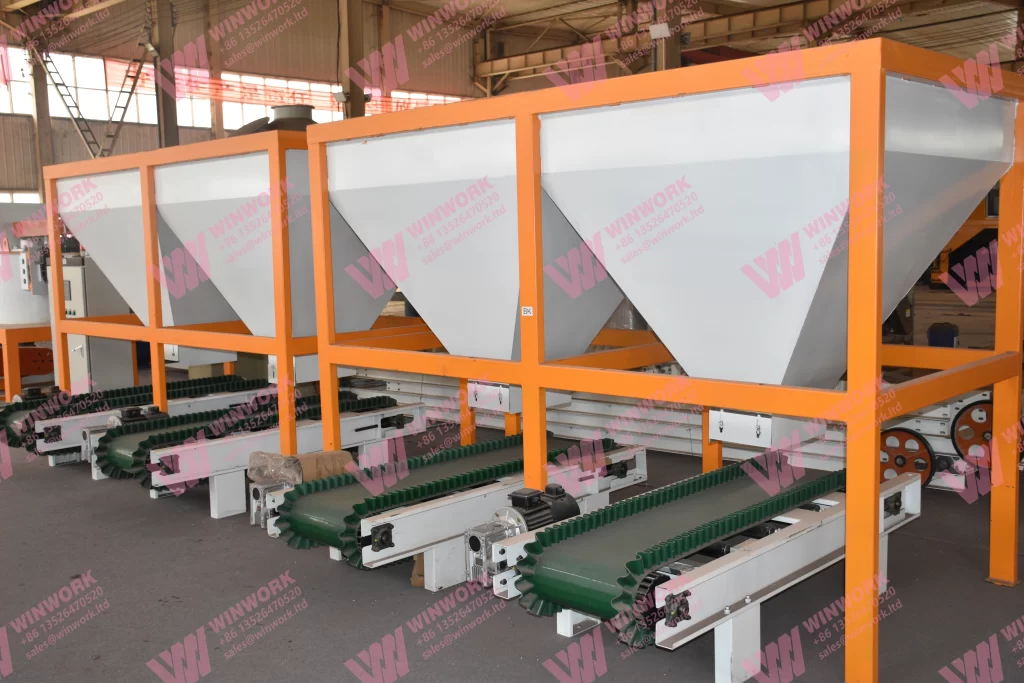
The Weighing Bucket (Weigh Hopper)
This is the heart of the Automatic quantitative fertilizer packing machine. Suspended by high-sensitivity sensors, this bucket catches the fertilizer. It is designed to discharge quickly once the target weight is reached, ensuring no time is wasted.
The Bag Clamping and Release Mechanism
Once the computer says “Weight Achieved,” the machine clamps the bag open, releases the gate, and lets gravity do the work. High-end models of the Automatic quantitative fertilizer packing machine use pneumatic cylinders to ensure a tight seal on the bag spout, preventing spillage.
The Sewing/Sealing Unit
You can’t just fill a bag; you have to close it. Most lines integrate a conveyor that moves the filled bag to a sewing head (for woven bags) or a heat sealer (for laminated bags). A good Automatic quantitative fertilizer packing machine synchronizes perfectly with these units so there is no bottleneck at the end of the line.
The Control Cabinet (The Brain)
This is where the operator sets the weight, monitors the speed, and troubleshoots issues. Modern Automatic quantitative fertilizer packing machine models feature touchscreens that can store dozens of recipes for different bag sizes and fertilizer types.
Types of Machines for Different Needs
Not all fertilizer is the same, and neither are the bags. The Automatic quantitative fertilizer packing machine comes in several flavors to match your product:
Open Mouth Bagging Machines: These are for standard bags (5kg to 50kg) that are open at the top. The machine clamps the open end, fills it, and sends it to the sewer.
Valve Bag Packers: These are used for bags with a small opening (valve) on the side. The Automatic quantitative fertilizer packing machine forces the material into the valve, which then self-seals.
Ton Bag (FIBC) Filling Stations: For the big players. These machines are built to handle 500kg to 2000kg bags. They often include lifting loops to hoist the massive bags into place.
Example Model
Packaging machine is an automatic packaging equipment in fertilizer production lines, used to automatically package bulk materials such as fertilizers into bagged products. It also has the characteristics of high precision, fast speed, convenient cleaning and maintenance, and easy operation.
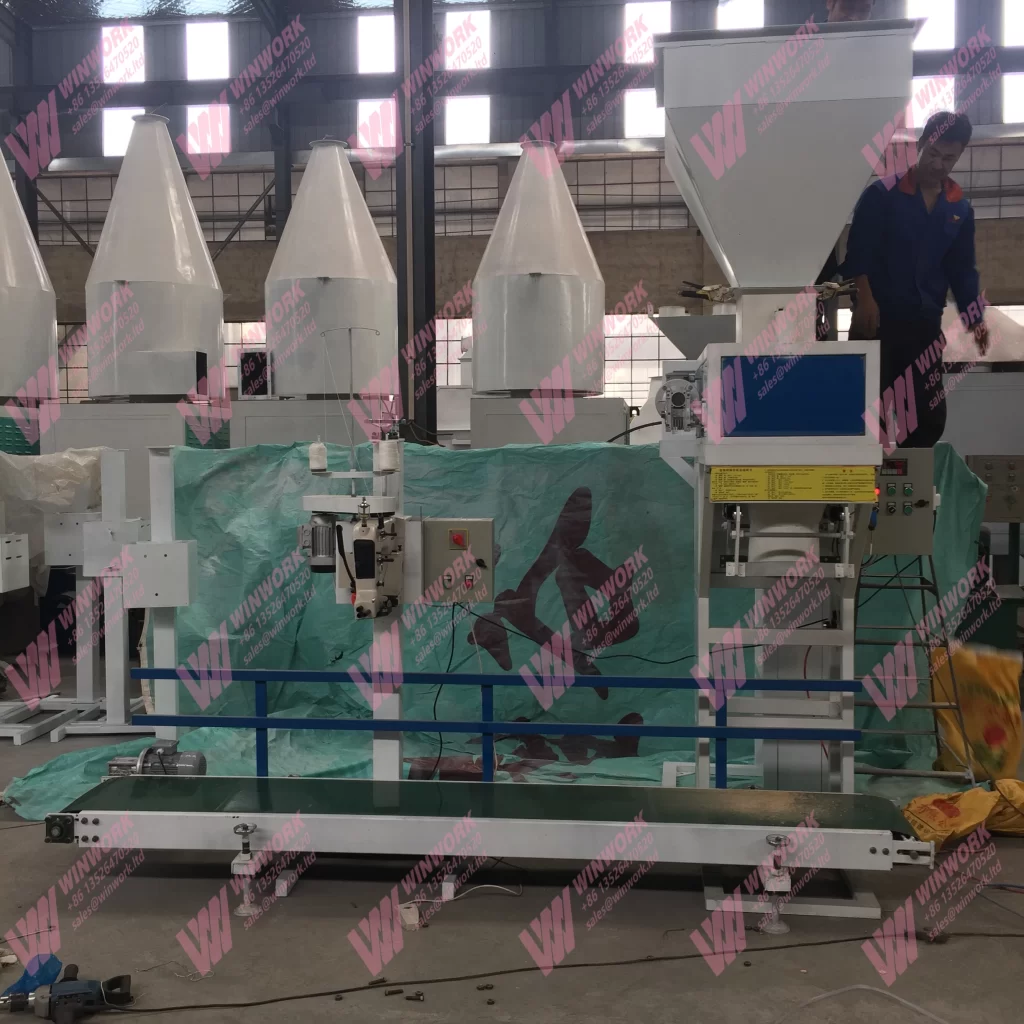
The fertilizer packaging machine achieves efficient and accurate packaging process through an automated control system.
Firstly, based on the preset packaging weight, the fertilizer is accurately measured through a precise measuring system. Then, the measured fertilizer is transported to the hopper of the packaging machine through equipment such as conveyor belts or vibrators.
Next, the packaging machine automatically shapes the packaging bag according to the preset size, forming an open packaging bag. Subsequently, the formed packaging bag is filled with fertilizer into the packaging bag through the filling device below the hopper.
After filling, the packaging machine automatically seals the packaging bag to ensure its sealing. Finally, the packaged fertilizer is transported to the designated location through a conveying device.
And often we need a belt conveyor to transport these products.
The belt conveyor is mainly composed of two end rollers and a closed conveyor belt tightly sleeved thereon.
The roller that drives the conveyor belt to rotate is called the drive roller (transmission roller); the other roller that only changes the direction of movement of the conveyor belt is called the redirection roller. The drive roller is driven by an electric motor through a reducer, and the conveyor belt is dragged by the friction between the drive roller and the conveyor belt. The drive roller is generally installed at the discharge end to increase the traction force and facilitate dragging. The material is fed from the feeding end, falls on the rotating conveyor belt, and is driven by the friction of the conveyor belt to be transported to the discharge end for discharge.
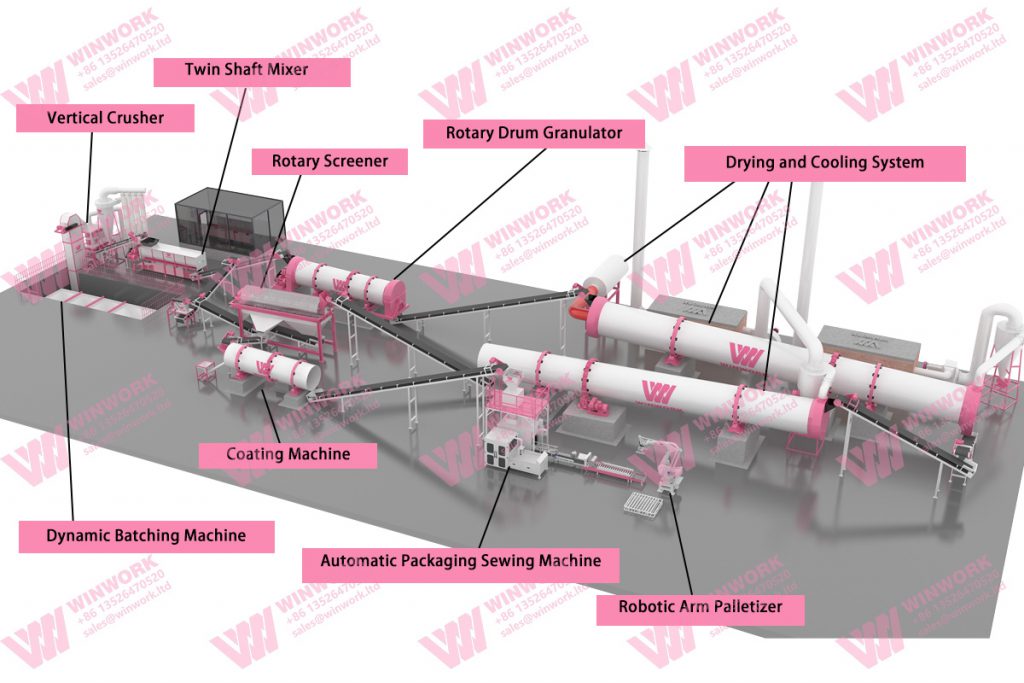
It can be used for horizontal or inclined transportation, and is very convenient to use. According to the requirements of the conveying process, it can be transported by a single unit, or it can be composed of multiple units or with other conveying equipment to form a horizontal or inclined conveying system to meet the needs of different forms of production lines.
FAQ: Your Questions Answered
Q1: Is an Automatic quantitative fertilizer packing machine difficult to operate?
A: Not at all. While it looks complex, modern machines are designed with user-friendliness in mind. If you can use a smartphone, you can operate the touchscreen interface of an Automatic quantitative fertilizer packing machine. Training usually takes less than a day.
Q2: What happens if the fertilizer is lumpy or moist?
A: This is a common concern. High-quality Automatic quantitative fertilizer packing machine setups often include a vibrating screen or a hopper agitator to break up lumps before they reach the weighing bucket. However, for the machine to work best, the fertilizer should be dry and free-flowing.
Q3: How do I calibrate the machine to ensure accuracy?
A: Calibration is straightforward. You simply place a certified test weight on the weighing bucket and tell the machine, “This is 50kg.” The sensors adjust accordingly. Most manufacturers recommend calibrating your Automatic quantitative fertilizer packing machine weekly or whenever you change the type of fertilizer.
Q4: Can one machine handle both powder and granular fertilizer?
A: Generally, it is best to have specific setups. Powders require different feeding screws and dust seals compared to granules. However, some heavy-duty models of the Automatic quantitative fertilizer packing machine are versatile enough to handle both with minor adjustments to the feed gate.
Q5: What is the maintenance schedule like?
A: Because fertilizer is abrasive, regular cleaning is key. You should blow out dust daily with compressed air. Check the sensors and the sewing head weekly. The better you treat your Automatic quantitative fertilizer packing machine, the longer it will last.
Conclusion
The days of relying on shovels, muscle, and guesswork are fading fast. In a competitive global market, consistency is king. By integrating an Automatic quantitative fertilizer packing machine into your production line, you are not just buying a piece of metal; you are investing in precision, efficiency, and the future growth of your business. It is time to let the machine do the heavy lifting while you focus on growing your brand.
For more details, please feel free to contact us.
Email: sales@lanesvc.com
Contact number: +8613526470520
Whatsapp: +8613526470520
Get A Quote