

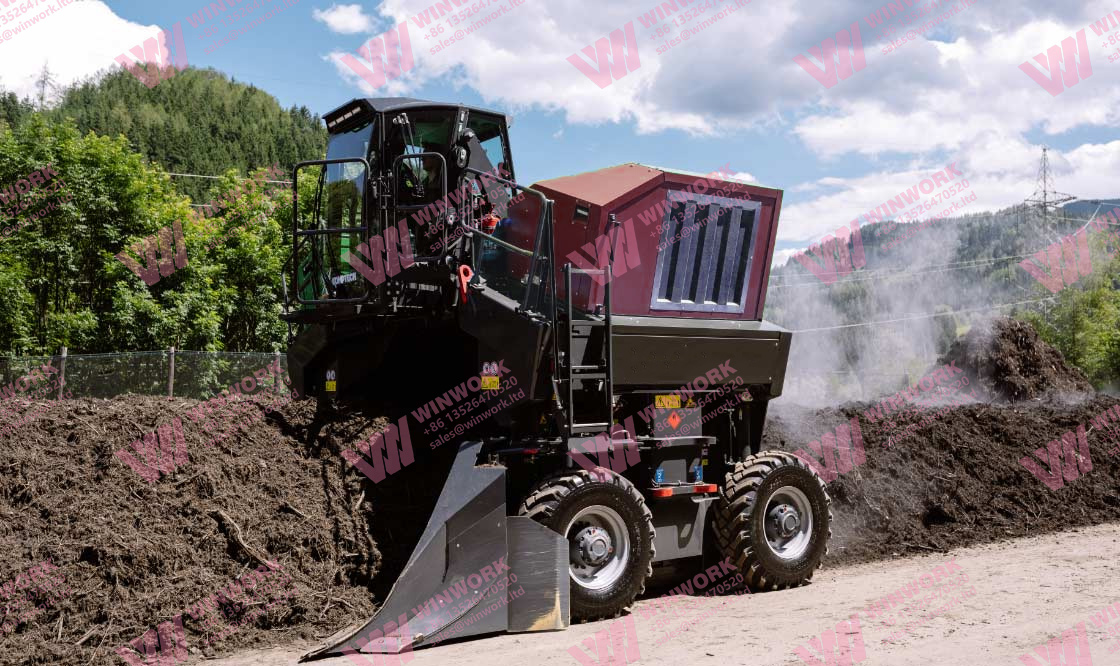
If you’ve ever stuck your hand into the middle of a large compost pile on a warm day, you know it’s not just warm—it’s practically baking. That’s the microbial magic of fermentation working overtime. But here’s the dirty secret: if that heat isn’t managed, those same hardworking microbes will cook themselves to death, your pile will go anaerobic, and you’ll be left with a smelly, rotting mess instead of rich fertilizer. The solution isn’t fancy chemicals or constant babysitting; it’s mechanical intervention. We are talking about Using compost turner to handle fermentation heating.
This isn’t just about mixing stuff up. Using compost turner to handle fermentation heating is the scientific and practical approach to keeping your compost pile in the “Goldilocks zone”—not too cold, not too hot, but just right for the bacteria to thrive. It is the difference between a 60-day wait for decent compost and a 15-day turnaround for premium, pathogen-free “black gold.” If you are serious about composting at any scale beyond a backyard bin, understanding how Using compost turner to handle fermentation heating works is not optional; it’s the key to your success.
What Does “Handling Fermentation Heating” Actually Mean?
Let’s strip away the jargon. When organic matter (manure, food waste, straw) decomposes, the microorganisms breaking it down release energy. This energy turns into heat. In a small backyard pile, this heat escapes easily into the air. But in a large windrow or a deep trough, that heat gets trapped. The core of the pile can easily hit 70°C to 80°C (158°F to 176°F).
While a short spike to 55-65°C is great for killing weed seeds and pathogens, staying that hot for too long kills the beneficial thermophilic (heat-loving) bacteria you actually need to finish the job. The pile then collapses, loses oxygen, and turns anaerobic, smelling like rotten eggs.
Using compost turner to handle fermentation heating means employing a machine to physically move the material. The goal is twofold: pull the super-hot material from the core and expose it to the cooler air to lower its temperature, and simultaneously move the cooler, outer material into the core to warm it up. It’s a thermal shuffle that keeps the entire pile active and evenly heated.
Why You Absolutely Need to Manage the Heat (The Benefits)
You might think, “Nature knows best, let it do its thing.” But nature’s timeline is slow, and nature doesn’t have to turn a profit or meet a production quota. Here is why Using compost turner to handle fermentation heating is a game-changer:
You Protect the Microbial Workforce
This is the big one. Different bacteria work at different temperatures. Mesophiles like it around 20-40°C; thermophiles peak at 55-65°C. If the pile exceeds 70°C, even the thermophiles start to die. By Using compost turner to handle fermentation heating, you cap the temperature, ensuring your bacterial workforce stays alive and productive throughout the process.
You Eliminate Cold Spots and Anaerobic Zones
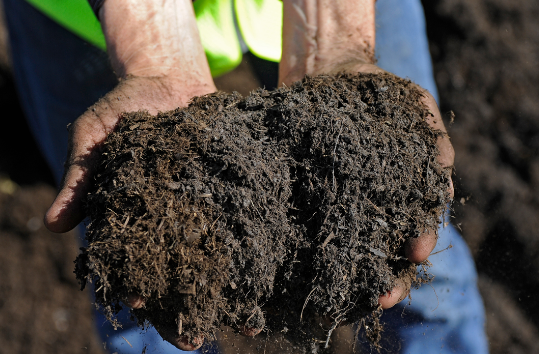
In a static pile, the outside is cool and often dry, while the core is hot and wet. This leads to uneven composting. The turner mixes everything thoroughly. Using compost turner to handle fermentation heating ensures that every particle of material spends time in the hot zone and the aerobic zone, guaranteeing a uniform, high-quality end product.
You Drastically Speed Up the Process
A managed, aerated, and temperature-controlled pile can finish primary fermentation in 15-20 days. A static pile can take 3 to 6 months. The efficiency gained by Using compost turner to handle fermentation heating is massive, allowing you to process more material in less space.
Odor Control
Bad smells come from anaerobic conditions (lack of oxygen). When you turn the pile and manage the heat, you are forcibly introducing oxygen. Using compost turner to handle fermentation heating is one of the most effective odor control strategies available, keeping your neighbors happy and your operation compliant.
How Does It Work? The Nuts and Bolts of the Process
Alright, let’s get into the mechanics. How does the machine actually do this? The principle of Using compost turner to handle fermentation heating relies on aeration, mixing, and heat exchange.
Step 1: The Approach
The compost turner (whether it’s a windrow type moving along a row, or a trough type moving on rails) positions itself at one end of the pile.
Step 2: The Lifting and Fracturing
As the machine moves forward, a rotating drum or a series of paddles/chains engages the pile. It lifts the material from the bottom and the core, breaking up compacted clumps. This is the first critical step in Using compost turner to handle fermentation heating because compaction squeezes out the air. By fracturing the material, you reopen air pores.
Step 3: The Throw and Mix
The lifted material is then tossed through the air or rearranged within the machine. This is where the magic happens. The hot, inner material is thrown to the outside, where it contacts the cooler ambient air and loses heat (convective cooling). Simultaneously, the cooler, outer material is carried inward toward the core. This constant remixing is the essence of Using compost turner to handle fermentation heating.
Step 4: Oxygen Infusion
As the material is tossed and falls back down, it creates countless air pockets. Fresh oxygen rushes in to fill these voids. This oxygen fuels the microbes, which in turn generate more heat—but because you are also exposing material to the air, you prevent that heat from spiking uncontrollably. It’s a self-regulating system when Using compost turner to handle fermentation heating is done correctly.
Step 5: Re-forming the Pile
The turner leaves behind a neatly reshaped pile, now thoroughly mixed, aerated, and with a more uniform temperature profile. The cycle is repeated every 1 to 3 days, depending on the intensity of the fermentation.
The Gear You Need: What Equipment is Essential?
You can’t do this with a garden fork if you have more than a few cubic yards. Using compost turner to handle fermentation heating requires specialized machinery built for the job.
Windrow Compost Turners: These are self-propelled machines (crawler or wheeled) that straddle a long row (windrow) of compost. They are highly flexible and great for outdoor pads. The iconic spinning drum with tines is the classic image of Using compost turner to handle fermentation heating.
Trough (Groove) Compost Turners: These run on fixed rails over concrete channels (troughs) filled with material. They are often more automated and can be integrated with aeration floors. They are the workhorses of indoor, large-scale operations. Using compost turner to handle fermentation heating in a trough system is very efficient and easy to control.
Elevating Face (Wheel) Turners: Large, wheel-type machines that can handle massive volumes and turning depths (up to 1.5 meters or more). They are powerful and fast, suitable for very large operations.
Temperature Probes and Control Systems (The Brain): Modern Using compost turner to handle fermentation heating often involves a simple control panel. You stick temperature probes deep into the pile. If the probe reads above 65°C, the system might trigger an extra turning cycle or alert the operator. Data logging helps you perfect your process.
Each machine has its place. The windrow turner offers flexibility; the trough turner offers control and odor containment. The key is that Using compost turner to handle fermentation heating requires a machine that can aggressively lift, fracture, and mix the entire profile of the pile, not just scratch the surface.
Fermentation Machines Example
The Horizontal Fermentation Tank is a state-of-the-art equipment designed for the effective aerobic fermentation of organic waste, agricultural residues, sludge, and other compostable materials. Unlike vertical tanks, the horizontal design allows for larger capacity and more uniform fermentation.
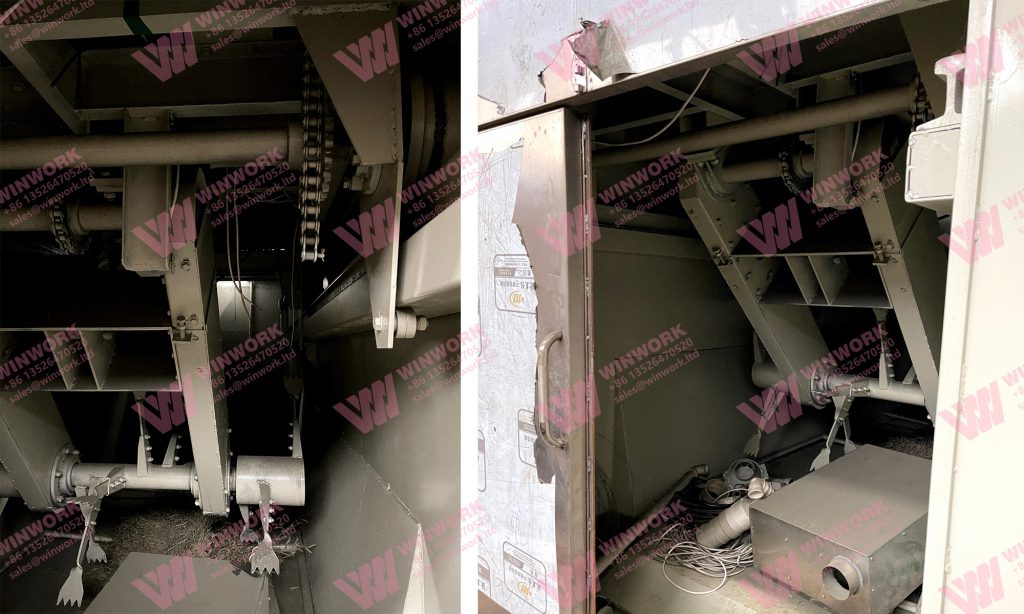
The Horizontal Fermentation Tank is widely used in the production of organic fertilizers and compost, offering numerous advantages in terms of efficiency, control, and environmental impact.
The Vertical Fermentation Tank is a specialized unit designed for efficient aerobic fermentation of organic waste, agricultural residues, sludge and other compostable materials. This fermenter features a vertical structure and a compact design that maximizes space utilization while providing excellent mixing and aeration capabilities. It is widely used in the production of organic fertilizers, compost and other bio-products with the advantages of high efficiency and reduced environmental pollution.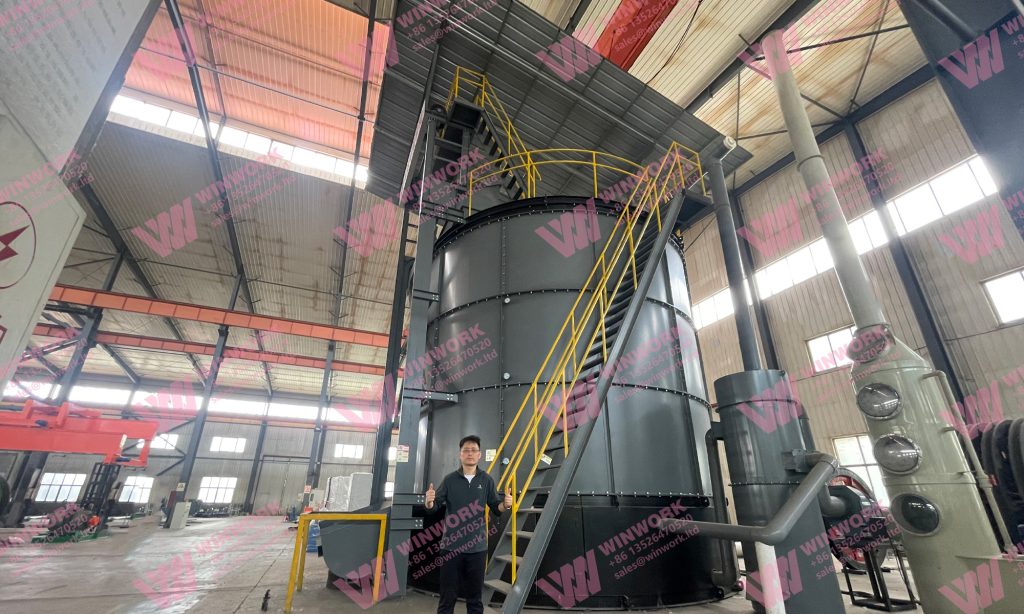
Crawler compost turner is an advanced compost turning equipment, specially designed for compost fermentation process, with the advantages of high efficiency, stability, easy operation and so on.
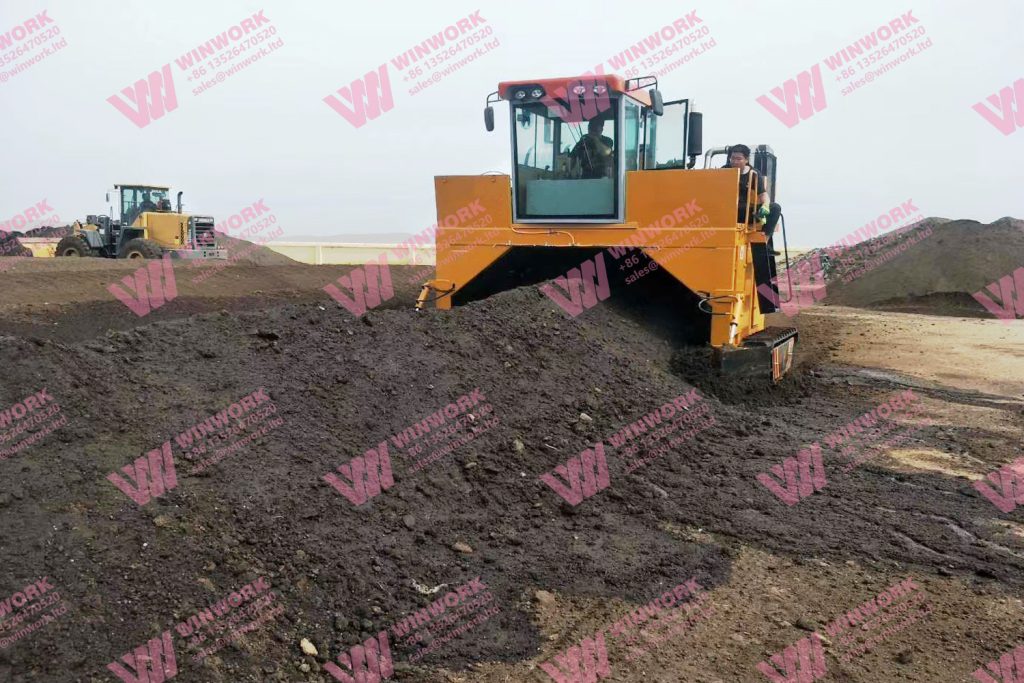
Crawler compost tumbler realizes automatic operation through crawler walking system, which is the necessary equipment for producing organic fertilizer granules and widely used in organic fertilizer production line.
Crawler compost turner can not only quickly improve the fermentation efficiency of materials, but also effectively improve the quality of compost, is the first choice of modern compost production equipment.
FAQ: Your Questions About Using Compost Turner to Handle Fermentation Heating Answered
We know you’ve got questions. Here are the answers to what people ask us most about Using compost turner to handle fermentation heating.
Q: How often should I turn the pile to manage the heat?
A: It depends on the stage. During the initial high-heat phase (first 1-2 weeks), turning every 1 to 3 days is common. As the pile cools and moves into the curing phase, you can stretch it to every 5-7 days. The goal of Using compost turner to handle fermentation heating is to stay ahead of the heat spike, not just react to it.
Q: Won’t turning the pile make it lose too much heat in the winter?
A: It can, if you overdo it. In cold weather, you might turn less frequently or use a thicker pile profile to retain heat. However, the aeration is often more important than the slight heat loss, as oxygen keeps the microbes active, which generates its own heat. Smart Using compost turner to, handle fermentation heating involves adjusting frequency with the seasons.
Q: Can I just use a front-end loader to turn the pile?
A: You can, but it’s a poor substitute. A loader just flips the pile over in big chunks. It doesn’t fracture the material, it doesn’t mix it thoroughly, and it can compact it further. Using compost turner to handle fermentation heating requires the fracturing and aerating action that only a dedicated turner provides. Loaders are for moving material, not for optimizing fermentation.
Q: Does the type of material matter?
A: Absolutely. High-nitrogen materials like chicken manure generate heat fast and furious. You’ll need to turn more frequently. Woody, high-carbon materials heat up slower. Using compost turner to handle fermentation heating allows you to manage both by adjusting the intensity and frequency of the turning to match the recipe.
Q: Is it worth the investment for a medium-sized farm?
A: Almost always, yes. Calculate the value of your time, the cost of land tied up in slow composting, and the potential revenue from selling a faster, higher-quality product. The labor savings alone from Using compost turner to handle fermentation heating often justify the cost of a smaller, tow-behind or tractor-mounted turner very quickly.
Conclusion: Don’t Let the Heat Go to Waste
Fermentation heat is a powerful tool, but like any tool, it needs to be guided. Left unchecked, it destroys the very process it started. Using compost turner to handle fermentation heating is the guidance system that keeps your composting operation efficient, odor-free, and productive.
By embracing this technology, you move from hoping for good compost to engineering it. You protect your microbial partners, you speed up your cycle, and you produce a consistent, premium product. Whether you are a municipality, a large farm, or a commercial composter, Using compost turner to handle fermentation heating is the practical, proven step that separates the amateurs from the pros. Make the turn. Your compost—and your bottom line—will thank you.
For more details, please feel free to contact us.
Email: sales@lanesvc.com
Contact number: +8613526470520
Whatsapp: +8613526470520
Get A Quote