

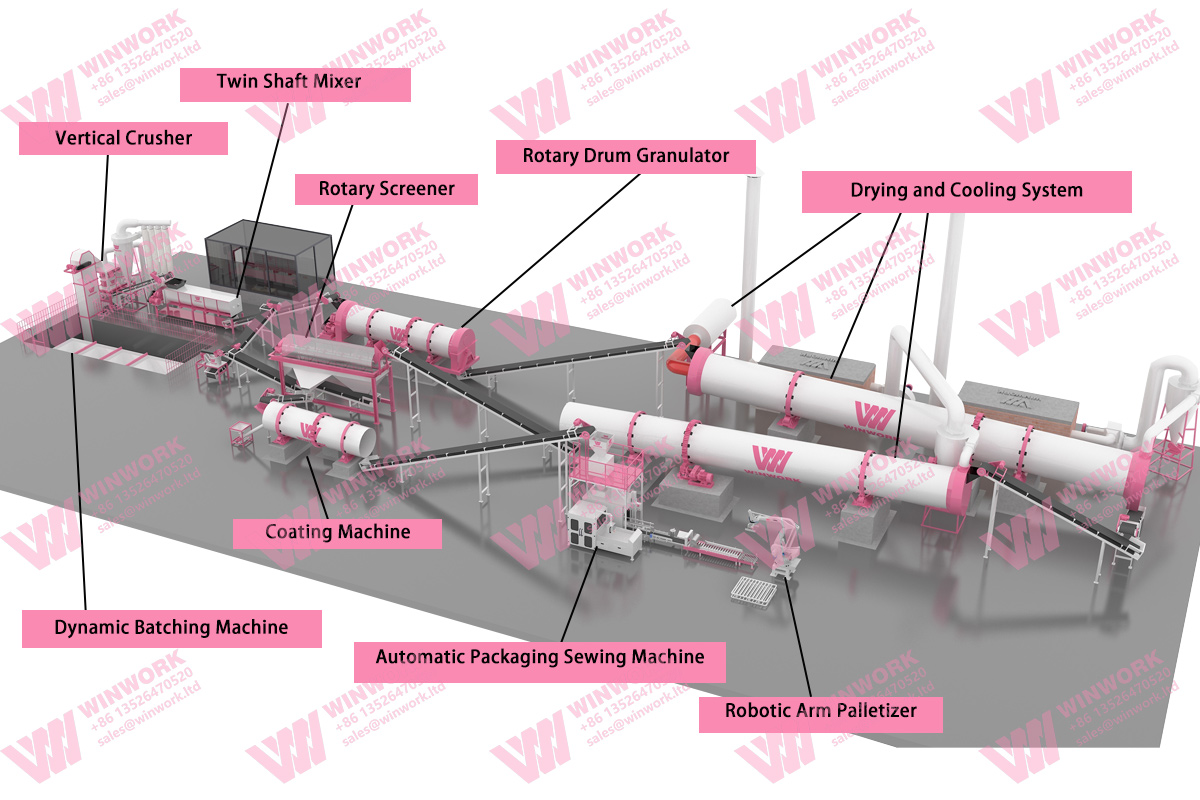
What Is Compound Fertilizer Bentonite?
Compound Fertilizer Bentonite refers to the use of bentonite in compound fertilizer formulations and granulation processes. Bentonite is a natural clay mineral known for its water absorption, swelling and binding characteristics. When properly incorporated into a fertilizer formula, it can affect the physical properties and granulation behavior of the material.
For fertilizer manufacturers, the processing method should be selected according to the complete formulation rather than one raw material alone. Moisture, particle size, mixing uniformity, required granule size and production capacity all influence the final production result.
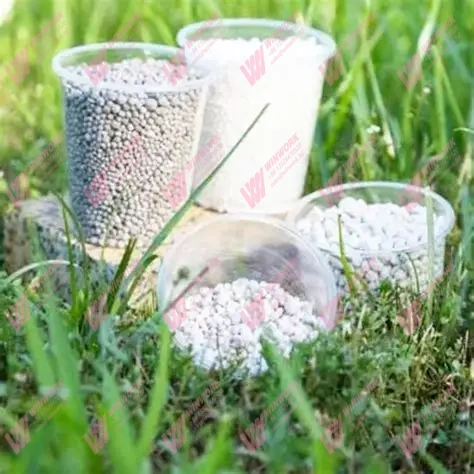
Why Is Bentonite Used in Fertilizer Production?
Bentonite can be considered when manufacturers need to process fine mineral powders or develop fertilizer formulations with specific physical requirements. Powdery raw materials can be difficult to transport, store and apply. Granulation converts fine materials into larger particles that are easier to handle.
The performance of the final product depends on the relationship between formulation and equipment. A suitable fertilizer granulator should provide stable material movement and enough agglomeration force for the selected process.
WINWORK offers several granulation options for fertilizer production, including rotary drum, disc and roller granulation equipment. Its NPK production-line information also lists these granulators as common equipment for the pelletizing stage.
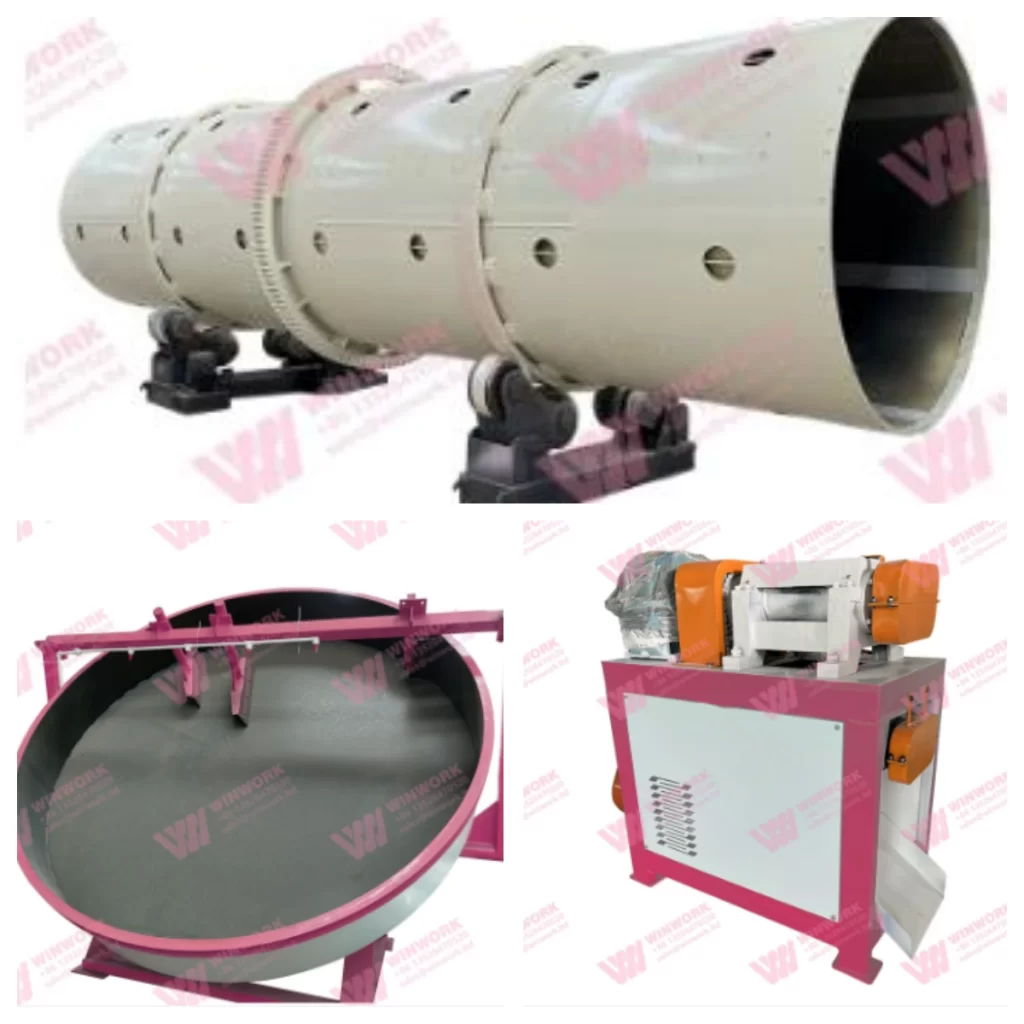
Compound Fertilizer Bentonite Production Process
A complete production process normally includes raw material preparation, batching, crushing, mixing, granulation and post-treatment. The exact configuration can be adjusted according to the fertilizer formula, required capacity and final product specifications.
1. Raw Material Preparation
Before production starts, manufacturers should evaluate the raw materials and confirm their moisture, particle size and physical properties. Depending on the formulation, materials may include nitrogen, phosphorus and potassium sources, bentonite and other mineral or functional ingredients.
Proper preparation helps create stable conditions for the following processing stages.
2. Crushing and Particle Size Control
Some raw materials may contain large particles or agglomerates and therefore need to be crushed before mixing. A suitable particle size improves material contact and helps the mixer achieve a more uniform blend.
3.Batching and Mixing
Accurate batching is important when several fertilizer materials are combined. The purpose is to maintain the desired formulation ratio before granulation.
After batching, the materials enter the mixer. WINWORK describes double-shaft and horizontal mixers as common equipment for fertilizer production. Its NPK production-line information states that automatic batching can be used to control the proportion of nitrogen, phosphorus and potassium materials.
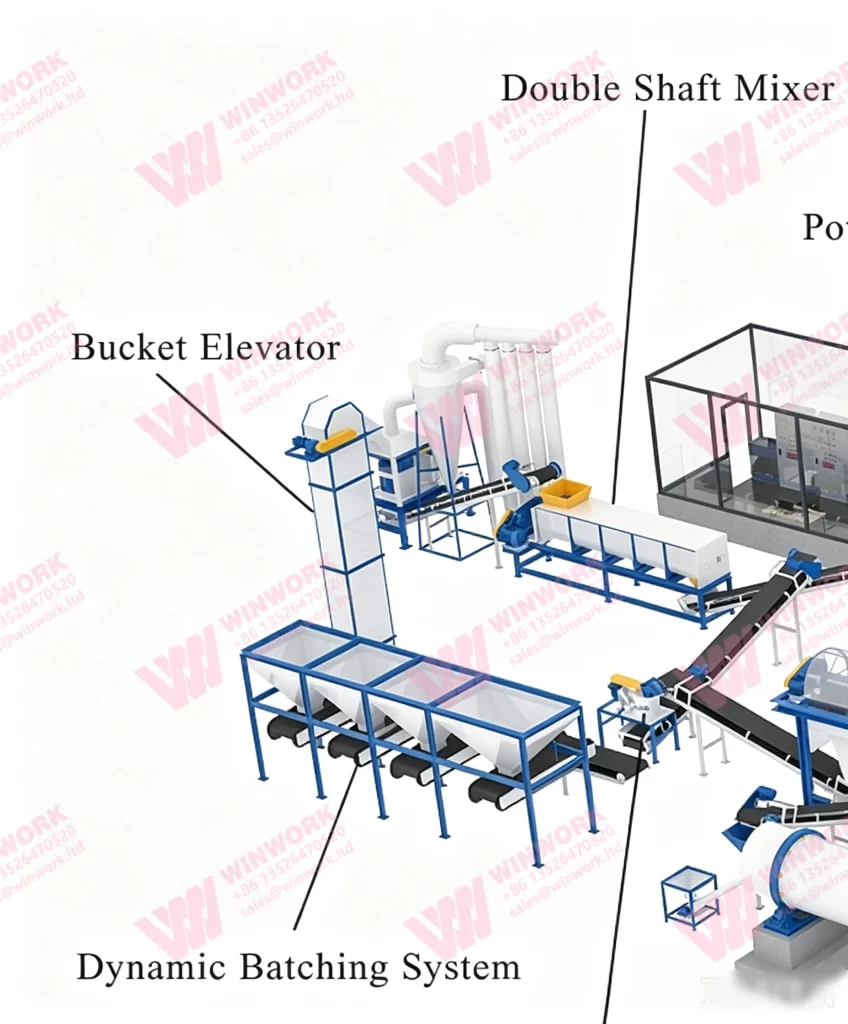
4. Granulation
Granulation is the core forming stage. During this process, prepared powder is converted into larger fertilizer granules.
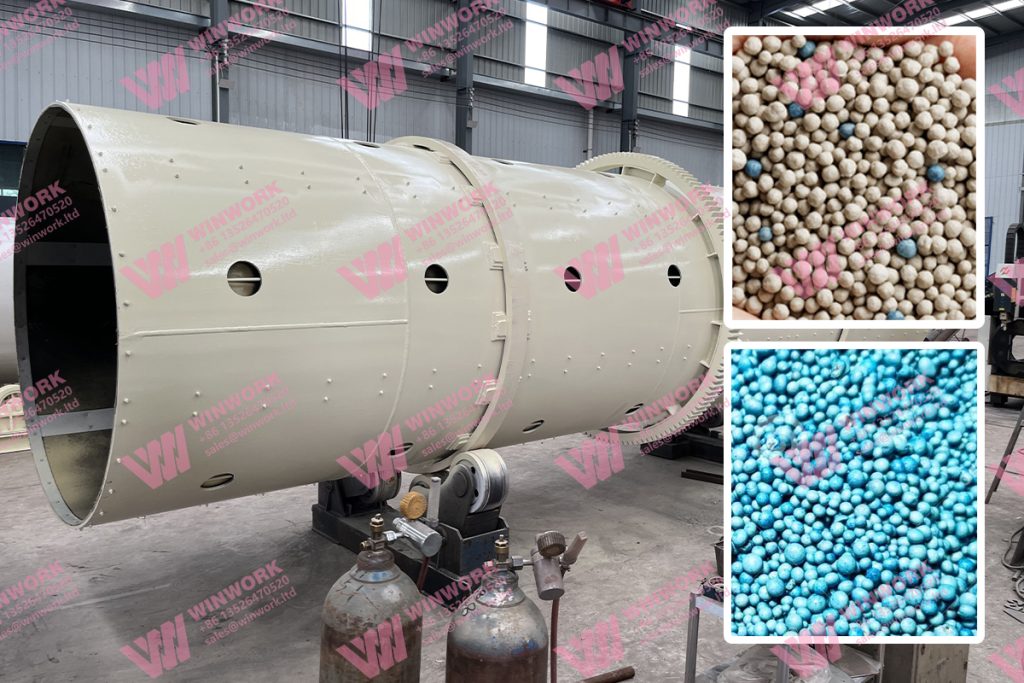
For wet granulation, a rotary drum granulator can be used together with controlled liquid addition. The rotating drum promotes material movement and agglomeration. For suitable dry formulations, roller granulation provides another processing route.
WINWORK’s NPK production-line information identifies drum, roller and disc granulators as common pelletizing equipment. The company also offers a two-in-one granulator that combines rotary drum and churning-tooth granulation functions and is designed for compound fertilizer applications.
How to Choose Granulation Equipment
Selecting equipment for compound fertilizer bentonite production depends on the complete formula and process requirements. There is no single granulator that is suitable for every fertilizer formulation.
Rotary Drum Granulator
A rotary drum granulator is commonly considered for continuous wet granulation and larger fertilizer production systems. It can be integrated with upstream mixing and downstream drying, cooling, screening and packaging equipment.
WINWORK describes its drum granulator as high-efficiency forming equipment and lists it among the core equipment used for compound fertilizer production.
Rotary Drum Granulator Working Principle
Double Roller Granulator
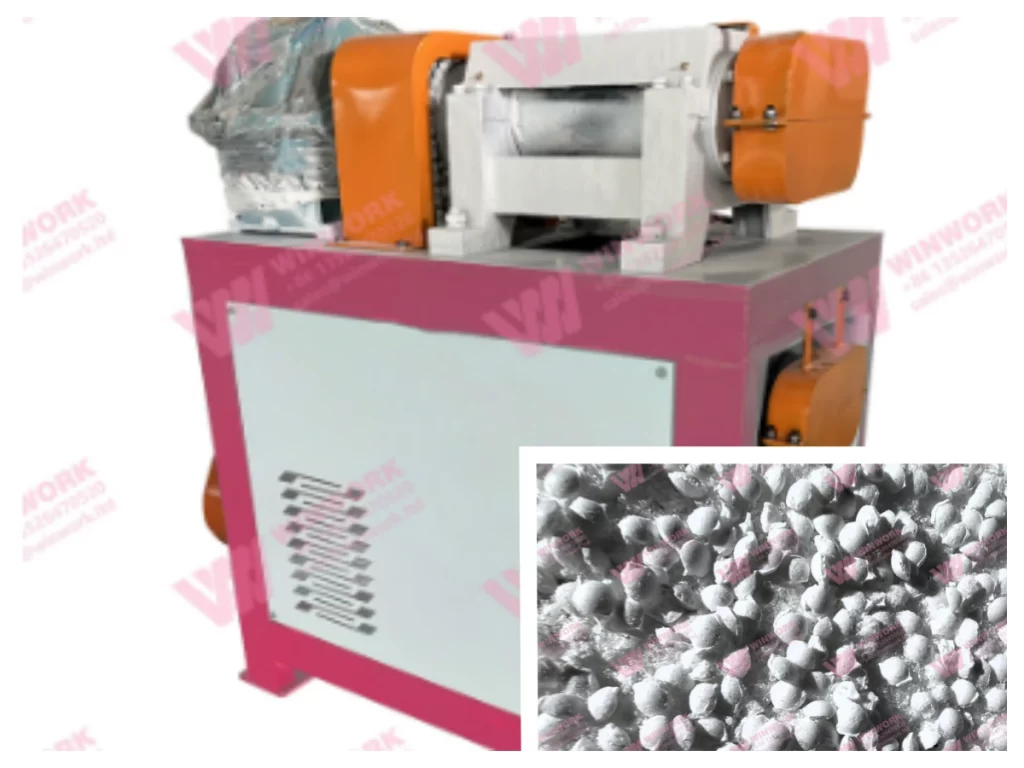
A double roller granulator can be considered for suitable dry extrusion formulations. Compared with wet granulation, dry extrusion can reduce or eliminate the conventional drying stage when the formulation and process conditions allow it.
WINWORK’s NPK production-line information lists a double roller granulator with a reference capacity of 0.8–4.5 t/h, while actual equipment selection should be based on the customer’s material and production requirements.
Disc Granulator
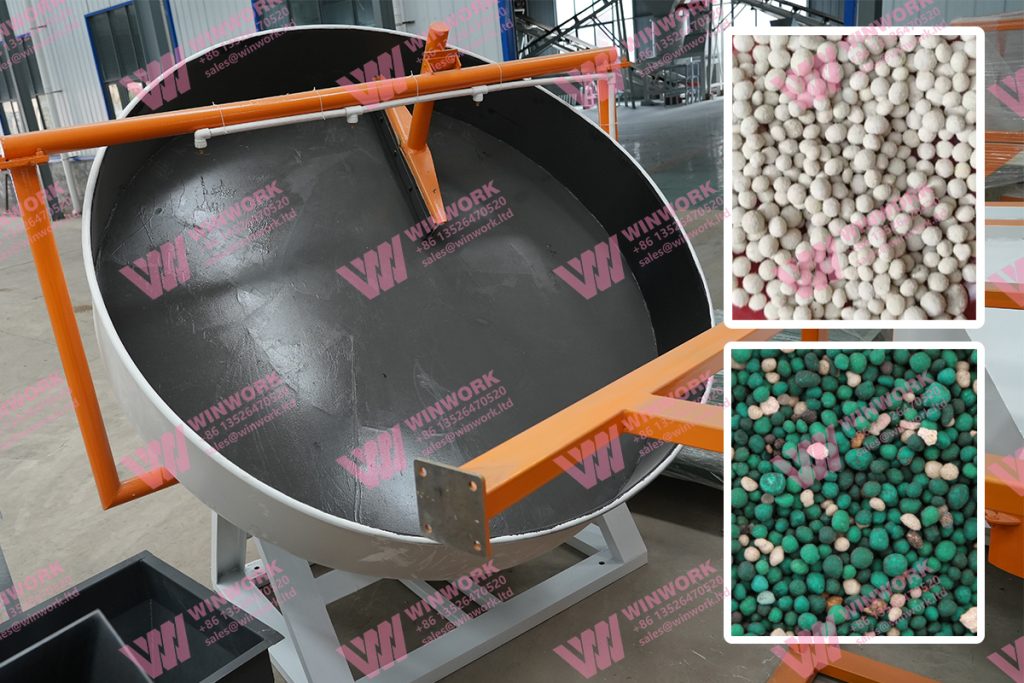
Disc granulators are another option for fertilizer granulation, particularly for applications where a compact granulation system and controllable operating conditions are required.
WINWORK describes its disc granulator as an important machine for compound fertilizer production and highlights features such as even granulation and stable operation.
Drying, Cooling, Screening and Packaging
The post-granulation process depends on the selected granulation method. Wet granulation normally requires drying and cooling, while suitable dry extrusion processes may reduce the need for drying.
Drying and Cooling
After wet granulation, the newly formed particles may contain excess moisture. A rotary dryer can reduce moisture, while a cooling machine lowers the temperature before screening and packaging.
Whether drying and cooling systems are required depends on the granulation method employed; wet granulation necessitates dryers and coolers, whereas dry granulation (using a double-roller granulator) does not require drying or cooling.
Screening and Packaging
After cooling, the fertilizer granules undergo screening to separate oversized and undersized particles from the qualified product. Provided the production line design allows for it, materials that do not meet the required particle size specifications can be returned to the production process. The qualified granules then proceed to the automated packaging system for weighing, bagging, and sealing.
Naturally, a coating machine can also be incorporated if coating is required.
Why Choose WINWORK Fertilizer Machinery?
For a fertilizer project, choosing individual machines is only part of the decision. The compatibility between equipment, material characteristics, production capacity and plant layout is equally important.
We provide customized fertilizer production-line solutions based on site conditions, raw materials and production capacity. Its services include program design, 3D and CAD design, granulation experiments, factory visits, manufacturing and installation support.
This customized approach is useful when the fertilizer formulation contains special mineral materials or when manufacturers need to balance production capacity, granule size and processing costs.
Frequently Asked Questions About Compound Fertilizer Bentonite
1.Can bentonite be used in compound fertilizer production?
Yes. Bentonite can be incorporated into certain fertilizer formulations, but the suitable proportion and processing method should be determined according to the complete formula and material properties.
2.Which granulator is suitable for compound fertilizer bentonite?
The appropriate choice depends on the formulation, moisture level, target granule size and production capacity. Rotary drum, disc and roller granulators can all be considered for different fertilizer applications.
3.Does wet granulation require a dryer?
Usually, wet granulation produces particles containing additional moisture, so drying is normally required before cooling, screening and packaging. Dry extrusion processes may reduce or eliminate the need for conventional drying.
4.Can WINWORK customize a fertilizer production line?
Yes. Our engineers can develop customized solutions according to raw materials, production capacity and site conditions. The company also offers granulation testing before equipment selection.
Conclusion
Compound Fertilizer Bentonite production requires more than simply mixing bentonite with fertilizer materials. A stable production result depends on appropriate raw material preparation, accurate batching, uniform mixing, suitable granulation, moisture control, drying, cooling, screening and packaging.
The best equipment configuration should therefore be selected according to the actual formulation and production target. WINWORK provides fertilizer machinery and customized production-line solutions for manufacturers that need to turn powder materials into stable, manageable fertilizer granules.
For a customized compound fertilizer bentonite production solution, manufacturers can provide their raw material information, desired capacity and target granule size to WINWORK for equipment evaluation and process design.
Do you have any other questions? Please feel free to contact us.
WINWORK – Whosale fertilizer production machine in China
Get A Quote