

Introduction
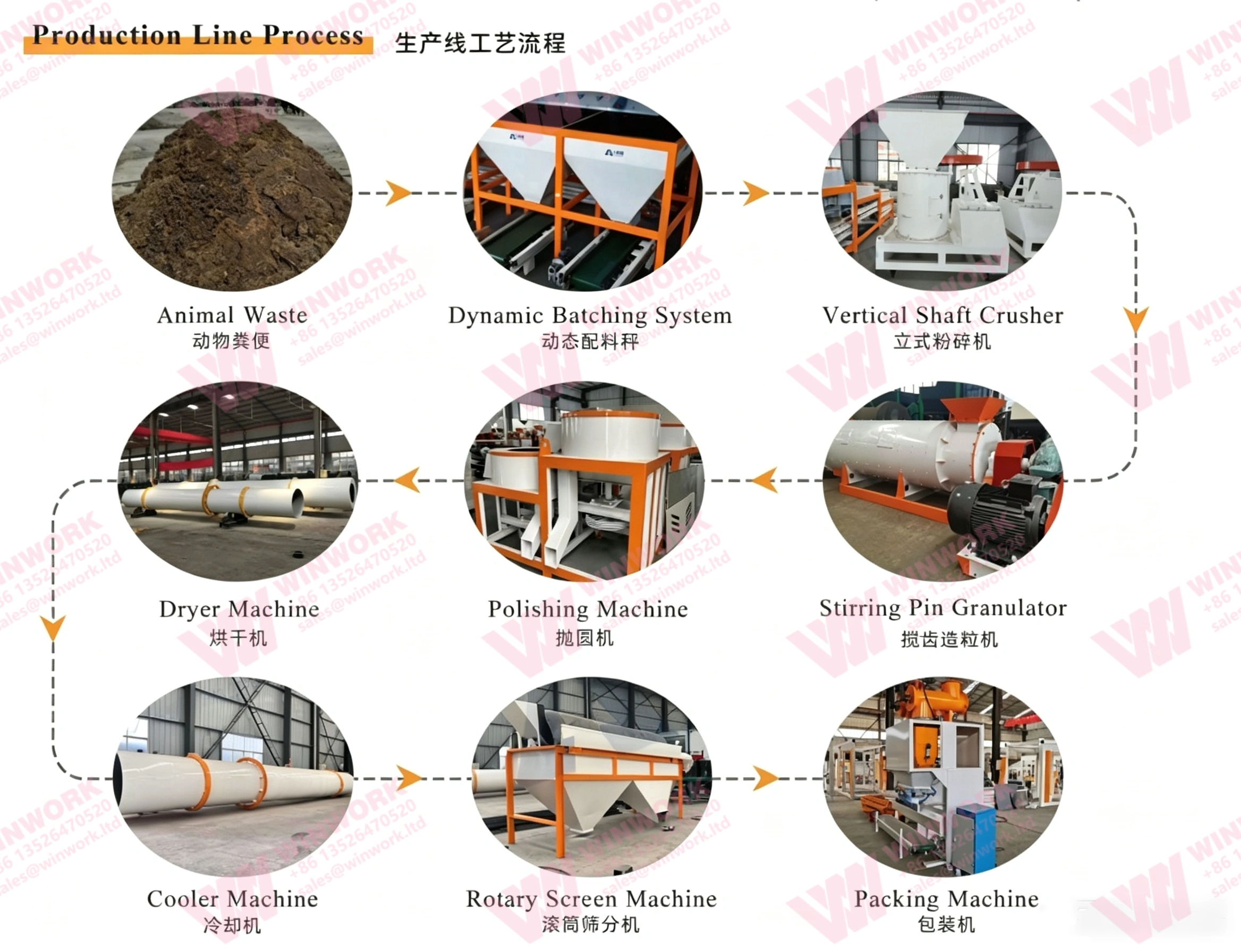
A fertilizer granulation system is designed to convert prepared fertilizer raw materials into uniform, stable, and easy-to-handle granules. Unlike a single granulator, a complete fertilizer granulation system combines several processing stages, including crushing, mixing, granulation, drying, cooling, screening, recycling, coating, and packing. Each stage contributes to the quality and consistency of the final fertilizer product.
Granular fertilizer is easier to transport, store, handle, and apply than loose powder. However, producing consistent granules requires the right combination of equipment and process conditions. Raw material properties, moisture content, fertilizer formulation, production capacity, and target particle size all influence the final equipment configuration.
For fertilizer manufacturers planning an organic fertilizer, compound fertilizer, or NPK fertilizer project, understanding how a fertilizer granulation system works is an important step before selecting equipment. A well-planned fertilizer granulation system can also connect different machines into a continuous production process instead of treating each operation as an independent step.
fertilizer granulation system
What Is a fertilizer granulation system?
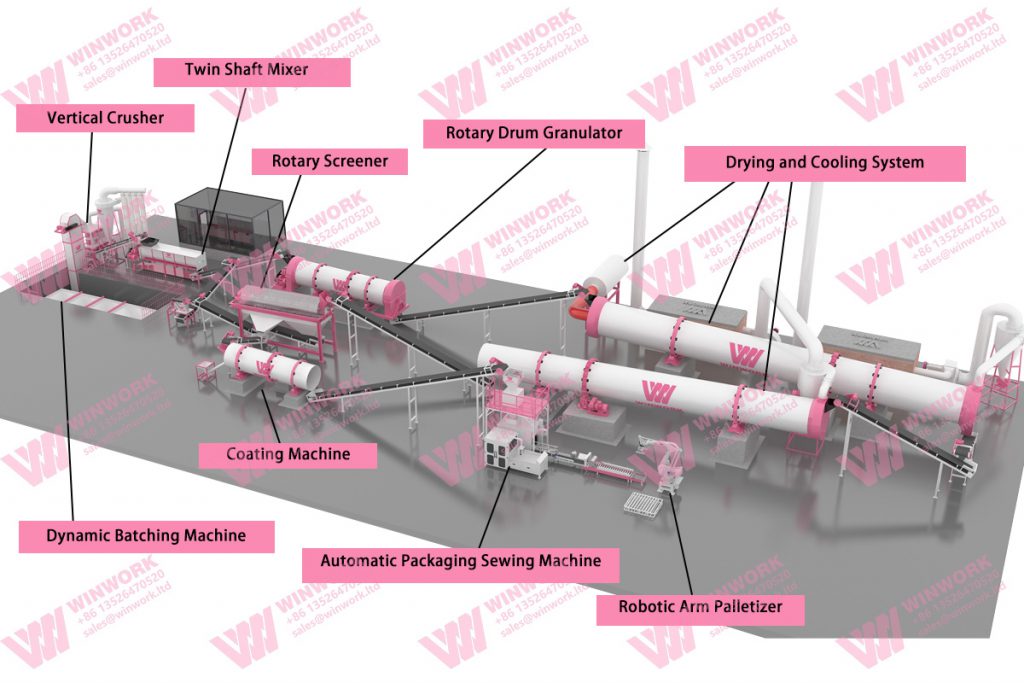
A fertilizer granulation system is an integrated group of machines that processes fertilizer raw materials and turns them into finished fertilizer granules. Depending on the production process, it may include a crusher, mixer, granulator, dryer, cooler, screener, coating machine, conveyor, and packing machine.
The main purpose of a fertilizer granulation system is to create fertilizer particles with a suitable size, shape, moisture level, and physical strength. The system also needs to maintain stable material flow from one processing stage to the next. When the machines are properly matched, the production line can operate more smoothly and reduce unnecessary material handling.
For example, organic fertilizer production may use fermented manure, compost, crop residues, or other organic materials. These materials may require crushing and conditioning before entering the granulation process. Compound and NPK fertilizer production can involve several nutrient materials that need to be accurately mixed before granulation.
Therefore, a fertilizer granulation system should be designed around the characteristics of the raw materials and the requirements of the finished fertilizer instead of selecting a granulator separately. The final configuration may be different for a small fertilizer plant, a medium-capacity production line, or a large continuous fertilizer production project.
How Does a fertilizer granulation system Work?
The exact process varies according to fertilizer type and raw material, but most systems follow a basic sequence. The material is prepared first, then crushed and mixed, followed by granulation. Depending on the process, the granules may then be dried and cooled. Finally, they are screened, recycled if necessary, coated, and packed.
A complete fertilizer granulation system controls not only the formation of fertilizer particles but also the condition of the material before and after granulation. This is why auxiliary equipment can have a direct influence on the final product.
1. Raw Material Preparation
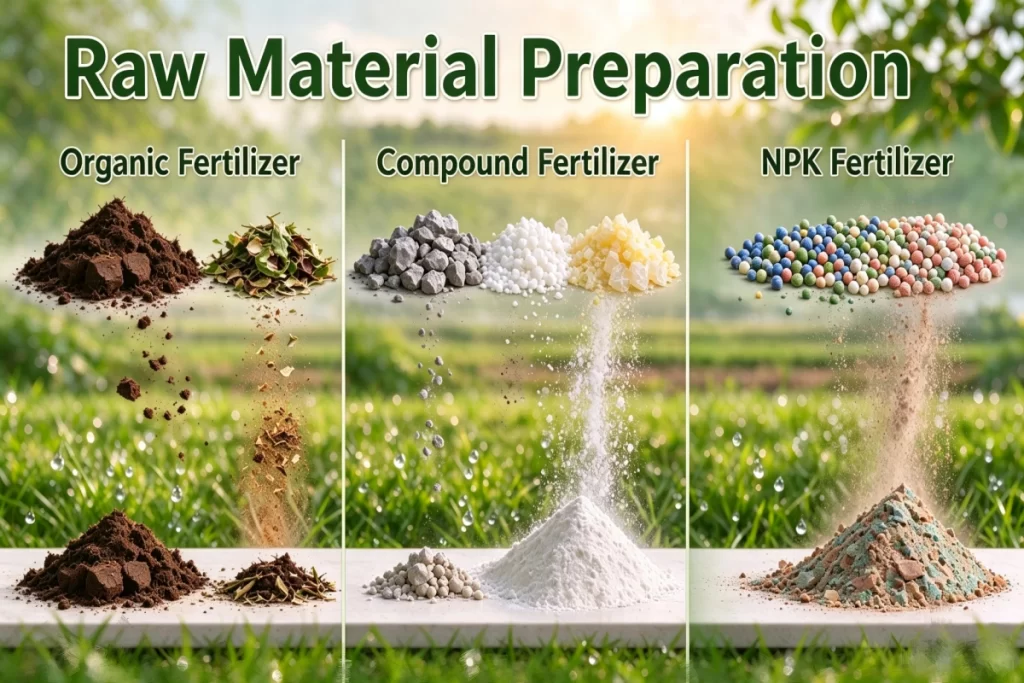
The first step is to prepare raw materials for stable processing. Different fertilizer materials have different particle sizes, moisture levels, densities, and flow characteristics. Organic materials can contain large lumps, fibers, or excess moisture, while chemical fertilizer materials are often supplied as powders or small particles.
Before granulation, raw materials may need fermentation, drying, crushing, or screening. Proper preparation gives the granulator a more consistent feed and helps improve the stability of the following stages. Moisture is particularly important because an unsuitable level can affect particle adhesion and granule formation.
The raw material preparation stage should therefore be considered as part of the fertilizer granulation system rather than as a separate operation. Consistent feed conditions make it easier for the following machines to operate within their expected range.
2. Crushing and Mixing
After initial preparation, oversized or compacted materials are reduced to a suitable particle size. A fertilizer crusher improves material uniformity and prepares raw materials for efficient mixing. The crushed materials are then combined according to the required fertilizer formulation.
Mixing is especially important for compound and NPK fertilizer because several nutrient sources may need to be distributed evenly throughout the mixture. If the feed entering the fertilizer granulation system is not uniform, the nutrient composition of the finished granules may also vary.
A suitable fertilizer mixer helps create a consistent material flow before granulation. For this reason, the mixer capacity should be considered together with the granulator capacity when designing a complete fertilizer granulation system.
3. Granulation
Granulation is the central stage of the fertilizer production process. After mixing, prepared material enters a suitable granulator. The machine changes the physical form of the material by allowing particles to agglomerate, compact, or grow into larger particles.
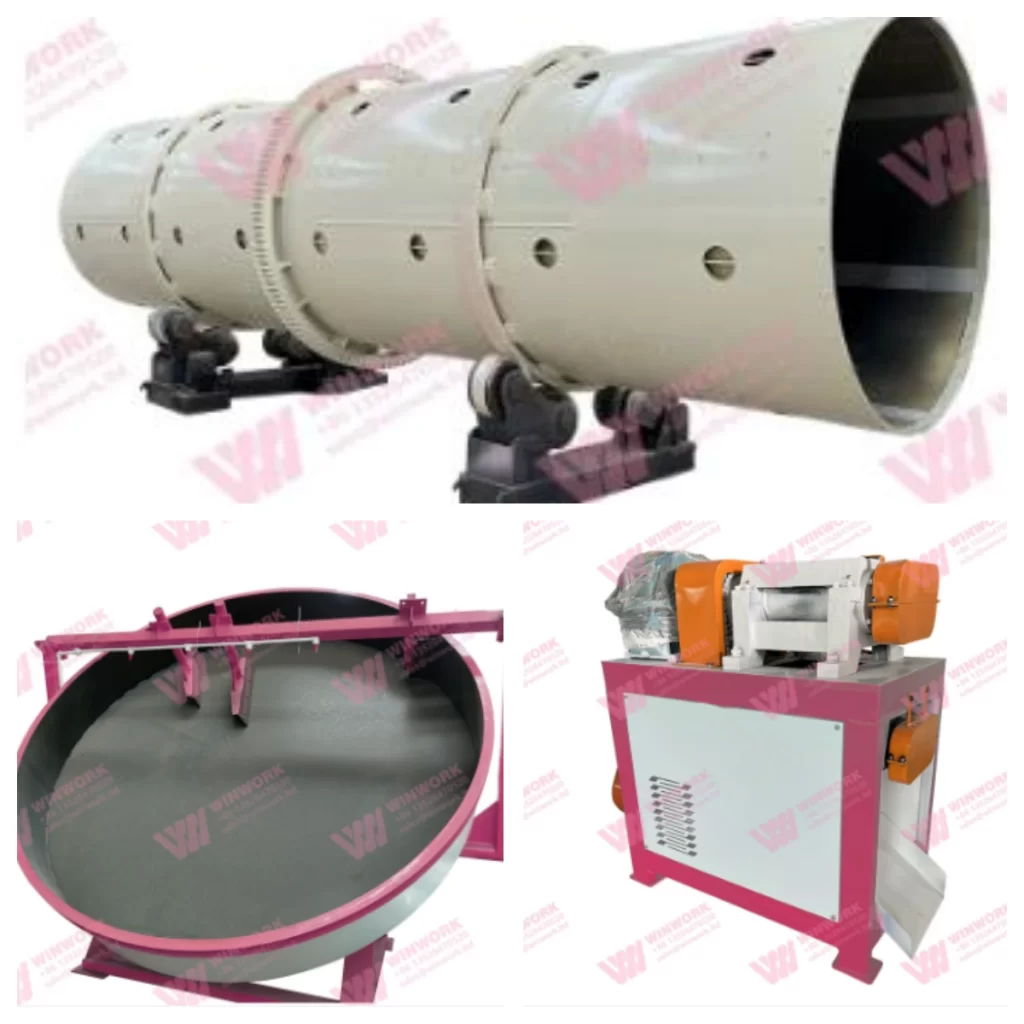
A rotary drum granulator promotes rolling and agglomeration inside a rotating drum. Water or binder can help small particles adhere to one another. A disc granulator uses a rotating disc to make the material roll continuously. With suitable moisture and process control, smaller particles gradually develop into larger fertilizer granules.
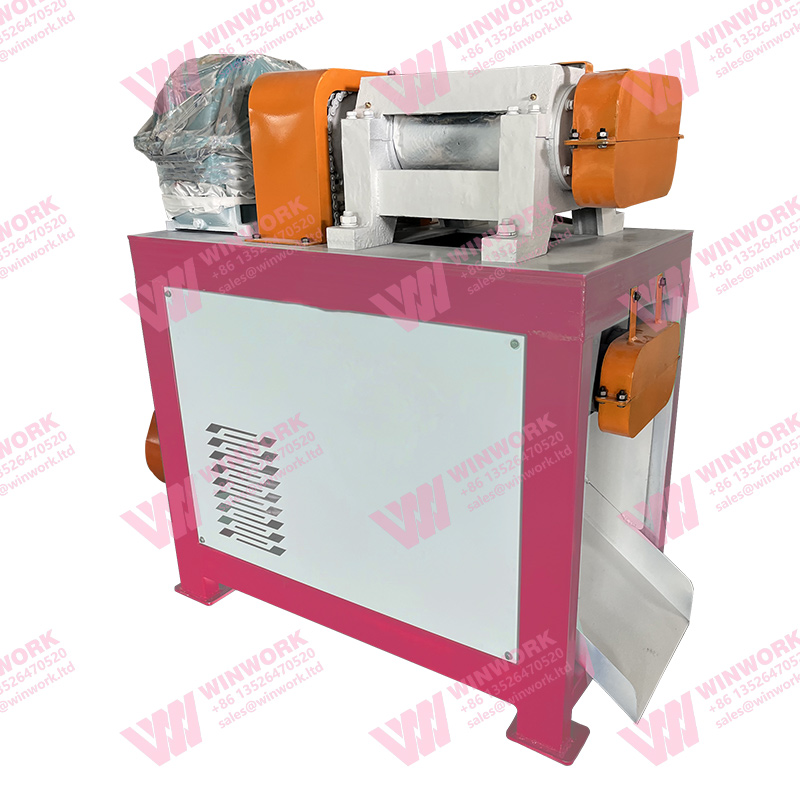
A double roller granulator uses mechanical pressure instead. Suitable dry or low-moisture powder is compressed between two rotating rollers and then crushed and screened into the required particle size.
The granulator is therefore the core forming machine, but its performance also depends on preparation and material conditions before and after it. In a complete fertilizer granulation system, the granulator should be selected according to raw material properties, required capacity, moisture, and target particle size.
4. Drying and Cooling
Wet granulation normally produces granules with relatively high moisture content. These particles may enter a fertilizer dryer to remove excess moisture. After drying, a cooler can reduce the temperature of the fertilizer granules before screening, coating, and packing.
Moisture control is important because excessive moisture can influence storage stability, granule strength, and caking. The drying and cooling capacity must therefore be considered when configuring a fertilizer granulation system for wet granulation.
Dry granulation can follow a different process. For suitable materials, a double roller granulator uses mechanical compaction rather than conventional wet agglomeration, reducing the need for a conventional drying stage. This difference can affect the overall equipment configuration, energy requirements, and material flow.
5. Screening and Recycling
After granulation and moisture control, fertilizer particles are screened according to size. The screener separates qualified granules from oversized and undersized particles. Qualified material continues to the next stage, while unsuitable material can be returned for further processing.
Oversized granules may be crushed and returned to granulation. Fine particles can also be recycled according to the production-line design. This recycling process helps reduce material loss and maintain a more consistent final particle size.
It also allows the fertilizer granulation system to operate as a continuous material circulation process. Instead of removing every off-size particle as waste, suitable material can be returned to an earlier stage and processed again.
6. Coating and Packing
Some fertilizer products require a coating stage after screening. Coating can improve handling characteristics or provide specific product functions depending on the formulation.
After all required processing steps are completed, qualified granules enter the packing stage. The packing machine weighs and fills fertilizer into bags or other packages for storage, transportation, and sale.
At this point, the fertilizer granulation system has completed the conversion from prepared raw materials to finished granular fertilizer. The final packaging format can vary according to the fertilizer product, bag size, production capacity, and customer requirements.
What Equipment Is Included in a fertilizer granulation system?
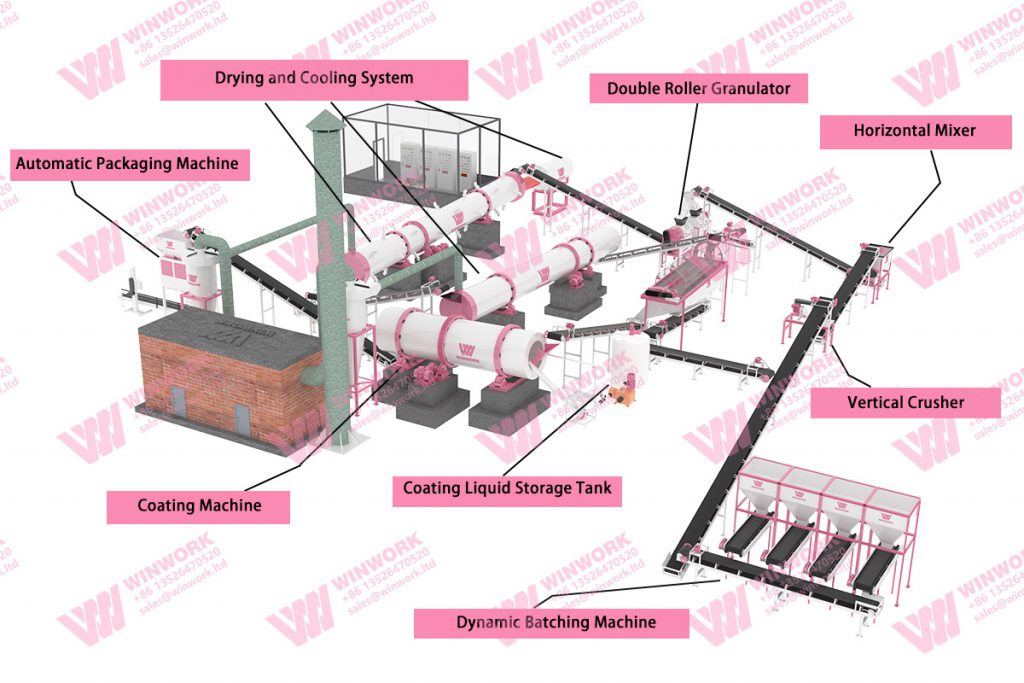
The equipment configuration depends on material, fertilizer type, capacity, and granulation method. A typical fertilizer granulation system may include:
1. Crusher — reduces large or compacted raw materials to a suitable size.
2. Mixer — combines different fertilizer ingredients and creates a uniform feed.
3. Granulator — forms fertilizer particles through wet granulation, extrusion, or another suitable process.
4. Dryer — removes excess moisture from wet-granulated fertilizer.
5. Cooler — reduces fertilizer temperature after drying.
6. Screener — separates particles according to size and supports material recycling.
7. Coating Machine — applies a coating when required.
8. Packing Machine — weighs, fills, and seals finished fertilizer products.
These machines should not be considered completely independent. Their capacities and material flows need to match. A high-capacity granulator can become a bottleneck if the upstream mixer cannot provide enough material or the downstream screener cannot process the same amount of fertilizer.
This is why the design of a fertilizer granulation system needs to consider the entire production line. Feeding, crushing, mixing, granulation, drying, screening, recycling, and packing should be evaluated as connected stages.
Which Fertilizer Granulation Method Should You Use?
The appropriate method depends on raw material and finished-product requirements. Different fertilizer materials may require different levels of moisture, pressure, mixing, and particle-size control.
Rotary Drum Granulation
A rotary drum granulator uses drum rotation to promote rolling and agglomeration. Moisture or binder addition can help particles gradually form larger granules. This method can be integrated with drying, cooling, screening, coating, and packing equipment and is commonly considered for compound and NPK fertilizer production.
Disc Granulation
A disc granulator forms fertilizer particles through continuous rolling on a rotating disc. Disc angle, rotation speed, feed rate, moisture, and raw material properties can affect the final result. It can be used for different fertilizer materials and integrated into a complete production line.
Double Roller Granulation
A double roller granulator uses mechanical compression. Powder is compressed between two rotating rollers to form dense material, which is then crushed and screened into fertilizer granules. This approach can be suitable for dry or low-moisture materials with appropriate compaction characteristics.
There is no universal method for every fertilizer project. Selection should consider raw material properties, formulation, moisture, required capacity, desired particle size, granule strength, and the complete production process. These factors should be evaluated together when designing a fertilizer granulation system.
How to Choose a fertilizer granulation system?
Choosing the right system starts with production requirements.
First, identify the raw materials. Determine whether the project uses organic materials, chemical fertilizer ingredients, mineral powders, or a mixture. Their moisture, particle size, density, and flowability can influence equipment selection.
Second, determine fertilizer type and formulation. Organic fertilizer, compound fertilizer, NPK fertilizer, and other products can require different preparation and granulation processes. The fertilizer formulation can also influence the mixer and granulator configuration.
Third, define production capacity. Small-scale projects may use a relatively simple configuration, while larger plants may require continuous feeding, multiple processing machines, conveyors, automatic control, and higher-capacity auxiliary equipment.
Fourth, check moisture content. Moisture strongly affects granulation. Wet granulation generally requires moisture control and downstream drying and cooling, while suitable dry materials can be processed through mechanical compaction.
Finally, define desired granule size and product quality. The granulator, screener, and recycling system should be considered together to maintain the required particle size and product consistency. A fertilizer granulation system should be designed around the complete material flow rather than a single machine.
For projects with uncertain raw material behavior, testing before final equipment selection can be useful. WINWORK can conduct granulation experiments based on customer-provided raw materials and develop customized solutions according to site conditions and production capacity.
Conclusion
A fertilizer granulation system is more than a single granulator. It is an integrated production process connecting raw material preparation, crushing, mixing, granulation, drying, cooling, screening, recycling, coating, and packing.
The granulation stage is at the center of the process, but final fertilizer quality depends on coordination across the complete production line. Raw material characteristics, moisture content, fertilizer formulation, production capacity, granulation method, and target particle size all need to be considered before equipment is selected.
A properly configured fertilizer granulation system can provide a more organized production process and help manufacturers produce fertilizer granules with more consistent physical characteristics.
If you are planning a new fertilizer production project, providing your raw materials, fertilizer type, required capacity, moisture condition, and target granule size is a practical starting point for determining the appropriate granulation method and supporting equipment. A properly planned fertilizer granulation system can then be configured around these specific production requirements.
Get A Quote