

Introduction
Are you tired of inconsistent product quality? Sick of watching your profits disappear because some guy with a shovel put in “about” the right amount of powder? It’s time to get serious. The answer to your production headaches isn’t more workers; it’s smarter technology. We are talking about the Fully automatic batching method.
This isn’t just a fancy upgrade; it is a complete overhaul of how you handle raw materials. The Fully automatic batching method takes the guesswork out of weighing, measuring, and mixing. It replaces the human hand with robotic precision, ensuring that the 100th bag you produce today is identical to the first bag you made this morning. If you want to eliminate waste, boost efficiency, and finally get a grip on your production costs, you need to understand how the Fully automatic batching method works. This not only ensures product quality but also stabilizes costs and profits.
What in the World is “Batching” Anyway?
Before we dive into the “fully automatic” part, let’s talk about “batching.” In the simplest terms, batching is just measuring out specific quantities of different ingredients to make a final product. Think of it like baking a cake. You don’t just dump flour, sugar, and eggs into a bowl randomly. You measure out 2 cups of flour, 1 cup of sugar, etc. That is batching.
The same principle applies to machinery: manufacturing requires mixing various raw materials in precise proportions. Manual processes inevitably introduce inaccuracies and errors, and these minor deviations can sometimes result in finished products that fail to meet quality standards.
In an industrial setting—whether you are making fertilizer, animal feed, or cement—the principle is exactly the same. You have a recipe (a “formula”) that calls for specific weights of different raw materials. The problem is, when you do this by hand with a shovel and a scale, mistakes happen. The Fully automatic batching method is what happens when you take the human error out of that equation.
Why You Absolutely Need the Fully Automatic Batching Method
Let’s be blunt. Doing things manually might have worked 30 years ago, but in today’s market, it’s a recipe for failure. Here is why the Fully automatic batching method isn’t just a luxury; it is a necessity.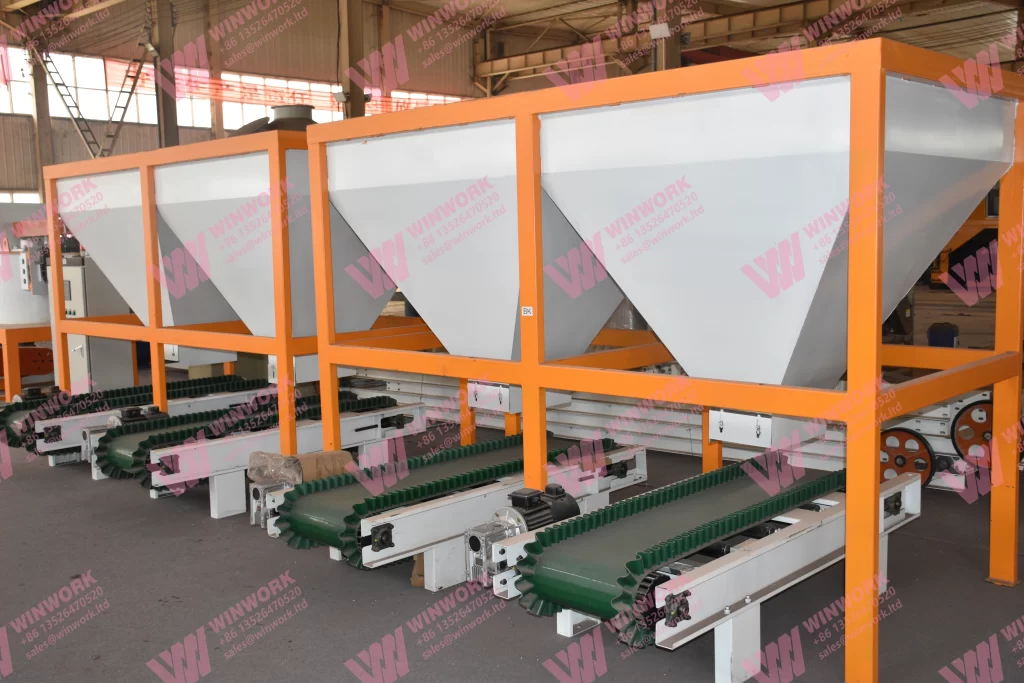
Consistency is King
Your customers expect the same quality every single time. If one bag of fertilizer has too much nitrogen and the next has too little, your reputation tanks. The Fully automatic batching method uses computers and precision load cells to ensure that every single batch is a perfect clone of the last. Same weight, same ratio, same result.
If you cannot guarantee the weight and quantity of each product bag, your customers will find it difficult to continue purchasing your products, creating a vicious cycle.
It Slashes Labor Costs
How many people does it take to shovel powder into a hopper all day? Probably two or three. Those workers are expensive, they need breaks, and they can get injured. A Fully automatic batching method system runs 24/7 with minimal supervision. You swap a team of laborers for one technician who watches a computer screen.
It Dramatically Reduces Waste
When humans measure, they over-pour. They spill. They misread the scale. That wasted material is wasted money. By using the Fully automatic batching method, you measure to the exact gram. There is no over-pouring, which means your raw material costs drop immediately.
How Does the Fully Automatic Batching Method Actually Work?
Alright, let’s pull back the curtain. The working principle of the Fully automatic batching method is a beautiful symphony of hardware and software working together. It’s not magic; it’s just smart engineering.
Here is the step-by-step breakdown:
The Recipe: It all starts on a computer screen. An operator logs into the system and selects a pre-programmed “recipe” for the product they want to make. Let’s say it’s an NPK fertilizer formula. The computer knows it needs 500kg of urea, 300kg of phosphate, and 200kg of potash.
Ingredient Discharge: The system sends a signal to the silos or hoppers where those ingredients are stored. Motorized gates or screw feeders open up. The material starts flowing down into a weighing hopper below.
Precision Weighing: This is the brain of the Fully automatic batching method. The weighing hopper sits on high-precision load cells (industrial-grade scales). As the material flows in, the computer watches the weight in real-time. When it gets close to the target weight (say, 495kg out of 500kg), it tells the gate to close partially, trickling in the last bits to avoid overshooting. When it hits exactly 500kg, the gate snaps shut.
Discharge to Mixer: Once all the ingredients for that batch have been weighed, the bottom of the weighing hopper opens, and the entire batch drops into a central mixing machine.
Confirmation and Repeat: The system confirms the batch is complete and immediately starts the process over for the next one. The Fully automatic batching method is a continuous, relentless cycle of precision.
The Batching Equipment Working Principle
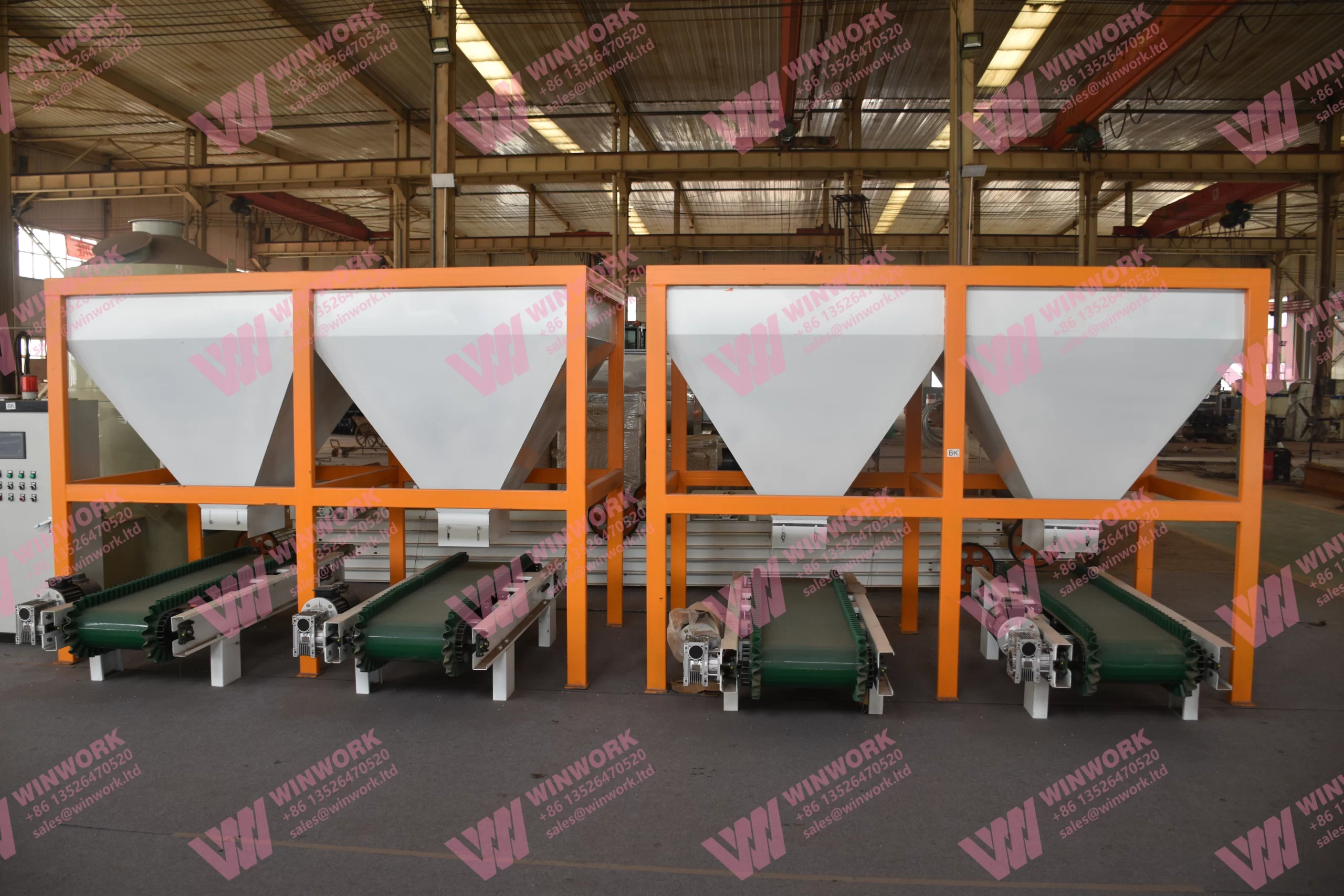
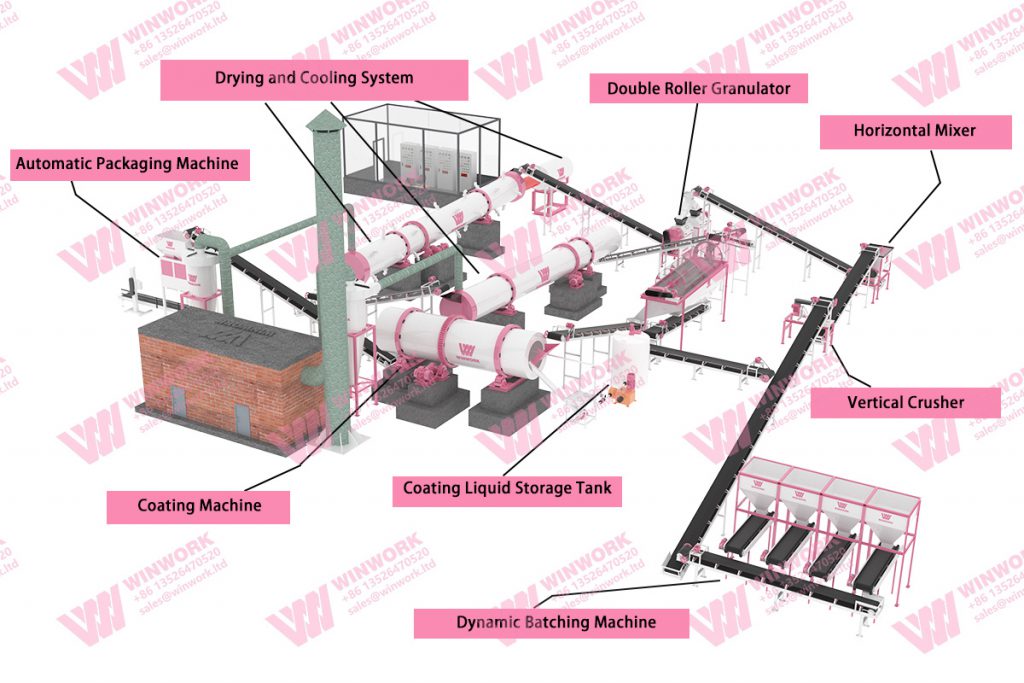
Fertilizer batching machine is a crucial machinery in BB fertilizer production line.
The material enters into the lower feeding port from the silo, and falls into the bet automatically through theadjustable material flow gate, the belt is skirt belt, which can prevent the material from overflowing.
The circular belt rotates at a constant speed, the material passes through the weighing section of the scale bodyduring the belt operation, the load cell measures the weight of the material required for dosage, and the speed of thedosage scale is controlled by variable frequency adiustment.
Through the freguency conversion adiustment of the fertilizer batching machine, the rotating speed of the batchingscale is controlled, and the materials fall into the collecting belt at the collecting section at the end of the belt.
The scraper is provided under the belt at the discharge port to clean up the adherents of the belt and improve thedosing accuracy of the fertilizer batching machine.
The Essential Gear: What Equipment Do You Need?
You can’t just snap your fingers and have a Fully automatic batching method appear. You need some serious iron to make it happen. Here is the shopping list:
Storage Silos/Hoppers: You need somewhere to keep your bulk materials. These are usually tall, upright steel tanks with conical bottoms to funnel the material out.
Weigh Hoppers: These are the heart of the system. They are smaller hoppers that sit directly on load cells. Every ingredient gets its own weigh hopper in a sophisticated Fully automatic batching method setup.
Load Cells: These are the ultra-sensitive scales that measure the weight. They are the “eyes” that tell the computer what is happening.
Feeding Devices: These are the mechanisms that move the material. They can be screw conveyors (augers), belt feeders, or vibratory feeders. Their job is to move material from the silo to the weigh hopper at a controlled rate.
Discharge Gates: Usually pneumatic (air-powered) or electric slide gates that open and close to release the material.
The Central Mixer: Often a ribbon mixer or a horizontal paddle mixer. This is where all the individually weighed ingredients come together to be blended into a uniform product.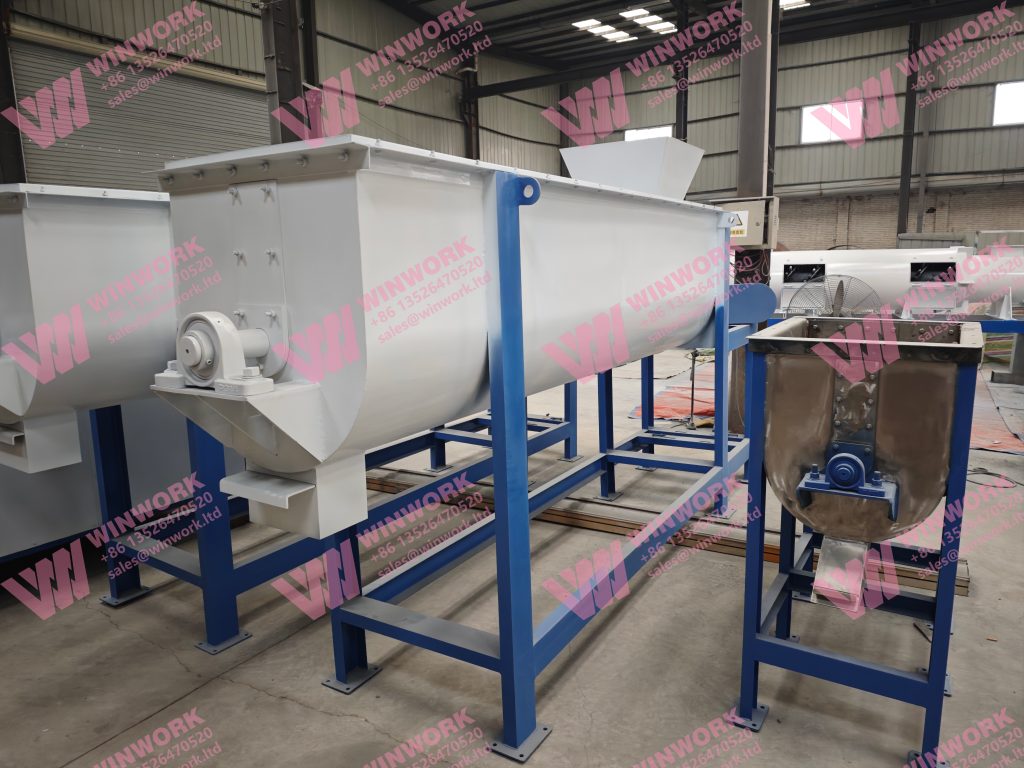
The Control System (The Brains): This is a computer running specialized software. It has the recipes, controls the motors, reads the scales, and provides the operator interface. Without this computer, the Fully automatic batching method is just a pile of metal.
Other Ways to Batch (And Why They Don’t Measure Up)
Is the Fully automatic batching method the only way? No. But the alternatives are slower and less accurate.
Manual Batching: This is the old-school way. Workers use shovels and wheelbarrows to move material onto a platform scale. It is slow, dangerous, and wildly inaccurate. You have zero traceability and high labor costs.
Semi-Automatic Batching: Here, a worker might operate a forklift to dump bags into a hopper, or use a handheld scale. It’s a step up from manual, but it still relies on a human, which introduces variability. The Fully automatic batching method eliminates the human variable entirely.
FAQ: Your Questions About the Fully Automatic Batching Method Answered
We know you’ve got questions. Here are the answers to what people ask us most about the Fully automatic batching method.
Q: Is the Fully Automatic Batching Method only for giant factories?
A: Not at all! While it scales up beautifully for massive operations, there are compact Fully automatic batching method systems designed for smaller plants. The key is that the return on investment (ROI) is so fast—often within a year—that even a mid-sized business can afford it by saving on labor and material waste.
Q: What happens if there is a power outage?
A: Good systems have backup power for the control systems and brakes on the gates. More importantly, the computer logs everything. If the system stops mid-cycle, it knows exactly how much of each ingredient was dispensed. When power returns, it can either finish the batch or safely discharge the partial batch, depending on your settings.
Q: Can the system handle different kinds of materials?
A: Absolutely. A well-designed Fully automatic batching method can handle everything from free-flowing granules (like urea) to sticky powders (like molasses-coated meals) to liquids. You just need to specify the right type of feeder (screw, belt, pump) for each ingredient.
Q: Is it difficult to change a recipe?
A: It’s incredibly easy. On the control screen, an operator can create a new recipe or modify an existing one in minutes. You just type in the new weights for each ingredient. The Fully automatic batching method then executes it flawlessly. This flexibility is a huge advantage over fixed-ratio systems.
Q: How much maintenance does it need?
A: Like any industrial equipment, it needs regular checks. Load cells need to be kept clean and calibrated. Augers and belts need to be inspected for wear. However, because the Fully automatic batching method reduces manual handling and spillage, it actually reduces the overall mess and maintenance associated with material handling in your plant.
Conclusion: Your Move
The writing is on the wall. In a competitive global market, inconsistency is a death sentence. The Fully automatic batching method is more than just a piece of equipment; it is a strategic investment in the future of your business.
By embracing the Fully automatic batching method, you are choosing precision over guesswork, efficiency over exhaustion, and profit over waste. It is time to stop babysitting your production line and start commanding it. Make the switch, and watch your quality—and your bottom line—soar.
For more details, please feel free to contact us.
Email: sales@lanesvc.com
Contact number: +8613526470520
Whatsapp: +8613526470520


Get A Quote