


What Is an SCU Production Line?
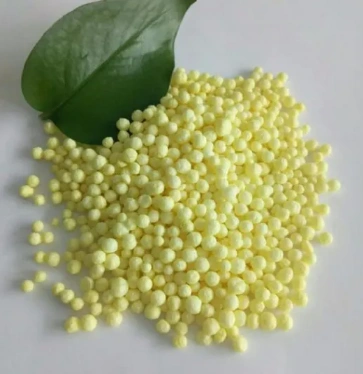 SCU, or sulfur-coated urea, is a controlled-release nitrogen fertilizer produced by coating urea granules with a layer of sulfur. The sulfur coating slows down the release of nitrogen after the fertilizer is applied to soil, helping provide nutrients over a longer period compared with conventional urea. Because of this characteristic, SCU is widely considered for applications where controlled nutrient release and improved nitrogen-use efficiency are important.
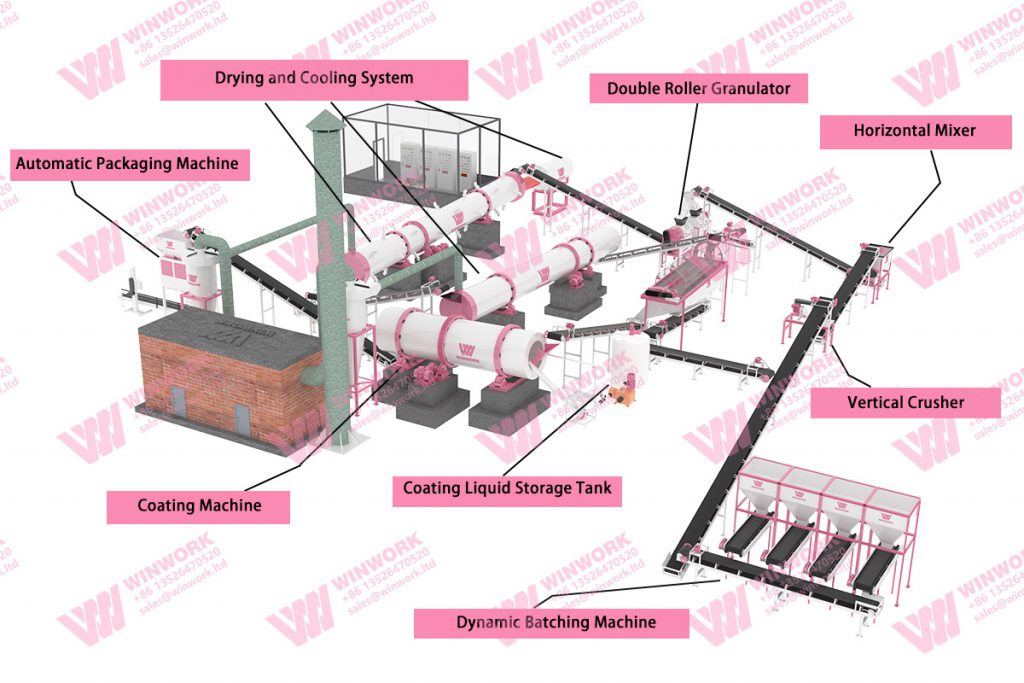
An SCU production line is an integrated fertilizer manufacturing system designed to melt sulfur, prepare urea granules, apply a uniform sulfur coating, cool the finished fertilizer, remove unsuitable particles, and pack the final product. Instead of treating coating as a simple standalone operation, the complete line coordinates several systems to maintain stable temperature, coating thickness, product size, and production capacity.
For fertilizer manufacturers, the value of an SCU line is not only the ability to produce sulfur-coated urea.Understanding how an scu production line is configured is important before investing in new equipment. A properly configured system can also improve coating consistency, reduce material losses, simplify operation, and create a more stable production process.
SCU Production Process
A complete SCU production process normally consists of feeding, preheating, sulfur melting, coating, cooling, screening, and packing.A well-designed scu production line connects these processes into a continuous production system, allowing manufacturers to control material flow, processing temperature, product quality, and production efficiency. Each stage has a specific function, and the performance of one section can directly influence the following stage.
Feeding
The process begins by feeding qualified urea granules and sulfur-related materials into the production system. Stable feeding is important because fluctuations in material flow can affect coating uniformity and production efficiency. The feeding system should be selected according to the required capacity and the characteristics of the raw materials.
Preheating
Urea granules are preheated before entering the coating section. Preheating helps reduce the temperature difference between the urea and molten sulfur, allowing the coating material to spread more evenly across the granule surface. If the temperature is not properly controlled, coating quality may become inconsistent.
Sulfur Melting
Solid sulfur must be heated until it reaches a suitable molten state before coating. The sulfur melting system needs to provide stable heating and temperature control so that the material remains suitable for continuous application. Proper melting conditions are important for maintaining a consistent coating layer.
Coating
This is the core stage of the production process. Preheated urea granules enter the rotary coating equipment, where molten sulfur is distributed over the moving fertilizer particles. The rotation, material movement, spraying conditions, and temperature all influence the final coating quality.
A uniform coating is particularly important because coating thickness affects the release characteristics of the fertilizer. An unstable coating process can lead to exposed areas, excessive sulfur accumulation, irregular granules, or inconsistent product performance.
Cooling
After coating, the fertilizer must be cooled before screening and packing. Cooling allows the sulfur layer to solidify and become more stable on the granule surface. Efficient cooling also helps prevent particles from sticking together during subsequent handling.
Screening
The cooled product is screened to separate qualified granules from oversized particles, undersized material, or other unwanted fractions. Screening helps maintain a consistent final product size and can also improve the appearance and handling performance of the fertilizer.
Packing
The final qualified SCU fertilizer is transferred to the packing section. Depending on the target market, the system can be configured for different bag sizes and packaging requirements. Automatic weighing and packing equipment can reduce manual handling and improve production efficiency.
When these stages are properly coordinated, an scu production line can provide a continuous manufacturing process while maintaining stable product quality and reducing unnecessary material handling.
Main Equipment for SCU Production
Rather than looking at every machine separately, manufacturers should focus on the equipment that has the greatest influence on coating quality, temperature control, and overall production stability.The equipment configuration of an scu production line can vary according to production capacity, raw materials, product specifications, and the required level of automation.
Sulfur Melting System
The sulfur melting system converts solid sulfur into molten sulfur suitable for coating. Its main responsibility is to provide stable heating and maintain the required operating temperature.
Temperature fluctuations can affect sulfur viscosity and application performance. A properly designed melting system therefore helps maintain a more consistent coating process and reduces the risk of unstable material flow.
For larger production capacities, the melting system should also be matched with the required sulfur consumption and continuous production rate.
Rotary Drum Granulator
The rotary drum granulator is an important piece of equipment for producing uniform fertilizer granules before the coating stage. Its main function is to agglomerate fertilizer materials into particles with a suitable size and shape for further processing.
A stable granulation process can improve particle size uniformity and provide a more consistent surface for subsequent sulfur coating. Uniform granules are easier to handle, screen, cool, and package, while stable granulation can also help maintain the overall production capacity of the fertilizer line.
The rotary drum granulator should be selected according to raw material characteristics, required particle size, production capacity, moisture content, and the configuration of the downstream coating system. Proper equipment matching can improve granule quality and help the entire production line operate more efficiently.
Rotary Drum Coating Machine
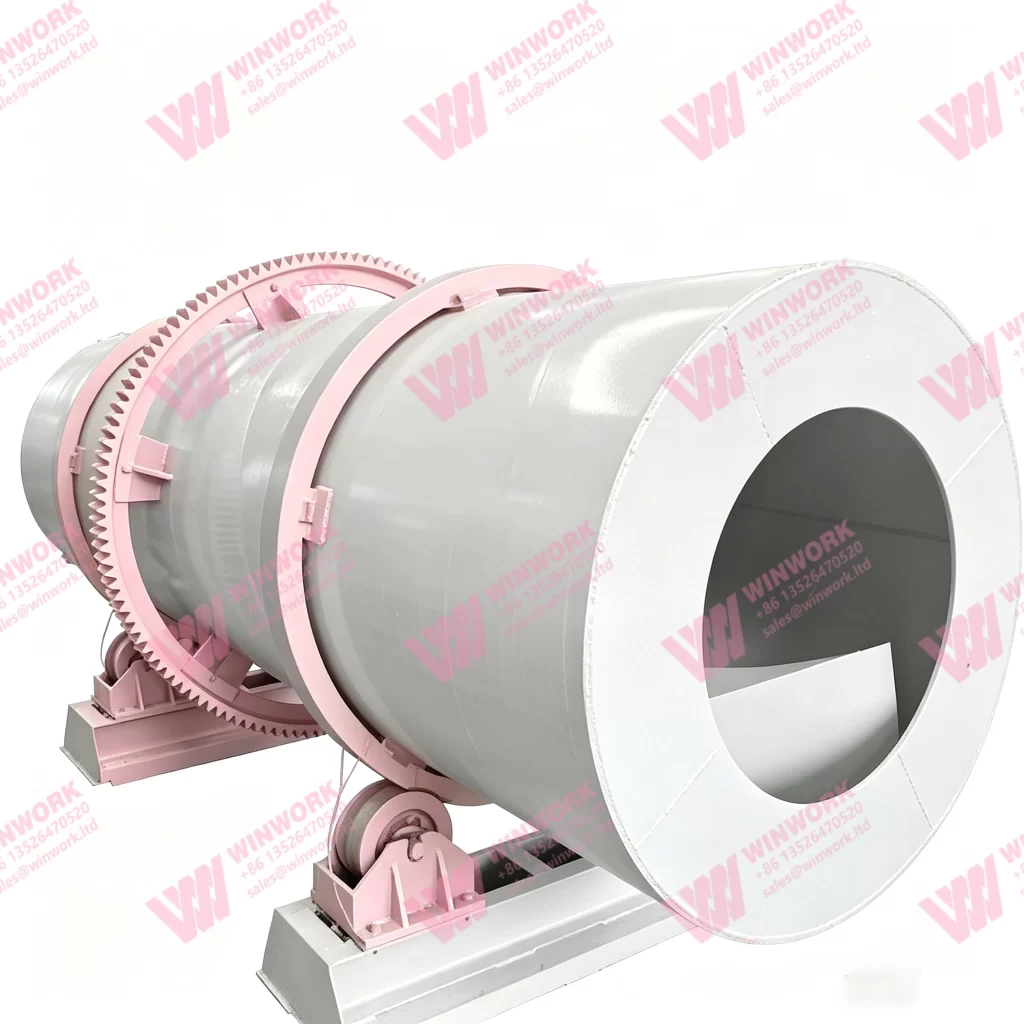
The rotary drum coating machine is one of the most important pieces of equipment in the entire system. It provides continuous movement of urea granules while molten sulfur is applied to their surfaces.
Inside the drum, the fertilizer particles are lifted and rolled as the drum rotates. This movement creates repeated contact between the granules and coating material, helping form a more uniform layer.
The drum’s operating parameters, spraying arrangement, residence time, and material feed rate can all influence the final product. For an scu production line, the coating machine should be properly matched with the upstream and downstream equipment.For this reason, coating equipment should be selected based on the required capacity and desired product specifications rather than simply choosing a machine based on nominal output.
Cooling & Screening Equipment
Cooling and screening equipment prepares the coated fertilizer for final handling. The cooling section helps solidify the sulfur layer, while the screening system separates qualified granules from particles outside the required size range.
Stable cooling can reduce sticking and improve product handling, while effective screening contributes to consistent particle size. Together, these systems can improve final product quality and reduce the amount of off-specification material entering the packing stage.
How to Choose an SCU Production Line
Choosing an SCU production line requires more than selecting equipment based on a target output. The complete production system should match the manufacturer’s product requirements, raw materials, factory conditions, and future production plans.
Capacity
Capacity is one of the first factors to determine. A small fertilizer plant may require a compact system, while a larger manufacturer may need continuous high-capacity equipment. The feeding, melting, coating, cooling, screening, and packing sections should be matched so that one part does not become a production bottleneck.
Coating Requirements
Different markets may have different requirements for sulfur coating thickness, product size, release characteristics, and appearance. These requirements directly affect the coating system and operating parameters. Before purchasing an scu production line, manufacturers should clearly define the desired final fertilizer specifications.
Automation
Automation level affects labor requirements, production stability, temperature control, and operational convenience. Basic systems may rely on more manual operation, while advanced configurations can integrate automatic feeding, temperature monitoring, material control, and packing.
Factory Layout
Available factory space should be considered before equipment is finalized. The layout needs to accommodate material flow, equipment maintenance, raw material storage, finished-product handling, and worker access. A well-planned layout can reduce unnecessary transportation and improve operational efficiency.
Equipment Configuration
Not every factory needs the same equipment configuration. The final solution should be designed according to capacity, raw materials, coating requirements, automation level, and budget. A professional manufacturer can adjust the equipment combination instead of simply providing a standard machine package.
SCU Production Line Cost
The cost of an scu production line depends on several factors rather than one fixed equipment price. Production capacity is usually one of the most important factors because larger systems require greater processing capacity and more supporting equipment.
Other cost factors include the sulfur melting system, urea preheating configuration, coating machine size, cooling and screening equipment, automation level, packing system, factory layout, installation requirements, and auxiliary equipment.
Raw material characteristics and the required coating specifications can also influence the final configuration. Therefore, manufacturers should provide the expected capacity, raw material information, product specifications, and automation requirements when requesting a quotation.
Instead of comparing only the initial equipment price, it is useful to evaluate the complete configuration and long-term operating requirements.
Why Work with a Complete Production Line Manufacturer?
Building an SCU facility involves more than purchasing a single coating machine.Choosing a complete scu production line solution can simplify equipment selection and reduce compatibility problems between individual machines. The melting, preheating, coating, cooling, screening, and packing sections need to work together as one system.
A complete equipment manufacturer can design the line according to the required capacity and factory conditions, coordinate different equipment sections, and provide a more integrated solution.
For fertilizer manufacturers planning a new facility or upgrading an existing plant, this approach can simplify equipment selection and reduce compatibility problems between individual machines.
Conclusion
An SCU production line combines sulfur melting, urea preparation, coating, cooling, screening, and packing into one coordinated fertilizer manufacturing system. The quality of the final product depends heavily on temperature control, coating uniformity, equipment matching, and stable material flow.With the right configuration, an scu production line can provide a stable and efficient solution for producing sulfur-coated urea at commercial scale.
For manufacturers planning an SCU project, capacity, coating requirements, automation, factory layout, equipment configuration, and total investment should all be considered before selecting a system. With the right configuration, an scu production line can provide a stable and efficient solution for producing sulfur-coated urea at commercial scale.
If you are planning an SCU fertilizer project, contact our team with your required capacity, raw materials, product specifications, and factory conditions. We can recommend a suitable equipment configuration and provide a project quotation based on your requirements.
For more details, please feel free to contact us.
Email: sales@lanesvc.com
Contact number: +8613526470520
Whatsapp: +8613526470520
Your choice is the best recognition for us!


Get A Quote