

Introduction
Granulators play an important role in fertilizer production because they directly affect pellet quality, production efficiency, and operating costs. Whether producing organic fertilizer, compound fertilizer, or other granular materials, keeping the granulator in good working condition is essential for stable operation.
Many beginners think that equipment maintenance requires professional mechanical knowledge. In fact, most basic maintenance work can be completed by operators if they understand the machine structure and follow regular inspection procedures. Small problems, such as loose bolts, insufficient lubrication, material blockage, or worn parts, can usually be found and solved before they develop into serious failures.
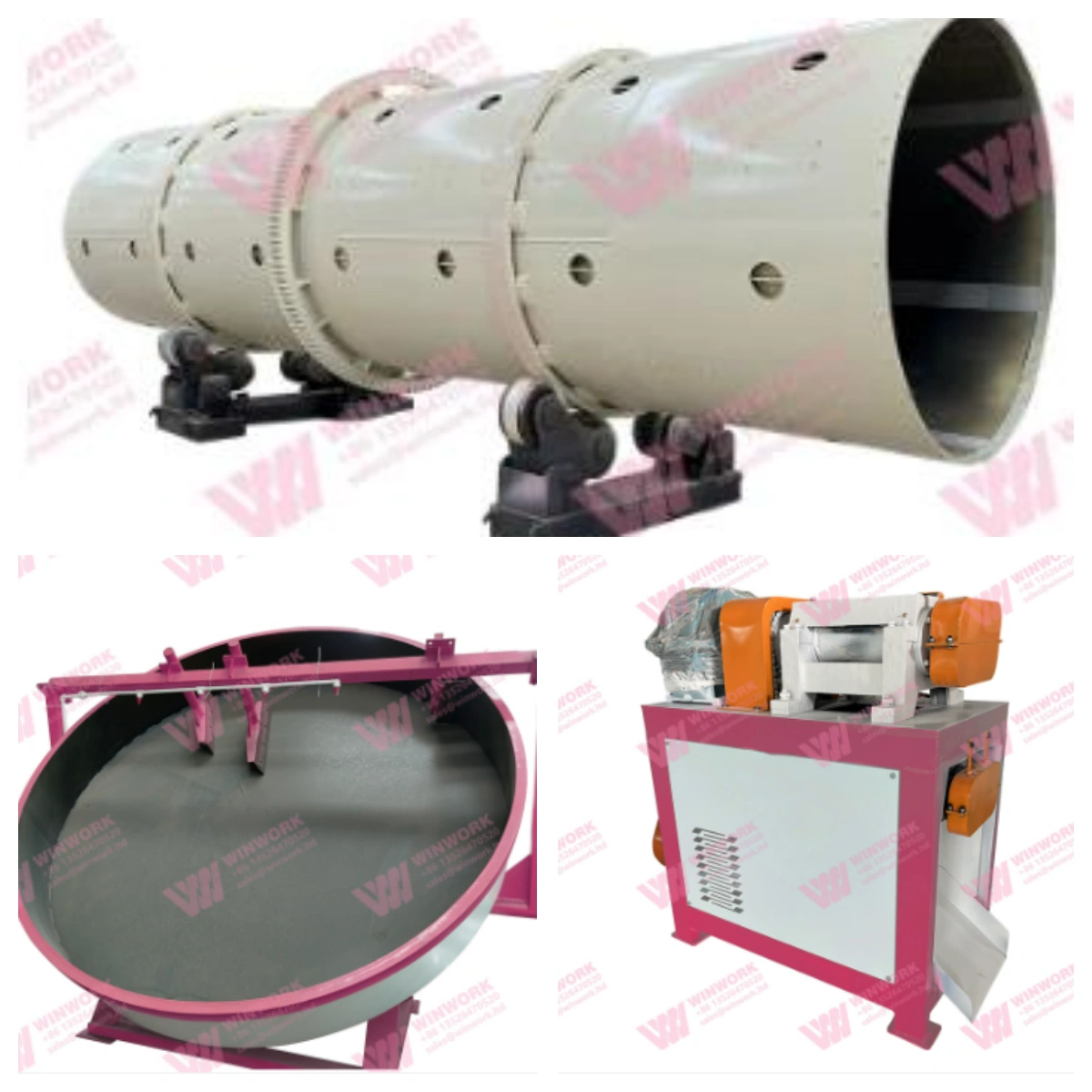
Proper granulator maintenance helps reduce unexpected shutdowns, extend equipment service life, and maintain consistent pellet quality. Different types of granulators have different structures, so their maintenance methods are also different. A disc granulator mainly depends on the rotation of an inclined disc to form pellets, a rotary drum granulator uses continuous rolling inside a rotating drum, and a double roller granulator uses mechanical pressure between two rollers.
This article will introduce the daily maintenance methods and simple troubleshooting solutions for these three common granulation machines. It is written for beginners who want to understand how to operate and maintain fertilizer equipment correctly.
For users planning a fertilizer project, selecting a suitable fertilizer granulator machine is also important because a reasonable machine structure makes operation and maintenance easier in the future.
Why Regular Granulator Maintenance Is Important
A granulator usually works under continuous load. During production, the machine is exposed to friction, vibration, moisture, dust, and raw material impact. Without regular inspection, small issues can gradually affect production performance.
Common problems caused by insufficient maintenance include:
- Reduced production capacity;
- Uneven pellet size;
- Increased energy consumption;
- Abnormal vibration or noise;
- Faster wear of spare parts;
- Unexpected machine shutdown.
For example, if wet material remains inside the machine for a long time, it may harden and block important areas. If bearings are not lubricated properly, continuous friction may increase temperature and shorten their service life.
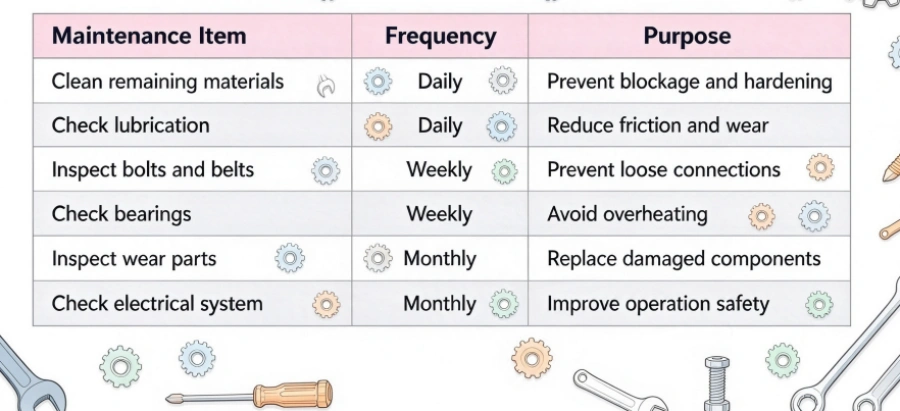
A basic maintenance plan usually includes three stages:
Daily inspection:
Check machine appearance, lubrication condition, abnormal sounds, material accumulation, and operating condition before and after production.
Weekly inspection:
Check transmission parts, belts, bearings, bolts, and other moving components.
Monthly inspection:
Inspect wear parts, electrical systems, and perform deeper cleaning.
Good granulator maintenance habits allow operators to discover problems early instead of
waiting until the machine stops working.
Granulator Maintenance: Basic Methods for Different Types of Machines
Although disc granulators, rotary drum granulators, and double roller granulators have different working principles, the basic maintenance requirements are similar. Operators should always focus on cleaning, lubrication, wear inspection, and correct operation.
Before performing any maintenance work, make sure the machine is completely stopped and the power supply is disconnected. Safety should always come first.
Disc Granulator Maintenance and Common Repairs
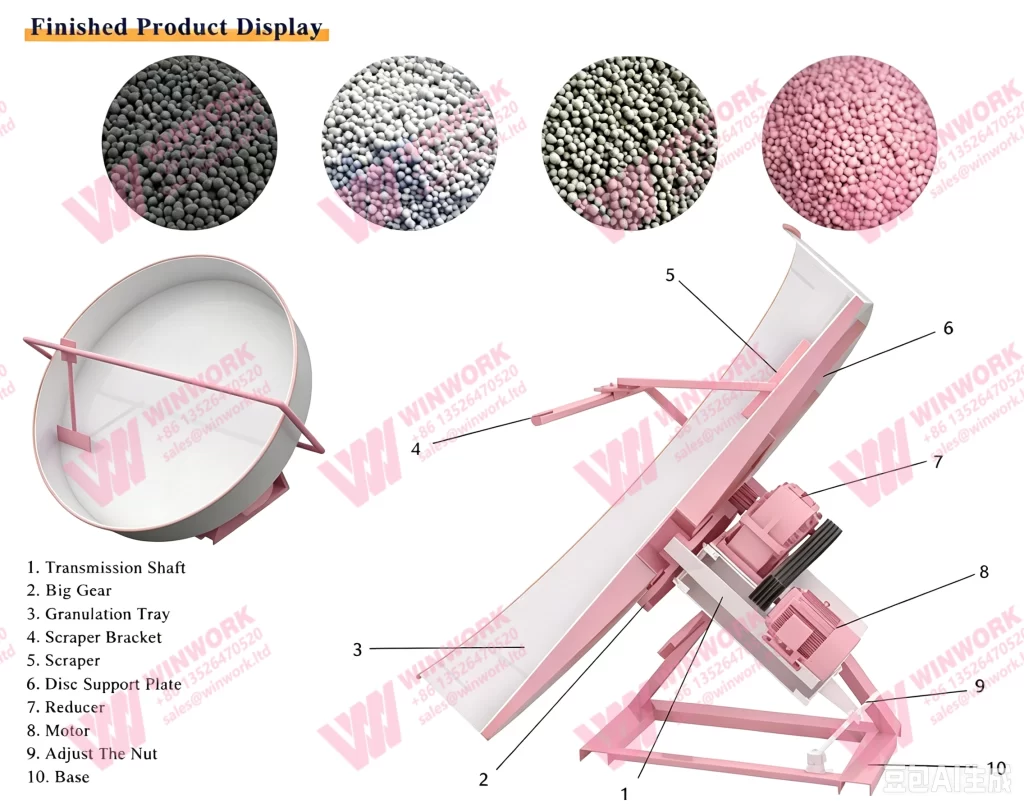
A disc granulator, also called a pan granulator, is one of the most common machines used for fertilizer pellet production. It forms particles through the continuous rotation of an inclined disc. Raw materials roll inside the disc while water or binder is sprayed to help small particles grow into larger pellets.
Because the disc is always rotating during operation, the main granulator maintenance areas include the disc surface, scraper, bearings, motor, and transmission system.
Daily Maintenance of Disc Granulator
The first step is checking the condition of the disc surface.
During production, some wet materials may stick to the disc. A small amount of material adhesion is normal, but excessive buildup can affect pellet formation and increase the machine load.
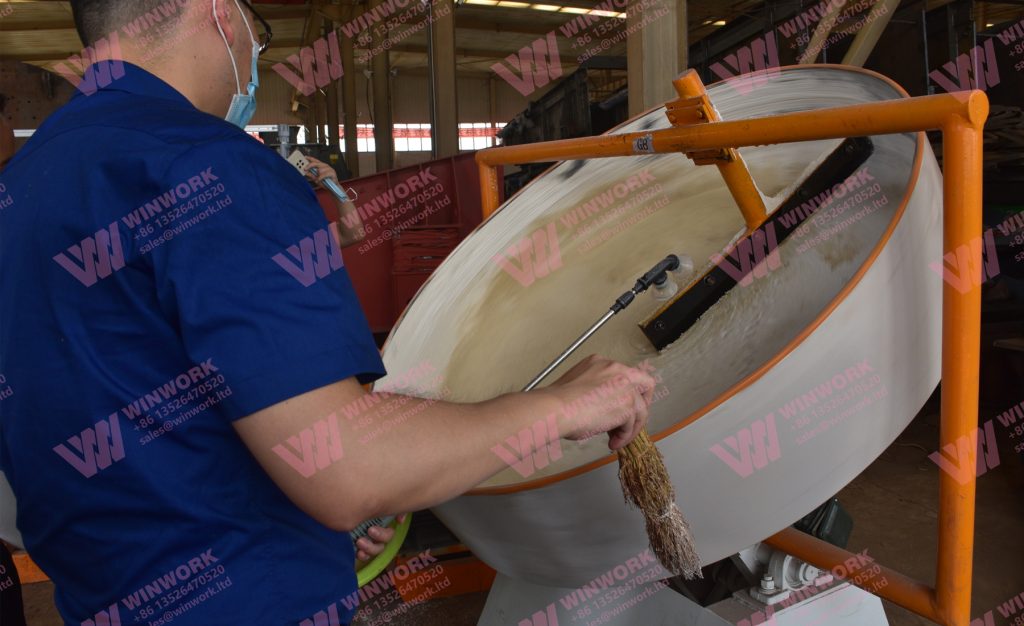
Operators should:
- Clean remaining materials after production;
- Remove hardened material from the disc surface;
- Check whether the disc rotates smoothly;
- Confirm that the spray system works properly;
- Inspect the scraper condition.
The scraper is an important component because it prevents excessive material accumulation. If the scraper becomes worn, the gap between the scraper and disc may become too large, reducing its cleaning effect.
The solution is simple: adjust the scraper position or replace it if the wear is serious.
Common Problems and Solutions
Problem 1: Disc rotation is unstable
Possible causes:
- Bearing lubrication problems;
- Loose transmission belt;
- Too much material buildup.
Solutions:
First check whether the bearing has enough lubricant. Then inspect the belt tension and remove unnecessary material from the disc. If abnormal vibration continues, the bearing condition should be checked carefully.
Problem 2: Pellet size is inconsistent
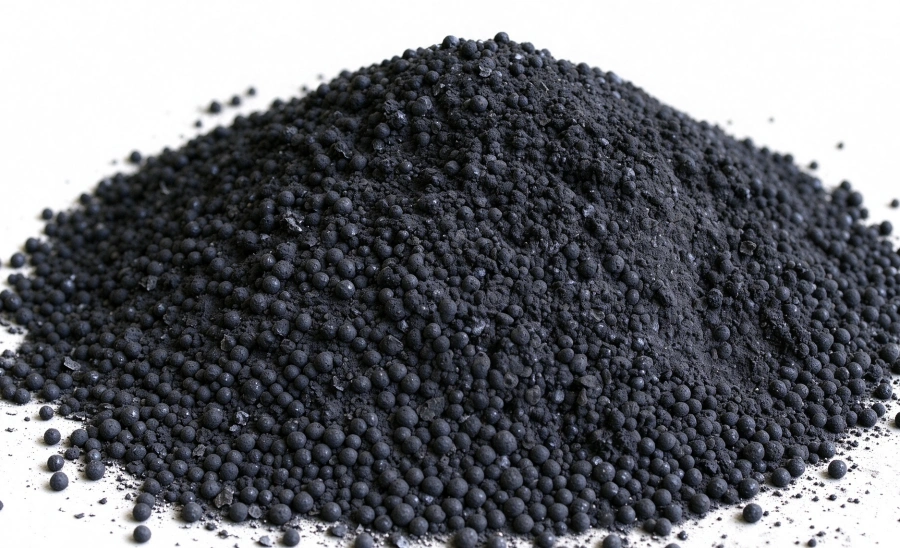
Possible causes:
- Incorrect spraying amount;
- Unstable feeding speed;
- Improper operation conditions.
Solutions:
Adjust the amount of liquid gradually. Too much moisture can make particles stick together quickly, while too little moisture prevents proper pellet growth. Keeping feeding speed stable is also important.
Problem 3: Material sticks heavily to the disc
Possible causes:
- Excessive raw material moisture;
- Insufficient cleaning;
- Incorrect spray position.
Solutions:
Control raw material moisture before production and clean the disc regularly. Check whether spray nozzles are positioned correctly.
The Disc Granulator is widely used because of its simple structure and convenient operation. Regular inspection of rotating parts can help maintain stable performance.
Rotary Drum Granulator Maintenance and Troubleshooting
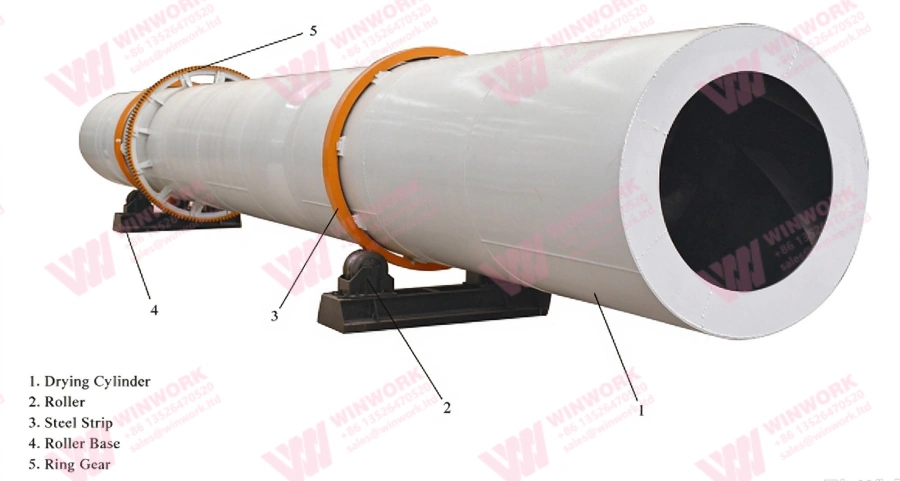
A rotary drum granulator is commonly used in large fertilizer production systems because it can handle continuous production. Unlike a disc granulator, this machine uses a rotating horizontal drum to mix and granulate materials.
During operation, materials move inside the drum while liquid binder is added. The continuous rotation allows particles to gradually grow into uniform granules.
The main granulator maintenance areas include the drum body, supporting rollers, gears, bearings, and spray system.
Daily Maintenance of Rotary Drum Granulator
Before operation, operators should check:
- Whether the drum rotates normally;
- Whether there is abnormal noise;
- Whether gears have enough lubrication;
- Whether the spray system is blocked;
- Whether bolts are loose.
After production, cleaning is necessary. Wet fertilizer materials can become hard if they remain inside the drum. Long-term accumulation may affect the balance of the drum and increase motor load.
Common Problems and Solutions
Problem 1: Abnormal noise during operation
Possible causes:
- Poor lubrication;
- Gear wear;
- Loose bolts;
- Supporting roller problems.
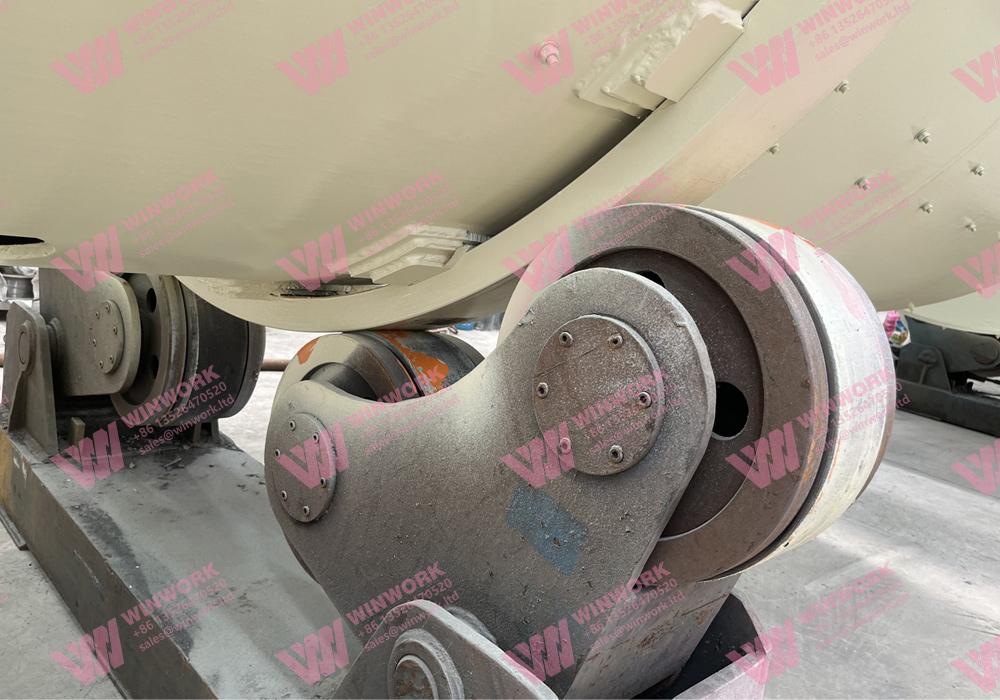
Rotary drum granulator rollers
Solutions:
Check the noise source first. Add lubricant to moving parts if needed and tighten loose bolts. If supporting rollers or gears are seriously worn, replacement may be required.
Problem 2: Materials stick inside the drum
Possible causes:
- Excessive moisture;
- Incorrect binder amount;
- Lack of cleaning.
Solutions:
Adjust moisture content and clean the inside of the drum regularly. Do not remove hardened materials while the machine is running.
Problem 3: Uneven pellet size
Possible causes:
- Uneven feeding;
- Blocked spray nozzle;
- Incorrect operating parameters.
Solutions:
Check the feeding system and spray equipment. Stable feeding and even liquid distribution are important for producing uniform pellets and effective granulator maintenance.
Rotary drum granulators are often installed as part of a complete organic fertilizer production line, so keeping this machine stable also helps improve the performance of the entire production process.
Double Roller Granulator Maintenance and Simple Repair Methods
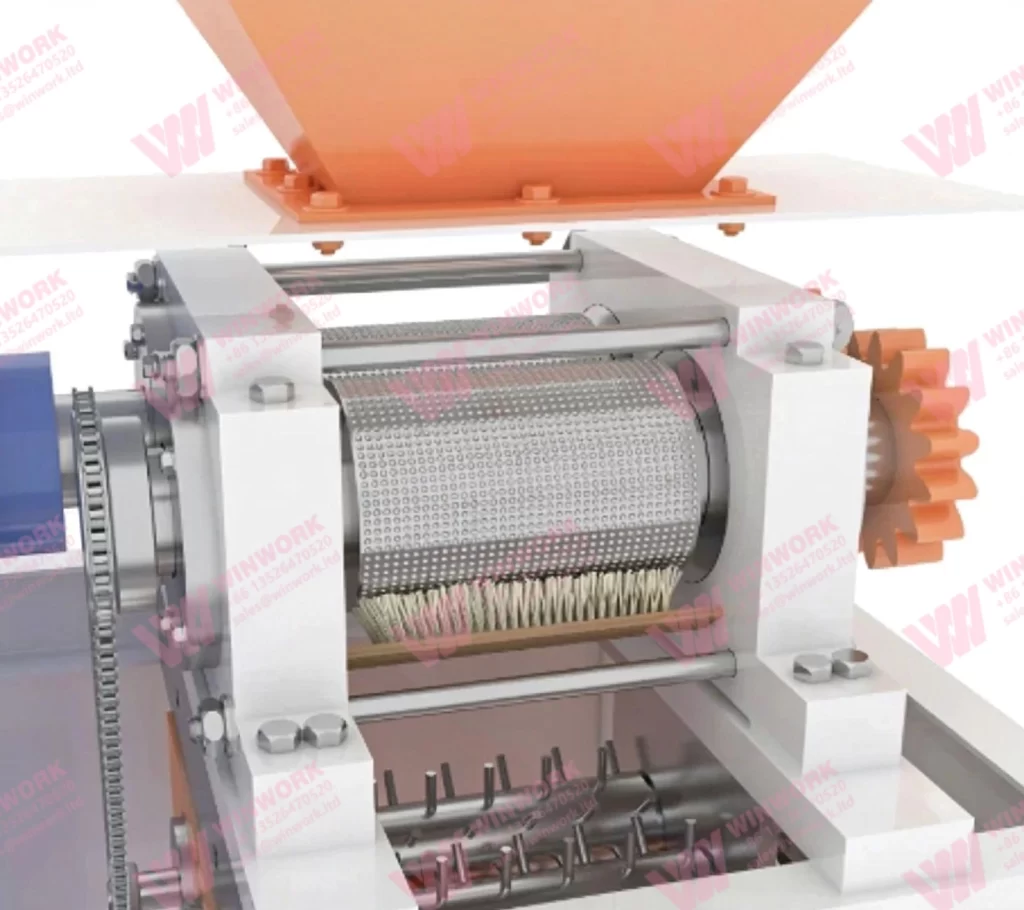
A double roller granulator produces pellets through mechanical pressure. Materials are pressed between two rollers and formed into specific shapes. Compared with wet granulation equipment, this machine does not require a drying process, making it suitable for some compound fertilizer applications.
The rollers are the core working parts, so most granulator maintenance focuses on roller condition, pressure adjustment, bearings, and transmission components.
Daily Maintenance of Double Roller Granulator
Before starting the machine, operators should check:
- Roller surface condition;
- Lubrication system;
- Tightness of bolts;
- Abnormal sounds;
- Material feeding condition.
During operation, pay attention to changes in:
- Pellet forming rate;
- Pellet shape;
- Machine vibration;
- Motor load.
These changes often indicate that inspection is needed.
Common Problems and Solutions
Problem 1: Low pellet forming rate
Possible causes:
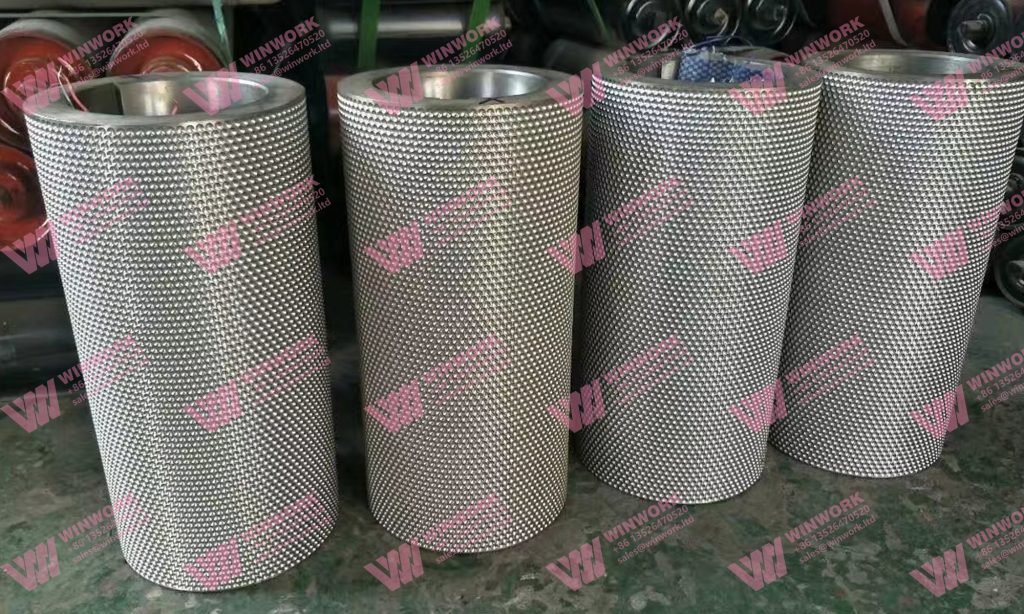
- Roller surface wear;
- Incorrect roller gap;
- Unsuitable material condition.
Solutions:
Adjust the roller gap according to production requirements. If the roller surface is seriously damaged, repair or replace the roller skin.
Problem 2: Uneven pellet size
Possible causes:
- Uneven feeding;
- Incorrect pressure;
- Material blockage.
Solutions:
Check whether materials enter the rollers evenly. Clean the feeding area and adjust pressure settings when necessary.
Problem 3: Bearing overheating
Possible causes:
- Lack of lubrication;
- Excessive working load;
- Bearing damage.
Solutions:
Check lubrication first. If overheating continues, inspect whether the bearing needs replacement.
Maintenance Tips for Beginners
For new operators, good maintenance habits are more important than complicated repair skills.
Keep the Equipment Clean
Cleaning is one of the easiest and most effective maintenance methods. Remove leftover materials after each production cycle, especially around feeding areas and moving parts.
Lubricate Moving Parts Regularly
Bearings, gears, and other rotating components need proper lubrication. However, excessive lubricant can attract dust and cause additional problems.
Replace Worn Parts in Time
Wear parts such as scrapers, belts, roller surfaces, and bearings should be checked regularly. Delaying replacement may cause damage to other components.
Follow Correct Operating Procedures
Many equipment problems are caused by incorrect operation. Operators should understand:
- Correct startup and shutdown procedures;
- Normal machine sounds;
- Basic troubleshooting methods;
- Safety requirements.
Simple Granulator Maintenance Checklist
Conclusion
Regular granulator maintenance is an important part of keeping fertilizer production equipment stable and efficient. Whether using a disc granulator, rotary drum granulator, or double roller granulator, operators should develop the habit of daily inspection, timely cleaning, proper lubrication, and early problem solving.
Most common equipment problems can be prevented through simple maintenance methods. By understanding the structure of each machine and following correct operating procedures, even beginners can maintain granulators effectively and reduce unnecessary repair costs.
Good maintenance not only extends equipment service life but also helps maintain consistent fertilizer pellet quality and stable production performance.
Get A Quote