

Introduction
You’ve built a successful fertilizer operation. Your granulator runs smoothly, your pellets are decent, and local farmers love them. But now, you’ve got your eye on a bigger prize: the international market. Suddenly, your decent pellets aren’t good enough anymore. Overseas buyers are a different breed—they speak a language of microns, hardness tests, and moisture percentages. The single biggest hurdle standing between you and that lucrative export contract is getting your granulator meeting export standards. This isn’t just about making pellets; it’s about engineering them to a specification so tight, it crosses oceans without falling apart.
What Does Meeting Export Standards Actually Mean?
Before you can start selling to Europe, Australia, or Asia, you need to understand what those markets demand. It’s not a single rule, but a checklist of quality. For your granulator meeting export standards, you need to hit these targets consistently:
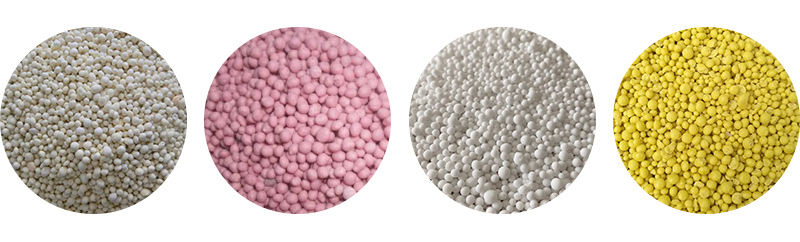
Uniform Size and Shape: Exported pellets must be spherical and consistent. A variation of more than ±1mm is often a rejection. Think of it like ball bearings—consistency is king.
High Crushing Strength: Pellets will be shipped in bulk or large bags. They need to survive conveyor belts, loading, unloading, and rough seas without turning back into dust. A standard test is measuring resistance in Newtons. And we ensure that our Granulator meeting export standards.
Low Moisture Content: This is non-negotiable. High moisture leads to mold, caking, and bacterial growth during transit. Export standards usually demand moisture below 10%.
Smooth Surface: A smooth pellet has less dust (which buyers hate) and indicates a proper compaction process within the granulator.
Contaminant-Free: No heavy metals, no plastic fragments, no glass. Just pure, clean fertilizer.
Achieving this level of quality requires moving beyond basic machinery and focusing on granulator meeting export standards as the core of your production line.
The Core Challenge: Why Standard Granulators Fall Short
A standard, off-the-shelf granulator is designed for local use. It might produce lumpy, irregular pellets that work fine for a farmer spreading them by hand. But for export, those imperfections are fatal. The key difference lies in the engineering. Getting your granulator meeting export standards means controlling three critical variables with surgical precision:
Raw Material Consistency: You need a consistent feed of compost or powder.
Moisture Control: You need to add just the right amount of water or binder—not too much, not too little.
Mechanical Pressure: You need a machine that applies consistent, adjustable pressure to form a dense, hard pellet.
How Our Granulators Help You Hit the Mark
This is where we come in. We don’t just sell machines; we provide the complete solution for granulator meeting export standards. Our equipment is engineered specifically to solve the problems that cause export rejections.
The Rotary Drum Granulator: The King of Uniformity
This is the heart of any export-focused line. Unlike pan granulators, a rotary drum uses gravity and friction to roll material into near-perfect spheres.
How it Works: The drum rotates on a slight tilt. Material tumbles and rolls, picking up a binding agent (like water or a clay solution) and growing into pellets.
Export Advantage: The long residence time inside the drum ensures every pellet is rolled to the same degree of roundness and hardness. It is the single most important machine for granulator meeting export standards.
The Disc Pelletizer: High-Efficiency Workhorse
For slightly less stringent (but still high-quality) markets, or for pre-granulation, the disc pelletizer is a fantastic tool. Its inclined disc throws material outward, forcing it to agglomerate.
Export Advantage: It offers incredible throughput, ensuring you can meet large export order volumes without sacrificing the quality that comes from granulator meeting export standards.
The Polishing & Rounding Machine
This is the secret weapon. After the initial granulation, pellets often have rough edges. A polishing machine tumbles them in a low-friction drum to smooth them out.
Export Advantage: This step is crucial for reducing dust (a major export complaint) and increasing the “shininess” and perceived quality of the pellets. It’s the final touch for granulator meeting export standards.
Our Core Equipment
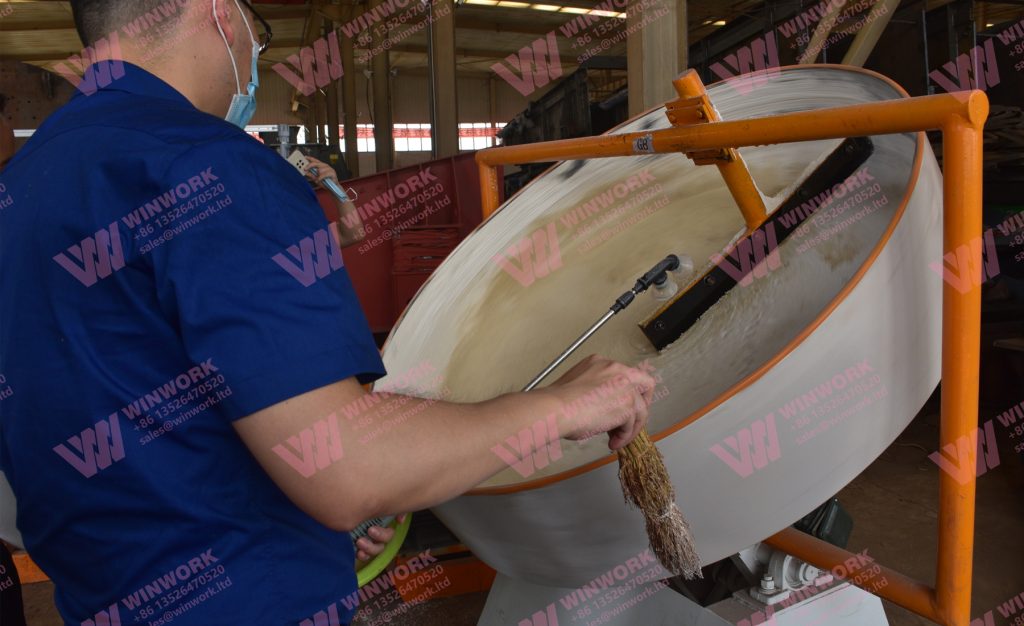
The disc granulator adopts advanced design and high quality materials, featuring high efficiency and durability. The disk corners of the pelletizing disc adopt rounded structure, and the pelletizing rate is up to 93% or more.
The disc granulator starts smoothly and reduces the impact force, thus prolonging the service life of the equipment. The pelletizing disc disk bottom is added with multiple radial steel plates, which strengthens the sturdiness of the equipment and ensures that it will never be deformed.
Flat die granulator also called flat die pellet mill, it is a kind of pelletizing equipment used to press powdery raw materials into pellets, which is widely used in feed, fertilizer, biomass energy, chemical industry and other industries.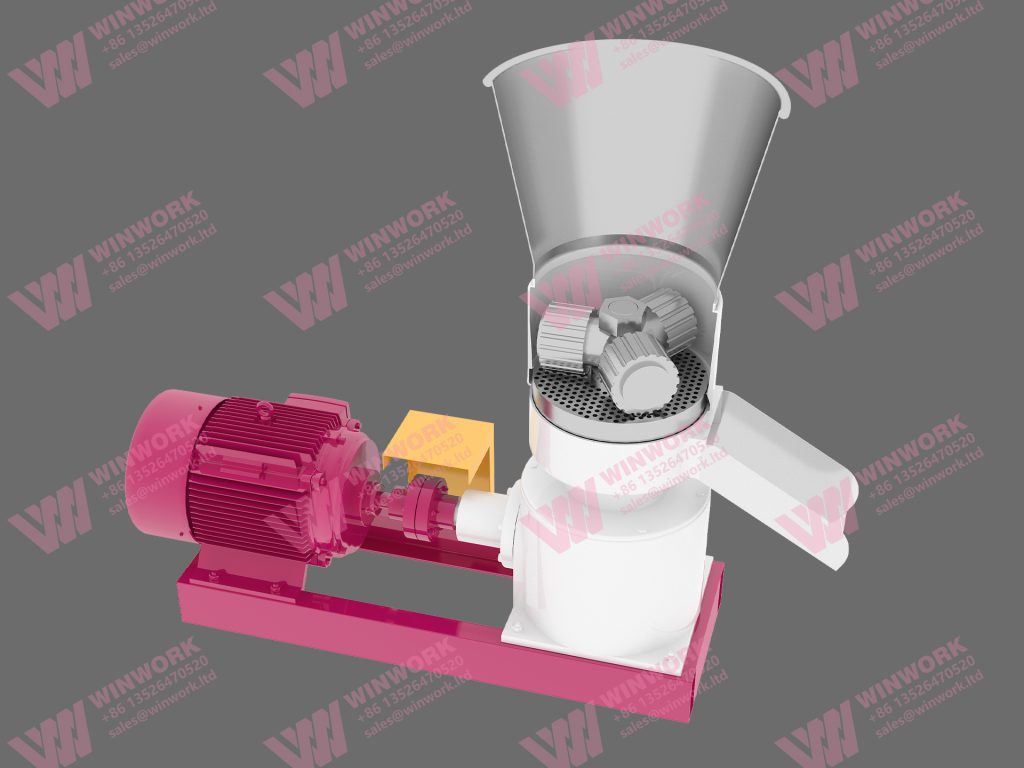
The equipment compresses the raw materials into high-density granules through the interaction of pressure roller and flat die, featuring high molding rate, uniform granules and low energy consumption.
Rotary Drum and Churning two-in-one granulator is a kind of high-efficiency equipment integrating rotary drum granulator and churning tooth granulator, which is widely used in fertilizer production line.
Rotary Drum and Churning two-in-one granulator combines the advantages of rotary drum granulator and stirring tooth granulator, featuring fast granulation speed, even granules, smooth operation, low energy consumption and long service life.
Two-in-one granulator is suitable for cold and hot granulation as well as large-scale production of high, medium and low concentration compound fertilizers, which is the ideal choice for modern agriculture and industry to improve the efficiency and quality of fertilizer production.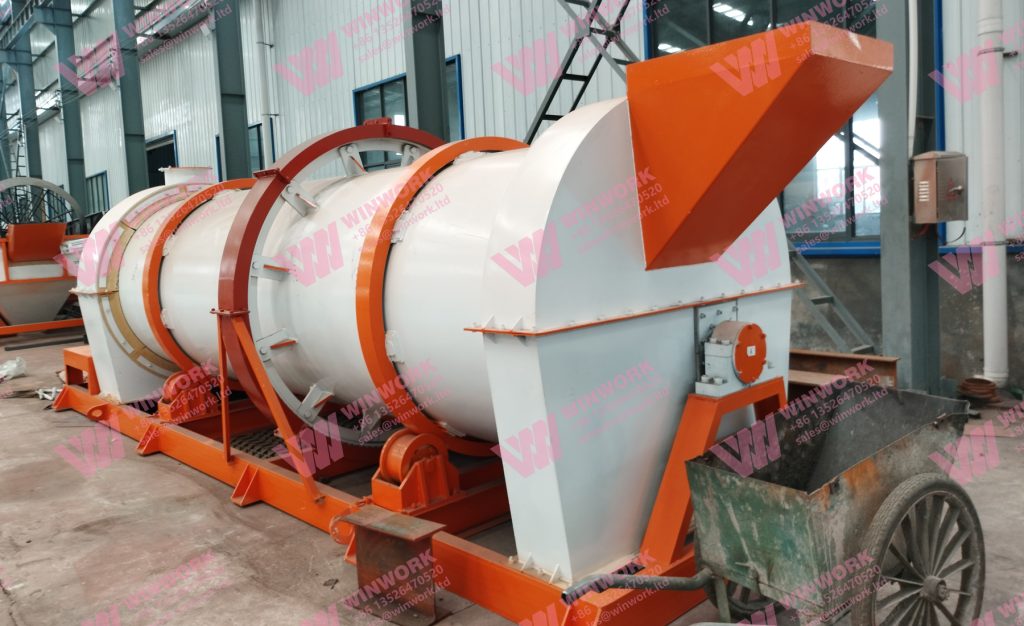
The Complete System: It’s More Than Just a Machine
You can’t just throw raw compost into a granulator and expect export-quality pellets. You need a system designed around the goal of granulator meeting export standards.
Step 1: Pre-Processing. You need a Crusher and Mixer to ensure your raw material is a fine, uniform powder. Lumps in, lumps out.
Step 2: Granulation. The Rotary Drum Granulator forms the pellets.
Step 3: Drying. An Rotary Dryer is essential to blast those pellets with hot air and lock in low moisture content.
Step 4: Cooling & Screening. A Cooler brings them to room temp, and a Vibrating Screen separates the perfect pellets from the rejects (which are sent back to the granulator.
Real Factory Example
GreenEarth Fertilizers in Kenya wanted to export to the UK. Their initial pellets were crumbly and dusty. They came to us with one goal: granulator meeting export standards.
We installed a complete line featuring our signature Rotary Drum Granulator and a Polishing Drum.
Their pellet hardness increased by 300%.
Dust generation dropped to nearly zero.
They secured a contract with a major UK distributor within six months.
“The focus on granulator meeting export standards transformed our business,” says director Amina. “We stopped making fertilizer and started manufacturing a global product.”
FAQ: Your Questions About Granulator Meeting Export Standards Answered
Q1: What is the most important spec for export pellets?
A: Consistency. Buyers hate surprises. If your last shipment was 3mm and this one is 5mm, you’ll lose the client. Your granulator meeting export standards must prioritize uniform size.
Q2: Can I just use water as a binder?
A: For some markets, yes. But for high-end export, a clay binder or a proprietary solution often works better to create a harder pellet that survives shipping. This is a key part of granulator meeting export standards.
Q3: How do I test for crushing strength?
A: You need a simple compression tester. Most buyers will specify a minimum Newton rating (e.g., >20N). This is a non-negotiable part of granulator meeting export standards.
Q4: Is a Rotary Drum Granulator better than a Pan Granulator for this?
A: For spherical, high-strength pellets, yes. Pan granulators are great for quick, lower-quality batches. For serious granulator meeting export standards, the drum is superior.
Q5: What about packaging for export?
A: You’ll need valve bags or bulk bags (FIBCs). The key is that the pellets must be cool and dry before bagging to prevent moisture buildup inside the bag.
Q6: How much does a full export-standard line cost?
A: It varies wildly based on capacity (1 ton/hr vs 10 ton/hr). But consider this: the cost of rejected shipments and lost contracts is infinitely higher than the investment in proper granulator meeting export standards equipment.
Q7: Can I upgrade my existing granulator?
A: Sometimes. We can often add a polishing drum or modify your drying system. However, if your core granulator is outdated, a full replacement is usually the most cost-effective path to granulator meeting export standards.
Conclusion
The world is hungry for high-quality organic fertilizer, but they won’t accept anything less than perfect. The journey to granulator meeting export standards is a journey of precision—from the raw material mixer to the final polishing drum. It requires the right engineering, the right process, and the right partner. Stop thinking of your product as “local fertilizer” and start engineering it as a global commodity.
For more details, please feel free to contact us.
Email: sales@lanesvc.com
Contact number: +8613526470520
Whatsapp: +8613526470520

Get A Quote