

Introduction
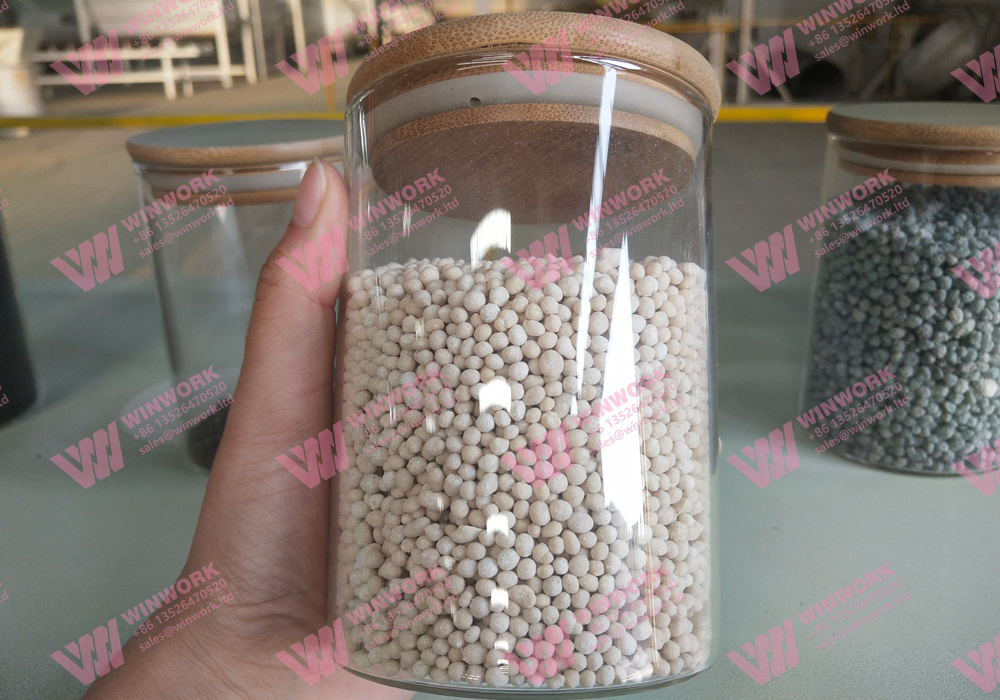
Let’s cut to the chase. You’ve got the raw materials: mountains of compost, rich with nutrients. You’ve got the ambition to sell on the global stage. But there’s a massive gap between a pile of “black gold” and a shipload of premium, export-ready fertilizer pellets. The bridge across that gap is a single, critical partnership: finding the right granulator provider. This isn’t about buying a hunk of steel; it’s about investing in an engineering partner who understands that your success depends on specs like 2mm uniformity and 20+ Newton crush strength.
The Export Gauntlet: What Quality Really Means
Before you talk to any granulator provider, you can you need to speak the language of international buyers. They don’t care how cheaply you make your pellets; they care about three things:
Sphericity (Roundness): Your pellets must be near-perfect spheres. A variation of more than ±1mm is a reject. Think ball bearings, not potatoes.
Crushing Strength: Your product will be thrown, poured, and stacked during shipping. It needs to withstand the pressure without turning into dust. We’re talking specific measurements in Newtons (N).
Low Moisture Content: Anything above 10-12% is a red flag. High moisture means mold, caking, and bacterial growth during transit.
Surface Smoothness: A smooth pellet sheds dust (a major export complaint) and signals a high-quality product.
Meeting these standards is impossible with sub-par equipment. That’s why vetting your granulator provider is the most important decision you’ll make.
What a Top-Tier Granulator Provider Actually Does
A machine seller just takes your money. A true granulator provider does so much more. They are your technical consultant, your quality control expert, and your long-term support system.
They Engineer for Your Material
Not all compost is created equal. Manure-based compost behaves differently from biochar or straw-based compost. A great granulator provider won’t just sell you a “one-size-fits-all” machine. They will ask for a sample of your material to test its moisture content, fiber length, and binding capability beforerecommending a machine.
They Customize the Solution
Your goal is self-sufficiency and export sales. A good granulator provider will design a complete production line—from crushers and mixers to dryers and screeners—that integrates seamlessly. They ensure the granulator is the heart of a system that produces consistent output 24/7.
They Guarantee the Specs
The best providers don’t just promise a machine; they promise a result. They will guarantee that their equipment can achieve the particle size, hardness, and moisture levels required for export. This is the hallmark of a reliable granulator provider. This is very important to have a real fertilizer manufacture for you, so you need to check it seriously and consider whether to start the whole project by yourself.
As the restriction of import and output, many fertilizer can not be delivered to other countries, so how do you and your country using this kind of fertilizer, problems are still and always here, the important thing is to get rid of it and try to overcome it, so if you are suitable to start your own plant, then this time is really a golden time. Try to catch it and you can win.
The Core Technology: How We Help You Achieve Self-Sufficiency
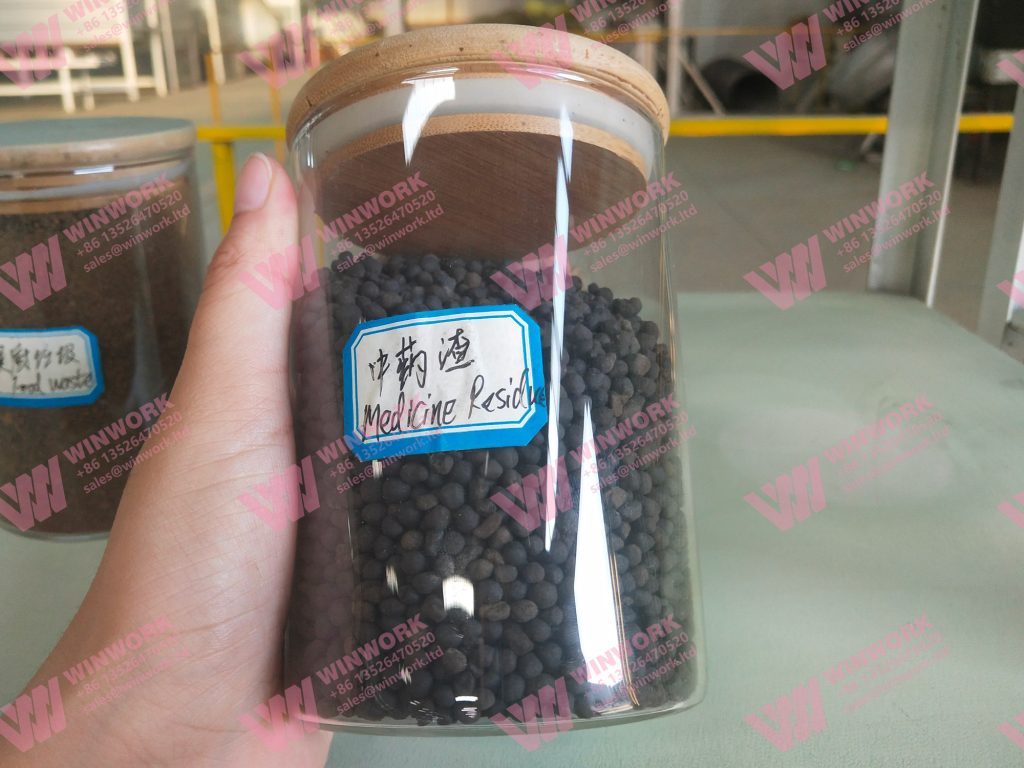
So, how do we, as your granulator provider, help you hit these impossible standards? It’s all about the technology.
The Rotary Drum Granulator: The King of Uniformity
This is the non-negotiable centerpiece for any export operation. Unlike a pan granulator that flings material around, the rotary drum uses a gentle tumbling action.
Why it Works: Material rolls like a snowball inside the drum, picking up binder and growing into a perfect sphere.
Export Advantage: It creates unmatched sphericity and hardness, which is the absolute foundation of granulator meeting export standards.
The Polishing Drum: The Secret Weapon
Pellets coming out of the main granulator can be a bit rough. A polishing drum is a low-friction, secondary drum that smooths the surface of the pellets.
Export Advantage: This step is crucial for reducing dust (a cardinal sin in export) and giving your pellets that professional, “shiny” look that buyers love.
Our Core Equipment
The disc granulator adopts advanced design and high quality materials, featuring high efficiency and durability. The disk corners of the pelletizing disc adopt rounded structure, and the pelletizing rate is up to 93% or more.
The disc granulator starts smoothly and reduces the impact force, thus prolonging the service life of the equipment. The pelletizing disc disk bottom is added with multiple radial steel plates, which strengthens the sturdiness of the equipment and ensures that it will never be deformed.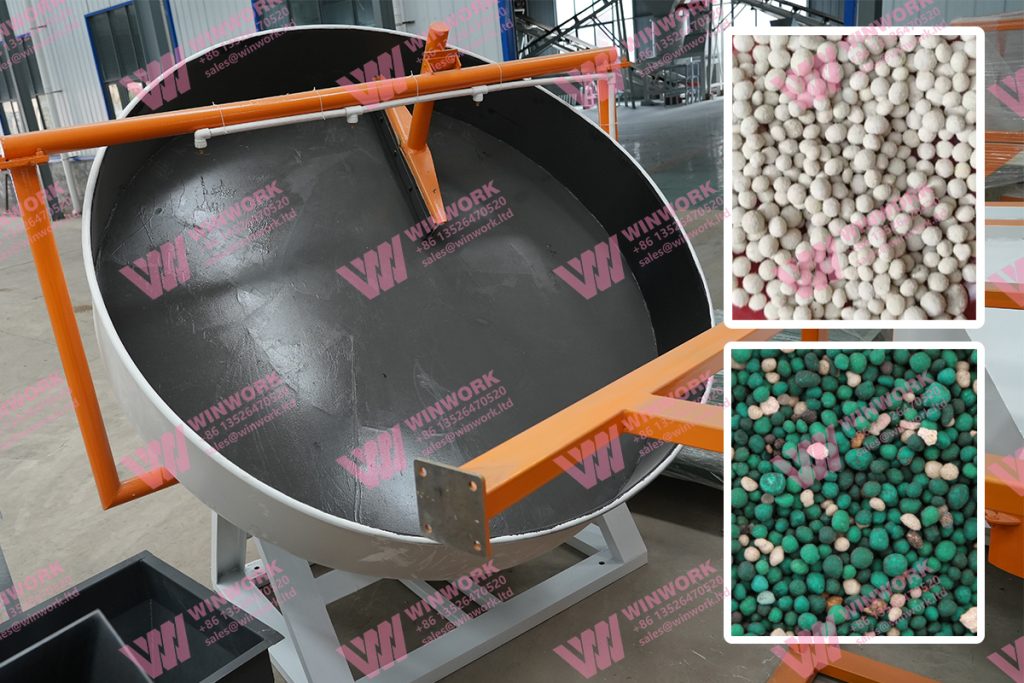
Flat die granulator also called flat die pellet mill, it is a kind of pelletizing equipment used to press powdery raw materials into pellets, which is widely used in feed, fertilizer, biomass energy, chemical industry and other industries.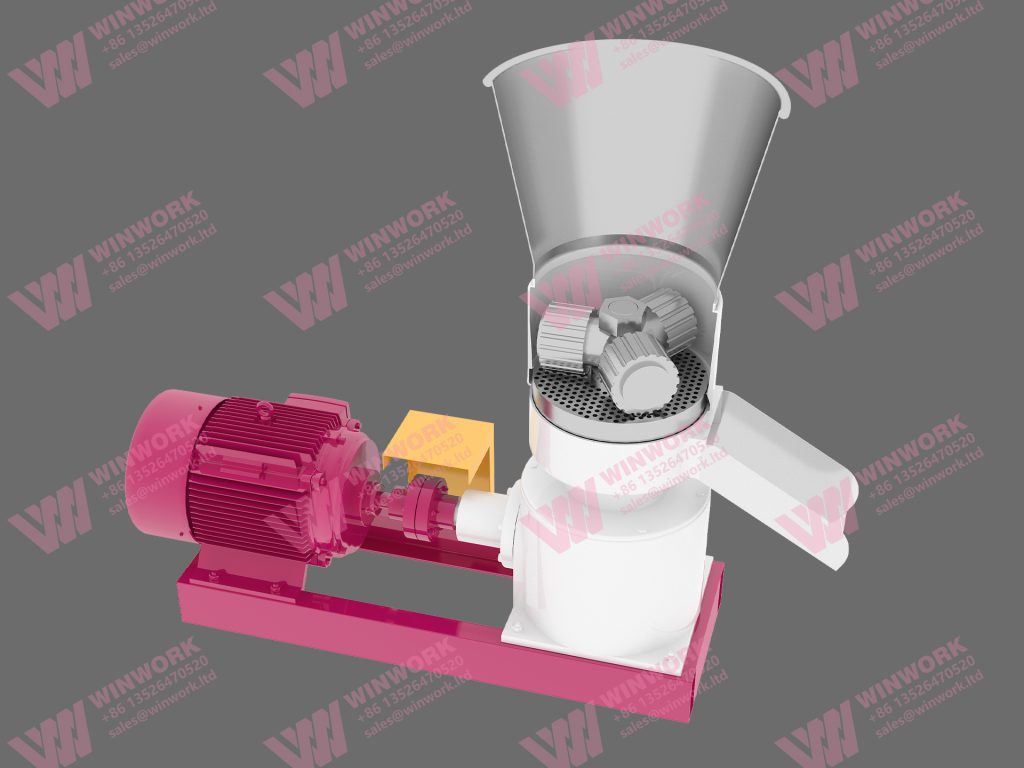
The equipment compresses the raw materials into high-density granules through the interaction of pressure roller and flat die, featuring high molding rate, uniform granules and low energy consumption.
Rotary Drum and Churning two-in-one granulator is a kind of high-efficiency equipment integrating rotary drum granulator and churning tooth granulator, which is widely used in fertilizer production line.
Rotary Drum and Churning two-in-one granulator combines the advantages of rotary drum granulator and stirring tooth granulator, featuring fast granulation speed, even granules, smooth operation, low energy consumption and long service life.
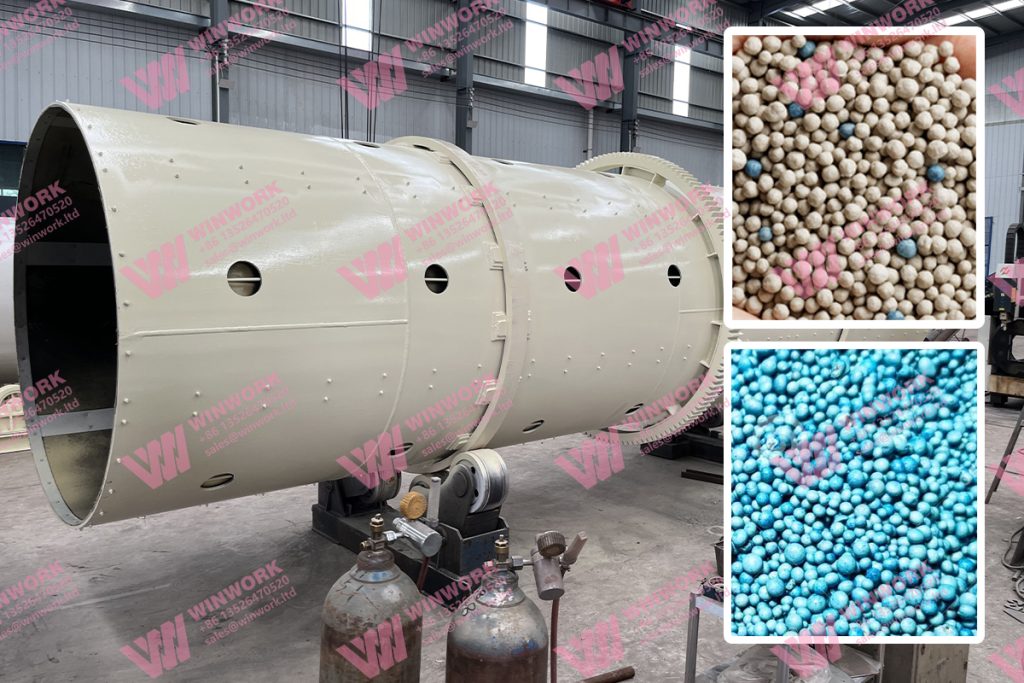
Two-in-one granulator is suitable for cold and hot granulation as well as large-scale production of high, medium and low concentration compound fertilizers, which is the ideal choice for modern agriculture and industry to improve the efficiency and quality of fertilizer production.
The Complete Line: From Heap to Ship
A granulator alone is useless. A full-service granulator provider supplies the ecosystem:
Crusher: To make your raw material a fine powder.
Paddle Mixer: To evenly distribute binders.
Rotary Dryer: To blast moisture down to the 8-10% range.
Cooler: To bring pellets to room temperature before bagging.
Vibrating Screener: To separate perfect pellets from undersized or oversized rejects (which are sent back to the granulator).
Real-World Impact
Consider the story of “Agri-Grow,” a medium-sized farm in South America.
The Problem: They were producing decent pellets for local use but got rejected three times trying to export to Europe. The issue? Dust and inconsistent sizing.
The Solution: They partnered with a new granulator provider who installed a complete line featuring a high-torque Rotary Drum Granulator and a final-stage Polishing Drum.
The Result: Their dust generation dropped by 95%. Their pellet hardness exceeded European standards. They are now shipping 500 tons a month. “Finding the right granulator provider didn’t just fix our machine; it fixed our entire business model,” said the Operations Manager.
FAQ: Your Questions About Choosing a Granulator Provider Answered
Q1: Can’t I just use a disc pelletizer? It’s cheaper.
A: You can, but you’ll struggle with export. Disc pelletizers create irregular, potato-shaped pellets that crumble easily. For guaranteed export quality, a Rotary Drum is what your granulator provider should recommend.
Q2: My compost is very fibrous. Can a granulator handle it?
A: Maybe. This is a critical question for your granulator provider. Fibrous material often needs pre-crushing or a specific type of binder. A good provider will test your material first.
Q3: What kind of after-sales support should I expect?
A: A real granulator provider offers installation supervision, commissioning (testing the line with your material), operator training, and a readily available spare parts supply. If they just drop off a machine, keep looking.
Q4: How important is the binder?
A: It’s everything. The binder (usually clay, bentonite, or a proprietary solution) is what gives the pellet its strength. Your granulator provider should advise on the best binder for your specific raw material.
Q5: What’s a reasonable warranty?
A: For the main body of the granulator (the drum shell), expect at least 12-18 months. For motors and gearboxes, 1 year is standard. A confident granulator provider stands behind their build quality.
Q6: Do I need to send a sample of my material to the provider?
A: YES. Any granulator provider who quotes you a price without seeing your material is guessing. You need a provider who will run tests to prove their machine works for you.
Q7: How much does a full export-standard line cost?
A: It varies wildly based on capacity (1 ton/hour vs 10 ton/hour). But consider this: the cost of one rejected shipment is often more than the price difference between a standard machine and a full export-ready system from a proper granulator provider.
Conclusion
Achieving fertilizer self-sufficiency and cracking the export market isn’t about working harder—it’s about working smarter with the right technology. The single most important decision in that journey is choosing your granulator provider. They are the architects of your quality, the guarantors of your specs, and the partner who turns your raw compost into a globally respected commodity. Don’t just buy a machine; build a partnership.
For more details, please feel free to contact us.
Email: sales@lanesvc.com
Contact number: +8613526470520
Whatsapp: +8613526470520

Get A Quote