

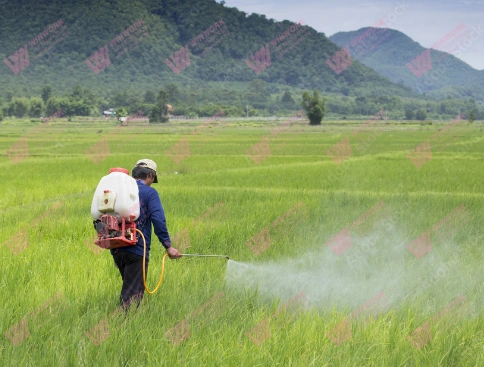
If you run a biogas plant, you know the headache all too well. For every cubic meter of biogas you make, you get about 10 to 15 cubic meters of “biogas slurry.” It’s that brown, murky liquid left over after the fermentation. For years, plant managers have seen this slurry as a massive problem—too watery to use, too expensive to transport, and a regulatory nightmare to dump. But the smart operators have figured it out. That “waste” isn’t waste; it’s a goldmine of nutrients. We are talking about Producing liquid fertilizer utilizing biogas slurry concentrate.
This isn’t just about getting rid of a byproduct; it’s about transforming it into a premium, high-value agricultural input. Producing liquid fertilizer utilizing biogas slurry concentrate means taking that weak, watery slurry, squeezing out the excess water to concentrate the good stuff (nitrogen, phosphorus, potassium, and organic matter), and turning it into a potent liquid fertilizer that farmers and gardeners will pay good money for. If you want to solve your slurry disposal crisis and add a serious revenue stream to your biogas operation, you need to understand how Producing liquid fertilizer utilizing biogas slurry concentrate works.
What Exactly is Biogas Slurry and Why Concentrate It?
First, let’s get on the same page. Biogas slurry is the liquid effluent from an anaerobic digester. When you feed manure, food waste, or crop residues into a biogas plant, the microbes eat the organic matter and produce biogas (methane). What’s left over is the slurry.
It’s actually full of good things: dissolved nutrients (N, P, K), micronutrients, organic acids, and humic substances. The problem? It’s about 95% to 98% water. You can’t spray 10,000 liters of watery slurry on a field to get the nutrient value of 500 liters of real fertilizer—the transport cost would eat all your profit, and the water might even waterlog the soil.
That’s why concentration is key. Producing liquid fertilizer utilizing biogas slurry concentrate starts with removing that excess water. By concentrating the slurry 5 to 10 times, you turn a bulky, low-value liquid into a small volume of nutrient-dense liquid gold. Now it’s economical to store, transport, and sell.
Why Bother? The Big Benefits of Producing Liquid Fertilizer Utilizing Biogas Slurry Concentrate
You might ask, “Why go through the trouble of processing it?” Here is the straight talk on why Producing liquid fertilizer utilizing biogas slurry concentrate is a game-changer:
You Solve the Slurry Disposal Problem (and Costs)
This is the biggest immediate win. Land application of raw slurry is limited by the land’s nutrient loading capacity, and regulations are getting stricter. By concentrating it, you reduce the volume dramatically. Producing liquid fertilizer utilizing biogas slurry concentrate turns a disposal liability into a marketable product, often eliminating hauling and spreading costs entirely.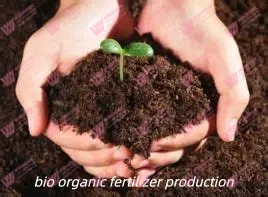
You Create a Premium, Easy-to-Use Product
Liquid fertilizers are incredibly popular because they are easy to apply (foliar spray or drip irrigation) and plants can uptake the nutrients quickly. Raw slurry can be clumpy and smell. The concentrated, filtered liquid fertilizer is clear or dark, has a mild earthy smell, and flows perfectly through modern irrigation systems. Producing liquid fertilizer utilizing biogas slurry concentrate allows you to tap into the high-value liquid fertilizer market.
Higher Nutrient Efficiency
Because the nutrients are in a dissolved, available form, and you can blend the concentrate with other additives (like chelated micronutrients), the fertilizer becomes more efficient for the farmer. They use less product to get better results. This added value is what Producing liquid fertilizer utilizing biogas slurry concentrate is all about.
Resource Recovery and Water Reuse
The water you remove during concentration isn’t necessarily waste either. Depending on the treatment, it can often be reused in the biogas plant (to dilute new feedstock) or as clean irrigation water. Producing liquid fertilizer utilizing biogas slurry concentrate is the heart of a true circular economy.
How Does It Work? The Nuts and Bolts of the Process
Alright, let’s get practical. How do you actually turn a tank of brown water into a bottle of liquid fertilizer? The process of Producing liquid fertilizer utilizing biogas slurry concentrate follows a path of cleaning, concentrating, and refining.
Step 1: Pre-Treatment (Cleaning the Slurry)
Raw slurry is full of suspended solids—undigested fiber, sand, grit. If you try to concentrate this directly, you’ll clog your equipment and the final fertilizer will be gritty. So, first, you run the slurry through a solid-liquid separator (like a screw press) to remove the big stuff. Then, it goes through a sedimentation tank or a flotation unit to let finer particles settle. Finally, it passes through a screen or a simple filter. This pre-treatment step is critical for Producing liquid fertilizer utilizing biogas slurry concentrate that is clean and stable.
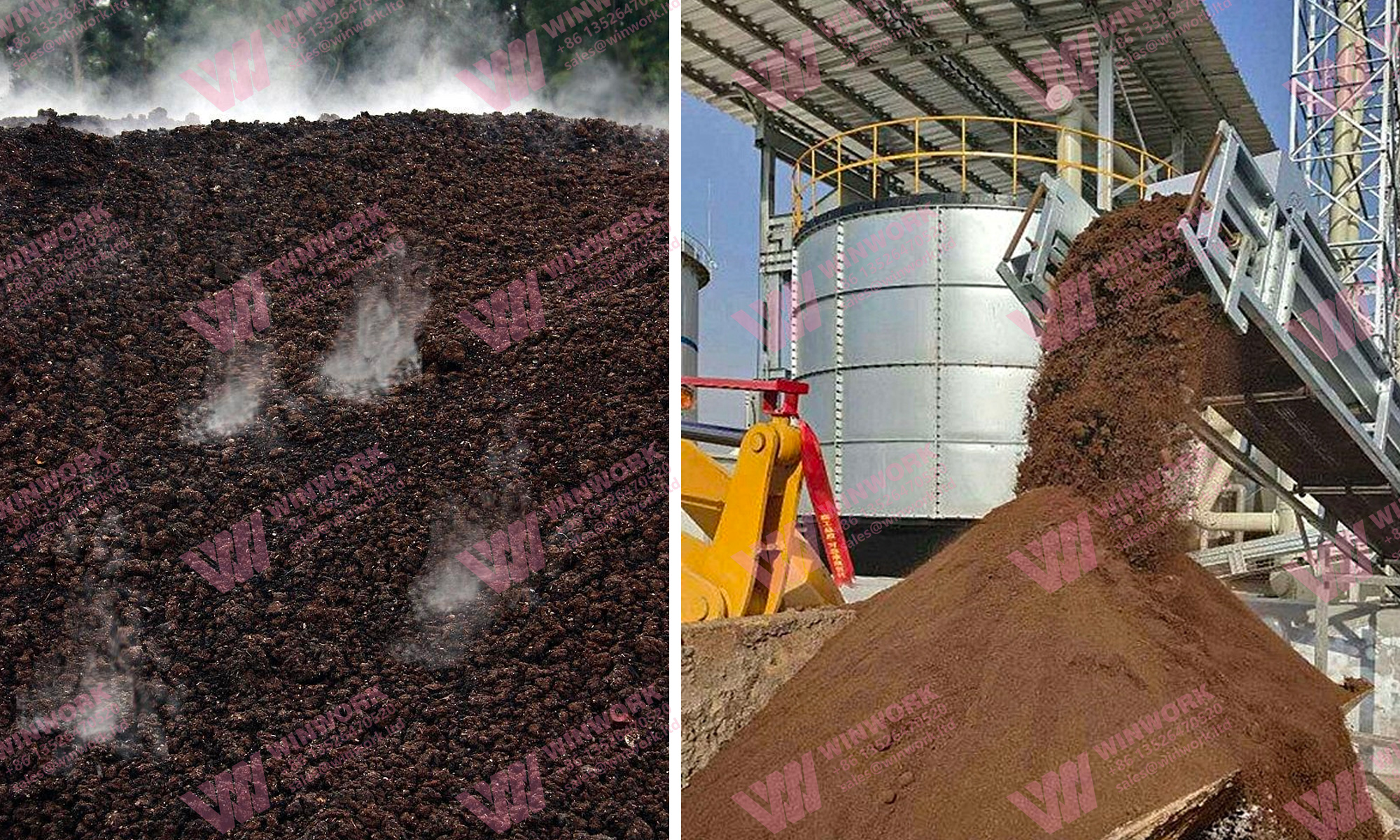
The Horizontal Fermentation Tank is a state-of-the-art equipment designed for the effective aerobic fermentation of organic waste, agricultural residues, sludge, and other compostable materials. Unlike vertical tanks, the horizontal design allows for larger capacity and more uniform fermentation.
The Horizontal Fermentation Tank is widely used in the production of organic fertilizers and compost, offering numerous advantages in terms of efficiency, control, and environmental impact.
Step 2: The Concentration (Removing the Water)
This is the core of the operation. There are a few ways to do this, but the most common modern method is Membrane Technology.
Microfiltration (MF) / Ultrafiltration (UF): These membranes act like super-fine sieves. They remove bacteria, colloidal particles, and large organic molecules. The “clean” water (permeate) passes through, and the nutrients stay behind in the “retentate” (the concentrate).
Nanofiltration (NF) or Reverse Osmosis (RO): These are tighter membranes. They can actually reject dissolved salts and small organic molecules, concentrating the nutrients even further.
The result? You might start with 10,000 liters of slurry at 0.5% total nutrient content, and end up with 1,000 liters of concentrate at 5% nutrient content. This step in Producing liquid fertilizer utilizing biogas slurry concentrate is where the volume reduction and nutrient enrichment happens.
Alternative methods include vacuum evaporation (heating the slurry under low pressure to boil off water) or even forward osmosis, but membranes are generally more energy-efficient for this specific task.
Step 3: Post-Treatment and Formulation (Refining the Product)
The raw concentrate is good, but to make a commercial product, you often tweak it. You might adjust the pH to make it more stable. You might add a small amount of preservatives (like citric acid) to prevent microbial growth in the bottle. You can also blend the concentrate with other nutrient sources—for example, adding a bit of potassium sulfate if the slurry is low in K. This formulation step in Producing liquid fertilizer utilizing biogas slurry concentrate allows you to create specific NPK grades (like a 3-2-3 or 4-1-2 liquid fertilizer) that meet market demands.
Step 4: Sterilization and Filtration
To ensure a long shelf life and prevent the product from smelling or fermenting in the bottle, you might run it through a UV sterilizer or a pasteurizer (gentle heat). A final polish filter (like a cartridge filter) ensures the product is crystal clear.
The finished liquid fertilizer is stored in stainless steel or HDPE tanks and then filled into bottles, jerry cans, or IBC totes. Producing liquid fertilizer utilizing biogas slurry concentrate ends with a professional, branded product ready for the agricultural distributor.
Packaging machine is an automatic packaging equipment in fertilizer production lines, used to automatically package bulk materials such as fertilizers into bagged products. It also has the characteristics of high precision, fast speed, convenient cleaning and maintenance, and easy operation.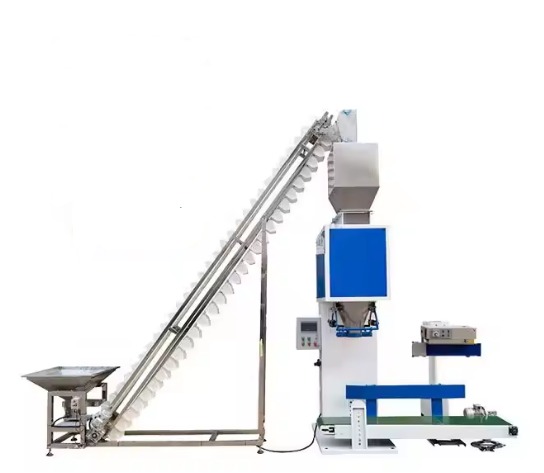
The Gear You Need: What Equipment is Essential?
You can’t do this with a bucket and a sieve. Producing liquid fertilizer utilizing biogas slurry concentrate requires some key machinery to handle the volume, the abrasiveness of the slurry, and the precision of the membranes.
The Solid-Liquid Separator (Screw Press or Centrifuge): To take the big chunks out first. This protects your downstream pumps and membranes.
The Sedimentation Tank / Flotation Unit: For gravity-based removal of finer solids. Often comes with a chemical dosing system (adding a flocculant like polyacrylamide) to help particles clump together and settle faster.
The Pre-Filter (Screen or Sand Filter): A final guard before the membranes to catch anything the settlement missed.
The Membrane System (UF/NF/RO Units): This is the heart and the most expensive part. It includes high-pressure pumps, membrane housings, and the membranes themselves. This is where the magic of Producing liquid fertilizer utilizing biogas slurry concentrate happens.
The Blending/Mixing Tanks: Stainless steel tanks with agitators where you adjust pH, add additives, and blend batches.
The Sterilizer (UV or Pasteurizer): For product stability.
The Polish Filter: A final 1-micron or 5-micron filter to ensure clarity.
The Filling and Packaging Line: Automated or semi-automated fillers, cappers, and labelers.
Each piece of equipment plays a vital role. Skimping on pre-treatment will foul your expensive membranes instantly. Skimping on sterilization leads to spoiled product. Producing liquid fertilizer utilizing biogas slurry concentrate is a system, and every part needs to be robust.
The Whole Line of Liquid Fertilizer
Raw material proportioning: the liquid fertilizer production line first carries out accurate proportioning of raw materials, weighs various nutrients accurately according to the set formula, and conveys the raw materials to the mixing system through the automatic dosing system.
Mixing and Dissolving: The raw materials after proportioning enter into the mixing and dissolving tank, through the mechanical mixing and dissolving system, the nutrient elements are fully mixed and dissolved in the liquid substrate to form a uniform liquid fertilizer.
Filtering and purification: The mixed liquid fertilizer needs to go through a multi-stage filtering system to remove the impurities that may exist during the dissolution process, ensuring the purity and quality of the liquid fertilizer.
Automatic Filling: The filtered liquid fertilizer is transported to the automatic filling machine for quantitative filling. The filling process accurately controls the volume of each bottle of liquid fertilizer to avoid overflow or uneven phenomenon.
Capping and Packing: The bottles of liquid fertilizer after filling will be automatically capped and labeled and packaged through the automatic packaging system, finally forming the finished liquid fertilizer.
Quality Inspection: The production line is equipped with automated inspection equipment, which carries out strict quality inspection on each batch of products produced to ensure that each bottle of liquid fertilizer meets the national standards and the quality requirements of the enterprise.
Storage and Transportation: Qualified finished products are centrally stored through the warehousing system, and then transported to customers on demand after orders are confirmed.
FAQ: Your Questions About Producing Liquid Fertilizer Utilizing Biogas Slurry Concentrate Answered
We know you’ve got questions. Here are the answers to what people ask us most about Producing liquid fertilizer utilizing biogas slurry concentrate.
Q: Is the fertilizer safe? Doesn’t slurry contain pathogens?
A: Raw slurry can. But the anaerobic digestion process already kills many pathogens by holding the material at temperature for days. Then, the membrane concentration process (especially UF/NF) acts as a physical barrier, removing bacteria and viruses. Finally, a UV or pasteurization step ensures the finished product is hygienic. Proper Producing liquid fertilizer utilizing biogas slurry concentrate includes these safety steps.
Q: Do farmers actually buy this? How is it different from chemical liquid fertilizer?
A: Absolutely. While it’s not a replacement for all chemical fertilizer, it is a fantastic organic-based liquid feed. It contains not just NPK but also organic matter, humic acids, and beneficial microbes (depending on treatment). This improves soil health over time, not just feeds the plant. Producing liquid fertilizer utilizing biogas slurry concentrate creates a product that bridges the gap between organic compost teas and synthetic liquid feeds.
Q: Which concentration method is best?
A: For most biogas plants, a combination of Ultrafiltration (UF) followed by Nanofiltration (NF) or Reverse Osmosis (RO) is the current gold standard. It gives good nutrient recovery, produces a clean permeate water for reuse, and creates a concentrated retentate. The exact setup for Producing liquid fertilizer utilizing biogas slurry concentrate depends on your slurry quality and your target concentration factor.
Q: How much does it cost to set up?
A: The membrane system is the biggest capital expense. A small to medium system can range from tens of thousands to a few hundred thousand dollars, depending on capacity. However, you must weigh this against the cost of notdoing it—land application restrictions, potential fines, and the lost opportunity to sell a product. Many find that Producing liquid fertilizer utilizing biogas slurry concentrate pays for itself in 3 to 5 years through reduced disposal costs and new product sales.
Q: What do I do with the water that is removed?
A: This is a great bonus. The “permeate” water from the membranes is often very clean—low in organics and nutrients. It can frequently be reused in the biogas plant to dilute thick feedstock (like manure) before it enters the digester. This closes the water loop, making Producing liquid fertilizer utilizing biogas slurry concentrate even more sustainable and cost-effective.
Conclusion: Don’t Let the Slurry Run You
The biogas industry is maturing. Making gas is only half the battle; managing the digestate is the other half. Producing liquid fertilizer utilizing biogas slurry concentrate is more than just a waste management strategy; it is a value-added diversification that can determine the economic viability of your entire plant.
By embracing this technology, you close the loop. The farm waste goes in, energy and fertilizer come out. It’s the ultimate nutrient recycling story. Producing liquid fertilizer utilizing biogas slurry concentrate transforms a liability into an asset, a problem into a product, and a cost into a profit. It’s time to look at that tank of slurry not as a headache, but as the start of your next great batch of liquid gold. Make the shift today.
For more details, please feel free to contact us.
Email: sales@lanesvc.com
Contact number: +8613526470520
Whatsapp: +8613526470520
Get A Quote