

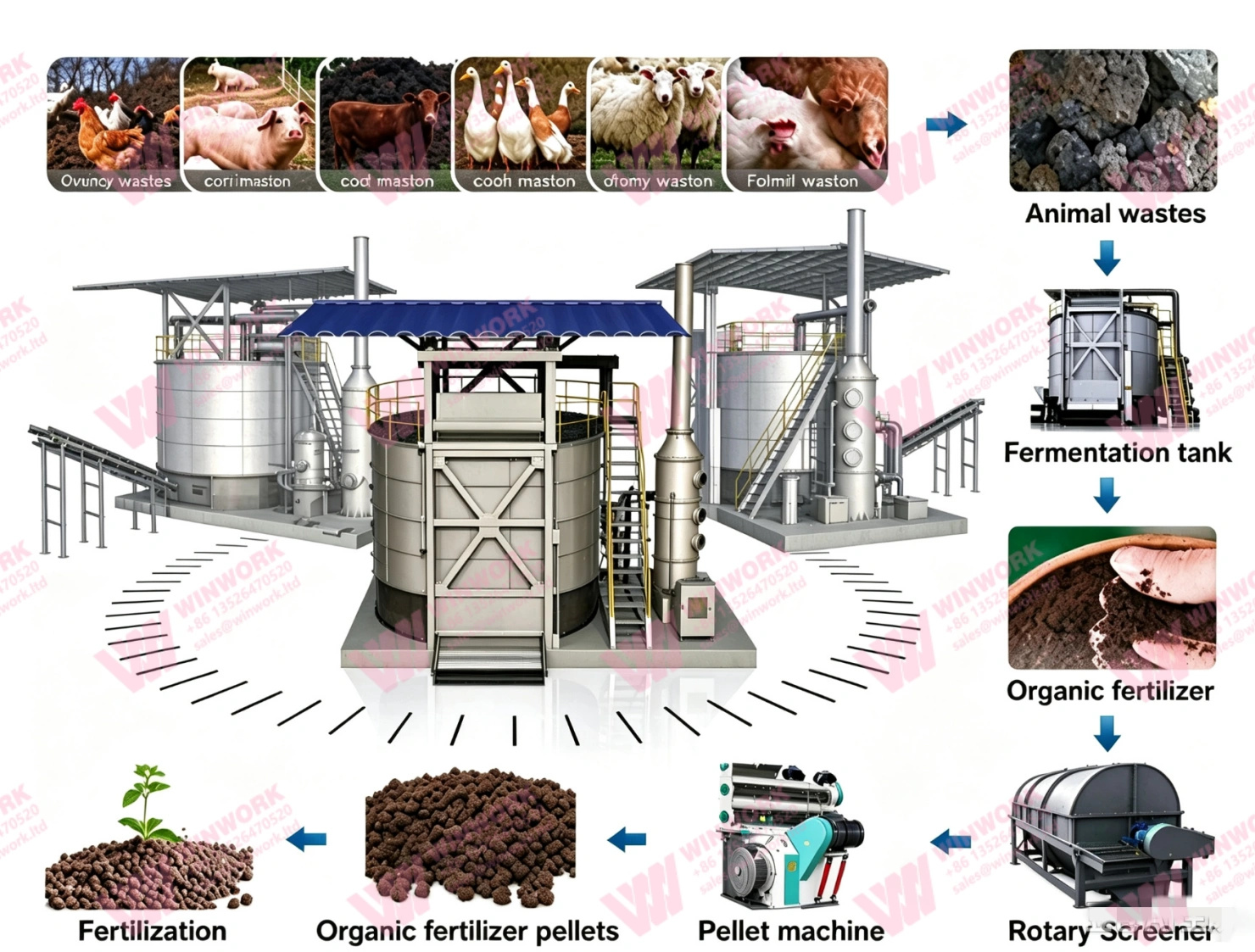
Organic fertilizer production often starts with materials such as animal manure, crop residues, straw, and other biodegradable organic waste. Although these materials contain valuable nutrients and organic matter, fresh materials usually need to be properly fermented and decomposed before they can be used in further fertilizer processing. This is where an organic fertilizer fermentation tank can become an important part of the production process.
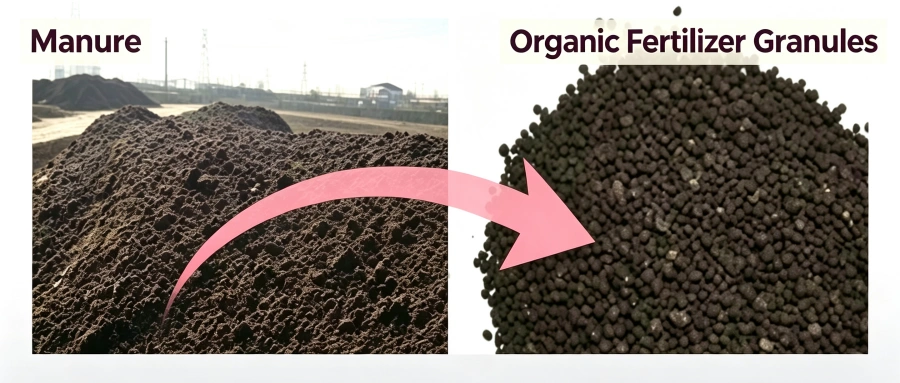
A suitable fermentation system can provide a more controlled environment for mixing, aerobic fermentation, temperature management, and organic matter decomposition. However, fermentation tanks are not all designed in the same way. Vertical and horizontal structures have different dimensions, capacities, and space requirements.
Understanding these differences can help fertilizer producers select equipment according to their raw materials, processing capacity, available space, and overall production process.
What Is an Organic Fertilizer Fermentation Tank?
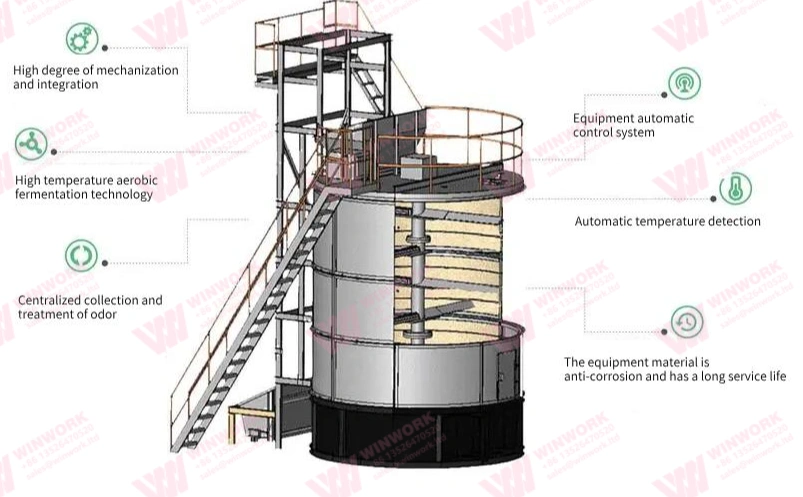
An organic fertilizer fermentation tank is equipment designed to provide a controlled environment for fermenting and decomposing organic materials. During the fermentation process, microorganisms break down organic matter under suitable conditions, while mixing helps distribute moisture and materials more evenly.
Depending on the material and production process, the main stages can generally include:
Material Feeding → Mixing → Aerobic Fermentation → Temperature Management → Fermentation → Discharge
Compared with simply piling organic waste in an open area, a dedicated fermentation tank can make the fermentation process more organized and easier to manage. The tank provides a defined processing space and can incorporate mixing and temperature-control functions according to the equipment configuration.
Benefits of Using a Fermentation Tank
One important advantage is more controlled fermentation. Organic materials need suitable conditions for microbial activity, and the fermentation equipment can help maintain a more consistent processing environment.
Another benefit is more uniform mixing. Animal manure and agricultural residues may contain different moisture levels and physical properties. Mixing helps distribute the materials more evenly during fermentation.
A fermentation tank can also provide better use of production space. Instead of spreading organic materials over a large open area, the material can be processed within a dedicated piece of equipment. The actual space requirement depends on the tank design, which is why both vertical and horizontal structures are available.
In addition, enclosed or defined processing equipment can help reduce direct exposure of organic waste to the surrounding environment. This can make the overall production area easier to organize and manage.
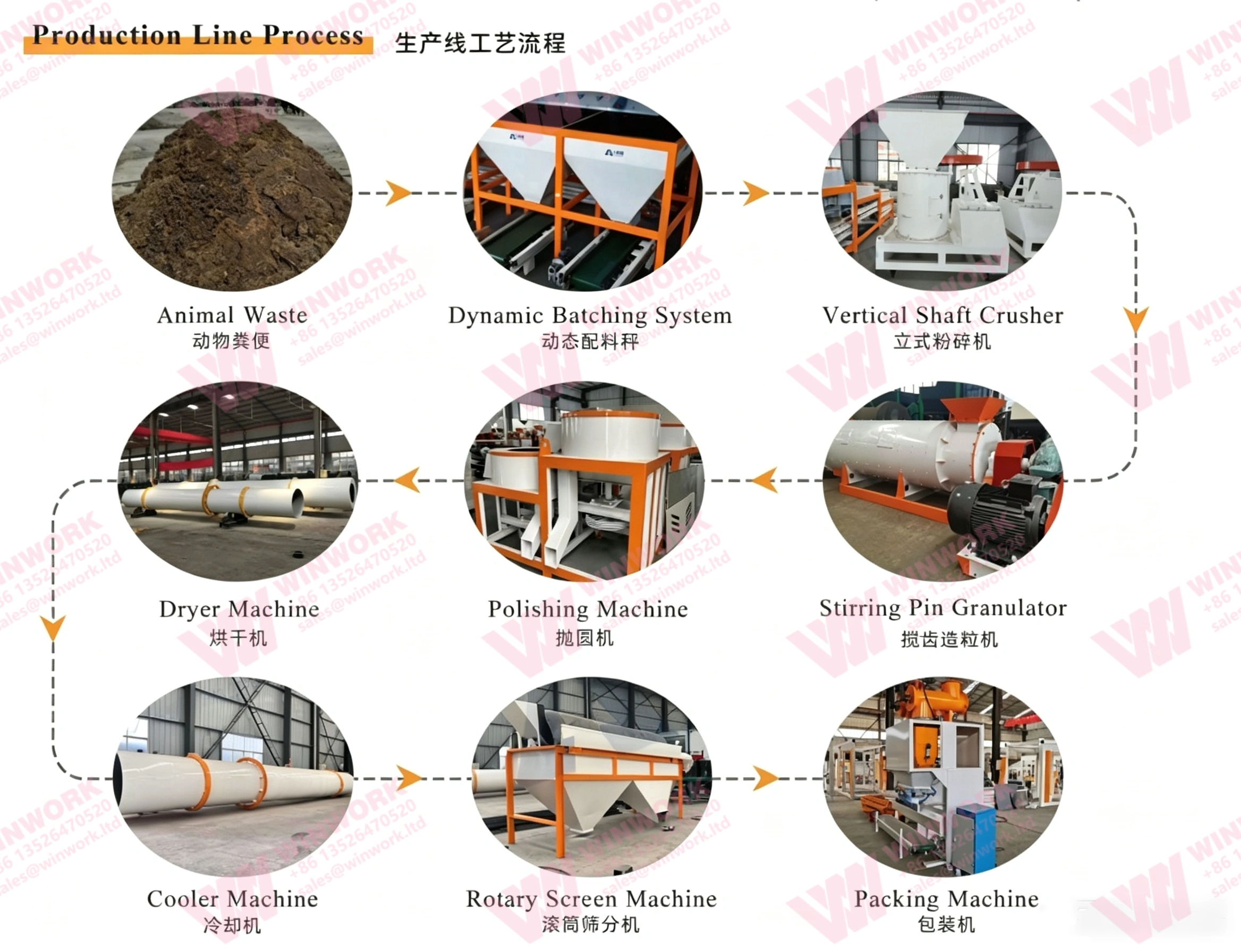
Finally, a fermentation tank can be integrated with other fertilizer processing equipment. After fermentation, the material may continue to crushing, mixing, granulation, drying, cooling, screening, and packaging.
What Materials Can Be Processed in an Organic Fertilizer Fermentation Tank?
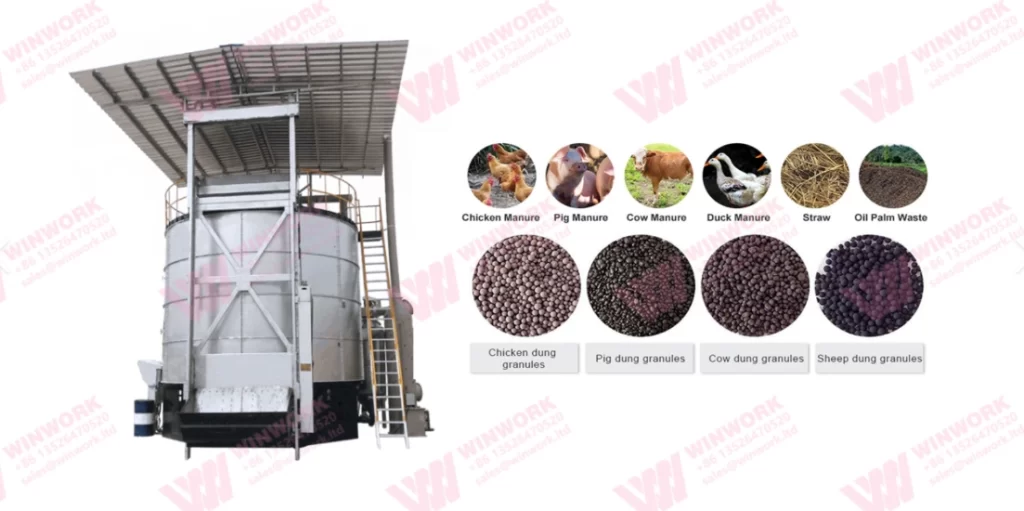
The raw materials used in organic fertilizer production vary from project to project. An organic fertilizer fermentation tank can be considered for many biodegradable materials, but the actual configuration should be selected according to the physical characteristics of the feedstock.
Animal manure is one of the most common groups of materials. Typical examples include chicken manure, cow manure, pig manure, sheep manure, and other poultry or livestock manure. These materials contain organic matter and nutrients but may require fermentation before being used in fertilizer production.
Agricultural residues are another important category. Crop residues, straw, plant residues, and other agricultural waste can be processed after suitable preparation.
Other biodegradable materials can also be considered, including food waste, mushroom residue, organic sludge, and other compostable organic materials, depending on their composition and the intended fertilizer process.
The moisture content, particle size, fiber content, organic matter, and physical properties of the material can all affect fermentation. For this reason, the equipment should not be selected based only on the material name. Processing capacity and the following production stages should also be considered.
Vertical and Horizontal Organic Fertilizer Fermentation Tanks
For organic fertilizer production, two common equipment configurations are vertical and horizontal fermentation tanks. Both can be used for organic material fermentation, but their structures and operating parameters are different.
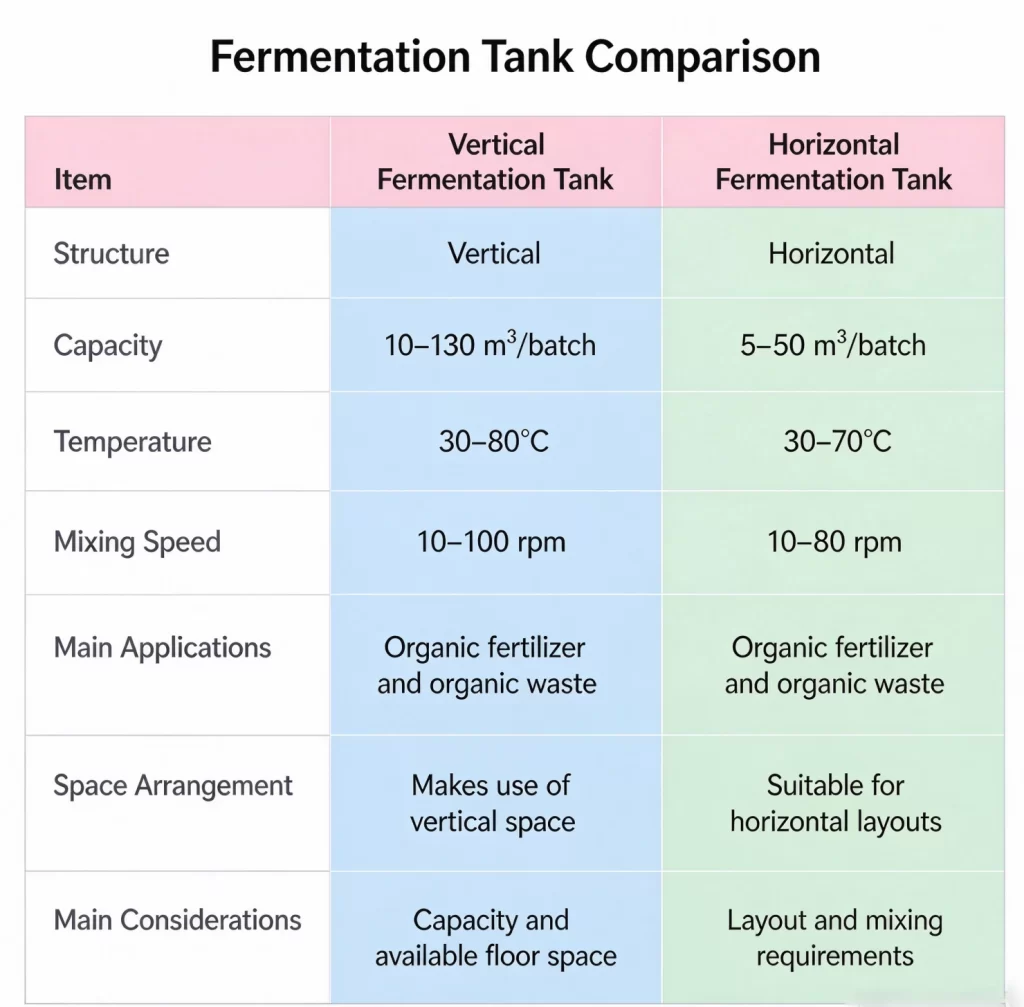
The vertical fermentation tank uses a vertical tank structure. According to its current product specifications, the capacity range is 10–130 m³ per batch, with a temperature range of 30–80°C and a mixing speed of 10–100 rpm.
The vertical structure can make better use of vertical space and may be suitable for projects where available floor space is limited. It can be used for organic waste, agricultural residues, animal manure, and other compostable materials.

The horizontal fermentation tank uses a horizontal tank structure. Its current specifications cover 5–50 m³ per batch, with a temperature range of 30–70°C and a mixing speed of 10–80 rpm.
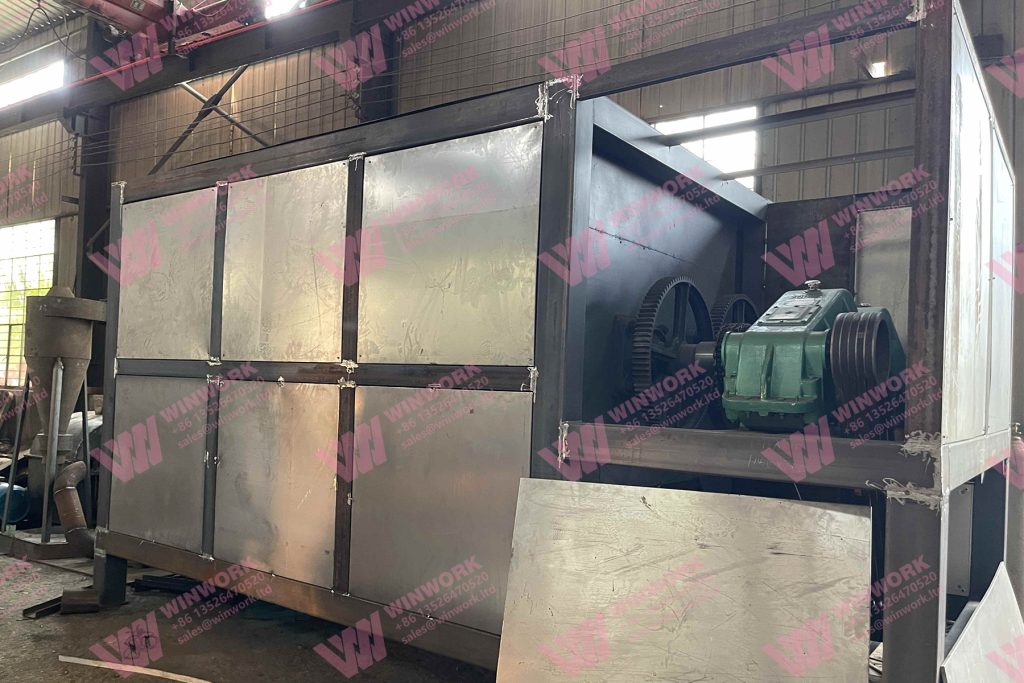
Horizontal fermentation tank
This configuration can be suitable for projects that prefer a horizontal equipment arrangement. It can also be used for animal manure, agricultural residues, organic waste, and other biodegradable materials used in organic fertilizer production.
Both designs can support organic material fermentation, but their different dimensions and capacity ranges mean that the appropriate choice depends on the requirements of each project.
Vertical vs. Horizontal Fermentation Tank: Key Differences
When comparing an organic fertilizer fermentation tank in vertical and horizontal configurations, several factors should be considered rather than looking at the structure alone.
Capacity
Capacity is one of the first factors to consider. The vertical design currently covers a range of 10–130 m³ per batch, while the horizontal design covers 5–50 m³ per batch. Therefore, the required batch volume should be determined according to the amount of material that needs to be processed.
Available Space
The physical dimensions of the equipment also affect installation. A vertical design makes use of height, while a horizontal design extends along the floor. Therefore, the available height, floor area, and existing equipment layout should be checked before selecting a model.
Raw Material and Process Requirements
Both designs can be used for organic fertilizer materials, but the characteristics of the raw material still need to be evaluated. Moisture content, particle size, fiber content, and material consistency can influence the mixing and fermentation process.
The equipment should also match the rest of the production line. A fermentation tank is normally only one stage of organic fertilizer production, so its discharge arrangement and capacity should be compatible with downstream equipment.
How to Choose the Right Organic Fertilizer Fermentation Tank?
Choosing the right organic fertilizer fermentation tank starts with the raw material.
First, determine what material needs to be fermented. Chicken manure, cow manure, pig manure, straw, agricultural waste, and other organic materials may have different moisture and physical characteristics.
Next, determine how much material needs to be processed. Daily processing capacity and batch capacity are important when selecting equipment. The tank should provide enough working volume for the planned production requirements.
The available installation area should also be measured. If floor space is limited but sufficient vertical space is available, a vertical structure may be considered. If the production facility is already arranged around horizontal equipment, a horizontal configuration may fit the existing layout more naturally.
Finally, consider the complete fertilizer production process. A typical organic fertilizer line may include:
Fermentation → Crushing → Mixing → Granulation → Drying → Cooling → Screening → Packing

The fermentation equipment should therefore be considered as part of the complete process rather than as an independent machine.
For projects with different raw materials or processing requirements, the final configuration should be determined from the material characteristics, required capacity, installation conditions, and production process.
FAQ About Organic Fertilizer Fermentation Tank
What is an organic fertilizer fermentation tank?
An organic fertilizer fermentation tank is equipment used to provide a controlled environment for fermenting and decomposing organic materials such as animal manure, agricultural residues, and other biodegradable waste.
What materials can be processed in a fermentation tank?
Common materials include chicken manure, cow manure, pig manure, sheep manure, crop residues, straw, agricultural waste, food waste, and other biodegradable organic materials. The suitability of a specific material depends on its moisture content, particle size, composition, and processing requirements.
What are the advantages of using a fermentation tank for organic fertilizer?
A fermentation tank can provide a more organized and controlled environment for fermentation. Mixing can improve material uniformity, while temperature management can help maintain suitable fermentation conditions. The equipment can also be integrated into a complete organic fertilizer production process.
What is the difference between vertical and horizontal fermentation tanks?
The main differences are their structure, capacity range, dimensions, and space requirements. The vertical model currently covers 10–130 m³ per batch, while the horizontal model covers 5–50 m³ per batch. The appropriate design depends on the project conditions.
How do I choose an organic fertilizer fermentation tank?
Consider the raw material, moisture and physical properties, required processing capacity, available installation space, and the equipment used before and after fermentation. These factors can help determine a suitable configuration.
Conclusion
An organic fertilizer fermentation tank can provide a more organized and controllable way to process animal manure, agricultural residues, and other biodegradable organic materials before further fertilizer production.
Vertical and horizontal fermentation tanks can both be used for organic fertilizer applications, but their capacity ranges, structures, and space requirements are different. The right choice should therefore be based on the raw material, processing capacity, available space, and the overall production process.
For more details, please feel free to contact us.
Email: sales@lanesvc.com
Contact number: +8613526470520
Whatsapp: +8613526470520
Your choice is the best recognition for us!
Get A Quote