

Introduction: My Journey into Organic Fertilizer Manufacturing
Are you struggling to get your fertilizer production line started and unsure where to begin? Sometimes, what you need most is guidance from someone who has experienced the entire process firsthand.
I started my journey in organic fertilizer manufacturing from scratch, learning step by step how to manage raw materials, control fermentation, select the right equipment, and achieve stable production. Now that I have gained practical experience, I want to share what I have learned to help others avoid common mistakes and move forward with greater confidence.
If you are planning to start an organic fertilizer business, I believe this article will give you useful insights and help you take the first step toward successful production.
Understanding Raw Materials for Organic Fertilizer Manufacturing
One of the first lessons I learned was that finished fertilizer quality depends heavily on the materials used at the beginning. Different organic materials have different nutrient contents, moisture levels, decomposition rates, and physical characteristics.
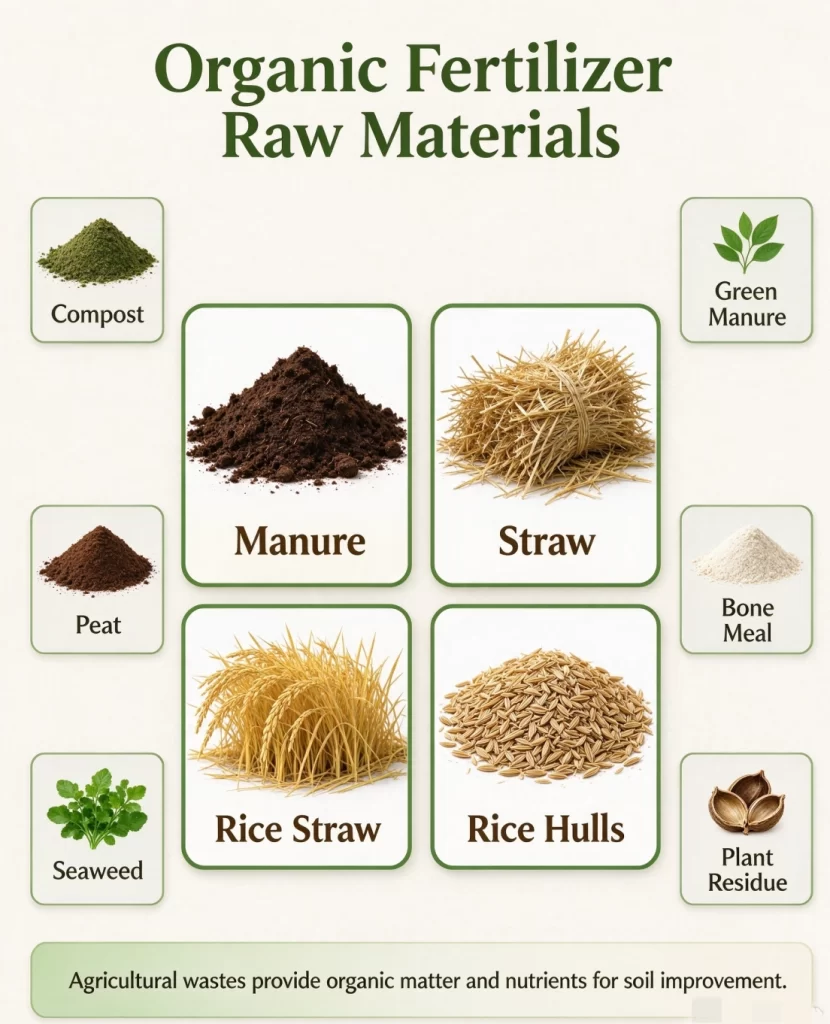
Cow manure is a common material worth considering in India because it can be collected from farms and dairy operations. Depending on local availability, poultry manure, sheep manure, rice straw, wheat straw, rice husks, and other agricultural residues may also be suitable ingredients.
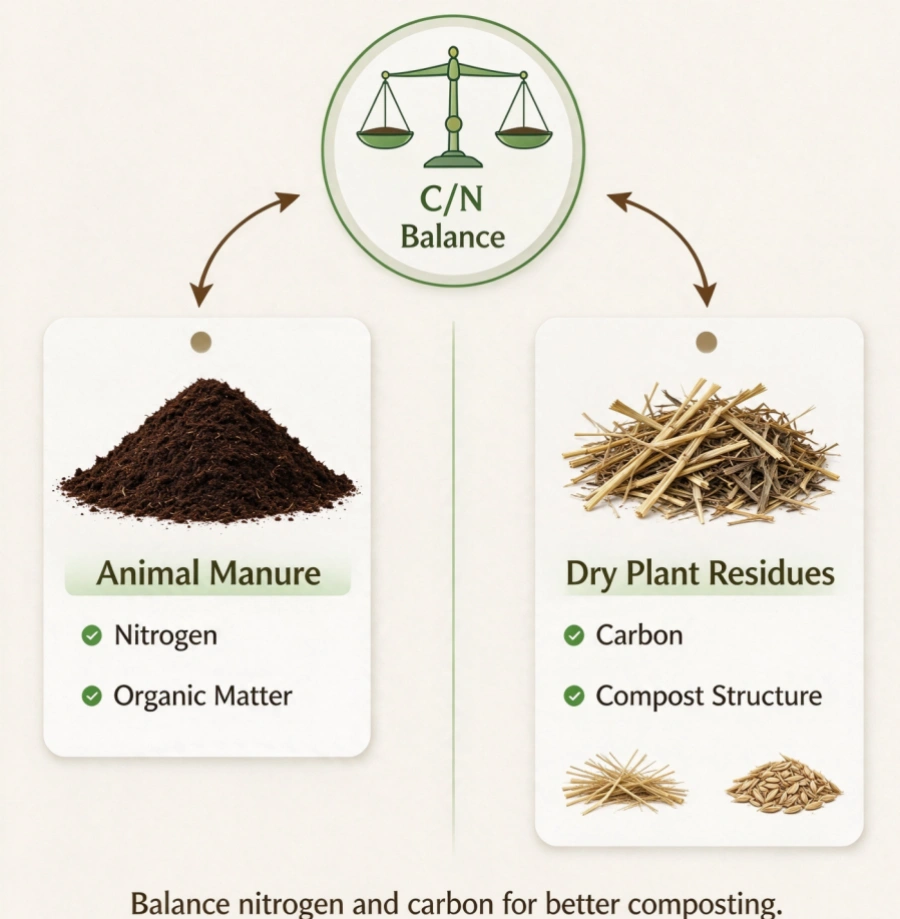
Animal manure can supply nitrogen and organic matter, while dry plant residues contribute carbon and help improve the structure of the compost mixture. Their proportions should be adjusted according to the actual characteristics of the materials rather than following one fixed recipe.
Transportation costs and supply consistency also deserve attention. Cheap raw materials may become expensive if they must be transported over long distances or require extensive pretreatment. Materials contaminated with plastic, stones, chemicals, or other unsuitable substances can create additional processing and quality-control problems.
Before choosing equipment for organic fertilizer manufacturing, I would first assess the available materials, test their characteristics where necessary, and identify the type of fertilizer the business intends to sell.
Good raw material management makes subsequent processing easier to control and helps reduce unnecessary waste.
How Organic Fertilizer Manufacturing Works Step by Step
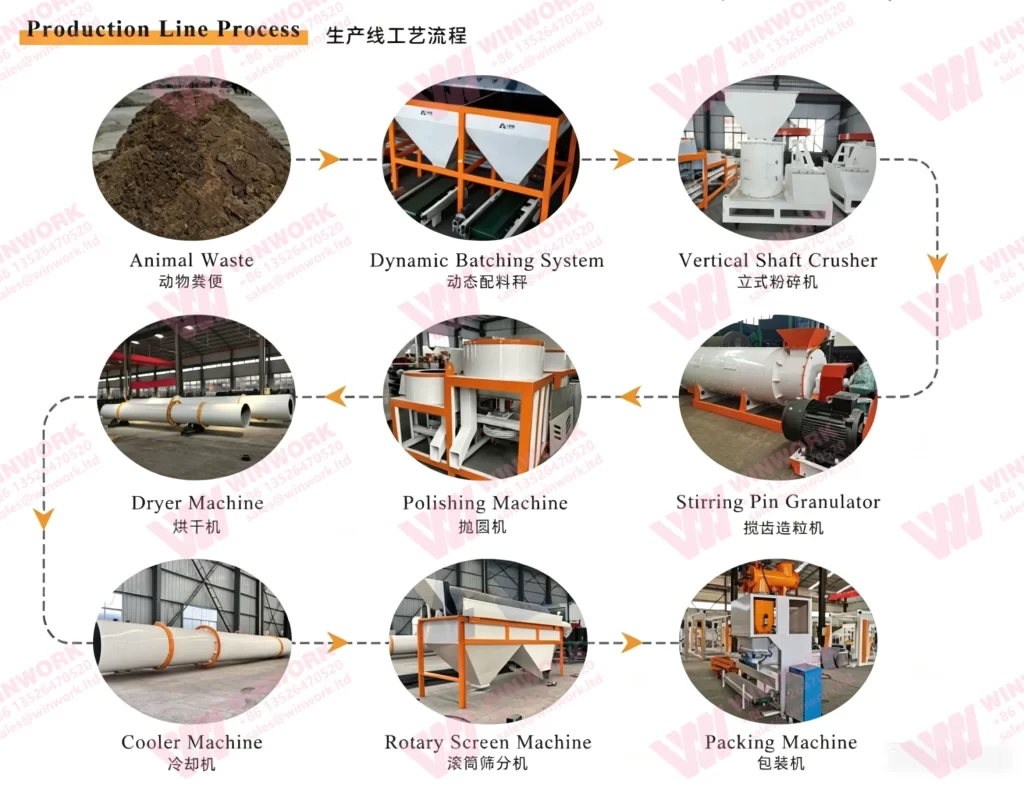
The organic fertilizer manufacturing process depends on the raw materials, target product, production capacity, and available budget. A basic composting operation may produce loose or powdered fertilizer, while a commercial granulated fertilizer plant requires additional processing equipment.
Step 1: Raw Material Collection and Preparation
The process begins with collecting suitable organic materials and removing unwanted impurities. Large plant residues may need to be chopped or crushed to make them easier to mix and decompose.
The raw materials should then be assessed for moisture content, particle size, and other relevant characteristics. Consistent preparation helps create a more uniform mixture and makes fermentation easier to manage.
For beginners, testing a small batch before purchasing large quantities of equipment can reveal practical problems and help reduce investment risks.
Step 2: Mixing and Moisture Adjustment
Different raw materials are combined to create a mixture suitable for composting. The proportions depend on factors such as the carbon-to-nitrogen ratio, moisture content, and physical structure of the materials.
Moisture is particularly important. If the mixture is too dry, microbial activity may slow down. If it is excessively wet, air movement can become restricted, increasing the risk of undesirable anaerobic conditions and unpleasant odors.
There is no single mixing formula that works for every combination of cow manure, poultry manure, and crop residues. Operators should adjust the mixture according to actual measurements and operating conditions.
Step 3: Composting and Fermentation
Composting is one of the most important stages in organic fertilizer manufacturing. Microorganisms break down organic materials under suitable conditions, gradually converting them into more stable compost.
For many commercial operations, aerobic composting is a practical option. It requires adequate oxygen, suitable moisture, and temperature management. The material may be arranged in windrows or processed in a dedicated composting area.
Turning the compost helps introduce air, redistribute moisture, and improve temperature uniformity. Depending on the production setup, workers may use manual turning or mechanical equipment.
A compost turner can help manage larger compost piles and reduce the labor required for turning. However, machinery alone cannot guarantee mature compost. Operators still need to monitor temperature, moisture, odors, and decomposition progress.
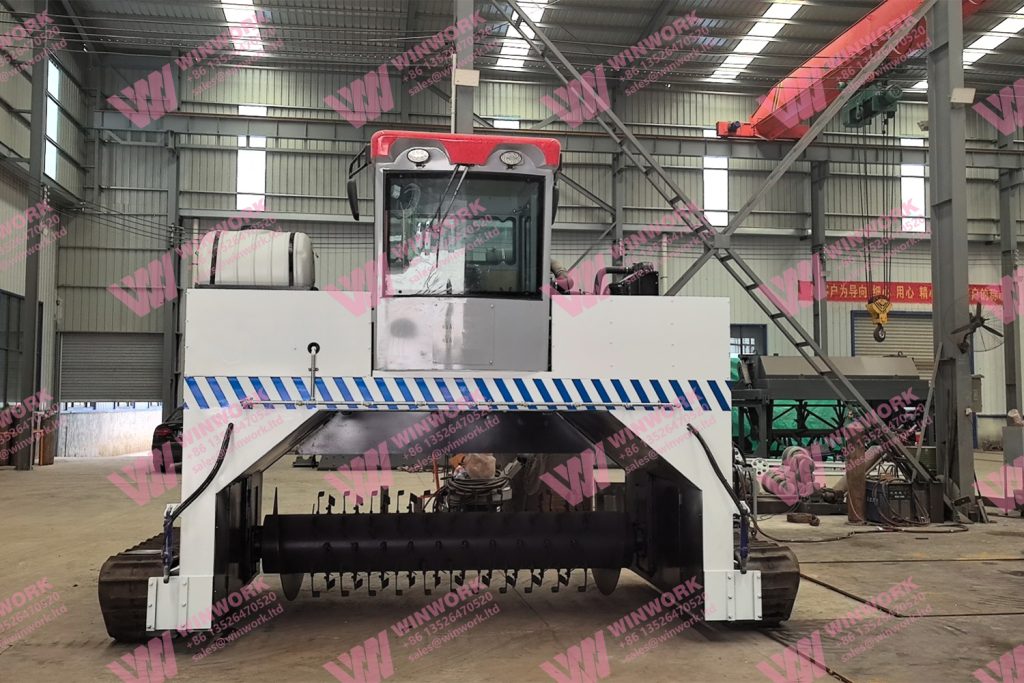
Fermentation time varies with the materials, climate, pile size, and process management. The compost should be evaluated for maturity before moving to the next stage.
Step 4: Crushing, Mixing, and Granulation
Once the compost has matured sufficiently, it may need to be crushed to break up lumps and create a more uniform particle size. A mixer can then help distribute the prepared materials evenly.
Granulation is optional. If the business sells powdered organic fertilizer, it may not need a granulator. If the target product is granular fertilizer, a suitable granulation process can make the product easier to handle, package, transport, and apply.
The appropriate granulator depends on material characteristics, required particle size, moisture content, and planned production capacity. Some formulations may require adjustments or suitable binders to achieve acceptable granule strength.
This stage demonstrates why organic fertilizer manufacturing equipment should be selected according to actual production requirements rather than the assumption that every fertilizer plant needs identical machinery.
Step 5: Drying, Cooling, Screening, and Packaging
Granulated fertilizer may require drying to reduce excess moisture and cooling before storage. The appropriate process depends on the granulator, material properties, and required product specifications.
After cooling, screening separates particles that meet the desired size range from oversized or undersized material. Depending on the formulation and process, some rejected particles may be returned for reprocessing.
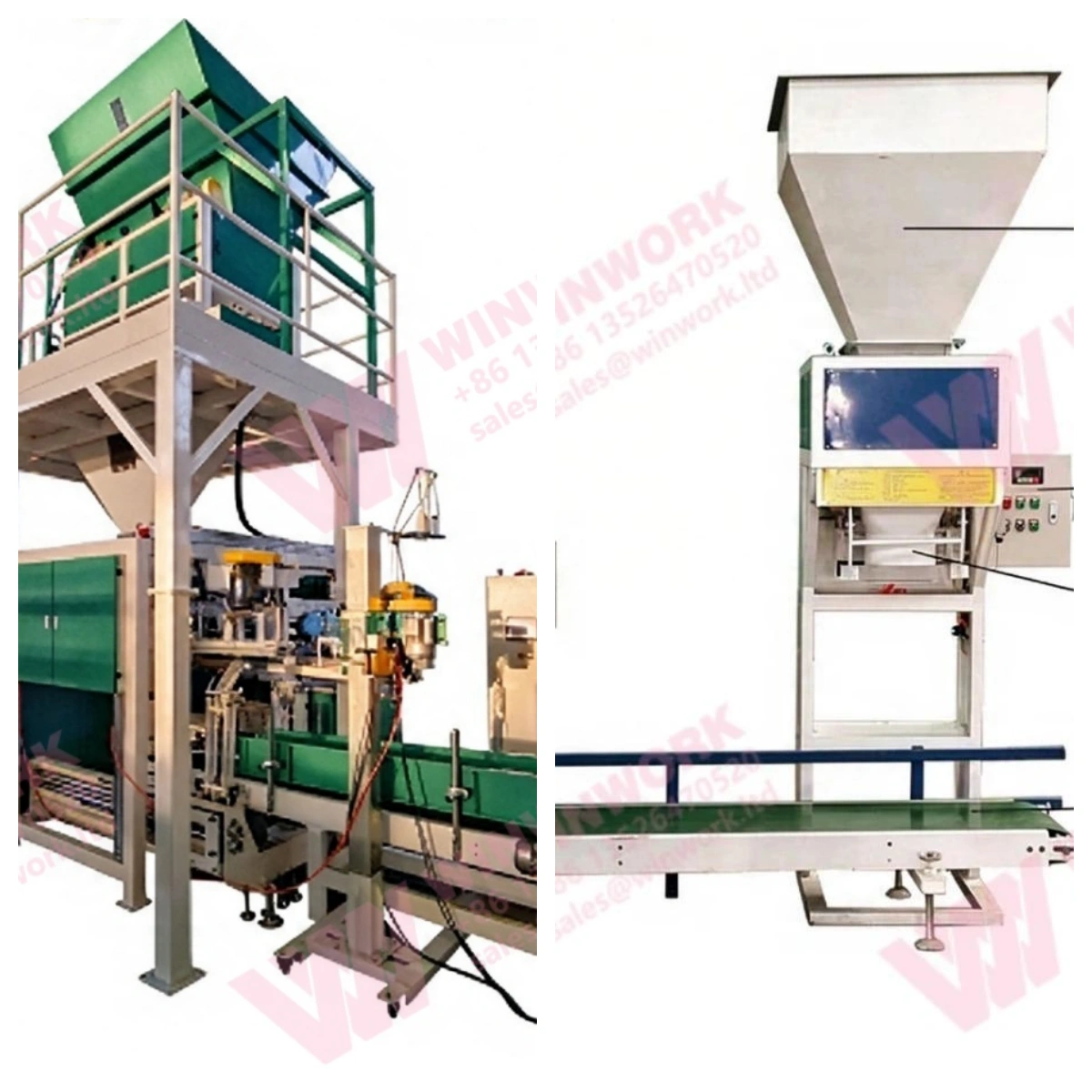
Finally, the finished fertilizer is weighed and packed into suitable bags. Packaging should protect the product from excessive moisture and contamination during storage and transportation.
Not every product requires all these stages. A small compost producer may use a relatively simple process, while a commercial granulated fertilizer operation may need an integrated production line.
Essential Equipment for Organic Fertilizer Manufacturing
Choosing the right equipment is a major decision when planning a fertilizer production project. Buying too many machines too early can increase initial investment without solving the most important production problems.
A typical granulated organic fertilizer production line may include:
- Compost turner: Turns compost piles and helps improve aeration during fermentation.
- Crusher: Breaks down lumps and prepares materials for further processing.
- Mixer: Blends raw materials or additives into a more uniform mixture.
- Granulator: Converts prepared materials into granules of a suitable size.
- Dryer and cooler: Help achieve the required moisture and temperature before storage.
- Screening machine: Separates finished granules according to particle size.
- Conveyors and packaging machine: Support material transfer, weighing, and final packaging.
The exact configuration depends on raw materials, target output, available space, labor costs, and budget. A producer making compost for nearby farms has different equipment needs from a business supplying packaged granules to distributors.
WINWORK’s organic fertilizer production line provides an example of how individual machines can be combined into a coordinated manufacturing process. Equipment can be selected according to the project’s specific requirements.
For entrepreneurs with limited budgets, a low-cost organic fertilizer production line can serve as a reference when comparing essential equipment with more automated configurations.
The goal is to establish a workable production process that meets current demand and can be expanded when business conditions justify the investment.
Common Challenges in Organic Fertilizer Manufacturing
Even with suitable machinery, producers may encounter several challenges during daily operations.
Inconsistent raw materials: Changes in moisture, particle size, or composition can affect fermentation and granulation. Incoming materials should be inspected, and preparation procedures should be standardized.
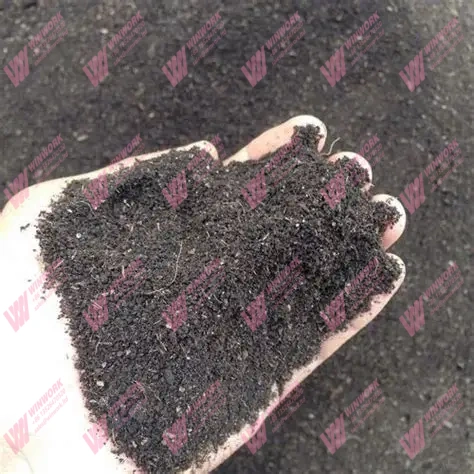
Incomplete composting: Material that has not matured sufficiently may create odor, storage, or product-quality problems. Operators should assess compost maturity instead of relying on time alone.
Weak or irregular granules: Moisture, formulation, particle size, and granulator settings can influence the final shape and strength. Testing different operating conditions may be necessary.
Unexpected operating costs: Electricity, labor, maintenance, transportation, and rejected products all affect profitability. These expenses should be considered before expanding production capacity.
Insufficient quality control: A product that looks uniform may not meet its intended nutrient or moisture specifications. Appropriate testing and documented production procedures can help identify problems before products reach customers.
Successful organic fertilizer manufacturing therefore requires more than purchasing machinery. It also depends on consistent operating practices, trained workers, suitable quality checks, and reliable raw material suppliers.
Developing a Stable Fertilizer Production Business in India
Learning how organic fertilizer manufacturing works is only the beginning. Running a stable business requires repeatable procedures, reliable suppliers, appropriate equipment, and consistent product quality.
If I were developing a small operation into a more established business in India, I would start by recording the quantity and characteristics of each incoming batch of raw materials. I would also document mixing ratios, moisture adjustments, fermentation temperatures, processing conditions, and finished-product test results.
These records help identify why one batch performs differently from another. They also make it easier to train workers, plan production, and estimate operating costs.
Quality control should not stop when compost looks dark or granules appear uniform. Depending on the intended product, relevant checks may include moisture content, nutrient composition, maturity, contamination, and other applicable quality parameters.
Products intended for commercial sale in India must comply with the requirements applicable to their category under the current Fertiliser (Control) Order and related regulations. Producers should verify current standards and registration or licensing obligations with the appropriate authorities.
I would also expand production gradually. Before investing in additional machines, I would confirm that raw materials are consistently available, the existing process is working reliably, and customers need the additional output.
Over time, the objective is to move from solving individual production problems to following a documented process that workers can repeat. This approach makes organic fertilizer manufacturing more predictable and easier to manage.
Conclusion: Building a More Reliable Organic Fertilizer Business
Organic fertilizer manufacturing connects agricultural waste management with the production of useful fertilizer products. However, a successful operation depends on much more than machinery. It requires careful raw material selection, controlled composting, suitable processing equipment, consistent quality checks, and a realistic understanding of local production costs.
For beginners in India, starting with the right materials and a practical production plan can make it easier to build experience before expanding. By improving process control and selecting equipment according to actual needs, a small operation can gradually develop into a stable fertilizer business.
With the right production strategy, organic fertilizer manufacturing can help turn locally available organic resources into more valuable products while supporting a more efficient use of agricultural residues.
Get A Quote