

Introduction
Let’s be honest. If you run a livestock operation, you know the headache. The piles get bigger, the smell gets worse, and the neighbors start complaining. But what if I told you that pile of “waste” is actually a goldmine? We are talking about Producing pellet fertilizer using livestock manure.
This isn’t just about cleaning up your barnyard; it is about transforming a liability into a high-value asset. Producing pellet fertilizer using livestock manure is the process of taking raw animal waste, breaking it down, drying it out, and compressing it into clean, easy-to-handle pellets. It is the ultimate recycling story. Instead of paying to get rid of manure, you start making money by selling a premium product that gardeners and farmers are desperate to buy. If you want to boost your farm’s sustainability and add a serious revenue stream, you need to understand how Producing pellet fertilizer using livestock manure works.
What Exactly Are We Doing Here?
Most people regard feces as garbage and simply have it removed by others, or they bury or pile it up.
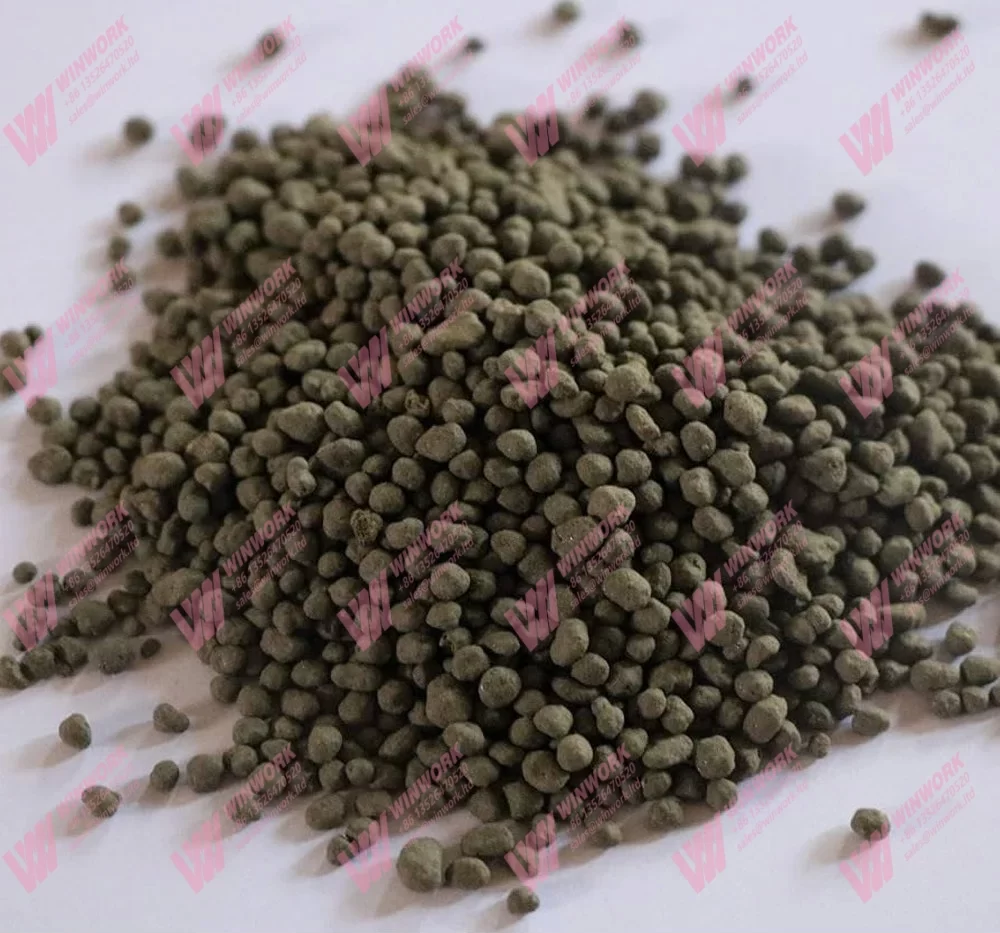
So, what is this process all about? At its core, Producing pellet fertilizer using livestock manure is about concentration and convenience. Raw manure is wet, heavy, and hard to transport. It also smells terrible and can harbor pathogens. By processing it, we remove the water, kill the bad bugs, and pack all that rich organic matter into a small, dense pellet.
Think of it like this: Raw manure is like a fresh ear of corn. Producing pellet fertilizer using livestock manure is like turning that corn into corn syrup or high-fructose sweetener. You take the good stuff, refine it, and package it so it is easy to use and incredibly effective. The end result is a uniform, dry pellet that looks professional and acts as a slow-release powerhouse for plants.
Why Bother? The Big Benefits of Producing Pellet Fertilizer Using Livestock Manure
You might be asking, “Why go through all the trouble?” Here is the straight talk on why Producing pellet fertilizer using livestock manure is a no-brainer for modern agriculture.
It Solves Your Waste Problem
This is the obvious one. Instead of managing a mountain of waste that attracts flies and creates runoff issues, you are processing it into a product. Producing pellet fertilizer using livestock manure drastically reduces the volume of waste you have to deal with on-site.
You Can Charge More
Loose, raw manure is cheap. People might take it for free, but they won’t pay much. Pellets, however, are a different story. Because they are dried, odorless, and nutrient-stable, you can sell them at a premium price. Producing pellet fertilizer using livestock manure allows you to capture the value of the organic matter and the nutrients (NPK) locked inside.
It’s Better for the Soil
When you spread raw manure, it can be “hot”—meaning it has too much nitrogen and can burn plants. It also releases nutrients all at once, which plants can’t always use. Producing pellet fertilizer using livestock manure creates a slow-release effect. The pellet breaks down slowly in the soil, feeding the plants over months, not days. This is what gardeners call “black gold.”
Easy Storage and Transport
Try shipping a truckload of wet cow manure across the country. It’s heavy, it leaks, and it stinks. Now try shipping pellets. They are light, dry, and clean. Producing pellet fertilizer using livestock manure opens up markets far beyond your local county. You can sell to urban gardeners or organic farms hundreds of miles away.
How Does It Work? The Nuts and Bolts
Alright, let’s get into the dirt. How do you actually turn a sloppy mess into a perfect pellet? The process of Producing pellet fertilizer using livestock manure follows a logical path from the barn floor to the bag.
Step 1: Solid-Liquid Separation (The Squeeze)
Fresh manure is usually too wet to work with right away. The first step in Producing pellet fertilizer using livestock manure is dewatering. You run the manure through a screw press or a separator. This squeezes out the excess liquid (which can be used for biogas or lagoon storage) and leaves you with a semi-solid cake. You want the moisture content down to around 60-70% to start.
Step 2: Composting and Fermentation (The Magic)
This is where the “cooking” happens. You mix that semi-solid manure with a carbon source—usually straw, sawdust, or wood chips. This balances the carbon-to-nitrogen ratio. You pile it up and let it ferment. You have to turn the pile regularly to get oxygen in there. This heat (reaching 60-70°C) kills weed seeds and pathogens. Proper fermentation is critical for Producing pellet fertilizer using livestock manure that is safe and high-quality.
Crawler compost turner is an advanced compost turning equipment, specially designed for compost fermentation process, with the advantages of high efficiency, stability, easy operation and so on.
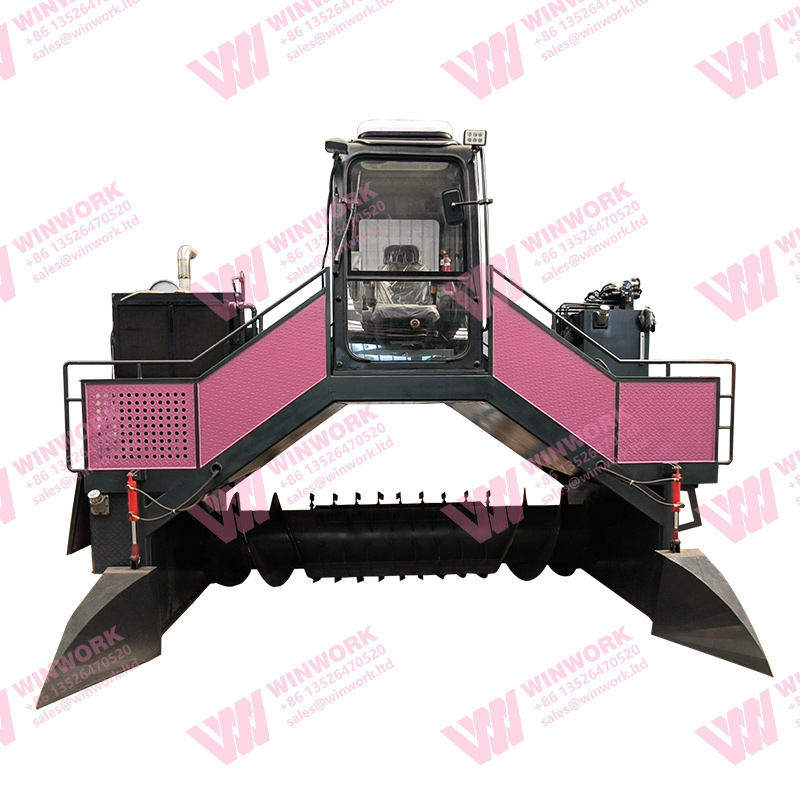
Crawler compost tumbler realizes automatic operation through crawler walking system, which is the necessary equipment for producing organic fertilizer granules and widely used in organic fertilizer production line.
Crawler compost turner can not only quickly improve the fermentation efficiency of materials, but also effectively improve the quality of compost, is the first choice of modern compost production equipment.
The Horizontal Fermentation Tank is a state-of-the-art equipment designed for the effective aerobic fermentation of organic waste, agricultural residues, sludge, and other compostable materials. Unlike vertical tanks, the horizontal design allows for larger capacity and more uniform fermentation.
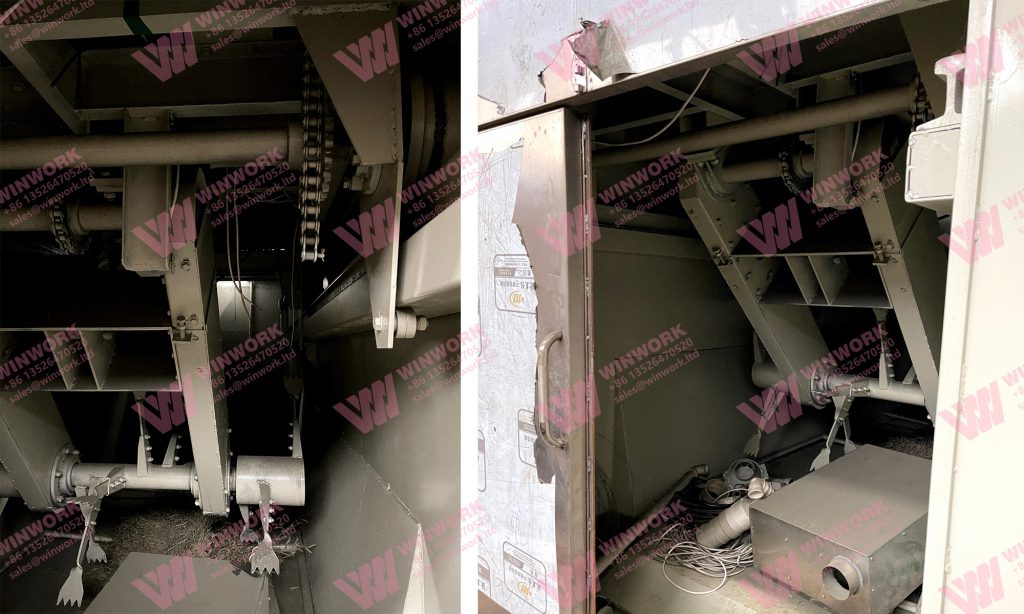
The Horizontal Fermentation Tank is widely used in the production of organic fertilizers and compost, offering numerous advantages in terms of efficiency, control, and environmental impact.
Step 3: Crushing and Mixing (The Prep)
Once the compost is mature (usually after a few weeks), it needs to be broken down. You run it through a crusher to turn the clumpy compost into a fine powder. This is also the stage where you might add other goodies—like phosphate rock or potash—to boost the nutrient profile. Producing pellet fertilizer using livestock manure often involves this customization step to meet specific fertilizer grades.
Horizontal crusher, also known as horizontal semi-wet material crusher, is a kind of crushing equipment specially designed to deal with high humidity, organic materials, especially suitable for organic fertilizer production in the material pre-treatment.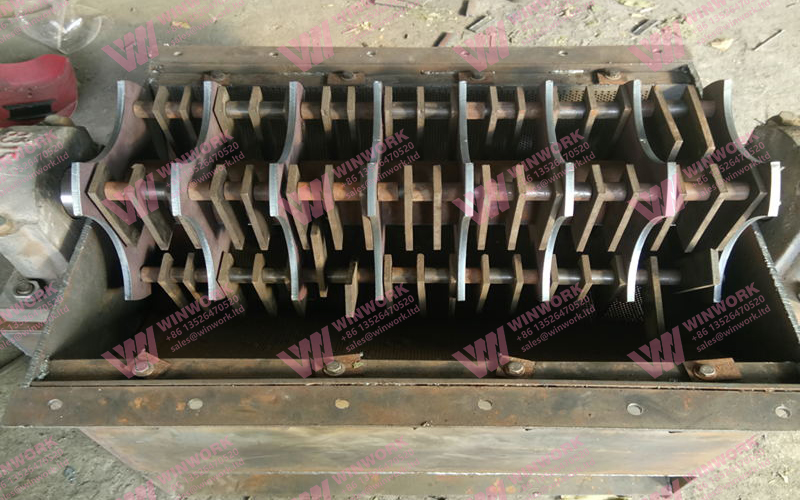
Horizontal crusher adopts a unique double-stage rotor structure, can effectively deal with high humidity materials, such as livestock and poultry manure, city garbage, crop residues and so on. It has high crushing efficiency, even material size, no blockage, no sticking phenomenon, and is one of the indispensable key equipments in organic fertilizer production line.
Step 4: Granulation (The Transformation)
This is the heart of the operation. The fine powder is fed into a granulator. There are a few ways to do this. You can use a disc pan (where material rolls around like a snowball), a rotary drum (where it tumbles), or a pellet mill (where it is forced through a die). Regardless of the machine, the goal of Producing pellet fertilizer using livestock manure at this stage is to create a solid, round or cylindrical shape.
Rotary Drum and Churning two-in-one granulator is a kind of high-efficiency equipment integrating rotary drum granulator and churning tooth granulator, which is widely used in fertilizer production line.
Rotary Drum and Churning two-in-one granulator combines the advantages of rotary drum granulator and stirring tooth granulator, featuring fast granulation speed, even granules, smooth operation, low energy consumption and long service life.
Two-in-one granulator is suitable for cold and hot granulation as well as large-scale production of high, medium and low concentration compound fertilizers, which is the ideal choice for modern agriculture and industry to improve the efficiency and quality of fertilizer production.
Step 5: Drying and Cooling (The Finish)
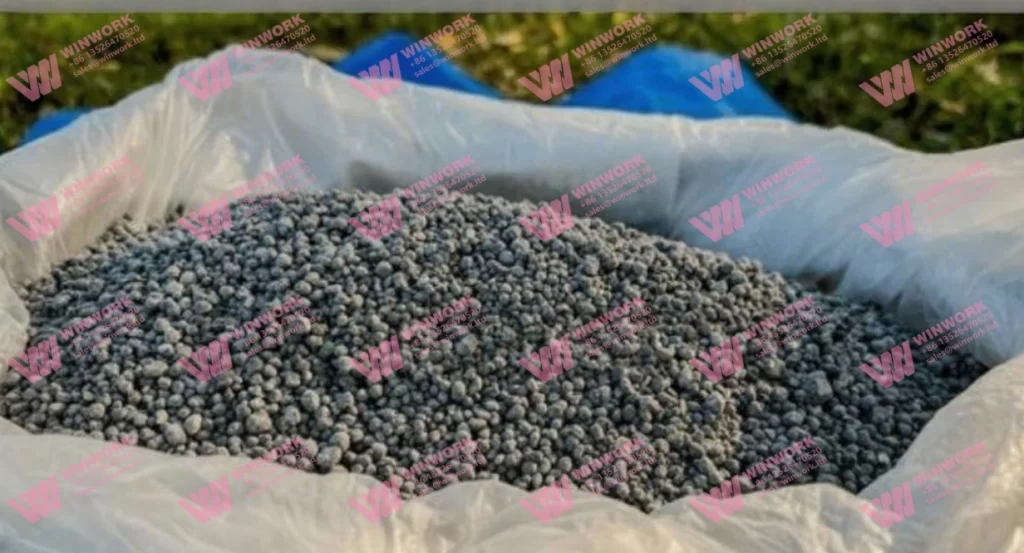
Fresh pellets come out of the granulator with too much moisture. They will mold if you bag them like that. So, you send them through a rotary dryer (using hot air) to get the moisture content down below 15% or even 10%. Right after drying, they are hot, so they go through a cooler. This step in Producing pellet fertilizer using livestock manure ensures the product is stable and won’t degrade in the bag.
Step 6: Screening and Packaging
Not every pellet comes out perfect. Some are dust, some are too big. You run them over a screen. The good pellets go forward; the rejects go back to the crusher to be made again. Finally, the perfect pellets are weighed and bagged. Producing pellet fertilizer using livestock manure ends with a professional package ready for the shelf.
The Gear You Need: What Equipment is Essential?
You can’t do this with a shovel and a dream. Producing pellet fertilizer using livestock manure requires some serious hardware. Here is the lineup you’ll need to get the job done right.
The Dewatering Machine: Usually a screw press separator. This is non-negotiable for starting the process with wet manure.
The Compost Turner: This can be a simple windrow turner (a machine that straddles the pile and mixes it) or a fermentation tank for faster results. This is where the biological work happens.
The Crusher/Grinder: You need a semi-wet material crusher. It handles the fermented material and turns it into a consistent powder without clogging up.
The Mixer: A horizontal ribbon mixer or a double-shaft mixer. This ensures your manure powder and any additives are married together perfectly.
The Granulator: This is your money maker. For organic manure, a disc granulator or a rotary drum granulator is common because they handle the fibrous nature of manure well.
The Dryer and Cooler: A rotary dryer is essential for removing moisture, and a counter-flow cooler is needed to bring the temperature down safely.
The Screener: A rotary drum screen or a vibrating screen to separate the keepers from the rejects.
The Packaging Machine: An automatic bagging scale that weighs and seals the bags so you are ready to sell.
Each piece of this equipment plays a vital role. Skimping on the crusher means your pellets will be lumpy. Skimping on the dryer means your product will rot in the bag. Producing pellet fertilizer using livestock manure is a chain, and every link needs to be strong.
FAQ: Your Questions About Producing Pellet Fertilizer Using Livestock Manure Answered
We know you’ve got questions. Here are the answers to what people ask us most about Producing pellet fertilizer using livestock manure.
Q: Can I use any kind of manure?
A: Pretty much! Chicken manure is the most popular because it is high in nitrogen. Cow and horse manure are great because they have good bedding (carbon) already mixed in. Even sheep and goat manure work well. The principles of Producing pellet fertilizer using livestock manure apply to almost any animal waste, through the recipe (how much sawdust you add) will change.
Q: Is the smell really gone?
A: Yes. That’s one of the best parts. The high-heat fermentation kills the odor-causing bacteria. By the time you are Producing pellet fertilizer using livestock manure pellets, the end product has an earthy, soil-like smell. It doesn’t stink up a garden or a storage shed.
Q: Do I need to add chemical fertilizers to the pellets?
A: It depends on your market. If you want to sell “Organic Fertilizer,” you stick to just manure and natural amendments like rock phosphate. If you want a higher NPK number, you can blend in some urea or potash during the mixing stage. Producing pellet fertilizer using livestock manure gives you the flexibility to make what your customers want.
Q: How much does it cost to start?
A: It varies based on how much you want to make. A small line for a family farm is different from a commercial plant. But remember, you are turning a disposal cost into a product cost. Many farmers find that Producing pellet fertilizer using livestock manure pays for itself surprisingly fast because they stop paying for waste removal and start earning income from sales.
Q: Can I use the pellets on my own crops?
A: Absolutely. In fact, that’s often the best way to start. You can use the pellets to fertilize your own fields, reducing your need to buy expensive chemical fertilizers. Producing pellet fertilizer using livestock manure for on-farm use is a classic “circular economy” move that saves you a ton of money.
Conclusion: Don’t Wait, Pelletize
The writing is on the wall. Regulations on manure management are getting stricter, and the demand for organic, sustainable fertilizers is skyrocketing. Producing pellet fertilizer using livestock manure isn’t just a trend; it’s the future of responsible farming.
By embracing this technology, you are cleaning up your operation, creating a valuable product, and closing the nutrient loop on your farm. It’s time to stop looking at manure as a problem to be managed and start seeing it as a resource to be harvested. Make the switch today, and turn that pile into profit.
For more details, please feel free to contact us.
Email: sales@lanesvc.com
Contact number: +8613526470520
Whatsapp: +8613526470520

Get A Quote