


Introduction
Ever wondered how that fine, messy powder transforms into the perfect, uniform granules you need for your industrial process?
It is obvious that merely transforming the powder into a solid ball is not feasible. So how to make it? Just like kneading flour, we would think of adding water to it. The answer lies in the Slurry granulation and drying method. This powerful technique is the unsung hero of industries ranging from fertilizers to pharmaceuticals, efficiently combining the creation of particles with their immediate drying in one seamless flow. If you are looking to boost your production efficiency and product quality, understanding the Slurry granulation and drying method is not just an option—it is a necessity.
What is the Slurry Granulation and Drying Method?
In the simplest terms, the Slurry granulation and drying method is a process that takes a liquid or semi-liquid mixture (called a slurry) and turns it into solid, dry granules. Think of it like making tiny, perfectly round meatballs, but instead of meat, you are using a chemical slurry, and instead of an oven, you are using hot air to cook and dry them instantly. If just granulate the material and it will broken because of the wet moisture.
The “Slurry granulation and drying method” is unique because it doesn’t treat granulation and drying as separate steps. Instead, it performs both simultaneously. The liquid slurry is sprayed or “jetted” into a stream of hot air. As the droplets fly through the air, the water or solvent evaporates almost instantly, leaving behind a solid, dry granule. This one-step magic is what makes the Slurry granulation and drying method so incredibly efficient for large-scale manufacturing.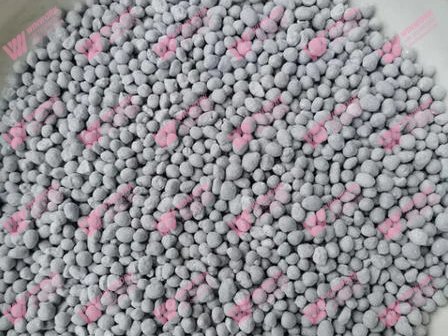
Is It Granulation or Drying?
This is a common question, and the answer is: it is both! The Slurry granulation and drying method is a hybrid process.
Granulation: This happens when the liquid slurry is atomized (broken up) into tiny droplets. The surface tension of the liquid helps these droplets form into near-perfect spheres.
Double roller granulator is the key equipment in compound fertilizer production line and npk production line, featuring advanced technology, reasonable design, compact structure, strong practicability and low energy consumption.
Double roller granulator and the corresponding auxiliary equipment supporting, can form a small production line, with a certain capacity, to achieve continuous, mechanized production. Roller extrusion granulator adopts superior formula, no need to dry, can be produced at room temperature. The product can be rolled and shaped once, so that its quality can meet the requirements of technical indexes of compound fertilizer.
Double roller granulator is suitable for the production of high, medium and low concentration of special compound fertilizers required by various crops, which is a newer product of energy saving and consumption reduction in the compound fertilizer industry.
Drying: Simultaneously, the heat from the surrounding air causes the liquid inside those droplets to evaporate.
The rotary drying and cooling machine is a kind of high-efficiency equipment integrating drying and cooling, which is widely used in chemical industry, fertilizer, mining industry, building materials and other industries.
The rotary drying and cooling machine realizes the continuous drying and cooling process of materials in the same body, which saves space and equipment investment and simplifies the process.
The rotary drying and cooling machine has the advantages of large processing capacity, strong adaptability, easy operation and maintenance, energy saving and environmental protection, etc. It is an indispensable and important equipment in the production of fertilizers.
So, when you use the Slurry granulation and drying method, you are literally forming the particle and removing its moisture at the exact same time. It’s like a chef who seasons, cooks, and plates a steak all in one pan—it saves time, energy, and equipment.
How Does the Slurry Granulation and Drying Method Work?
The working principle of the Slurry granulation and drying method is a fascinating dance of physics and engineering. Here is a step-by-step breakdown of how it turns a messy liquid into valuable dry goods:
Preparation: First, your raw powder materials are mixed with a liquid (usually water or a solvent) to create a smooth, pumpable slurry. This is the “goo” we mentioned earlier.
Atomization: This is the heart of the Slurry granulation and drying method. The slurry is forced through a nozzle or a spinning disk at high speed. This breaks the liquid stream into millions of tiny droplets. Imagine a high-pressure garden hose creating a fine mist—that’s the idea, but on an industrial scale.
The Hot Air Meeting: As these droplets are sprayed into the drying chamber, they meet a powerful current of hot air. The temperature and airflow are carefully controlled.
Flash Evaporation: Because the droplets have a very large surface area relative to their size, the heat penetrates instantly. The liquid evaporates in a matter of seconds—a process called “flash evaporation.” This leaves behind a solid granule.
Collection: The now-dry granules fall to the bottom of the chamber or are carried by the air to a collection cyclone, ready for packaging.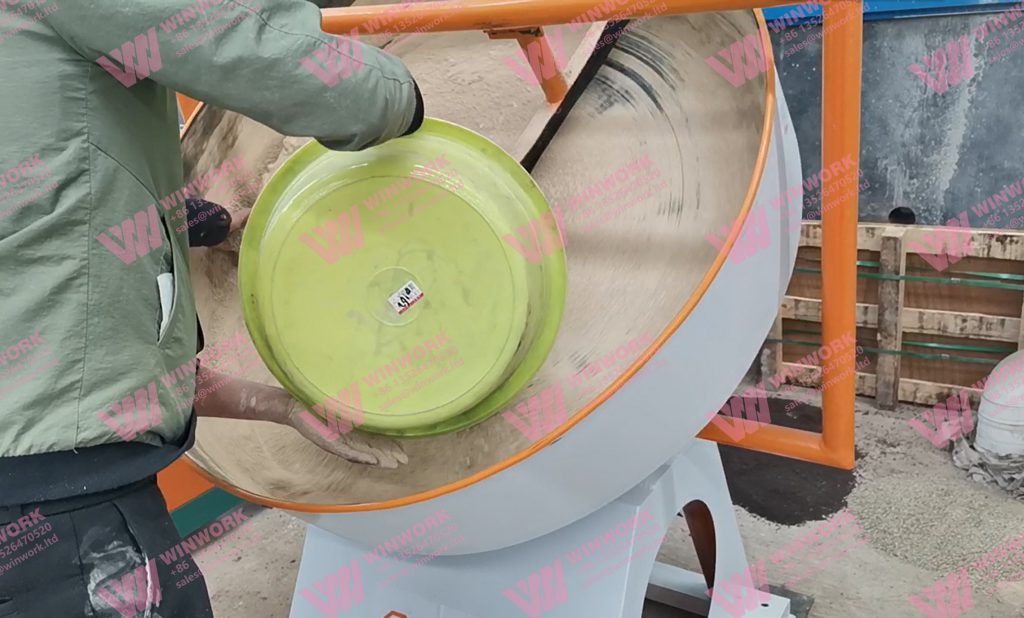
Other Granulation and Drying Methods: How Do They Compare?
While the Slurry granulation and drying method is a top choice, it is not the only way to skin a cat. Here are a few other common methods and how they stack up:
Fluid Bed Granulation: This method uses hot air blowing up through a bed of powder to make it “fluid” or float. A binder is sprayed onto the floating powder to make it stick together. Unlike the Slurry granulation and drying method, this starts with dry powder and adds liquid to it. It is great for creating porous granules but can be slower for high-volume liquid feedstocks.
Extrusion and Spheronization: This is a mechanical process where wet mass is forced through a screen to make rods, which are then rolled into spheres. It is very precise but involves more mechanical steps and usually requires a separate, lengthy drying phase afterward. The Slurry granulation and drying method is generally faster and more continuous.
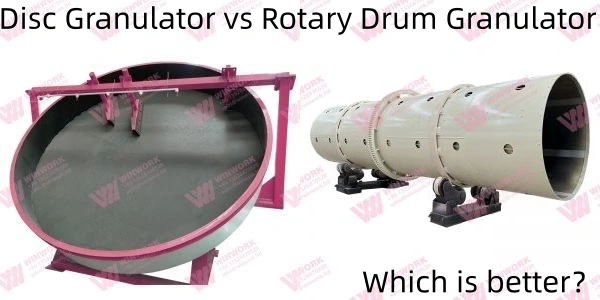
Pan (Disc) Granulation: This uses a rotating disc to roll powder into balls, similar to making a snowball. It is cost-effective but often produces irregular shapes and requires a separate rotary dryer, making it less efficient than the Slurry granulation and drying method.
The Necessity and Benefits of the Equipment
Why should you invest in equipment for the Slurry granulation and drying method? Here are the hard-hitting benefits that make it a no-brainer for many businesses:
Speed and Efficiency: The Slurry granulation and drying method is incredibly fast. Because drying happens in seconds, your production cycle time is slashed. You can move from raw material to finished product in one continuous line.
Product Quality: The granules produced are typically spherical, free-flowing, and have excellent solubility (if needed). The Slurry granulation and drying method gives you tight control over particle size, ensuring your customers get a consistent product every time.
Space Saving: Since it combines two major processes into one machine, you save valuable factory floor space. You don’t need a separate granulator and a separate dryer; the Slurry granulation and drying method does it all.
Reduced Labor and Energy: Fewer machines mean less maintenance and lower energy bills. The Slurry granulation and drying method is designed for thermal efficiency, capturing and reusing heat whenever possible.
Versatility: Whether you are making detergents, ceramic powders, or agricultural chemicals, the Slurry granulation and drying method can be tuned to handle a wide variety of slurry viscosities and compositions.
FAQ: Your Questions About the Slurry Granulation and Drying Method Answered
We know you have questions. Here are the answers to what people ask us most about the Slurry granulation and drying method.
Q: Is the Slurry Granulation and Drying Method suitable for heat-sensitive materials?
A: Yes! One of the superpowers of the Slurry granulation and drying method is that the evaporation process is so fast it actually cools the granule. This means the material itself never gets as hot as the surrounding air, protecting heat-sensitive ingredients like certain enzymes or vitamins.
Q: What kind of maintenance does the equipment need?
A: The most critical part is the atomizer (nozzle or spinning disk). It needs to be checked and cleaned regularly to prevent clogging. However, modern systems for the Slurry granulation and drying method are designed for easy access, making maintenance straightforward.
Q: Can I adjust the size of the granules?
A: Absolutely. The size of the granules in the Slurry granulation and drying method is controlled by several factors: the size of the nozzle, the pressure of the pump, the speed of the spinning disk, and the solid content of your slurry. It offers great flexibility.
Q: Is it expensive to run?
A: While the initial investment can be significant, the Slurry granulation and drying method pays for itself through lower labor costs, reduced energy consumption per ton of product, and minimal waste. It is an investment in efficiency.
Q: What happens to the air after it dries the granules?
A: The air, now carrying moisture and possibly some fine dust, passes through a cyclone separator and often a bag filter. This ensures that any escaped particles are captured and returned to the process, making the Slurry granulation and drying method an environmentally friendly choice.
Conclusion: Is the Slurry Granulation and Drying Method Right for You?
If you are dealing with liquid or slurry-based raw materials and need a fast, efficient, and high-quality way to turn them into dry granules, the Slurry granulation and drying method is likely your best bet. It streamlines your production, improves your product’s marketability, and can significantly reduce your operational costs.
The Slurry granulation and drying method represents the pinnacle of process engineering for many industries, blending the art of particle formation with the science of thermal dynamics. By adopting this technology, you are not just buying a machine; you are upgrading your entire production philosophy to one that values speed, quality, and efficiency.
For more details, please feel free to contact us.
Email: sales@lanesvc.com
Contact number: +8613526470520
Whatsapp: +8613526470520
Get A Quote