

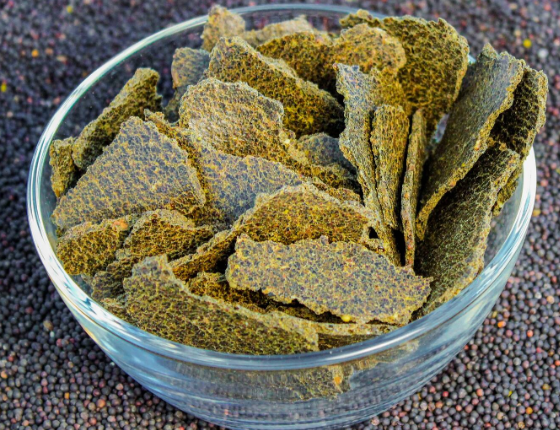
Walk into any fertilizer plant or farm storage shed, and you’ll see it: bags of what should be free-flowing granules, but instead, they’re full of rock-hard clumps. Fertilizer caking is the silent profit killer in the industry. It jams equipment, ruins spread patterns, frustrates farmers, and turns saleable product into rejected waste. But you don’t have to live with it. The practical, proven answer is Using crusher to handle caked fertilizer.
This isn’t about complicated chemistry or expensive retrofits. Using crusher to handle caked fertilizer means putting a straightforward piece of machinery—a fertilizer crusher or lump breaker—into your process to smash those clumps back into usable particles. Whether it’s urea that’s sucked moisture from the air, compound fertilizer pressed into blocks during shipping, or organic compost that’s set like concrete after fermentation, the right crusher can save the day. If you want to protect product quality, keep your machinery running, and stop throwing money in the dumpster, you need to understand how Using crusher to handle caked fertilizer works.
What Exactly Is “Caked Fertilizer” and Why Does It Happen?
Before we fix it, let’s name the problem. Caked fertilizer is simply granulated or powdered fertilizer that has lumped together into a solid or semi-solid mass.
It happens for a few common reasons:
Moisture: The biggest culprit. Many fertilizers (especially urea, NPK blends, and ammonium-based products) are hygroscopic—they pull moisture from the air. Add a little humidity, and the outer layer of the granules dissolves slightly, then re-hardens as a bridge between them.
Pressure: Stacking too many bags high in storage, or the weight of material in a silo, presses granules together. Over time, they fuse.
Temperature swings: Warm fertilizer cooling down can cause condensation on the particles, leading to caking.
Fine dust: Excess powder in the product fills the gaps between granules and acts like cement when it gets damp.
The result is a product that won’t flow through a hopper, won’t spread evenly from a spinner, and looks terrible to a customer. That’s why Using crusher to handle caked fertilizer isn’t just a nice option—for many operations, it’s a necessity.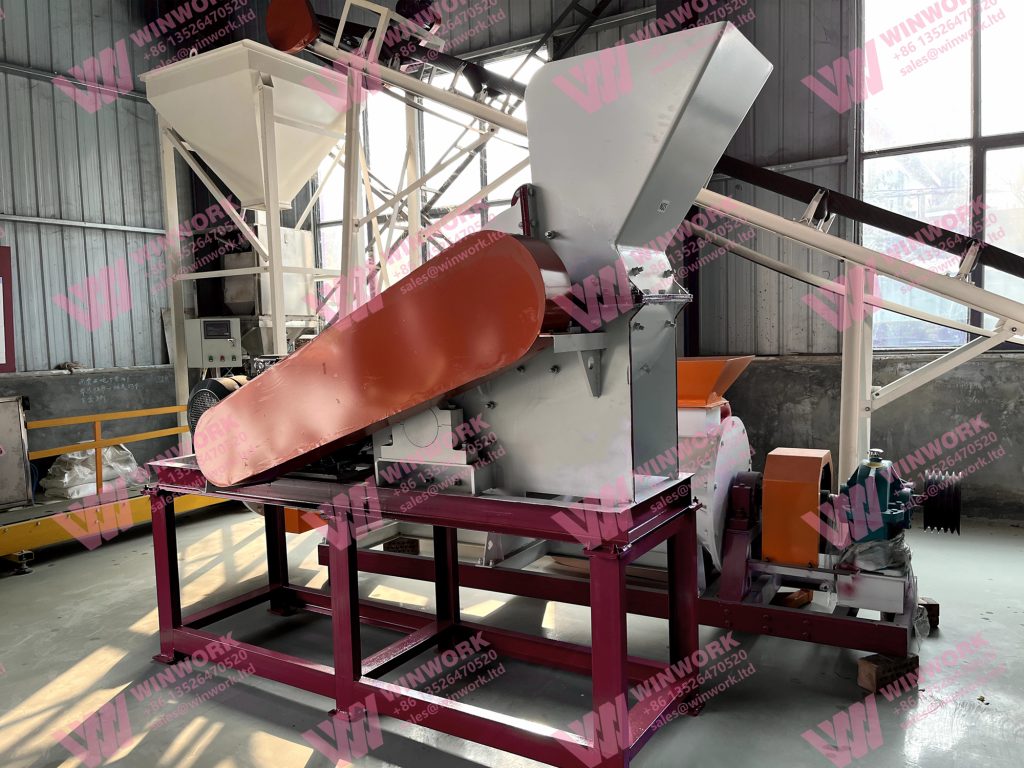
Why You Absolutely Need to Deal With Caking (The Benefits of Using Crusher to Handle Caked Fertilizer)
You might think, “I’ll just sell it as is, or my customer can break it up.” That’s a risky game. Here’s why Using crusher to handle caked fertilizer is a smart move:
You Salvage Rejected Material
This is the most direct win. Instead of discarding caked bags or off-spec return material from the field, you run it through a crusher and put it back into the process. Using crusher to handle caked fertilizer turns a write-off into reusable raw material or sellable product.
You Protect Your Equipment Downstream
Try feeding a lump of fertilizer into a precision granulator, a blender, or a packaging machine’s auger. It jams, it damages the screws, it causes shutdowns. Using crusher to handle caked fertilizer before these points ensures a consistent, free-flowing feed, reducing wear and tear and unplanned downtime.
You Ensure Spreading Accuracy
A farmer paying for a ton of fertilizer expects it to spread evenly across their field. Lumps break apart unpredictably in the spreader, leading to streaks of over-fertilization and streaks of nothing. Using crusher to handle caked fertilizer guarantees the particle size is uniform again, so the application is consistent.
It’s Fast, Simple, and Cost-Effective
You don’t need a massive new building or a team of engineers. A crusher is often a compact, bolt-on solution. The labor and energy cost of Using crusher to handle caked fertilizer is tiny compared to the value of the material you save and the problems you avoid.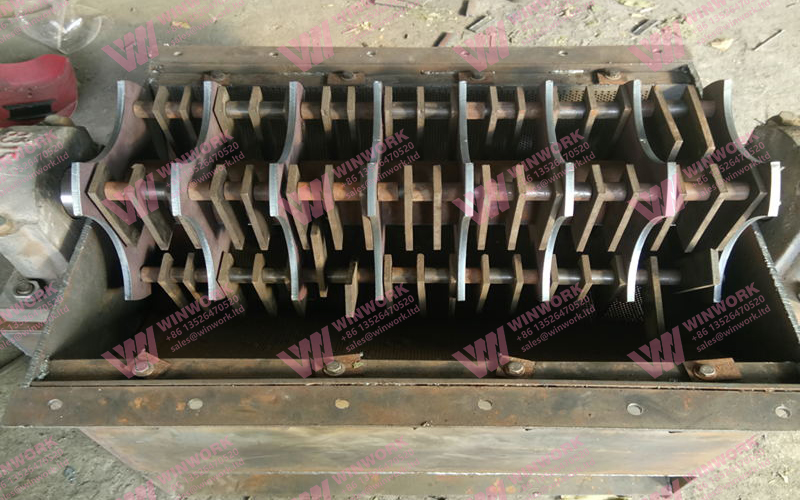
How Does It Work? The Nuts and Bolts of Using Crusher to Handle Caked Fertilizer
Alright, let’s talk mechanics. How does the machine actually break the lumps without turning everything into dust? The principle of Using crusher to handle caked fertilizer relies on applying controlled mechanical force—impact, shear, compression, or a combination—to weaken the bonds between the caked particles.
Step 1: Feeding
The caked material (either whole bags emptied, or lumps from a screen/reject conveyor) is fed into the crusher’s hopper. This can be done by hand for small batches, or via a conveyor for continuous operation.
Step 2: The Force Application
Inside the crushing chamber, the lump encounters the working parts of the machine. The type of force depends on the crusher design:
Impact: A high-speed hammer, chain, or bar strikes the lump, shattering it (common in hammer mills and chain crushers).
Shear: Rotating teeth or blades grab and tear the lump apart (common in toothed-roll crushers and some cage mills).
Compression: Two surfaces squeeze the lump until it breaks (common in roller crushers).
The goal of Using crusher to handle caked fertilizer is to apply enough force to break the caking bonds but not so much that the original granules are pulverized into useless fine powder.
Step 3: Size Control and Discharge
Many crushers have a screen, grate, or adjustable gap at the bottom. Particles smaller than the opening fall through. Oversized pieces remain in the chamber to be struck or squeezed again. This ensures the output of Using crusher to handle caked fertilizer is a consistent size, usually close to the original granule size (e.g., 2-5 mm for many NPKs).
Step 4: Integration
The crushed material is then conveyed to a mixer, a granulator, a screen (to remove any accidental fines), or directly to packaging. Using crusher to handle caked fertilizer becomes a seamless step in the flow.
The Gear You Need: What Equipment is Used?
Not all crushers are created equal for this job. Using crusher to handle caked fertilizer typically involves one of these common types:
Chain Crusher (or Link Crusher): This is a favorite for many fertilizer plants. It has one or two rotating shafts with heavy chains or hammers attached. The chains swing out by centrifugal force and smash the lumps. It’s robust, handles tough lumps, and is relatively forgiving. Chain crushers are excellent for Using crusher to handle caked fertilizer like urea, NPK, and some organics.
Toothed Roll (or Double Roll) Crusher: Two cylinders with teeth rotate towards each other. The lumps are drawn in and crushed by the interlocking teeth. This method is often gentler and produces less fine dust, making it great for Using crusher to handle caked fertilizer where you want to preserve granule integrity, like for coatings or blends.
Cage Crusher (or Cage Mill): Two cages of bars rotate in opposite directions at high speed. Material is fed into the center and subjected to multiple high-speed impacts as it’s flung between the cages. It’s very effective for brittle materials and can produce a fine, uniform product if needed, but can be more aggressive. Useful for Using crusher to handle caked fertilizer that needs further size reduction, not just de-lumping.
Hammer Mill (with careful setup): A classic, but can easily over-grind fertilizer into powder if the screen holes are too small or the hammers too aggressive. Can be used for Using cruser to handle caked fertilizer if configured correctly (larger screen, maybe a lower speed), often for softer organic cakes.
Single Shaft or Twin Shaft Lump Breaker: Simpler machines with slow-speed rotating shafts with protruding pegs or blades. They are specifically designed just for breaking lumps, not fine grinding. They are a straightforward choice for Using crusher to handle caked fertilizer at bag-dumping stations or silo outlets.
The choice depends on your material (how hard the cake is, how fragile the granule), your desired output size, and your throughput needs. The key is that Using crusher to handle caked fertilizer requires a machine selected for the task, not just any old rock crusher.
Detailed Display
Horizontal crusher, also known as horizontal semi-wet material crusher, is a kind of crushing equipment specially designed to deal with high humidity, organic materials, especially suitable for organic fertilizer production in the material pre-treatment.
Horizontal crusher adopts a unique double-stage rotor structure, can effectively deal with high humidity materials, such as livestock and poultry manure, city garbage, crop residues and so on. It has high crushing efficiency, even material size, no blockage, no sticking phenomenon, and is one of the indispensable key equipments in organic fertilizer production line.
Hammer crusher is a kind of equipment widely used in compound fertilizer production line, which is also suitable for crushing medium hardness and brittle materials in mining, cement, metallurgy, chemical industry and other industries.
The hammer crusher utilizes the high-speed rotating hammer head to impact, shear, tear and grind the material, so that the material is crushed into the required particle size.
Hammer crusher has simple structure, high production efficiency, large crushing ratio, uniform size of the discharged material, which is the ideal crushing equipment in industrial production.
Vertical crusher can crush the harder ore materials, is widely used in compound fertilizer production line and npk fertilizer production line.
Vertical crusher is a kind of high-efficiency and energy-saving crushing equipment, specially designed for all kinds of medium and low hardness materials, widely used in mining, chemical industry, cement, building materials and other industries. The equipment has a compact structure, covers an area of small, simple operation, easy maintenance, with a large ratio of crushing, low energy consumption, uniformity of the material size and other characteristics. Vertical crusher is especially suitable for fine crushing of brittle materials, which is the ideal choice for realizing efficient pulverizing operation.
FAQ: Your Questions About Using Crusher to Handle Caked Fertilizer Answered
We know you’ve got questions. Here are the answers to what people ask us most about Using crusher to handle caked fertilizer.
Q: Won’t crushing the cakes just create a lot of dust and fine powder?
A: It can, if you use the wrong machine or settings. That’s why selecting the right type of crusher is important. Toothed roll crushers and well-adjusted chain crushers are designed to break the lumps with minimal over-grinding. Also, placing a screen after the crusher to remove fines is standard practice when Using crusher to handle caked fertilizer. The goal is to get back to the original granule size, not make dust.
Q: Can I use the same crusher for urea and for organic fertilizer cakes?
A: Often, yes, but you may need to adjust settings. Urea cakes can be hard but are brittle; organic cakes (like compost) can be tougher and more fibrous. A chain crusher or a toothed roll crusher with adjustable gap is usually versatile enough for Using crusher to handle caked fertilizer across different types. You might slow the speed or increase the clearance for softer organic cakes.
Q: Where in my process should I install the crusher?
A: Common points are: 1) At the bag-dumping station, to crush lumps before they enter a mixer or line; 2) After a screening machine, to crush oversized lumps rejected from the final product; 3) Before a granulator, to crush returned off-spec material. The best spot for Using crusher to handle caked fertilizer depends on where the caking problem is most critical to your flow.
Q: Is it a dusty operation?
A: It can be, especially with impact crushers. That’s why many modern crushers for Using crusher to handle caked fertilizer are enclosed and can be connected to a dust collection system (like a cyclone or baghouse). This keeps the workspace clean and safe.
Q: How much maintenance do these crushers need?
A: They are generally robust. Chains, hammers, teeth, and rolls will wear and need eventual replacement. However, because fertilizer is not usually as abrasive as rock or ore, wear life can be good. The key maintenance for Using crusher to handle caked fertilizer is checking for buildup (especially with sticky organics) and ensuring moving parts are lubricated.
Conclusion: Break the Cycle of Waste
Fertilizer caking is inevitable in many operations, but letting it disrupt your business is not. Using crusher to handle caked fertilizer is a practical, proven, and affordable way to take control.
By installing the right crusher in the right place, you salvage material, protect your downstream equipment, ensure product quality, and keep your line running smoothly. It’s a small investment that pays for itself quickly in saved product and avoided headaches. Don’t let another lump jam your auger or another batch get rejected. Embrace Using crusher to handle caked fertilizer, and keep your product—and your profits—flowing freely.
For more details, please feel free to contact us.
Email: sales@lanesvc.com
Contact number: +8613526470520
Whatsapp: +8613526470520

Get A Quote