

Walk into any busy woodshop, metal fab plant, or fertilizer mixing line, and you’ll see it immediately: a haze in the air, a layer of grit on every flat surface, and workers wiping their noses with black-streaked sleeves. Dust isn’t just a nuisance; it’s a silent killer of productivity, equipment, and lungs. You can sweep the floor twice a day, but that doesn’t stop the microscopic particles floating in the air from doing their damage. The practical, no-nonsense solution isn’t more brooms—it’s Using dust collector to handle workshop dust.
This isn’t about hanging a filter on a ceiling fan. Using dust collector to handle workshop dust means installing a engineered system that captures particles at the source, pulls them through a controlled airstream, separates them from the air, and deposits them in a container while returning clean air to the room or venting it safely outside. It is the difference between a shop you tolerate and a workspace that actually protects your people and your machinery. If you are serious about running a professional operation, understanding how Using dust collector to handle workshop dust works isn’t optional—it’s foundational.
What Exactly Are We Dealing With? (The Nature of Workshop Dust)
We all know that the dust is very dangerous for both human body and the precise machines. So it is very important for us to fix the problem.
Before we fix it, let’s name the enemy. “Workshop dust” isn’t just one thing. It changes completely depending on what you’re cutting, grinding, or mixing:
Wood Dust: From saws and sanders. Ranges from big chips to “fine dust” (under 10 microns) that stays airborne for hours. Some wood dust is a known carcinogen.
Metal Dust & Fines: From grinders, cutters, and welders. Can be sharp, abrasive, and highly flammable or even explosive (think aluminum or magnesium fines).
Mineral & Chemical Dust: From cement, lime, fertilizers, or pigments. Often alkaline, irritating to skin and lungs, and can be corrosive to equipment.
Composite Dust: From plastics, resins, fiberglass. Can be fibrous and irritating.
The biggest danger is often the dust you can’tsee—the fine particulate matter (PM2.5 and PM10) that bypasses the nose and throat and embeds deep in the lungs. Using dust collector to handle workshop dust is primarily about capturing this invisible hazard before it becomes a health statistic.
Why You Absolutely Need a System (The Benefits of Using Dust Collector to Handle Workshop Dust)
You might think, “I’ve worked in dusty shops for years, I’m fine.” That’s like saying, “I’ve smoked for years and I’m fine.” The damage is cumulative. Here is why Using dust collector to handle workshop dust is a game-changer:
You Protect Your Workers’ Lungs (and Your Liability)
This is the big one. Occupational lung diseases (like chronic bronchitis, asthma, and pneumoconiosis) are real, costly, and often preventable. A good collection system removes the hazard at the source. Using dust collector to handle workshop dust isn’t just about comfort; it’s about compliance with health regulations (OSHA, NIOSH, local EPA equivalents) and avoiding devastating lawsuits or fines.
You Extend the Life of Your Expensive Machinery
Dust is abrasive. It acts like liquid sandpaper inside motors, bearings, slides, and electrical cabinets. It causes overheating, shorts circuits, and premature wear. Using dust collector to handle workshop dust keeps the air around your machines clean, meaning your CNC router, your planer, and your welder will run longer and break down less often. The savings on repairs alone often pay for the system.
You Drastically Reduce Fire and Explosion Risks
This is critical in woodshops and metal finishing. Fine dust suspended in air in the right concentration is explosive. A single spark can ignite a dust cloud, leading to catastrophic damage. By capturing dust at the source and preventing it from accumulating in the air or on ledges, Using dust collector to handle workshop dust is a primary fire prevention strategy. Many systems are specifically designed to be “explosion vented” for this reason.
You Improve Product Quality and Finish
In woodworking, finishing, and coating operations, a single speck of dust landing on a wet finish can ruin the piece. In food or pharma, contamination is unacceptable. Using dust collector to handle workshop dust ensures a cleaner environment, leading to fewer rejects and a higher-quality final product.
You Boost Morale and Productivity
Let’s be real. Working in a dusty, grimy shop is depressing and distracting. Workers spend time cleaning instead of producing. A clean shop, achieved through Using dust collector to handle workshop dust, is a point of pride. People work better, stay longer, and take more care in their craft.
How Does It Work? The Nuts and Bolts of the Process
Alright, let’s demystify the hardware. How does a box with a fan actually clean the air? The principle of Using dust collector to handle workshop dust relies on four basic stages: Capture, Convey, Separate, and Collect.
Step 1: Capture (The Hood or Enclosure)
You don’t wait for dust to float around. You catch it where it’s made. This is done with a hood (a shaped metal shroud) positioned right at the tool’s dust port—on a table saw, sander, grinder, or mixer. The hood is designed to create an air pattern that pulls the dust-laden air intothe duct. Good capture is 90% of the battle in Using dust collector to handle workshop dust.
Step 2: Convey (The Ductwork)
A network of galvanized steel or PVC pipes connects the hoods to the main collector unit. The key here is airflow (measured in CFM – Cubic Feet per Minute). The fan in the collector creates a vacuum, and the ducts deliver the dusty air. Proper duct sizing is critical; too small, and velocity drops, and dust settles in the pipes (a fire hazard). Too big, and you lose suction at the tool. Using dust collector to handle workshop dust requires a well-designed duct system.
Step 3: Separate (The Magic Inside the Machine)
This is where the dust leaves the air. There are a few main ways this happens, and the type of separator defines the collector:
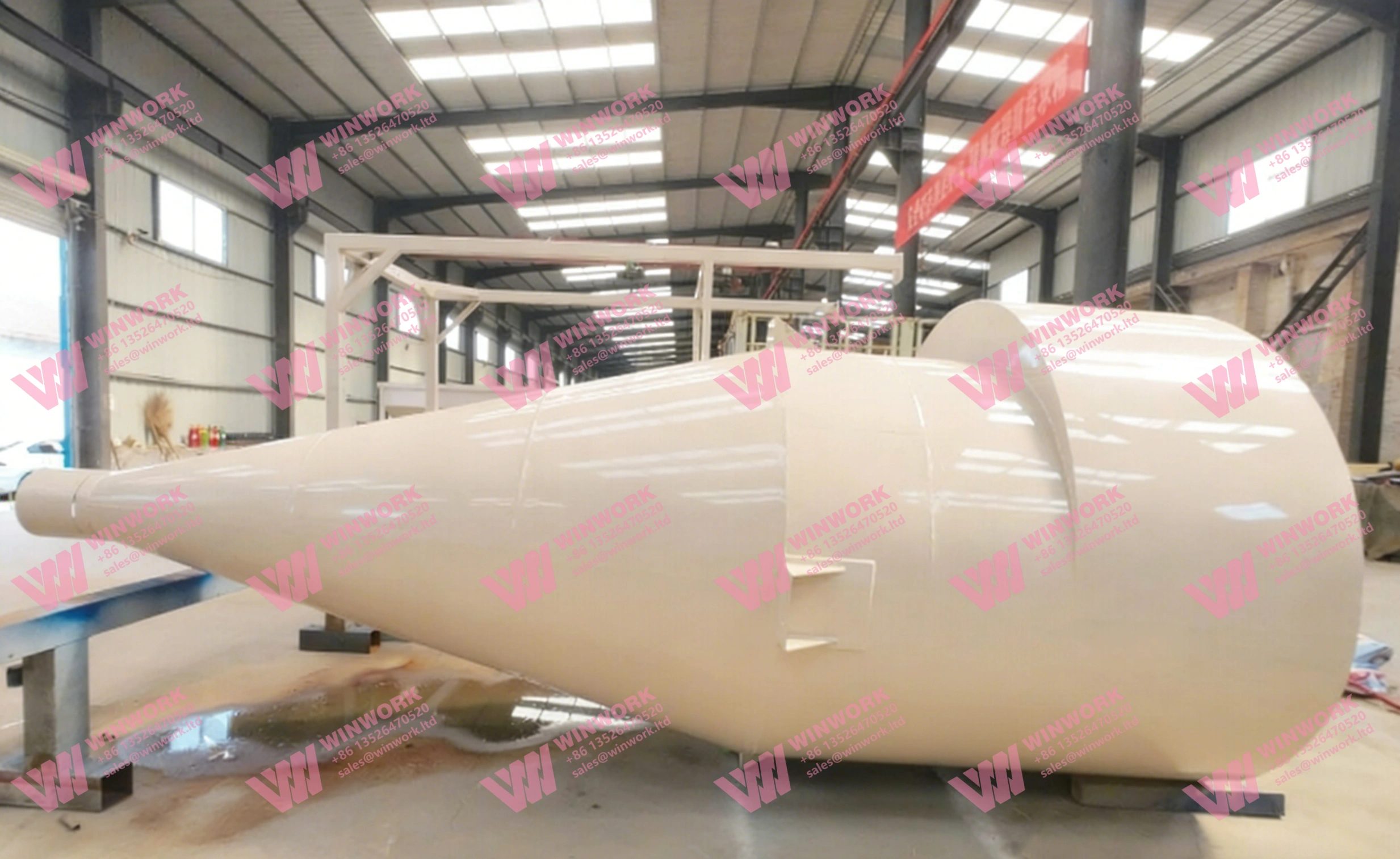
Cyclone Separation: The dusty air enters a conical chamber tangentially (on the side, at an angle). This makes the air spin violently. Centrifugal force flings the heavier dust particles outward against the wall, where they lose momentum and fall into a collection bin below. The cleaner air spins up the center and out to the filter. This is great for larger chips and heavier dust. Using dust collector to handle workshop dust often starts with a cyclone as a pre-separator.
Media Filtration (Baghouse or Cartridge): After the cyclone (or sometimes directly), the air passes through a filter. In a baghouse, it’s through large fabric socks. In a cartridge collector, it’s through pleated, often nanofiber-coated cartridges. The tiny particles get trapped on the surface of the media. The clean air then passes through.
The combination of cyclone pre-separation and fine media filtration is the industry standard for effective Using dust collector to handle workshop dust.
Step 4: Collect and Clean
The separated dust drops into a drum, bin, or hopper for disposal or recycling. The filters, however, get clogged over time. That’s why systems have a cleaning mechanism
Pulse-Jet Cleaning: The most common on industrial units. A burst of compressed air is shot backwards through the filter cartridge or bag, creating a shockwave that dislodges the dust cake, making it fall into the hopper. This happens automatically, keeping the system running continuously.
Shaker or Reverse Air: Less common now, but used on some units. The filters are shaken mechanically or blown with reverse air to clean them.
The entire process of Using dust collector to handle workshop dust is a continuous loop: capture, convey, separate, collect, and clean the air.
The Gear You Need: What Equipment is Essential?
You can’t just buy a shop vac and call it a day. Using dust collector to handle workshop dust on a workshop or plant scale requires an integrated system.
The Capture Hoods: Custom or universal hoods that fit your specific machines. They are the “hands” that grab the dust.
The Ductwork: Properly sized, sealed, and often grounded (to prevent static sparks) piping. Smooth interior walls are best to maintain airflow.
The Main Collector Unit: This is the heart. It contains:
The Blower/Fan:The engine that creates the suction. Sized by HP and CFM.
The Separator (Cyclone or Single-Stage):The chamber where the initial separation happens.
The Filter Media (Bags/Cartridges):The final barrier for fine dust.
The Cleaning System (Pulse-Jet Valves):To keep the filters clear.
The Collection Bin/Hopper:For the dust.
The Controls: A simple on/off switch, or a more advanced system with magnetic starters, variable frequency drives (VFDs) to adjust speed, and magnehelic gauges to monitor filter pressure drop.
Personal Protective Equipment (PPE): Even with a great system, some operations (like sanding or grinding) still benefit from a fitted respirator as a last line of defense.
Choosing the right combination is key. A small woodshop might use a single-stage collector with a canister filter. A large fertilizer plant will use a massive cyclone pre-separator feeding a large baghouse with automated hopper unloading. The principle of Using dust collector to handle workshop dust scales to any size.
FAQ: Your Questions About Using Dust Collector to Handle Workshop Dust Answered
We know you’ve got questions. Here are the answers to what people ask us most about Using dust collector to handle workshop dust.
Q: What’s the difference between a “dust collector” and a “shop vac”?
A: A shop vac is for intermittent, general cleanup. It has high suction but low airflow (CFM) and small filters that clog fast with fine dust. A dust collector is designed for continuous operation at specific machines, delivering high airflow (CFM) at the dust port to capture dust as it is made. The filters are large and designed for continuous self-cleaning. Using dust collector to handle workshop dust means investing in the right tool for continuous source capture.
Q: Do I need to vent the clean air outside?
A: It depends. Venting outside guarantees 100% of the dust is removed from the workspace, which is great for very hazardous dusts. However, in cold climates, you lose heated air. Many modern systems are designed for “recirculation”—the filtered air is returned to the room because the filtration (often 99.9% efficient at 0.5 microns) is so good. The choice depends on your dust type, climate, and local codes. A key part of Using dust collector to handle workshop dust is making this design decision correctly.
Q: How do I know what size (CFM) I need?
A: It’s based on the tool with the highest demand. A table saw might need 350-500 CFM at the port. A wide-belt sander might need 800+ CFM. You then size the main collector fan to handle the combined load if you run multiple tools, or the single largest tool plus a margin. Duct size is then calculated to maintain proper air velocity (usually 4000 feet per minute in the ducts) to keep dust suspended. Proper sizing is critical for Using dust collector to handle workshop dust to be effective.
Q: Is the dust I collect dangerous to handle?
A: It can be. Wood dust, silica dust, and metal fines can be hazardous even in the bin. You should treat collected dust as a hazardous waste until you know its properties. Use sealed containers, avoid creating plumes when emptying, and wear a respirator. Part of Using dust collector to handle workshop dust is having a safe disposal or recycling plan for the collected material.
Q: Can I really save money with one of these?
A: Absolutely. Calculate the cost of one major machine repair caused by dust (motor replacement), the cost of a few days of downtime, the potential cost of a fine for exceeding air quality limits, and the value of reduced employee sick days. The return on investment for Using dust collector to handle workshop dust is often realized within the first year or two for busy shops.
Conclusion: Clear the Air, Protect Your Future
Dust is inevitable in almost any manufacturing, fabrication, or processing environment. It is the unavoidable byproduct of creating something useful. But allowing that dust to accumulate in the air, on your machines, and in your workers’ lungs is a choice—and it’s a costly one. Using dust collector to handle workshop dust is not merely an equipment purchase; it is a fundamental commitment to operational excellence.
By investing in a properly designed and implemented dust collection system, you are making a multi-faceted investment in your business. You are protecting your most valuable asset—your employees—from debilitating respiratory illnesses. You are safeguarding your expensive machinery from premature failure and abrasive wear. You are mitigating the catastrophic risk of fire and explosion. And you are creating a cleaner, safer, and more productive environment that fosters pride and quality workmanship.
Don’t let your workshop be defined by the dust that settles on every surface. Take control of your air quality. Make the smart, sustainable choice for your people and your bottom line. Start Using dust collector to handle workshop dust today, and build a cleaner, safer, and more profitable future for your operation.
For more details, please feel free to contact us.
Email: sales@lanesvc.com
Contact number: +8613526470520
Whatsapp: +8613526470520



Get A Quote