

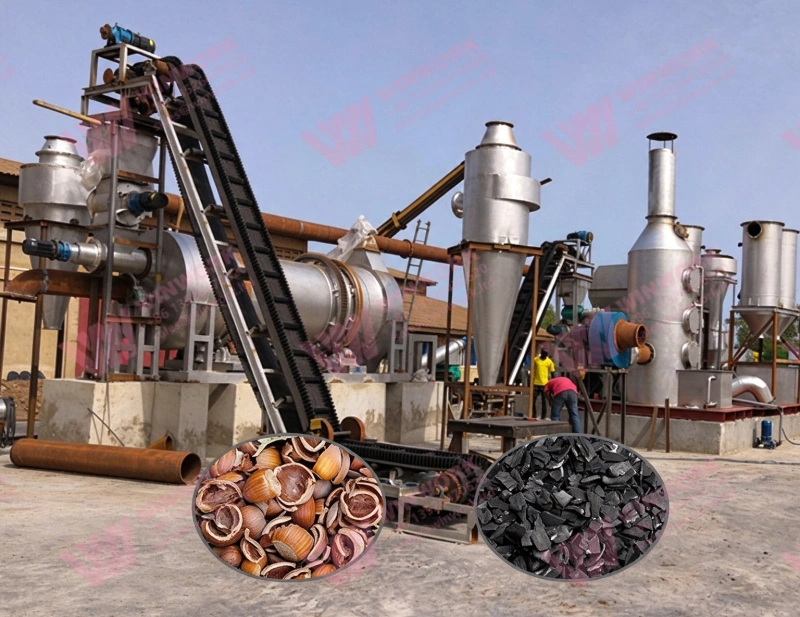
At first glance, a carbonization plant and a fertilizer production line may seem to have little in common. One transforms biomass into carbon-rich materials, while the other processes ingredients into fertilizer products. So why are we talking about carbonization on a website focused on fertilizer machinery?
The answer may be closer than you think. Behind these seemingly different production processes, some equipment and processing stages share surprisingly similar functions. And when biochar enters the picture, the connection becomes even more interesting.
But that is only part of the story. A carbonization plant can help businesses turn wood chips, rice husks, straw, coconut shells, and other biomass residues into useful carbon-based products. The real challenge is understanding which process fits your raw materials, what products you want to make, and which equipment your project actually needs.
Let’s explore how the technology works, where the resulting products may be used, and what businesses should consider before investing.
What Makes a Carbonization Plant More Than Just a Furnace?
It is easy to picture a carbonization plant as a single machine that heats biomass until it turns into charcoal. In reality, an industrial system involves several coordinated operations, with the carbonization furnace serving as its core component.
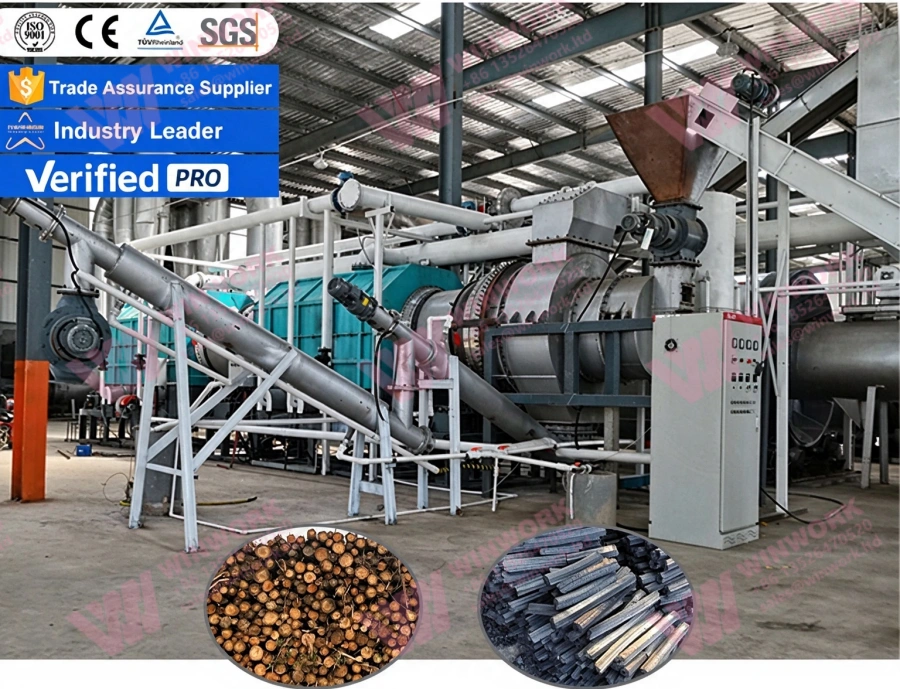
Biomass carbonization is a thermal conversion process. Organic materials are heated under oxygen-limited conditions, causing them to decompose rather than burn completely. The process produces a carbon-rich solid alongside gases and vapors that require appropriate handling.
Depending on the feedstock and operating conditions, the solid product may be used as charcoal, biochar, or another carbon-rich material. These products are not automatically interchangeable: their characteristics and suitability depend on how they are produced and their intended applications.
A complete carbonization plant may include:
- Raw material preparation: Biomass is inspected, sorted, and prepared for processing.
- Drying: Excess moisture is reduced when necessary to support more consistent operation.
- Crushing and conveying: Material is adjusted to a suitable size and transported between processing stages.
- Carbonization: A dedicated furnace converts prepared biomass under controlled conditions.
- Cooling and discharge: The carbonized material is cooled and collected using an appropriate handling system.
- Gas and vapor treatment: Process gases are managed according to the system design, safety requirements, and applicable environmental regulations.
Not every installation needs the same configuration. The right arrangement depends on the feedstock, moisture content, desired product, processing requirements, and local regulations.
This is why choosing a carbonization plant should begin with the entire production process rather than the furnace alone. A well-matched system must coordinate preparation, feeding, heating, discharge, cooling, and gas handling. If one stage cannot keep pace with the others, the performance of the overall line may suffer.
How Does a Continuous Carbonization Plant Work?
For businesses processing biomass regularly, a continuous carbonization plant may be worth considering. Unlike a batch system that handles material in separate cycles, a continuous system is designed to feed and process material on an ongoing basis.
Although equipment configurations vary, the general workflow usually involves four stages.
1. Prepare the biomass
The first step is to understand the raw material. Wood chips, rice husks, straw, and coconut shells differ in moisture content, density, particle size, and physical structure. These characteristics influence how the material should be prepared before entering the furnace.
Depending on the feedstock, preparation may involve drying, crushing, screening, or other conditioning steps. Suitable preparation helps create more consistent feed conditions, although the exact requirements must be determined for each material.
2. Feed the material into the furnace
Prepared biomass enters the carbonization furnace through a suitable feeding system. Inside, the material is heated under controlled, oxygen-limited conditions. Temperature, residence time, feedstock properties, and furnace design all influence the resulting product.
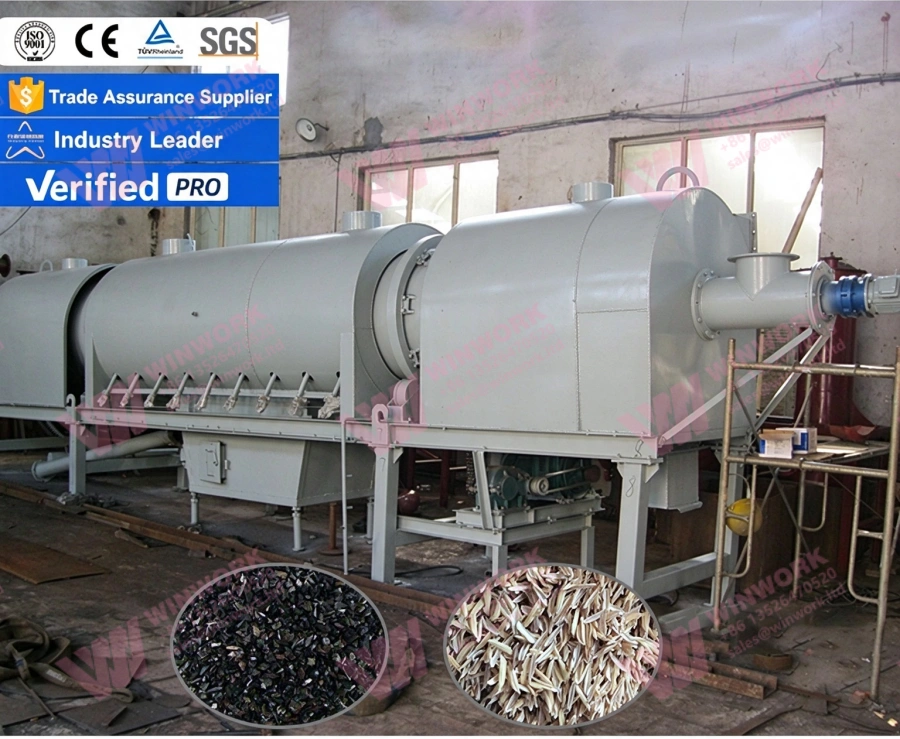
The goal is not simply to apply as much heat as possible. Instead, operating conditions must suit the chosen raw material and the required product characteristics.
3. Convert biomass into carbon-rich material
As the material heats, it releases volatile components and undergoes chemical changes. A carbon-rich solid remains, while gases and vapors are generated during the process.
The composition and potential uses of these outputs depend on the feedstock and operating conditions. Process gases must be handled through a system appropriate to the plant design; they should not be assumed to be harmless or suitable for uncontrolled release.
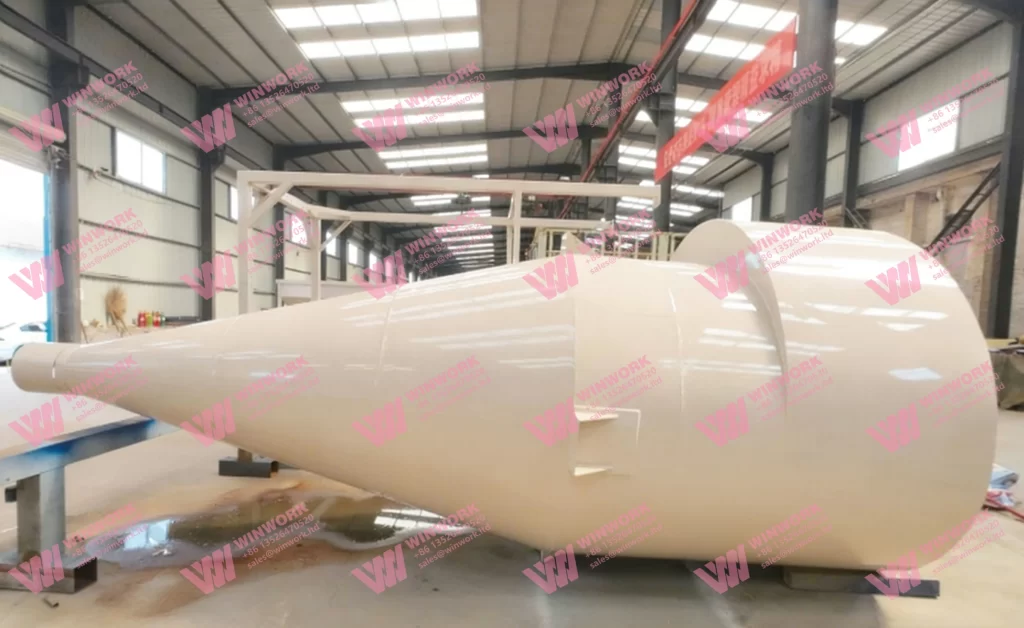
Using Dust Collector to Handle Workshop Dust
4. Cool and collect the product
The carbonized material must be cooled and handled appropriately before storage or further processing. Depending on the product requirements, downstream steps may include crushing, screening, or packaging.
In a continuous system, feeding, heating, discharge, cooling, and gas handling need to work together. Businesses evaluating a continuous carbonization plant should therefore ask about the complete process configuration, not just the furnace itself.
Which Biomass Materials Can a Carbonization Plant Process?
One advantage of biomass carbonization is the variety of potential feedstocks. Agricultural and forestry residues that might otherwise be underused can sometimes become raw materials for carbon-based products.
However, not every carbonization plant can process every type of biomass equally well. Material preparation and equipment configuration matter.
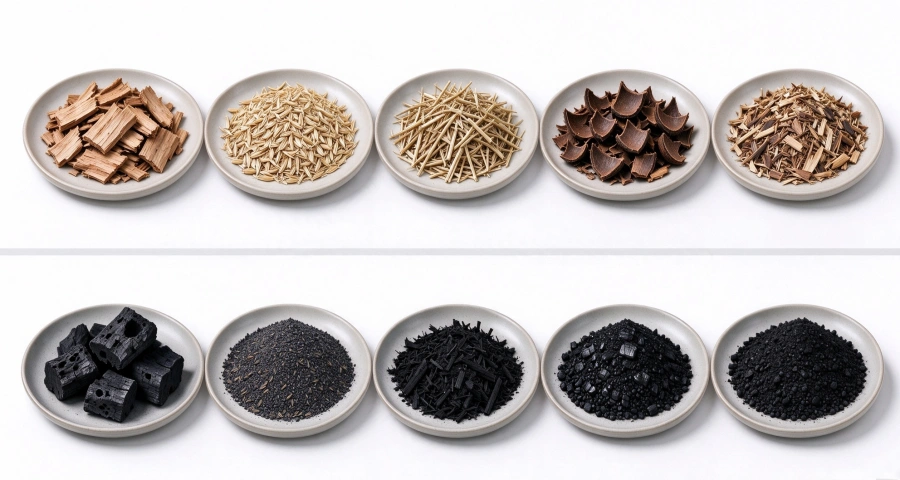
Wood chips and wood residues
Wood chips, sawdust, and other wood-processing residues are common candidates for carbonization. Their suitability depends on moisture content, particle size, and the intended product. Larger pieces may require size reduction, while wet material may need drying before processing.
Rice husks
Rice husks are widely available in rice-producing regions. Their composition differs from that of wood, including a relatively high silica content. This can affect the properties and potential applications of the resulting material, so the intended use should be considered before finalizing the processing conditions.
Straw and agricultural residues
Straw and similar agricultural residues offer another potential feedstock. Their loose structure and variable moisture content can create different handling requirements from those of wood chips. A suitable feeding and conveying arrangement is therefore important.
Coconut shells
Coconut shells may be used to produce carbon-rich materials, including charcoal for applications where the required quality specifications can be met. Their hardness and shape may influence preparation requirements, depending on the system design.
Before selecting equipment, businesses should identify their main feedstock and consider how much its characteristics vary over time. If several biomass types will be processed, testing representative samples can help clarify the necessary preparation steps and operating conditions.
The best carbonization plant is not necessarily the one advertised as handling the widest range of materials. It is the system configured for the raw materials your business can reliably obtain.
How Do You Choose the Right Carbonization Plant?
Choosing equipment based on a headline capacity or an attractive machine image can leave important questions unanswered. A more reliable approach is to evaluate the project as a complete production system.
Start with the raw material. Identify the biomass type, typical moisture content, particle size, bulk density, and seasonal variation. Ask the supplier what preparation is required and whether feedstock testing is advisable.
Define the target product. Charcoal, biochar, and other carbon-rich materials may have different quality requirements. The intended application determines which operating conditions and downstream equipment deserve the most attention.
Evaluate the complete process. Look beyond the furnace to feeding, drying, conveying, cooling, discharge, gas treatment, and any required crushing or screening. The equipment must work together as a coordinated system.
Confirm capacity and operating conditions. Discuss the expected feed rate, operating schedule, raw material characteristics, and product specifications. Request technical information that matches the proposed configuration instead of relying on general performance claims.
Consider safety and environmental compliance. Biomass carbonization involves high temperatures and may generate combustible gases, vapors, and particulate emissions. Appropriate controls, monitoring, maintenance procedures, and compliance with local regulations are essential.
Plan for long-term operation. Installation space, utilities, maintenance access, spare parts, operator training, and after-sales support can all affect the long-term value of the investment.
A reliable supplier should explain which parameters are confirmed, which depend on the feedstock, and which require further testing. Clear technical communication is more useful than promises that overlook actual operating conditions.
Why Are We Discussing Carbonization on a Fertilizer Machinery Website?
Here is the connection introduced at the beginning.
A carbonization plant and a fertilizer production line serve different primary purposes. Carbonization converts biomass under oxygen-limited heating conditions, while fertilizer production processes ingredients into products intended to supply nutrients or improve soil-related properties. The two processes should not be treated as interchangeable.
However, some supporting operations can have similar functions.
Both types of production line may require drying to control moisture, crushing to achieve a suitable particle size, conveying to move materials between machines, and screening to separate particles by size. The specific equipment and specifications depend on the materials being processed, so functional similarities do not mean that the same machine can always be used directly in both systems.
The connection becomes more interesting when carbonized biomass is intended for a biochar-based fertilizer or soil amendment product. Depending on the formulation and applicable requirements, the carbonized material may need to be crushed, screened, blended with other ingredients, or processed through additional downstream equipment.
In this type of project, carbonization and fertilizer processing may form separate but connected stages. One prepares a carbon-rich material; the other handles the formulation and processing of the final product.
This explains why a company familiar with fertilizer machinery may also have relevant experience in certain supporting equipment and material-handling functions. It does not eliminate the need for a dedicated carbonization furnace or the specialized gas-handling, cooling, and safety systems required for carbonization.
For businesses exploring biomass utilization and downstream product development, understanding these connections can help when planning equipment integration and future expansion.
Start with the Biomass, Not Just the Machine
A successful carbonization project begins with a clear understanding of the raw material, target product, and operating conditions. A continuous carbonization plant may suit businesses that need ongoing biomass processing, but the appropriate configuration depends on the feedstock, product quality requirements, safety measures, and business objectives.
Wood chips, rice husks, straw, and coconut shells each offer different opportunities and processing challenges. Evaluating the material and planning the entire production process can help businesses avoid choosing equipment based on assumptions alone.
At WINWORK, equipment discussions should begin with your actual biomass and production goals. By clarifying the feedstock, intended application, and required processing stages, businesses can identify the equipment functions they need and the technical details that must be confirmed before investment.
Ultimately, the value of a carbonization plant is not simply the machine itself. It is the ability to transform an available resource into a product with a clear purpose.
For more details, please feel free to contact us.
Email: sales@lanesvc.com
Contact number: +8613526470520
Whatsapp: +8613526470520
Get A Quote