

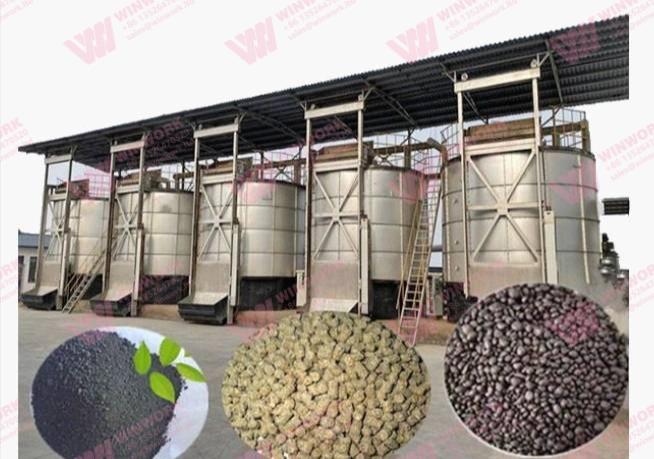
1. Introduction: Choosing the Right Composting Method
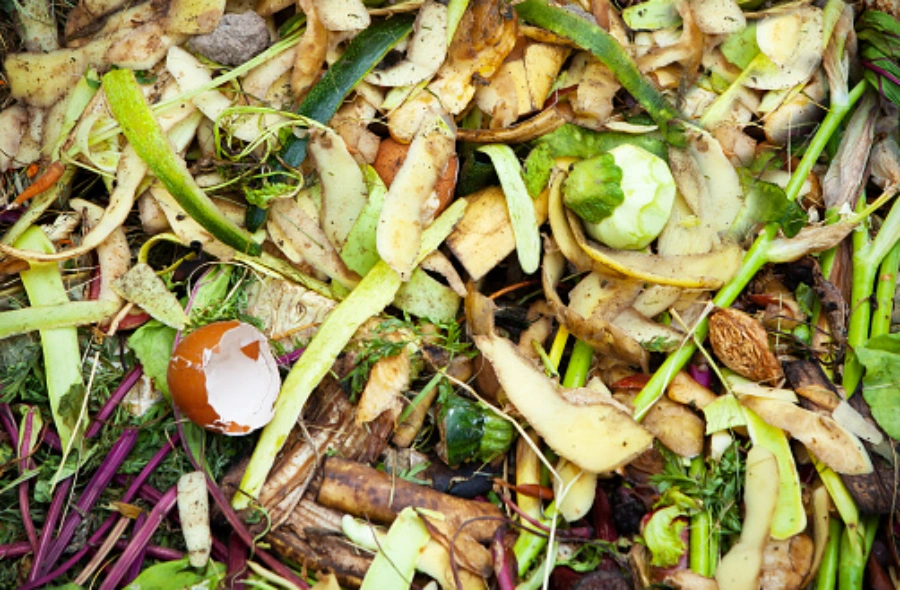
Organic waste management has become an important concern for livestock farms, food processing facilities, agricultural businesses, and organic fertilizer manufacturers. Animal manure, food waste, crop residues, and other biodegradable materials can be converted into useful compost or organic fertilizer when they are processed under suitable conditions. However, choosing the right composting equipment is essential for controlling operating costs, managing waste efficiently, and achieving consistent results.
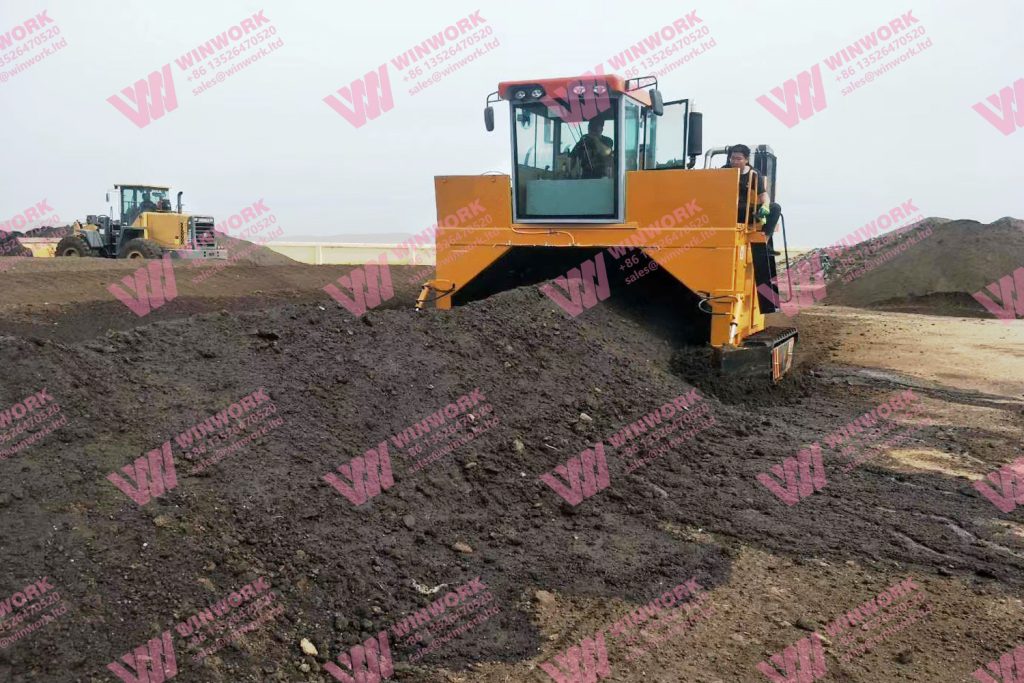
Two common options are a compost turner and a composting fermentation tank. A compost turner is generally used to turn and aerate organic material arranged in windrows or composting beds. A composting fermentation tank processes material inside a dedicated vessel, where mixing, aeration, temperature monitoring, and other functions can be integrated according to the equipment configuration.
Neither method is suitable for every project. The right choice depends on the available land, raw material characteristics, environmental requirements, processing capacity, and budget. For businesses that need a more compact processing layout, controlled fermentation conditions, and centralized environmental management, a composting fermentation tank may offer significant advantages over conventional windrow composting.
Understanding these differences helps businesses select equipment based on actual operating needs rather than purchase price alone.
2. Composting Fermentation Tank vs. Compost Turner: Understanding the Differences
Before investing in composting equipment, it is important to understand how these two systems organize the composting process.
A compost turner works with material arranged in piles or windrows. The machine turns, loosens, and mixes the compost, helping air enter the pile and distributing moisture and heat more evenly. Depending on the machine type, it may operate in open windrows or dedicated composting troughs. This approach is widely used in agricultural waste treatment and large-scale composting operations.
By comparison, a composting fermentation tank provides a defined processing space for organic material. Depending on its design, the system can incorporate mechanical mixing, forced aeration, temperature monitoring, and automated operating controls. The material is processed inside the tank rather than being spread across a large open composting area.
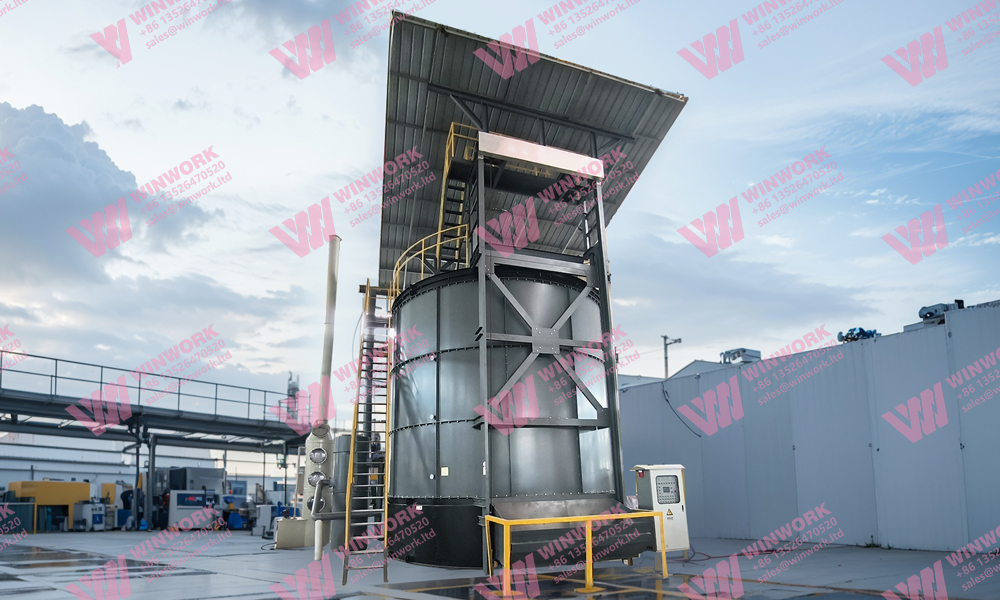
The difference also affects facility planning. Windrow composting requires enough room for compost piles, turning equipment, material transfer, and potentially separate areas for different processing stages. A tank-based system concentrates the main fermentation stage within the equipment, although space is still needed for loading, unloading, maintenance, storage, and downstream treatment.
Environmental management is another consideration. Open windrow systems expose compost to surrounding weather conditions and may require additional measures to manage rainfall, runoff, and odors. A composting fermentation tank can be connected to an enclosed exhaust collection and odor treatment system, depending on the project design.
Investment structures also differ. A windrow system may require a larger prepared composting area but relatively simple equipment, while a tank-based installation involves the vessel, mixing and aeration systems, controls, and any necessary environmental facilities.
Therefore, comparing these options requires evaluating the complete installation and operating process, not simply comparing the price of one machine with another.
3. Why Choose a composting fermentation tank?
For projects where space, process consistency, and environmental management are important, a composting fermentation tank can provide practical advantages.
More efficient use of available space
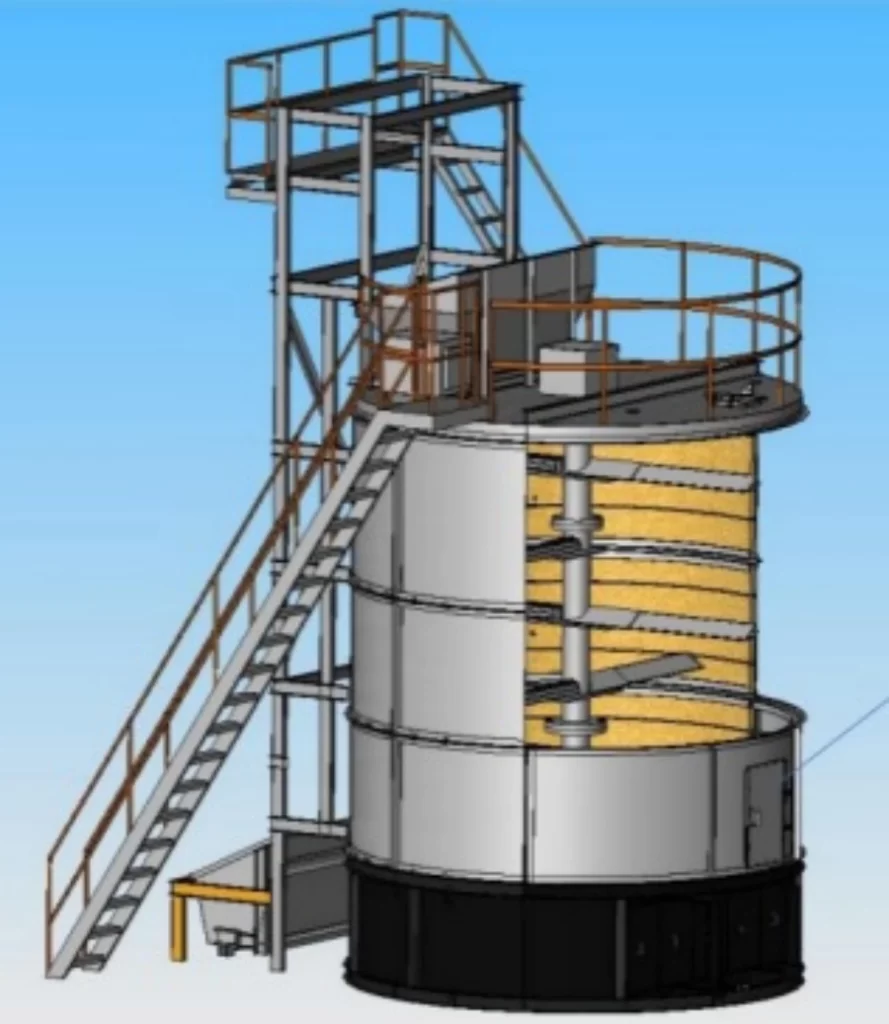
One major reason to consider a composting fermentation tank is its compact processing arrangement. Instead of spreading material across multiple windrows, the main fermentation stage takes place inside a dedicated vessel. This can be particularly valuable for factories, livestock farms, and waste treatment facilities with limited available land.
A vertical design can make use of building height, while a horizontal design can fit facilities that favor a lower equipment profile. The actual footprint depends on capacity, equipment dimensions, access requirements, and supporting systems. Businesses should evaluate the entire installation rather than the tank dimensions alone.The floor area of a 120-cubic-volume fermenter is approximately 60 square meters.
Better control of odors and the surrounding environment
Fresh organic waste, especially manure and food waste, can produce unpleasant odors when stored or processed under unsuitable conditions. A composting fermentation tank with an enclosed structure can help contain process emissions and direct exhaust air toward an appropriate treatment system.
This is particularly relevant for facilities located near residential areas, industrial parks, or other sites with strict environmental management requirements. However, a tank does not automatically eliminate odors. Effective results depend on raw material preparation, proper operation, exhaust collection, and suitable odor treatment equipment.
More consistent fermentation management
Successful composting depends on several interacting factors, including oxygen availability, moisture, temperature, and the characteristics of the raw material. Uneven aeration or excessive moisture can slow decomposition and create undesirable conditions.
A properly configured composting fermentation tank can integrate mixing, aeration, temperature monitoring, and operating controls to help maintain suitable processing conditions. This makes the fermentation stage easier to monitor and standardize, particularly when material properties and production volumes vary.
A more organized operating process
Depending on the model, a composting fermentation
tank may incorporate automated feeding, mixing, temperature monitoring, and discharge functions. These features can reduce some manual handling and help operators manage production more systematically.
Automation does not remove the need for inspection and maintenance. Nevertheless, it can make daily operations more predictable and support a more standardized waste treatment process.
Potentially shorter initial processing time
Controlled fermentation conditions may accelerate the initial decomposition stage compared with poorly managed outdoor composting. The actual processing time depends on the raw materials, pretreatment, moisture content, oxygen supply, temperature, and equipment design.The fermentation process in a fermentation tank usually takes 7 to 15 days as a cycle, while the composting machine requires 30 to 45 days to complete the fermentation.
It is also important to distinguish initial fermentation from complete compost maturation. Some materials require additional curing after leaving the tank before they are suitable for their intended use. Businesses should therefore evaluate the total process duration rather than relying on a single advertised fermentation time.
For projects that prioritize compact layouts, centralized control, and improved environmental management, these advantages can make a composting fermentation tank a worthwhile investment.
4.When Is a Composting Fermentation Tank the Right Choice? Practical Examples
To determine whether a fermentation tank is suitable for a project, it’s best to start with raw material data and actual operational constraints.
Scenario 1: A livestock farm generates 5 tons of fresh manure daily.
Assuming a moisture content of 75%, this means each ton contains approximately 750 kg of water and 250 kg of dry matter. Thus, 5 tons of feedstock per day contain about 3,750 kg of water and 1,250 kg of dry matter.
If such high-moisture material is fed directly into the fermentation system, it may easily clump together, preventing air from penetrating the interior. A more practical approach would be to first assess mechanical dewatering or add appropriate drying co-materials, then evaluate the resulting moisture level in the mixed feedstock before deciding if it’s suitable for the tank.
Whether such a project is suitable for a fermentation tank depends on the condition of the material after pretreatment, not merely on the name of the raw material.
Scenario 2: A food processing plant produces continuous organic waste daily.
If the facility has a relatively stable daily feed rate and limited space, a fermentation tank could be considered for establishing a fixed treatment process. Equipment selection should be based on calculations involving daily feed volume, actual fermentation cycle duration, effective equipment capacity, and feeding/unloading schedules.
For batch-operated systems, additional considerations include batch switching time and temporary storage space. One should not assume that a 20 m³ unit can process 20 tons of material per day simply because of its volume.
Scenario 3: The project site is located near residential areas or other sensitive zones.
When odor control requirements are strict, the enclosed structure of a fermentation tank combined with an exhaust gas collection system may offer better centralized management than open composting. However, prior to investment, it’s essential to clarify the configuration of odor abatement facilities, exhaust treatment capacity, and local emission standards.
Therefore, fermentation tanks are most suitable for projects where specific challenges—such as site limitations, odor control, or process management—need to be addressed, rather than simply pursuing “more advanced” equipment.
5. When Is a Compost Turner Still the Better Choice?
Turners remain a practical choice for many agricultural composting projects, especially when raw materials are suitable for piling, sufficient land is available, and operational staff can manage daily operations.
For example, farms that process straw, cow manure, and other high-fiber agricultural materials daily may find windrow composting to be a lower initial investment option, provided the feedstock can be adjusted to an appropriate moisture content and adequate space for windrows is available.
The effectiveness of turners also depends on material conditions. When piles are too wet, turning may not fully resolve internal oxygen deficiency; conversely, if piles are too dry, additional watering or adjustment of feedstock ratios may be required.
Therefore, when comparing equipment, factors such as land cost, labor, turning frequency, preprocessing equipment, odor control, and the entire composting cycle should all be considered. If a project faces no significant site or environmental constraints, turners may prove more economical than composting reactors.
Conversely, if open-pile composting is limited by space or struggles to meet on-site environmental management requirements, the overall cost of reactor-based fermentation systems can be further evaluated.
6. How to Select the Right composting fermentation tank for Your Project
Once a tank-based system has been identified as a suitable option, the next step is to choose the right configuration.
Start with the raw material. The typical initial moisture content range for large-scale aerobic composting is 50%–60%. Below 40%, microbial activity may significantly decline; above approximately 65%, air in the material pores can be displaced by water, increasing the risk of anaerobic conditions and odors. The specific range should be adjusted according to raw material characteristics and equipment requirements.
Calculate the required processing capacity. Estimate the amount of material generated per day and determine how much must be processed in each batch. Consider the working volume, bulk density, fermentation cycle, and expected material reduction. A tank’s nominal volume is not necessarily equal to its daily treatment capacity.
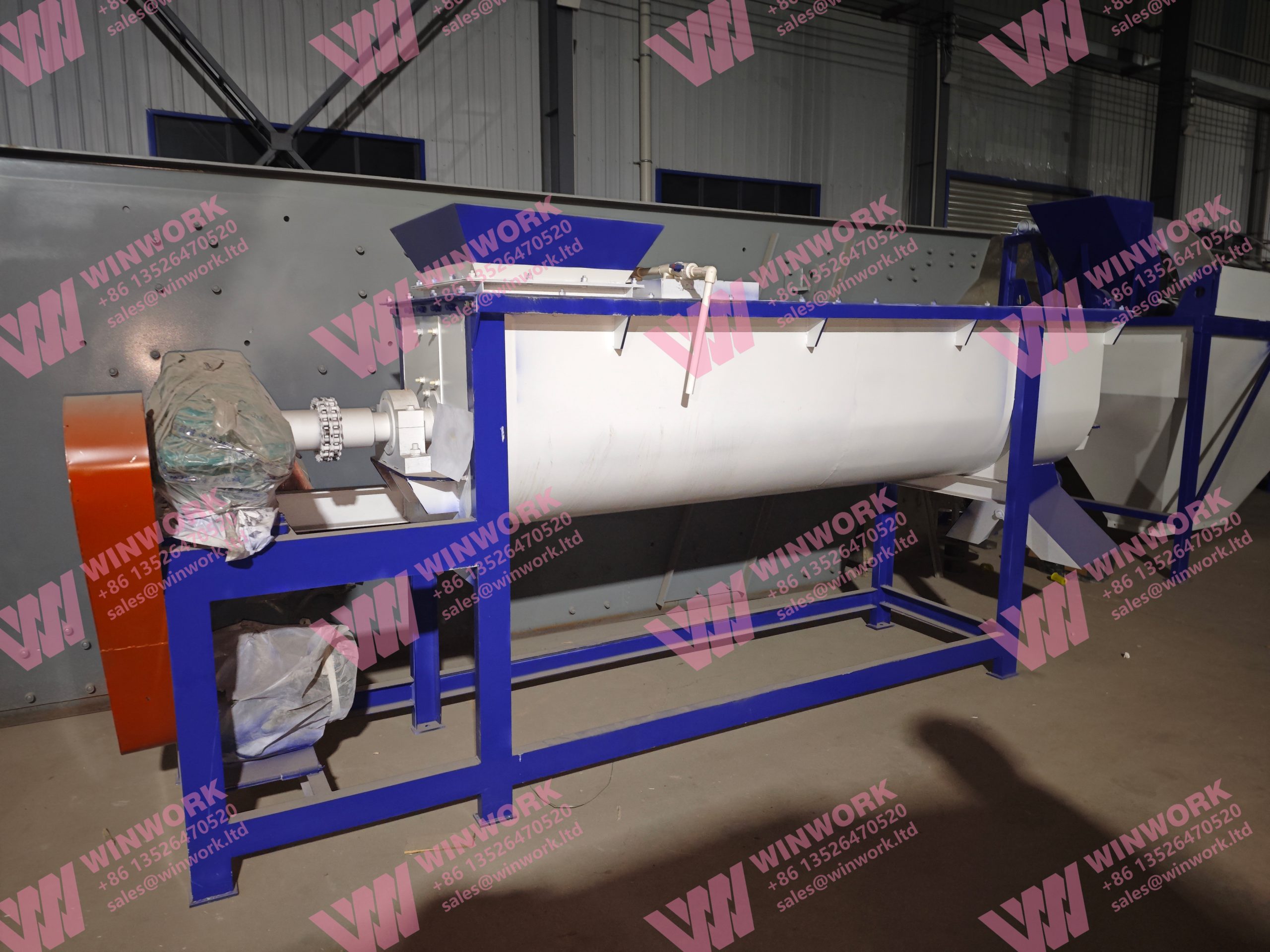
Choose a suitable tank configuration. WINWORK offers both vertical fermentation tanks and horizontal fermentation tanks. The appropriate design depends on the required batch volume, available installation space, material properties, and production layout.
Check the complete system configuration. Confirm the requirements for mixing, aeration, temperature monitoring, loading, discharge, exhaust treatment, and leachate management. Do not assume that every model includes the same functions or that an enclosed vessel alone satisfies all environmental requirements.
Evaluate the downstream process. If the goal is to manufacture commercial organic fertilizer, fermentation is only one stage of production. The material may need further curing, crushing, mixing, granulation, drying, cooling, screening, and packaging.
WINWORK’s organic fertilizer production line provides a starting point for understanding how fermentation equipment can be integrated with downstream processing machinery.
Finally, compare the total project cost, including equipment, installation, energy consumption, labor, maintenance, and environmental facilities. A well-matched system should meet the processing target while remaining practical to operate over the long term.
7. Conclusion: Is a composting fermentation tank the Right Investment?
Choosing between a compost turner and a composting fermentation tank is ultimately a decision about process requirements, site conditions, and long-term operating value.
A tank-based system can be particularly attractive when available land is limited, odor management is important, and the operator needs a more controlled and organized fermentation process. A compost turner may remain the more economical choice for projects with ample land, suitable raw materials, and manageable environmental requirements.
The best solution is not necessarily the most complex equipment. It is the system that handles the intended material reliably, fits the available space, and supports the required production goals.
If you are planning an organic waste treatment project, WINWORK can help you evaluate suitable fermentation equipment according to your raw materials, daily processing capacity, installation conditions, and downstream production requirements. Explore our fermentation tank options or contact the WINWORK team to discuss a configuration tailored to your project.
Get A Quote