

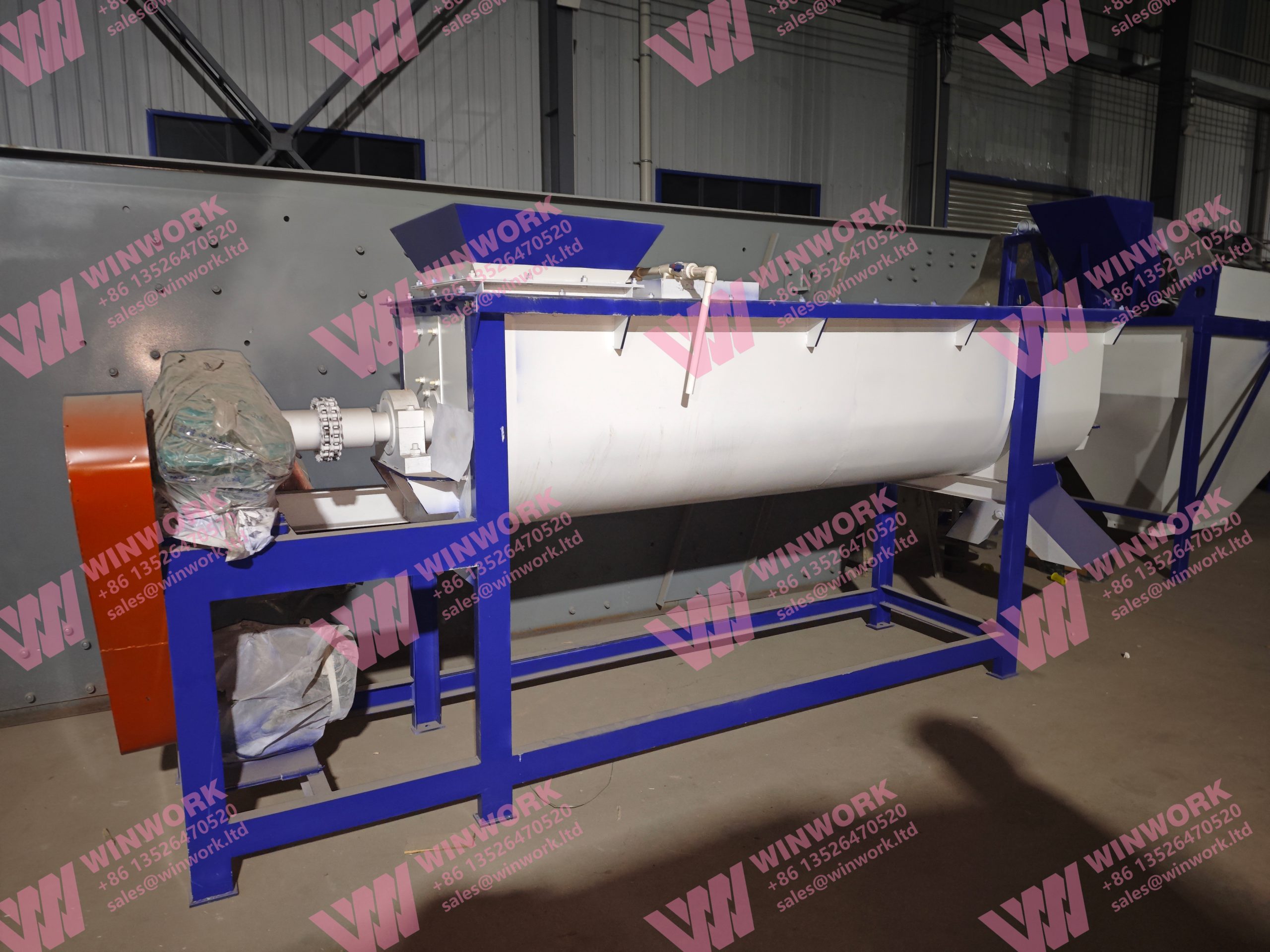
Introduction: Why Different Types of Fertilizer Mixers Matter
Choosing the right mixer is an important step in fertilizer production. Different raw materials have different particle sizes, moisture levels, bulk densities, and flow characteristics. A machine that works well for dry powder may not be the best choice for granular fertilizer or bulk blending (BB) fertilizer. Understanding the types of fertilizer mixers helps manufacturers select equipment that matches their formulations, production capacity, and mixing objectives.
Fertilizer mixers are not interchangeable in every application. Some use rotating shafts and paddles to achieve intensive mixing, while others rely on ribbons, rotating pans, or tumbling motion. These structural differences affect mixing uniformity, material handling, cleaning, and the risk of damaging granules.
The following guide explains how different types of fertilizer mixers work, which materials they are suitable for, and when each design may be the right choice.
1. Twin Shaft Mixer
Structure and Working Principle
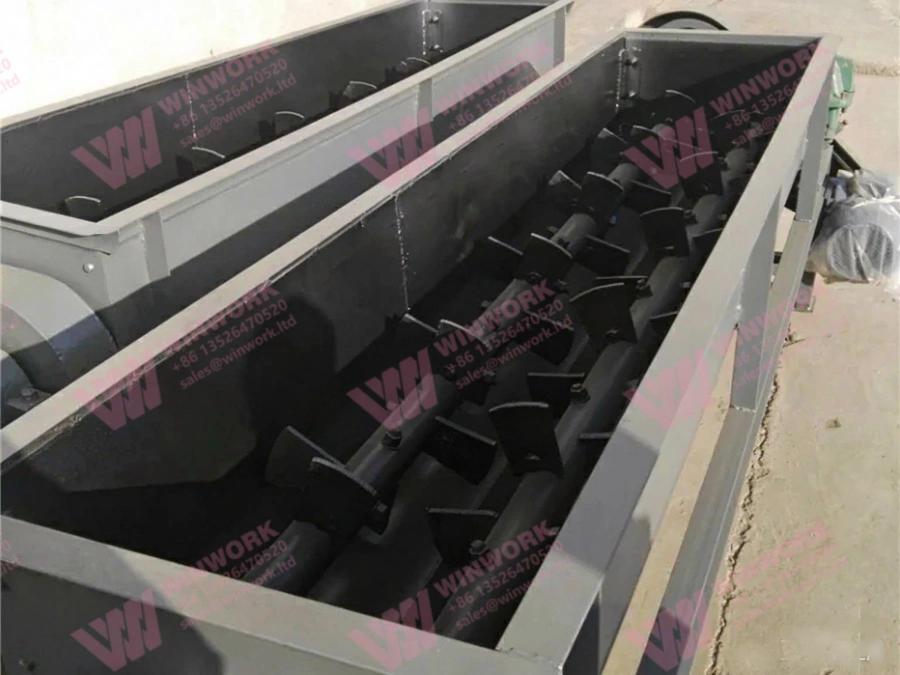
A twin shaft mixer, uses two parallel rotating shafts fitted with mixing paddles. The paddles move materials in different directions, creating a strong mixing action inside a horizontal chamber.
This design promotes rapid movement of materials and helps distribute ingredients throughout the batch. Depending on the machine configuration and formulation, it can handle a range of powdered and granular fertilizer materials.
Suitable Raw Materials
Twin shaft mixers are commonly considered for dry or slightly moist fertilizer ingredients, including:
- Nitrogen, phosphorus, and potassium fertilizer materials
- Powdered mineral additives and fillers
- Compound fertilizer ingredients
- Mixed powder and small-granule formulations
Actual suitability depends on moisture content, particle size, abrasiveness, and the machine’s design. Sticky, highly wet, or easily damaged materials may require a different configuration.
When Should You Choose It?
Consider a twin shaft mixer when your production process requires intensive mixing, relatively short mixing cycles, and the combination of several fertilizer ingredients. It can be a practical option for compound fertilizer production lines where consistent distribution is important.
Among the types of fertilizer mixers, twin shaft designs are worth evaluating when the process needs strong mechanical mixing rather than gentle tumbling alone.
For equipment details, see the WINWORK product range and its compound fertilizer production line.
2. Ribbon Mixer
Structure and Working Principle
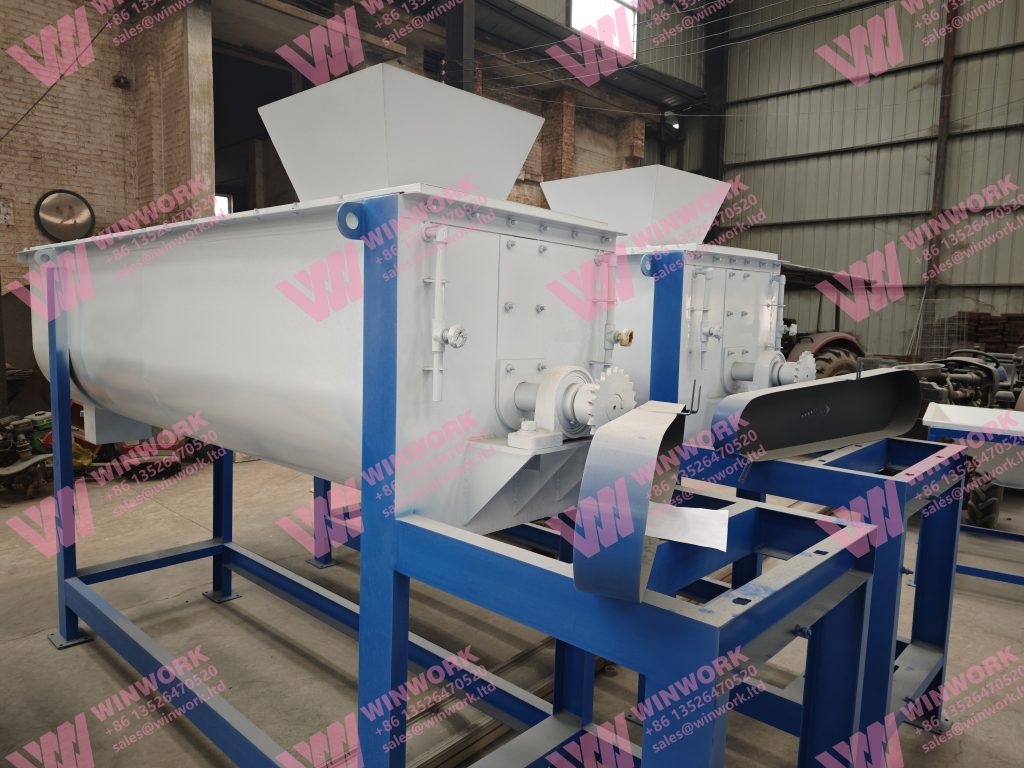
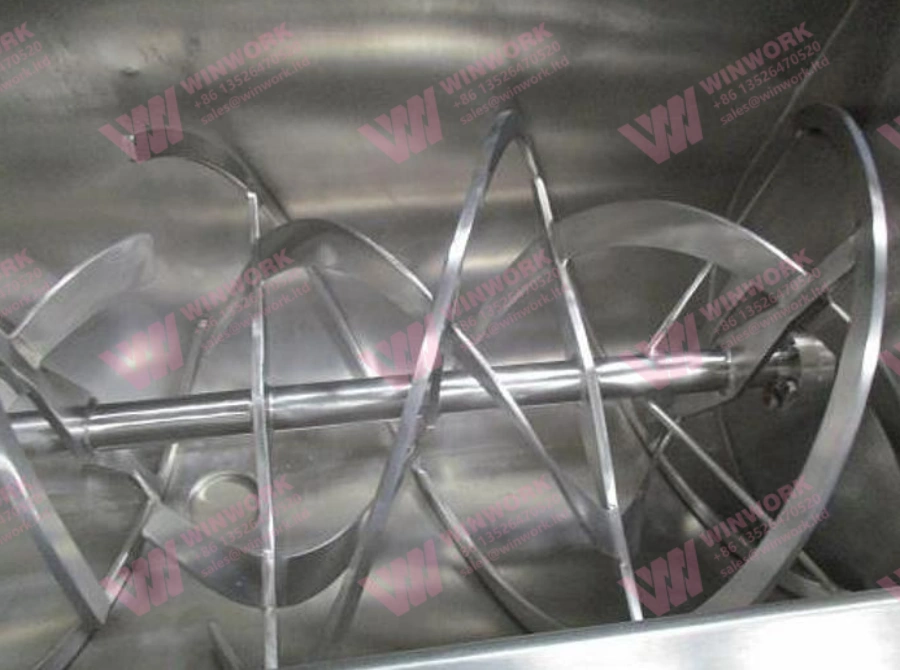
A ribbon mixer typically consists of a horizontal U-shaped trough and a central shaft carrying inner and outer helical ribbons. As the shaft rotates, the ribbons move material in opposing axial directions while also circulating it around the trough.
This combined movement helps blend dry powders and other free-flowing ingredients. Ribbon mixers are widely recognized in powder-processing industries, although the exact design and performance vary by manufacturer.
Suitable Raw Materials
A ribbon mixer may be suitable for:
- Dry fertilizer powders
- Fine mineral additives
- Powdered carriers and fillers
- Formulations that require the distribution of small quantities of ingredients
The best results generally depend on the material remaining sufficiently free-flowing. High moisture, sticky ingredients, or large differences in particle properties may affect mixing quality and cleaning requirements.
When Should You Choose It?
Consider a ribbon mixer when the main objective is blending dry powders in a horizontal trough and the formulation is compatible with ribbon-based movement. Before selecting one, confirm the required batch size, discharge arrangement, cleaning procedure, and compatibility with your ingredients.
Ribbon mixers represent one of the types of fertilizer mixers commonly considered for dry powder blending. However, buyers should verify that this equipment is actually available from their chosen supplier rather than assuming every fertilizer machinery manufacturer offers it.
3. Disc Mixer / Pan Mixer
Structure and Working Principle
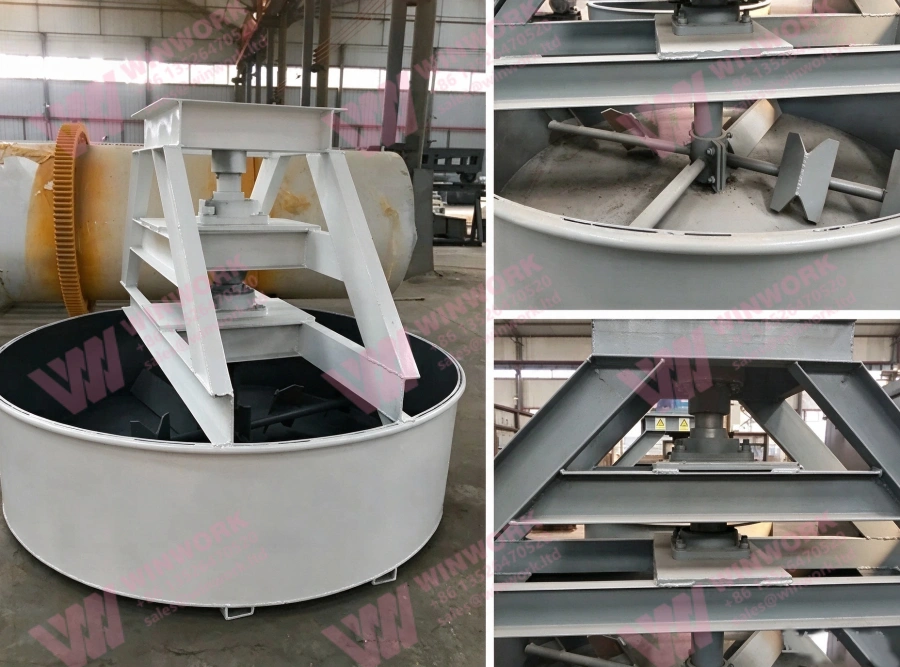
A disc mixer, often called a pan mixer, uses a rotating circular pan or disc to move material around the mixing chamber. Depending on the model, fixed or adjustable scrapers help guide material and prevent excessive buildup along the pan surface.
The pan’s rotation creates a circulating movement that brings different ingredients together. Disc and pan mixer designs can vary in pan angle, speed, diameter, scraper arrangement, and discharge method, so the specific machine configuration matters.
Suitable Raw Materials
Disc or pan mixers may be considered for:
- Powdered fertilizer ingredients
- Compound fertilizer blends
- Mineral powders and additives
- Formulations that benefit from circulation within a pan-shaped chamber
Some pan mixers are also used in processes involving moisture addition or granulation, but not every pan mixer is designed for those duties. Buyers should distinguish a mixing machine from a granulation machine and confirm the intended process with the manufacturer.
When Should You Choose It?
A disc or pan mixer may suit a process where the pan’s circulating movement matches the formulation and required output. Consider available installation space, batch or continuous operation, discharge design, cleaning access, and the required mixing uniformity.
Comparing types of fertilizer mixers by chamber structure helps clarify their different working methods. A pan-shaped chamber does not automatically make a machine suitable for every fertilizer formulation, so raw-material testing and supplier confirmation are recommended.
For examples of this equipment category, review the Disc Mixer.
4. Fertilizer Rotary Blender for BB Fertilizer
Structure and Working Principle
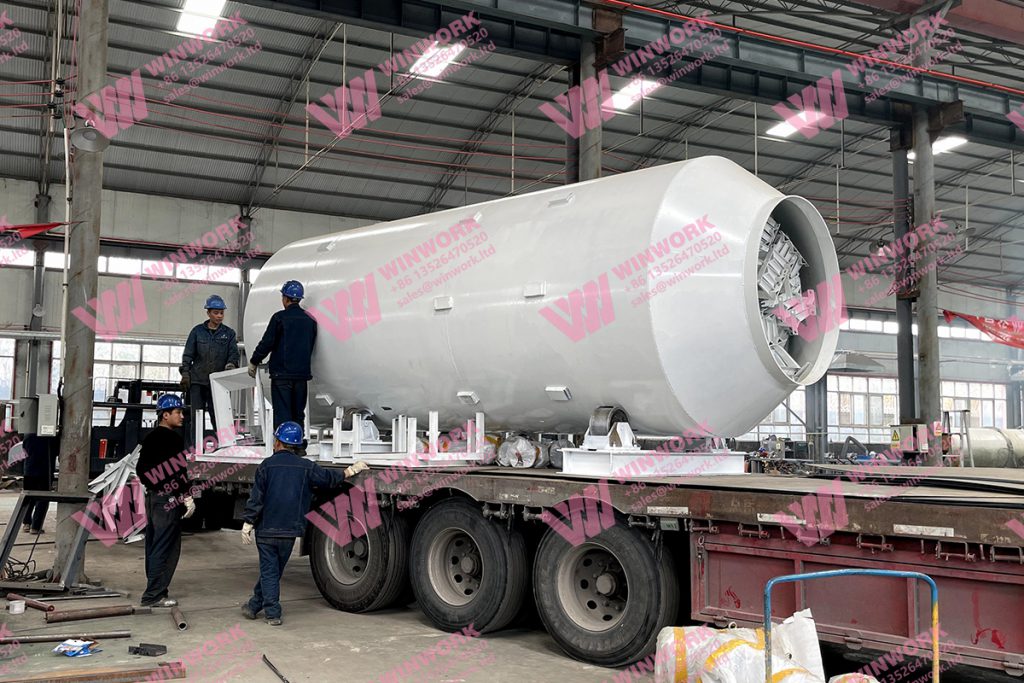
A fertilizer rotary blender is commonly associated with bulk blending, or BB fertilizer production. In a typical rotary design, a cylindrical or drum-shaped chamber rotates to tumble and redistribute granular ingredients. The repeated lifting and falling of particles helps combine different fertilizer components.
The exact structure varies among machines. Some designs focus on gentle tumbling, while others include internal lifting elements or specialized feeding and discharge arrangements.
Suitable Raw Materials
Rotary blenders are often considered for dry, free-flowing granular materials, such as:
- Granular nitrogen, phosphorus, and potassium fertilizers
- Pre-screened fertilizer granules
- BB fertilizer ingredients with compatible particle properties
- Formulations that need blending without excessive granule breakage
Particle size, density, shape, moisture, and flowability all influence the final blend. Large differences between ingredients can lead to segregation during mixing, discharge, transport, or storage. Material compatibility should therefore be assessed before equipment selection.
When Should You Choose It?
Consider a rotary blender when your main goal is to blend separate fertilizer granules into a bulk-blended product. This application differs from intensive powder mixing because maintaining particle integrity and limiting segregation can be especially important.
The term “BB fertilizer mixer” generally describes the equipment by its application. In many cases, it refers to a rotary blender or another mixer configured for bulk blending.
For granular formulations, types of fertilizer mixers should be evaluated according to particle integrity, flowability, and the risk of segregation.
5. Comparison of the Main Types of Fertilizer Mixers
The following table summarizes typical differences. It is a general selection guide rather than a substitute for checking individual machine specifications.
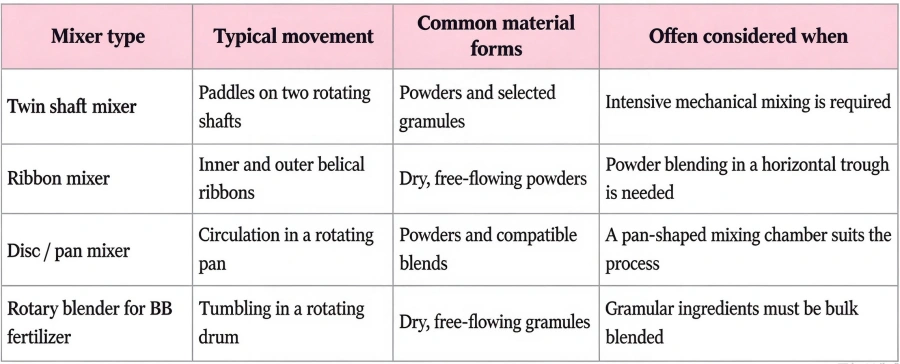
This comparison of types of fertilizer mixers highlights their main structural and application differences. These are typical applications, not absolute rules: actual performance depends on the material properties, mixer geometry, operating settings, and production requirements.
6. How to Choose the Right Fertilizer Mixer
Selecting equipment should begin with the production task, not simply the machine name. Before comparing models, define the formulation, expected output, and required mixing quality.
Identify the Raw Materials
List each ingredient and record its particle size, moisture content, bulk density, flowability, abrasiveness, and sensitivity to breakage. Powdered formulations and granular BB blends may need different mixing mechanisms.
Define the Mixing Objective
Determine whether you need to distribute fine additives through a bulk material, combine several powders, or blend pre-made granules while preserving their shape. The objective helps narrow down the types of fertilizer mixers suitable for your process.
Confirm Capacity and Operation
Clarify whether production will be batch-based or continuous. Estimate the required throughput, working volume, mixing time, feeding method, and discharge requirements. Nominal machine capacity alone does not guarantee the desired output or uniformity.
Check Cleaning and Maintenance
If the production line handles multiple formulations, consider how easily the chamber can be cleaned and whether material may remain around shafts, ribbons, scrapers, or discharge outlets. Also review wear-part replacement, sealing, and maintenance access.
Request Material Testing and Technical Confirmation
When the formulation is unusual or the required uniformity is strict, provide representative samples and operating conditions to the supplier. A mixing test can help evaluate blend uniformity, particle damage, and discharge behavior before purchasing.
These factors help narrow down the types of fertilizer mixers suitable for a particular production line. A reliable decision should combine raw-material properties, process objectives, technical data, and supplier confirmation rather than relying on a general equipment label alone.
Conclusion
Understanding the types of fertilizer mixers helps fertilizer manufacturers compare equipment according to structure, material compatibility, and production objectives. Twin shaft mixers are often considered for intensive mechanical mixing; ribbon mixers for compatible dry powders; disc or pan mixers for processes suited to pan circulation; and rotary blenders for bulk blending of granular BB fertilizer.
No single design is ideal for every formulation. Before making a decision, confirm material characteristics, mixing targets, throughput, cleaning needs, and the machine’s actual configuration with the supplier. Comparing types of fertilizer mixers carefully helps manufacturers make more informed equipment decisions and select a mixer that fits the complete production process.
Get A Quote