

Introduction
Growing healthy vegetables requires more than watering regularly and adding fertilizer whenever plants look weak. Different crops have different nutrient requirements, and even the same vegetable may need different feeding strategies during seedling growth, flowering, fruit development, and harvesting. Applying too much fertilizer can damage roots, while using an unsuitable formula may encourage excessive leaf growth without improving the harvest.
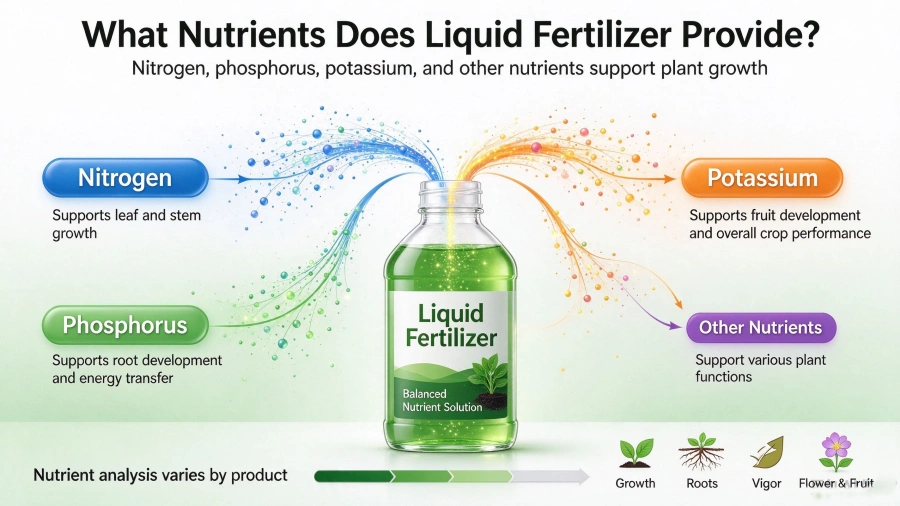
Organic liquid fertilizer for vegetables is a practical option for gardeners, greenhouse growers, and commercial vegetable farms that want to supply nutrients through irrigation or direct soil application. Depending on its ingredients and nutrient analysis, a liquid fertilizer may supply nitrogen, phosphorus, potassium, and other nutrients that support plant growth. Some products also contain organic matter or other beneficial components, although their composition varies considerably.
However, there is no single formula that works equally well for every vegetable. Leafy greens, tomatoes, peppers, carrots, and cucumbers have different growth patterns, and their fertilizer requirements also depend on soil conditions, climate, growing containers, and irrigation practices. Choosing the right product is only the first step. Growers must also understand dilution rates, application timing, and signs of nutrient imbalance.
This guide explains how to select organic liquid fertilizer for vegetables, adjust feeding throughout the growing season, troubleshoot common problems, and apply fertilizer more efficiently. It also explores what manufacturers should consider when producing liquid fertilizers for vegetable growers.
How to Choose Organic Liquid Fertilizer for Vegetables
The best fertilizer choice depends on what you are growing, the condition of your soil, and the stage of plant development. Before purchasing a product, check its nutrient analysis and application instructions instead of relying only on claims such as natural, organic, or suitable for all plants.
Leafy Greens Need Steady, Balanced Nutrition
Lettuce, spinach, kale, and other leafy vegetables are grown mainly for their leaves. They need sufficient nitrogen to support leaf development, but this does not mean that more nitrogen always produces a better harvest. Excessive feeding can lead to soft growth, nutrient imbalance, or unnecessary fertilizer use.
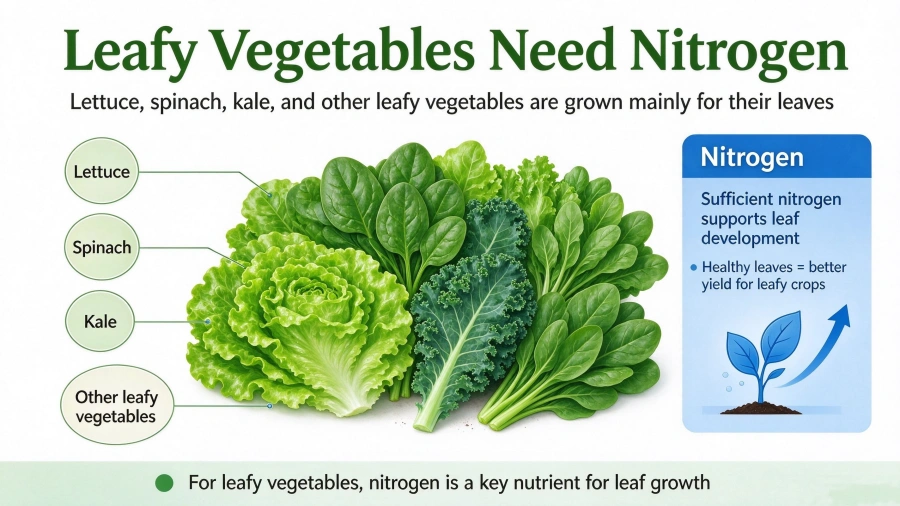
For leafy greens, organic liquid fertilizer for vegetables should be selected according to the crop’s growth stage and the nutrients already available in the soil. A balanced product may be suitable when the soil needs several nutrients, while a product with a higher nitrogen proportion may be appropriate when a confirmed nitrogen shortage needs correction.
For example, suppose lettuce develops pale older leaves and grows more slowly than expected. Nitrogen deficiency is one possible explanation, but it is not the only one. Poor root development, waterlogged soil, low temperatures, and unsuitable soil pH can also reduce growth. Before increasing the fertilizer rate, inspect the roots and growing conditions.
Leafy greens also have relatively short production cycles. Applying large amounts of fertilizer shortly before harvest is rarely a sensible substitute for an appropriate feeding schedule. Follow the product label, especially when it specifies restrictions for edible crops, harvest intervals, or application methods.
Tomatoes and Peppers Need Different Nutrients at Different Stages
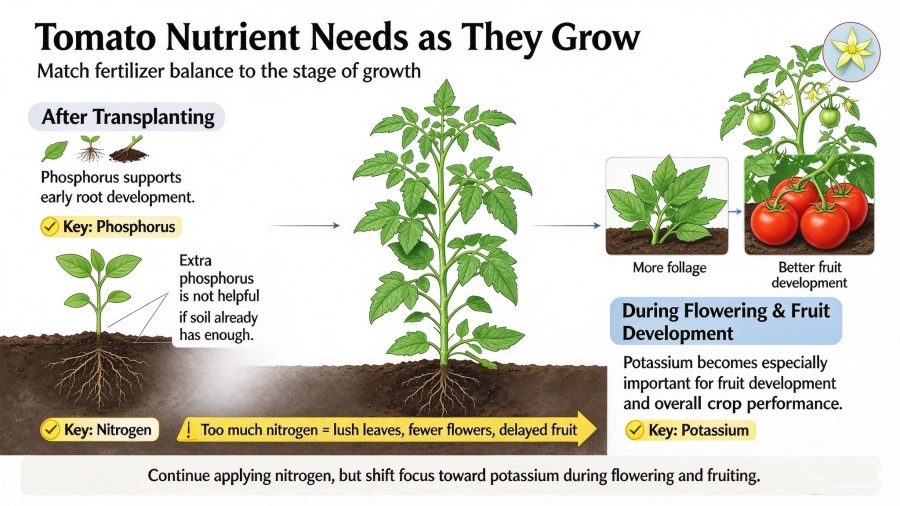
Tomatoes and peppers produce both leaves and fruit, so their nutrient requirements change as they develop. Young plants need enough nutrients to establish roots and healthy foliage. As flowering and fruit development begin, growers should pay closer attention to the overall balance of nitrogen, phosphorus, and potassium.
Organic liquid fertilizer for vegetables can be useful when growers need to apply measured amounts of nutrients during irrigation. However, a liquid product should not automatically be considered better than a granular fertilizer. The right choice depends on nutrient concentration, soil conditions, application equipment, and the grower’s feeding schedule.
Consider a tomato plant that grows vigorously but produces very few flowers. Adding more nitrogen without checking the existing nutrient supply may make the problem worse by encouraging further vegetative growth. Review the fertilizer label, sunlight exposure, watering practices, and plant development before changing the formula.
When fruit begins to develop, potassium becomes particularly important for normal plant function and fruit development. This does not mean every tomato plant needs a high-potassium product immediately. The appropriate formula depends on the growing medium, existing nutrient levels, and the product’s actual analysis.
Root Vegetables Need Suitable Soil Conditions
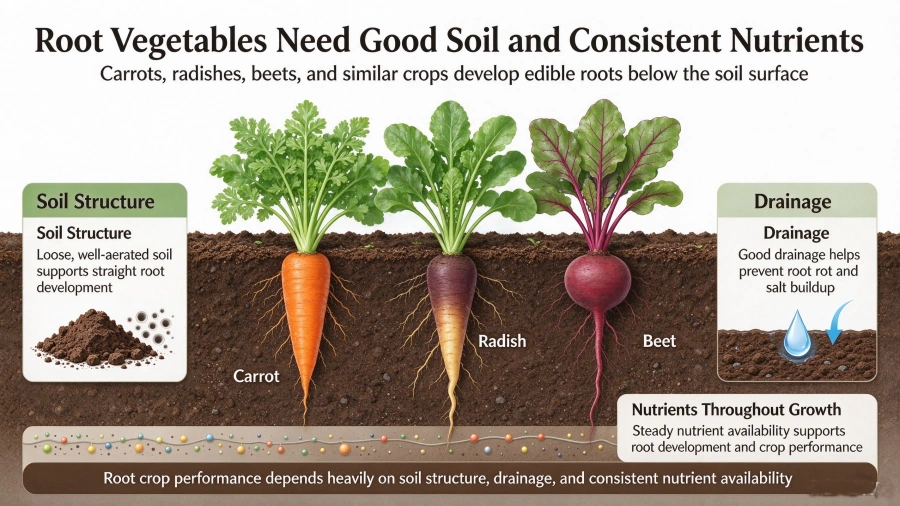
Carrots, radishes, beets, and similar crops develop edible roots below the soil surface. Their performance depends heavily on soil structure, drainage, and the availability of nutrients throughout the growing period.
Too much nitrogen can encourage excessive foliage in some root crops, while compacted soil or irregular watering may prevent roots from developing properly. Misshapen carrots, for example, are not necessarily evidence of a fertilizer shortage. Stones, hard soil, root damage, and inconsistent moisture may be more important causes.
When choosing organic liquid fertilizer for vegetables grown for their roots, avoid selecting a product based only on its nitrogen content or marketing description. Consider the crop’s nutrient requirements and the condition of the planting area. A well-prepared growing bed with suitable moisture and soil structure is just as important as the fertilizer itself.
For container-grown radishes or beets, check how quickly the growing medium dries out and whether nutrients are being lost through frequent drainage. Smaller containers may need more frequent monitoring, but that does not mean fertilizer should be added every time the plants are watered. Follow the label and adjust only when the crop and growing conditions justify it.
Cucumbers and Other Fruiting Vegetables Need Consistent Feeding
Cucumbers, zucchini, and similar crops can produce substantial amounts of fruit during a relatively short period. They need sufficient water and nutrients to support continuous growth, particularly when plants are carrying multiple fruits.
A suitable organic liquid fertilizer for vegetables may help growers deliver nutrients in controlled amounts, especially in greenhouse production or drip-irrigation systems. Nevertheless, irregular watering can cause problems that fertilizer alone cannot solve. If plants repeatedly dry out and then receive large amounts of water, nutrient uptake may become inconsistent and fruit quality may suffer.
Check the plant’s overall condition rather than responding to every yellow leaf with more fertilizer. Older leaves naturally change as plants develop, while widespread yellowing, weak growth, or poor fruit development may indicate a problem with nutrition, roots, pests, or environmental conditions.
Adjust Feeding to Each Growth Stage
Selecting a suitable product is only part of a successful feeding plan. The amount, concentration, and timing of fertilizer applications should match the crop’s development and the growing conditions.
Seedling Stage: Start with a Conservative Approach
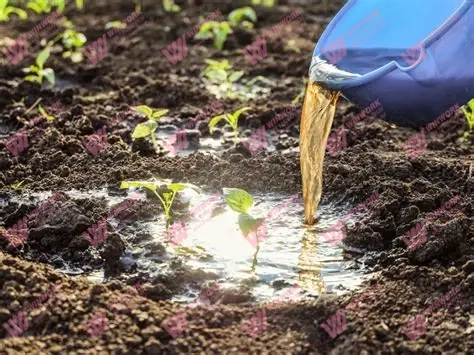
Young seedlings have small root systems and limited reserves. A concentrated fertilizer solution may damage roots or create excessive salt levels around them, especially when seedlings are growing in small trays or containers.
Before applying organic liquid fertilizer for vegetables to seedlings, check whether the growing medium already contains starter nutrients. Some commercial seed-starting mixes include enough fertilizer for the initial growth period. Adding another product immediately may be unnecessary.
If the product is suitable for seedlings, use the dilution rate specified on its label. Do not assume that a stronger solution will help seedlings grow faster. Provide adequate light, suitable temperatures, and consistent moisture, and monitor new leaf development before changing the feeding plan.
For example, if tomato seedlings have thin stems and lean toward a window, insufficient light may be the main problem. Adding extra fertilizer will not correct poor lighting. Moving the plants to a brighter location and maintaining appropriate growing conditions may be more effective than increasing nutrient concentration.
Vegetative Stage: Investigate Slow Growth Before Increasing Fertilizer
During vegetative growth, plants develop leaves, stems, and roots. This is an important period for establishing the structure needed to support later flowering or harvesting.
If plants grow slowly, check several factors before applying more organic liquid fertilizer for vegetables. Look at leaf color, root health, soil moisture, drainage, temperature, and light exposure. If possible, test the soil or growing medium to identify nutrient deficiencies more accurately.
Pale older leaves may indicate nitrogen deficiency, while other patterns of discoloration can suggest different nutrient problems. However, visual symptoms often overlap. Waterlogged roots, unsuitable pH, and disease may prevent plants from absorbing nutrients even when those nutrients are present in the soil.
A practical approach is to identify the most likely cause, make one appropriate adjustment, and observe the plants over the following days. Applying several fertilizers at once makes it difficult to determine which change helped or caused further problems.
Flowering and Fruiting Stage: Check the Formula Before Changing It
Flowering and fruit development place different demands on vegetable plants. Growers should consider the crop, expected yield, existing nutrient levels, and the composition of the fertilizer already being used.
For tomatoes, peppers, and cucumbers, an unsuitable feeding program may encourage excessive leaf growth or fail to supply enough of a needed nutrient. Before switching to a different organic liquid fertilizer for vegetables, check the nutrient analysis and compare it with the crop’s requirements.
For instance, a greenhouse grower may notice that tomato plants have plenty of foliage but relatively few flowers. Increasing fertilizer concentration without examining the situation is unlikely to be a reliable solution. Light levels, temperature, watering, and the existing nitrogen supply should also be reviewed.
Once fruit develops, maintain a consistent feeding and irrigation schedule appropriate to the crop. Sudden changes in watering or nutrient concentration may create additional stress. The goal is not to maximize fertilizer use, but to supply what plants need without creating avoidable imbalances.
Near Harvest: Follow the Product Instructions
As harvest approaches, fertilizer decisions should account for crop type, product directions, and local requirements for edible crops. Do not assume that an organic product can be applied at any rate or at any time simply because its ingredients are natural.
Before applying organic liquid fertilizer for vegetables close to harvest, review the label for permitted crops, dilution instructions, application frequency, and any stated pre-harvest interval. If the product has no clear directions for the intended use, contact the manufacturer rather than guessing.
For leafy vegetables harvested frequently, a consistent feeding plan established earlier in the growing cycle is generally more practical than making large last-minute changes. For fruiting vegetables, continue to monitor plant condition and follow the recommended program rather than adding extra fertilizer to force faster ripening.
How to Apply Organic Liquid Fertilizer Correctly
Even a suitable fertilizer can perform poorly if it is diluted incorrectly or applied under unsuitable conditions. A clear application plan helps reduce waste, protects plants, and makes results easier to evaluate.
Check Nutrient Analysis and Dilution Rates
Start by reading the product label. Check the nutrient analysis, recommended dilution rate, application method, and frequency. Products sold under the same general category may have very different concentrations, so application rates should not be transferred from one product to another without checking the instructions.
For example, one product may be intended for dilution before soil application, while another may be formulated for a specific irrigation system. Using the wrong concentration can damage plants or deliver less nutrition than expected.
When using organic liquid fertilizer for vegetables, measure the product and water accurately. Avoid estimating the amount by eye, particularly when preparing a large tank for greenhouse irrigation. Record the product, dilution rate, application date, and observed plant response so that future adjustments can be based on actual results.
Do not mix multiple fertilizers or other agricultural products in the same tank unless their labels or a qualified technical adviser confirm compatibility. Some combinations can cause precipitation, clogging, or other problems that affect application.
Choose Between Soil Application and Irrigation
Liquid fertilizers may be applied directly to the soil or delivered through a suitable irrigation system, depending on the product formulation and label instructions.
Soil application can be useful for small gardens, raised beds, and crops where growers want to treat a defined area. Apply the solution as directed and avoid concentrating it against stems or exposing foliage to a product that is not approved for foliar use.
In greenhouse production, fertigation can help distribute nutrients through an irrigation network. However, the fertilizer must be suitable for the system. Poorly dissolved materials, suspended solids, or incompatible ingredients can block filters and emitters.
A reliable organic liquid fertilizer for vegetables intended for fertigation should be evaluated for solubility or suspension stability, filtration requirements, and compatibility with the irrigation equipment. The exact requirements depend on the formulation. Not every organic liquid fertilizer is suitable for every drip system.
Container Vegetables Need Closer Monitoring
Pots and containers usually hold less growing medium than garden beds. Nutrients and water can therefore change more quickly, particularly in hot weather or when plants are watered frequently.
For container tomatoes, peppers, and leafy greens, check moisture before watering and observe whether water drains freely from the bottom. If the medium remains saturated, roots may lack oxygen and struggle to absorb nutrients. Adding more fertilizer will not correct that problem.
Organic liquid fertilizer for vegetables can be convenient for container growing because it allows growers to measure and apply small amounts. Even so, frequent feeding is not automatically necessary. The correct schedule depends on the product concentration, container size, crop, growing medium, and watering frequency.
If white deposits appear on the surface of the growing medium or leaf tips begin to turn brown, excessive soluble salts may be one possible cause. Review fertilizer rates and water quality, and follow suitable guidance for managing the growing medium before applying additional nutrients.
How to Troubleshoot Common Fertilizer Problems
When vegetables look unhealthy, fertilizer is only one part of the diagnosis. A useful troubleshooting process starts with the symptom, considers several possible causes, and avoids making multiple untested changes at the same time.
Yellow leaves: Check whether the yellowing affects older leaves, newer leaves, or the whole plant. Nitrogen deficiency can cause older leaves to become pale, but poor drainage, root damage, unsuitable pH, and other nutrient problems can produce similar symptoms. Check growing conditions before increasing fertilizer.
Slow growth: Review temperature, light, root development, watering, and nutrient availability. A plant growing in cold soil or a waterlogged container may remain small even when fertilizer is available. Correct the underlying condition rather than repeatedly increasing the feeding rate.
Excessive leaves but few flowers: This may occur when nitrogen supply is high relative to the plant’s needs, but environmental conditions can also affect flowering. Check the existing fertilizer program, light exposure, temperature, and crop development before changing the formula.
Brown leaf tips: Possible causes include excessive fertilizer salts, irregular watering, root stress, and environmental damage. Check the fertilizer concentration and water quality. Do not assume that adding a different nutrient will solve the problem.
Poor fruit development: Review pollination, temperature, irrigation consistency, plant health, and the nutrient supply. A suitable organic liquid fertilizer for vegetables can support normal growth, but it cannot compensate for every environmental or pollination problem.
Keep a simple record of fertilizer applications and crop responses. If a problem affects many plants or persists after basic corrections, consider soil or growing-medium testing and seek advice from an agricultural specialist. This is more reliable than repeatedly changing products based only on appearance.
How to Choose a Reliable Organic Liquid Fertilizer
Product selection should be based on measurable information rather than the word “organic” alone. A clear label and consistent product quality make it easier to use fertilizer safely and evaluate whether it meets the crop’s needs.
First, check the nutrient analysis and ingredient information. Confirm that the product is appropriate for the vegetables you grow and the application method you plan to use. If the label does not explain the recommended dilution or frequency, ask the supplier for technical information before use.
Second, consider product stability and handling. Some liquid formulations may settle during storage and require mixing before application. Others may have specific storage conditions or a limited shelf life. Follow the manufacturer’s instructions and check whether the product can be used with your existing irrigation equipment.
Third, consider the practical cost per application rather than comparing bottle prices alone. A concentrated product may require a smaller quantity per tank, while a less concentrated product may require more storage and transport. Calculate the cost using the recommended application rate and the area or number of plants treated.
Finally, evaluate the product against your actual growing conditions. A fertilizer that works well in one greenhouse may not produce the same results in another soil or climate. Start with the recommended rate, observe the crop, and make evidence-based adjustments.
For growers who need organic liquid fertilizer for vegetables across different crop types, it may be useful to compare products by nutrient analysis, application method, concentration, storage requirements, and cost per treated area. This makes the selection process more practical than choosing a product based on broad marketing claims.
What Fertilizer Producers Should Consider When Making Liquid Fertilizer
Demand for liquid fertilizers creates opportunities for manufacturers serving vegetable growers, greenhouse operators, and agricultural distributors. However, producing a marketable liquid fertilizer involves more than mixing ingredients in a tank. The formulation must remain suitable for storage, transport, and the intended application method.
Start with the Intended Product and Raw Materials
Manufacturers should define the target product before choosing equipment. Will the fertilizer be a clear solution, a suspension containing fine particles, or a formulation based on particular organic raw materials? The answer affects mixing, filtration, storage, and quality-control requirements.
Raw materials should be evaluated for nutrient content, consistency, moisture, particle size, and compatibility. Organic materials can vary between batches, so suppliers may need testing and incoming-material controls. A formula that works with one batch of raw materials may need adjustment when the composition changes.
For manufacturers producing organic liquid fertilizer for vegetables, the intended crop, nutrient analysis, and application method should guide formulation development. Claims about nutrient content or product performance should be supported by appropriate testing and comply with applicable regulations.
Match Mixing and Filtration Equipment to the Formula
Mixing equipment must provide sufficient circulation and blending for the formulation. The required design depends on batch size, viscosity, solids content, and whether the ingredients dissolve or remain suspended. A simple solution and a thick suspension may require different mixing arrangements.
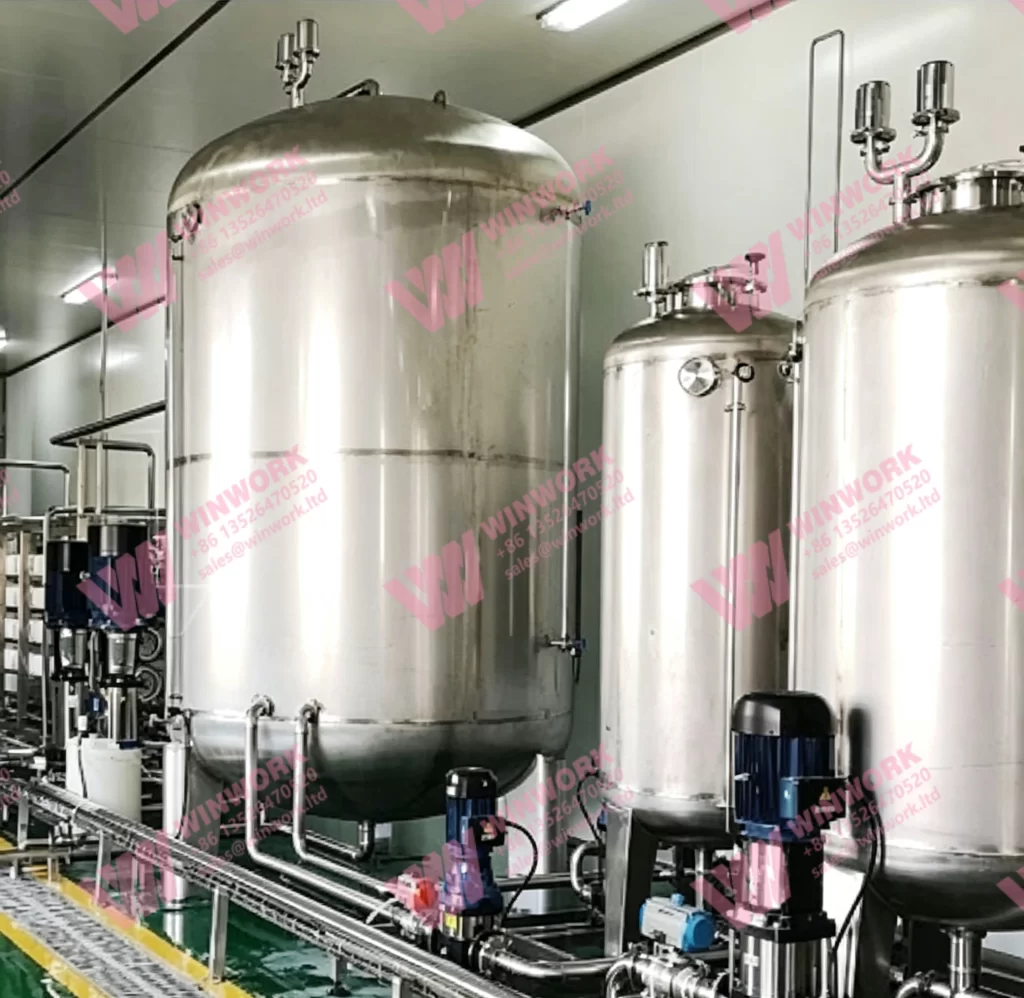
Filtration also needs to match the product and its intended use. If the fertilizer will be applied through drip irrigation, the filtration system must help protect the emitters without removing components that are meant to remain in the product. Manufacturers should confirm particle size and system compatibility rather than selecting a filter based only on tank capacity.
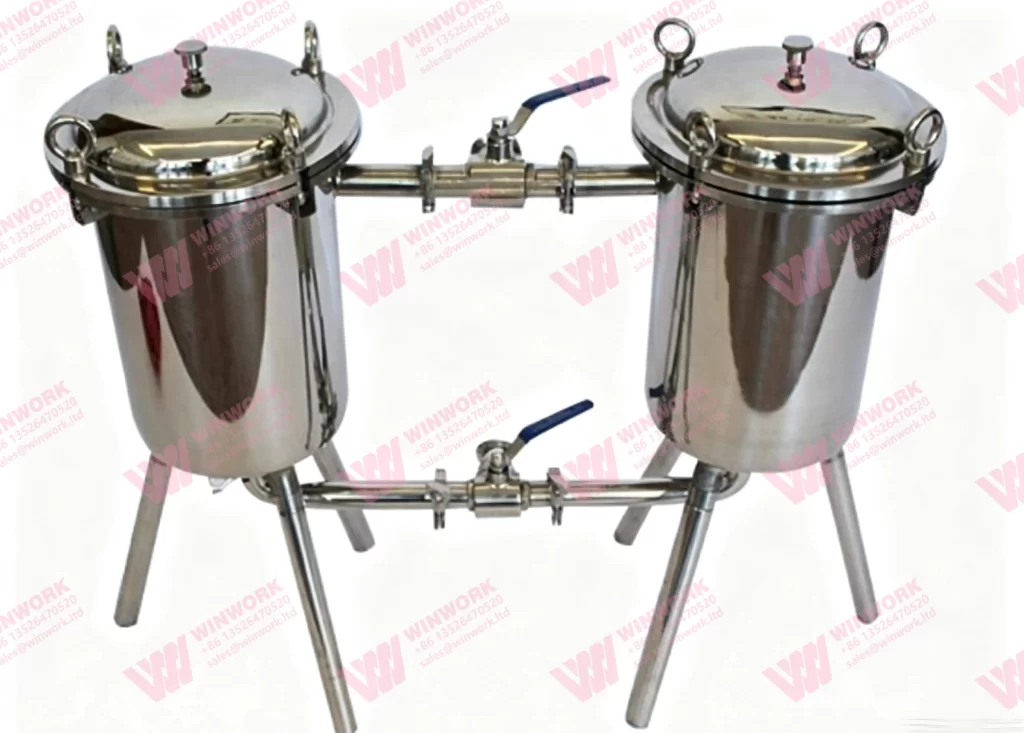
A liquid fertilizer production line may include raw-material preparation, metering, mixing, filtration where appropriate, storage tanks, and filling or packaging equipment. Not every product requires every component. Equipment selection should follow the formula and production target instead of adding unnecessary machinery.
Plan for Consistent Quality and Practical Packaging
Before commercial production, manufacturers should establish checks for nutrient content, pH where relevant, appearance, stability, and other properties required by the formulation. Storage tests can help identify settling, separation, or changes that may affect product handling.
Packaging should suit the sales channel and expected usage. Small bottles may be convenient for home gardeners, while larger containers may be more practical for farms, distributors, or greenhouse operations. The package must be compatible with the product and protect it under the recommended storage conditions.
A production line designed around these requirements can help manufacturers make batches more consistently and manage filling and storage more efficiently. However, equipment alone does not guarantee a reliable product. Formulation development, raw-material control, testing, and clear use instructions remain essential.
Manufacturers planning to supply organic liquid fertilizer for vegetables should therefore determine the product specifications, expected daily output, packaging sizes, and quality requirements before finalizing the equipment configuration. This makes it easier to select a production setup that fits the actual business rather than purchasing machinery based only on nominal capacity.
Final Thoughts
Successful vegetable growing depends on matching fertilizer use to the crop, growth stage, soil conditions, and application method. Leafy greens need suitable nutrition for leaf development, fruiting crops require a balanced feeding program throughout flowering and fruit production, and root vegetables depend heavily on appropriate soil structure and moisture management.
Organic liquid fertilizer for vegetables can be a useful part of that program when the product is suitable for the crop and applied according to its instructions. It is not a universal solution for yellow leaves, slow growth, poor flowering, or low yields. Checking water, light, roots, soil conditions, and nutrient availability helps growers identify the real problem before making changes.
For manufacturers, the same principle applies: start with the intended product and its performance requirements, then select the raw materials, mixing equipment, filtration, storage, and packaging systems that fit the formula. A well-planned liquid fertilizer production line should support consistent quality and practical use, not simply achieve a high production capacity.
By combining careful crop management with appropriate fertilizer selection, growers can make more informed decisions, reduce unnecessary applications, and build a more consistent vegetable production routine.
For more details, please feel free to contact us.
Email: sales@lanesvc.com
Contact number: +8613526470520
Whatsapp: +8613526470520
Get A Quote