Introduction
Producing fertilizer granules does not end when the granulator finishes its job. After granulation, the material can contain qualified granules, oversized particles, undersized particles, and fine powder. If these different sizes are not separated properly, the final fertilizer may have an inconsistent particle-size distribution.
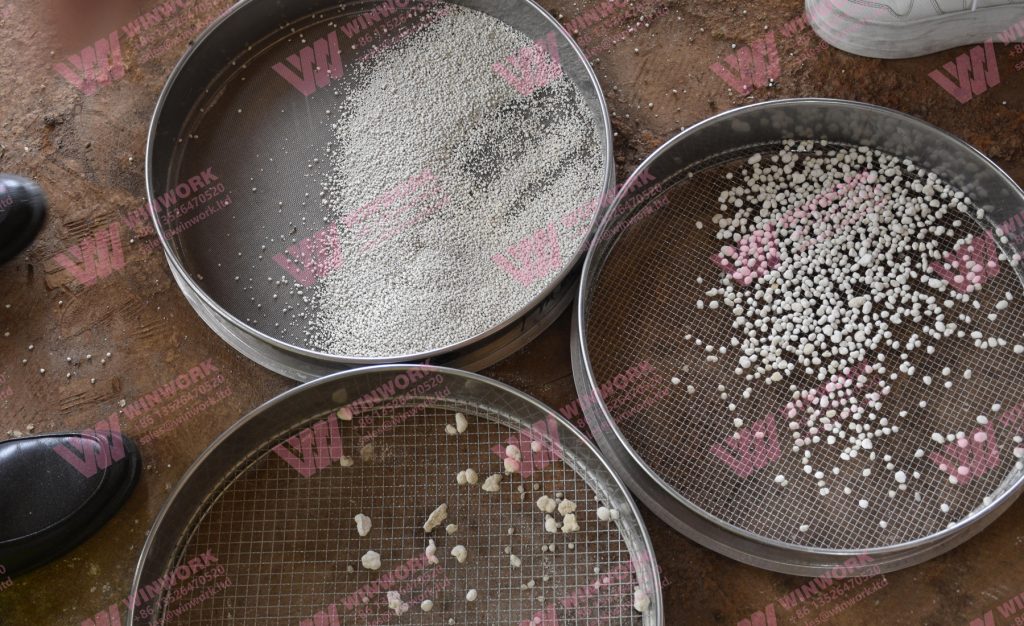
This is why screening equipment for fertilizer production is an important part of many fertilizer plants. The purpose is not simply to pass material through a screen. A well-designed screening process separates different particle sizes, sends unqualified material back for further processing, and allows qualified granules to continue toward coating or packaging.
For fertilizer producers, choosing the right machine means looking at more than capacity. The right screening equipment should match the actual fertilizer and the intended production result. Fertilizer type, moisture, target particle size, screening grades, and the desired screening result all need to be considered. This guide explains how to make that choice and when a rotary screener or vibrating screener may be suitable.
What Does Screening Equipment Do in Fertilizer Production?
In a fertilizer production line, screening usually comes after granulation and, depending on the process, drying and cooling. At this stage, the material needs to be separated according to particle size before it moves to the next step.
The first job of screening equipment is to remove oversized fertilizer granules. In this stage, screening equipment helps separate particles before they enter the next processing step. Large particles can be separated from the qualified product and sent to a crusher before returning to the granulation process. This recycling loop helps keep the final product within the desired size range.
The second job is to separate undersized particles and fine powder. These particles may be recycled into the production process instead of being packed as finished fertilizer. This can help reduce unwanted fines in the final product and improve material utilization.
The third job is to retain qualified fertilizer granules. Once particles meet the required size range, they can move to downstream processes such as coating, weighing, or packaging.
For this reason, screening equipment is closely connected with product consistency. It does not create the fertilizer granules, but it helps control which particles become part of the final product.
What Should You Consider When Choosing Fertilizer Screening Equipment?
Choosing fertilizer screening equipment should start with the production requirements rather than the machine name. When evaluating screening equipment, consider the complete fertilizer process instead of one machine specification. Several factors can affect which configuration is appropriate.
Production Capacity
Start with the amount of fertilizer that needs to be screened per hour. A small fertilizer project may require only a few tons per hour, while a larger production line may need much higher throughput.
The screening capacity should be reasonably matched with the granulator, dryer, cooler, and other upstream equipment. The screening equipment configuration should also leave enough room for the required material flow. If the screening stage cannot handle the material coming from the previous process, it can become a bottleneck in the production line.
At the same time, selecting a machine with much more capacity than the actual requirement may not be the most practical configuration. Capacity should therefore be considered together with the complete production process.
Fertilizer Type and Material Characteristics
The type of fertilizer is another starting point. Common applications include NPK fertilizer, compound fertilizer, organic fertilizer, bio-organic fertilizer, and other granular fertilizers.
However, the fertilizer name alone does not determine the machine. Moisture, stickiness, particle strength, bulk density, and material flow can also influence the screening process.
For example, two fertilizer products may have a similar target particle size but behave differently during screening because their moisture or physical properties are different. A suitable fertilizer screening machine should therefore be selected according to the actual material condition.
Target Particle Size
The required final particle size is one of the most important factors. A producer may want a finished fertilizer product in a range such as 2–4 mm or 2–5 mm.
The screen opening and configuration should be selected according to the target range and the particle sizes that need to be removed. Before purchasing a machine, it is useful to define the desired finished product size clearly.
Number of Size Grades
Another question is how many particle-size grades need to be separated.
If the goal is simply to separate qualified granules from oversized and undersized material, a relatively straightforward screening process may be enough. If the production line needs several particle-size fractions, a more detailed screening configuration may be required.
This is one reason why fertilizer screening equipment should be selected according to the desired result rather than capacity alone.
Desired Screening Result
The most useful question is often: What do you want the screener to achieve?
Some fertilizer producers mainly want continuous separation of qualified and unqualified granules. Others need more detailed particle-size classification. Some projects place greater importance on stable material flow, while others require several screening grades.
Defining this goal first makes it easier to compare different screening solutions.
Which Screening Equipment Is Right for Your Fertilizer?
There is no single screener that is automatically suitable for every fertilizer application. The choice depends on the material, capacity, moisture, target particle size, and the result you want to achieve. In some applications, both rotary and vibrating machines may be suitable.
If You Need Continuous and Stable Screening, Consider a Rotary Screener
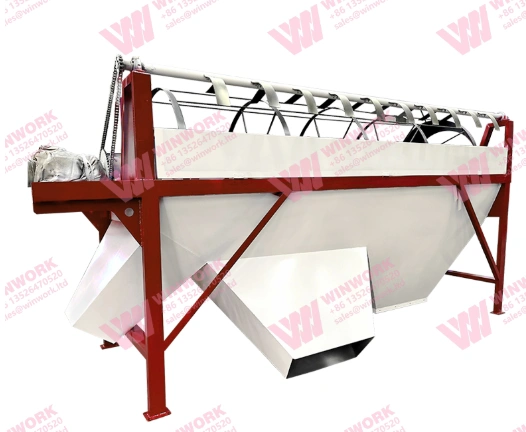
A rotary screener uses a rotating cylindrical drum to move fertilizer material through the screening surface. It can be considered when continuous material flow and stable screening are important parts of the production process.
For fertilizer producers handling granular fertilizer, compound fertilizer, NPK fertilizer, or organic fertilizer, a rotary configuration may be suitable when the main requirement is to separate qualified and unqualified particles continuously.
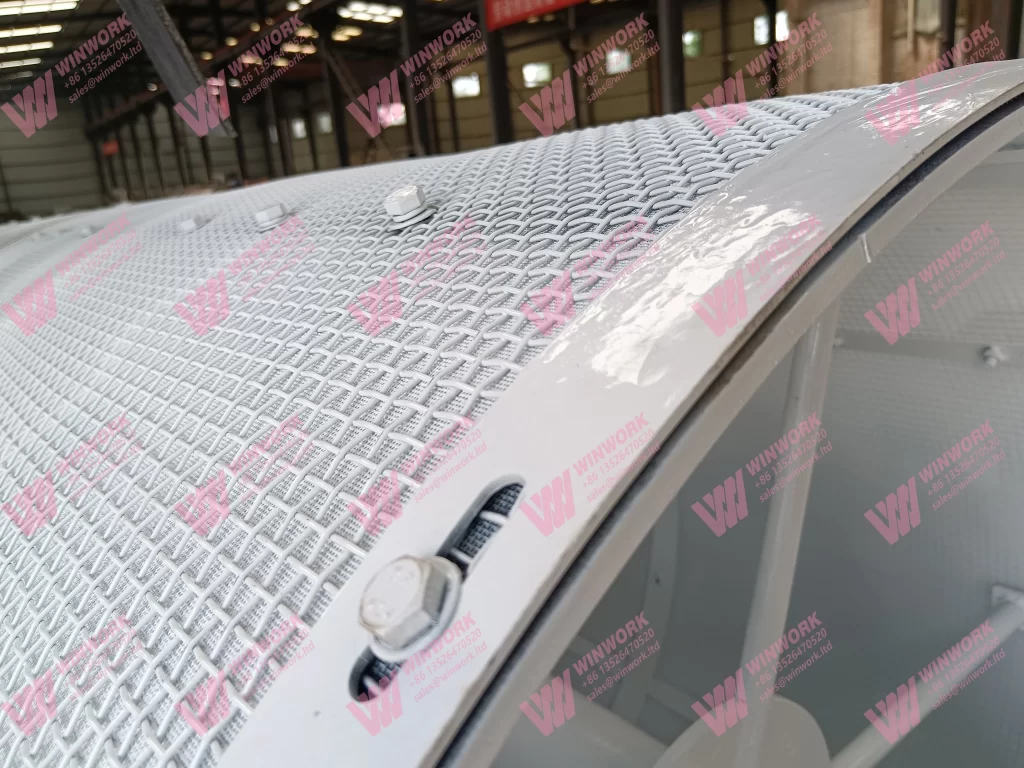
A rotary screener can also be integrated into a larger fertilizer production line. After screening, oversized particles can be sent to crushing and re-granulation, while qualified granules can continue to the next stage.
If You Need More Detailed Particle-Size Classification, Consider a Vibrating Screener
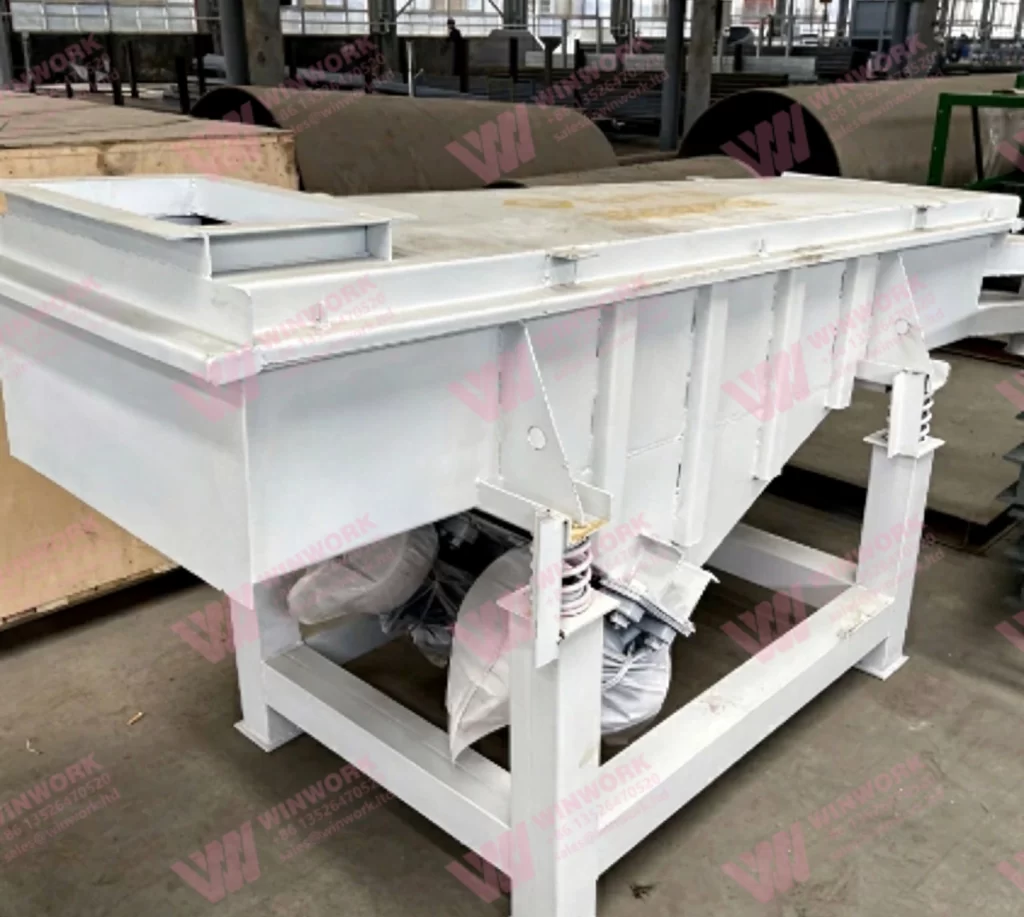
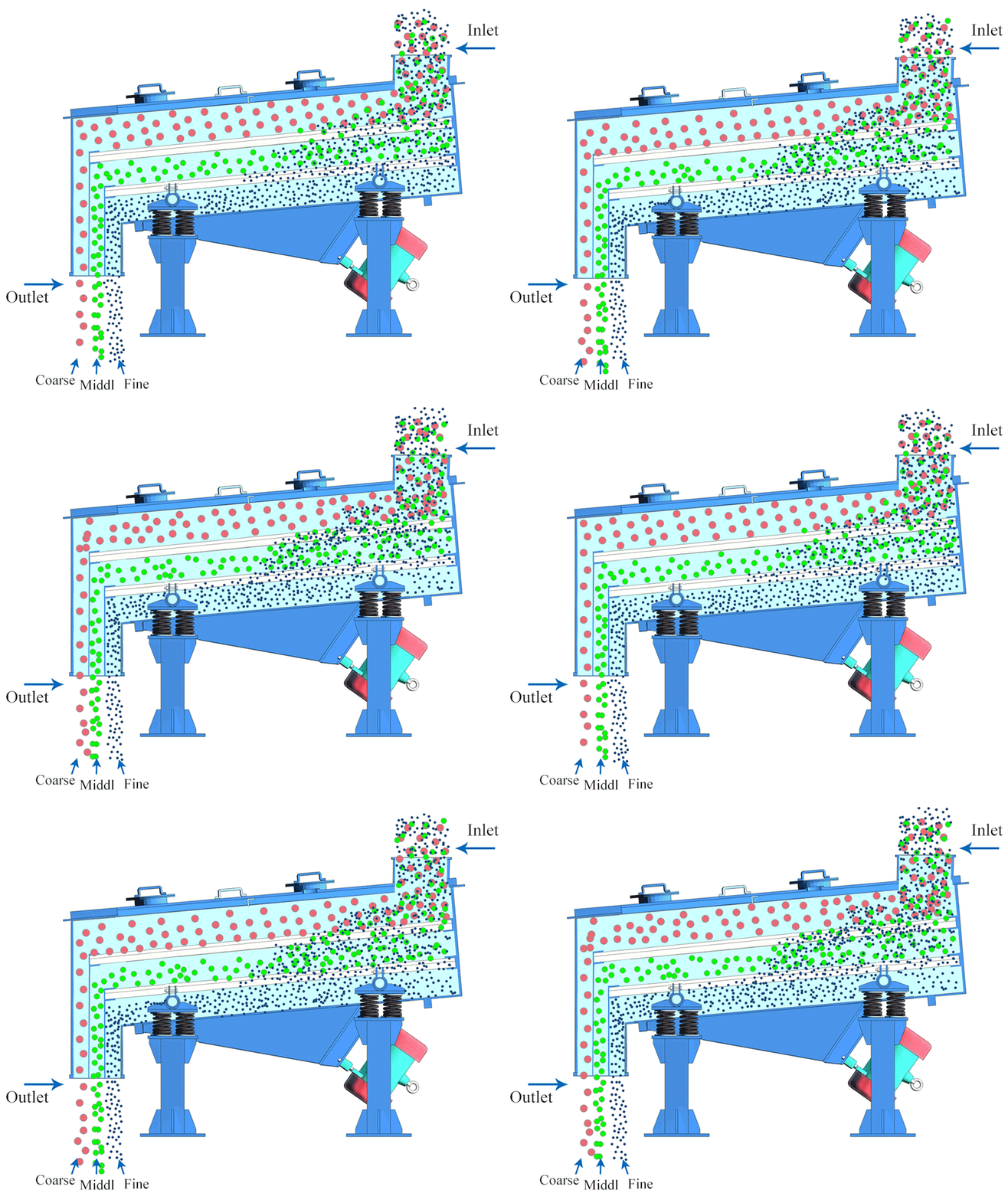
A vibrating screener uses vibration to move fertilizer particles across the screening surface. It can be considered when the production process requires more detailed particle-size classification or several screening grades.
With different screen decks or configurations, a vibrating machine can separate material into different size ranges. This makes it a possible option when the main goal is to control particle-size classification rather than simply remove unqualified granules.
If You Produce NPK or Compound Fertilizer, Both May Be Suitable
NPK and compound fertilizer do not automatically require one specific type of screener. Both rotary and vibrating screening equipment may be suitable, depending on the production requirements.
If the main goal is continuous screening of qualified and unqualified granules, a rotary screener may be considered. If the process requires more detailed particle-size classification, a vibrating screener may be considered.
The final choice should also take production capacity, moisture, material characteristics, target particle size, and screen configuration into account.
If You Produce Organic Fertilizer, Consider the Material Condition
Organic fertilizer can also be processed with different screening solutions. The important point is to look at the condition of the material rather than selecting a machine based only on the word “organic.”
If the organic fertilizer is relatively dry, granular, and requires continuous screening, a rotary screener may be considered. If the material and production process require multiple particle-size grades and the material is suitable for vibrating screening, a vibrating screener may also be considered.
The same principle applies to other granular fertilizers: the fertilizer type is a starting point, not the only selection criterion.
If You Mainly Need to Remove Oversized and Undersized Granules, Both May Be Suitable
Many fertilizer production lines use screening to separate three basic streams: oversized particles, qualified granules, and undersized particles or powder.
Oversized granules can be sent to a crusher and then returned to granulation. Qualified granules can move to coating or packaging. Undersized material can be recycled according to the production process.
For this basic separation task, both rotary and vibrating machines may be considered. Capacity, material characteristics, moisture, particle size, and the required screen configuration should then be used to determine the more suitable solution.
Where Does a Fertilizer Screening Machine Fit in a Production Line?
A fertilizer screening machine normally works as part of a complete production process rather than as an isolated piece of equipment. In other words, screening equipment should be considered as one stage of the complete fertilizer production system. A typical granular fertilizer line may follow a sequence such as:
Raw Materials → Crushing → Mixing → Granulation → Drying → Cooling → Screening → Coating → Packaging
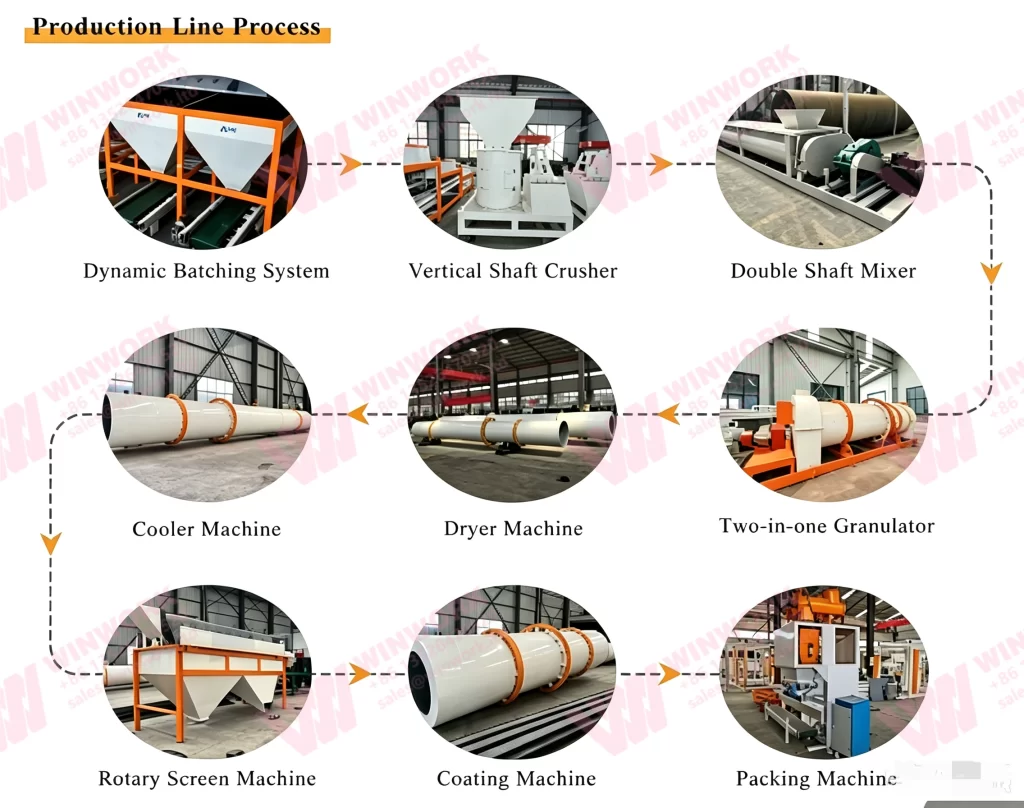
The exact process depends on the fertilizer type and production technology, but the screening stage has an important role in controlling particle size before the finished product reaches downstream equipment.
After screening, the material can be divided according to its size. Oversized fertilizer granules may go to a crusher and return to granulation. Undersized material or powder may be recycled. Qualified granules can continue to coating, weighing, and packaging.
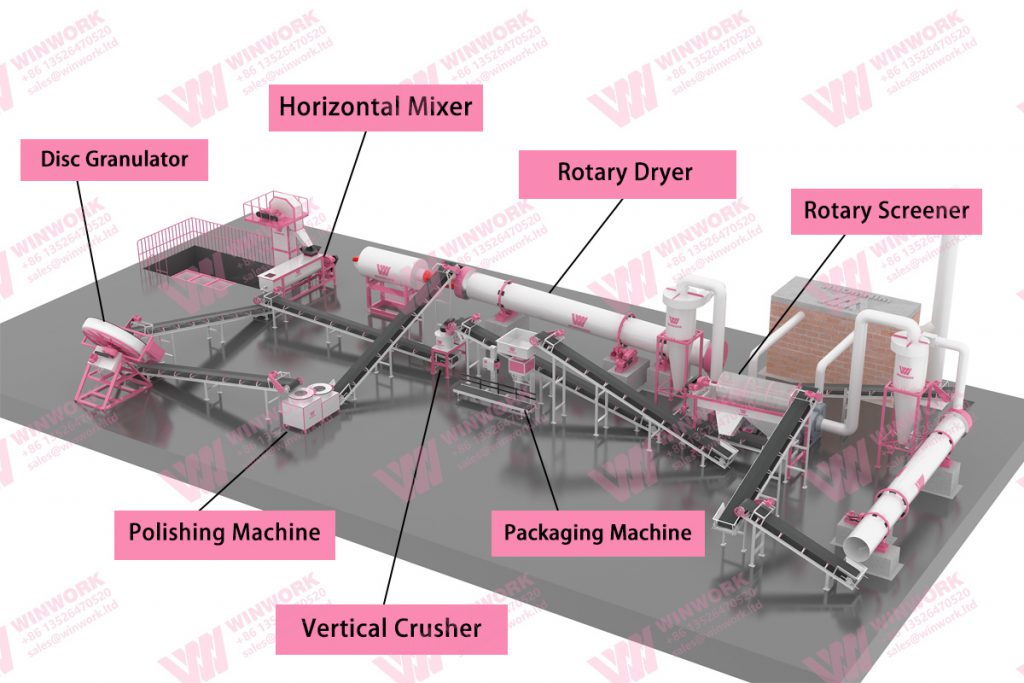
Because of this connection, the screening stage should be considered when the entire fertilizer production line is designed. The capacity and material flow of the screener should work with the equipment before and after it.
How Can You Choose the Right Screening Equipment for Your Project?
Before selecting fertilizer screening equipment, prepare several basic details about the project. These details make it easier to determine a suitable machine configuration.
First, provide the fertilizer type and describe the material condition. Then specify the required production capacity in tons per hour. The moisture content or whether the material is dry, moist, or sticky is also useful.
Next, define the target fertilizer particle size. If you need several particle-size grades, explain the required ranges. It is also helpful to describe what you want to achieve through screening: simple separation of qualified and unqualified granules, removal of fines and oversized particles, or more detailed particle-size classification.
Finally, explain whether the screener will be installed in a new fertilizer production line or added to an existing system. Information about the upstream and downstream equipment can help ensure that the screening stage fits the complete process.
The more clearly these requirements are defined, the easier it is to select screening equipment for fertilizer production that matches the actual project.
Conclusion
Choosing screening equipment for fertilizer production is not simply a matter of selecting a machine with enough capacity. Fertilizer type, material condition, moisture, target particle size, number of screening grades, and the desired screening result all need to be considered.
For continuous and stable screening, a rotary screener may be a suitable option. For more detailed particle-size classification, a vibrating screener may be considered. For NPK, compound fertilizer, organic fertilizer, and other granular fertilizers, either solution may be suitable in some applications.
The key is to start with the fertilizer and the result you want to achieve, then select the machine configuration that fits the complete production line.
Get A Quote