

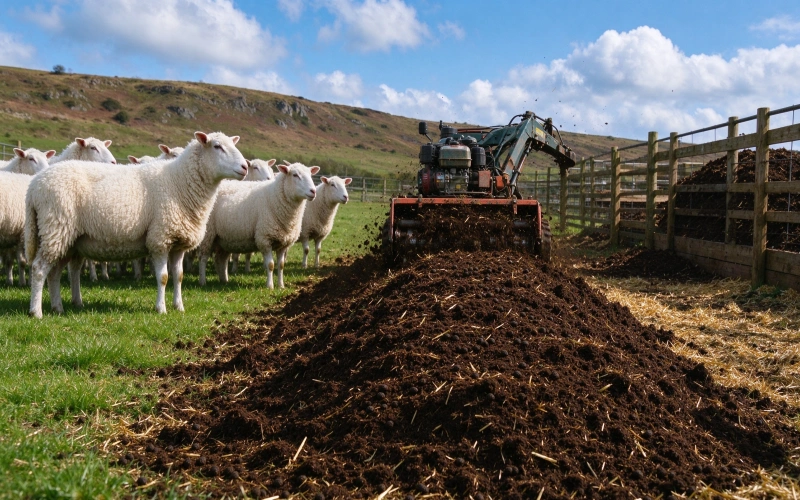
Sheep manure composting is a practical way to transform livestock waste into a valuable organic resource. For sheep farmers, commercial composting businesses, and organic fertilizer manufacturers, properly managed composting can help reduce waste accumulation and create material suitable for agricultural applications. However, the right method depends on the raw materials, processing volume, site conditions, and intended use of the finished product.
Small farms may manage manure with basic tools and a suitable composting area. Larger operations often need a more organized process, including moisture adjustment, mechanical turning, temperature monitoring, and downstream processing. Understanding these requirements before investing in equipment can help businesses plan their operations more efficiently.
This guide explains how sheep manure composting works, which equipment may be required, how commercial systems differ from small-scale methods, and what buyers should consider when selecting machinery.
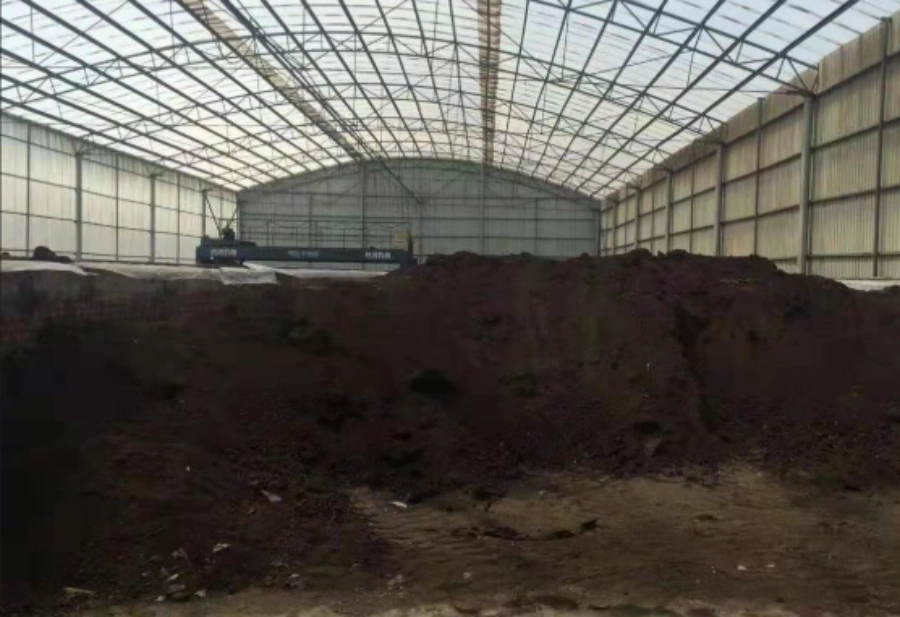
1. What Is Sheep Manure Composting?
Sheep manure composting is a biological process in which microorganisms break down organic materials under controlled conditions. During decomposition, microorganisms use organic matter as a source of energy, while suitable moisture and oxygen conditions support their activity. The process gradually transforms raw materials into more stable compost.
Sheep manure contains organic matter and plant nutrients, but its properties vary according to animal feed, bedding materials, manure collection methods, and storage conditions. For this reason, sheep manure composting requires a method suited to the characteristics of each batch rather than a single recipe or processing method.
Depending on the available materials, sheep manure may be mixed with straw, dry leaves, crop residues, or other suitable carbon-rich materials. These additions can improve the physical structure of the mixture and help adjust its moisture content. The appropriate proportions should be determined by the characteristics of the raw materials.
For agricultural use, properly matured compost can contribute organic matter to soil. For commercial producers, consistent processing and quality control are also important when preparing a product for sale.
It is worth distinguishing composting from complete organic fertilizer manufacturing. Composting focuses on the biological decomposition and stabilization of organic materials. Producing a commercial fertilizer may require additional crushing, mixing, granulation, screening, and packaging, depending on the product specification.
2. How to Compost Sheep Manure Step by Step
Effective sheep manure composting requires suitable raw materials, adequate aeration, appropriate moisture, and sufficient time for decomposition and curing. The exact operating conditions depend on the mixture, climate, pile dimensions, and composting system.
Step 1: Collect and Prepare the Raw Materials
Begin by collecting the sheep manure and checking its moisture content, texture, and contamination risks. These factors influence sheep manure composting, especially when manure mixed with bedding or straw behaves differently from manure collected separately.
If the mixture is too wet, suitable dry materials may help absorb excess moisture and improve porosity. If it is too dry, controlled water addition may be necessary. Remove unsuitable foreign objects before processing.
Commercial facilities should also estimate their daily raw material input. This figure helps determine the required composting area, handling capacity, equipment configuration, and storage requirements.
Step 2: Adjust Moisture and Aeration
Moisture is essential for microbial activity during sheep manure composting, but excessive water can fill the air spaces between particles and restrict oxygen supply. Poor aeration may lead to anaerobic conditions, unpleasant odors, and slower decomposition.
A mixture that is too dry may also decompose slowly because microbial activity becomes limited. Operators should therefore monitor moisture throughout the process rather than relying only on the initial mixture.
The carbon-to-nitrogen ratio, particle size, and bulk density can also affect composting performance. Where necessary, operators can adjust the mixture using suitable carbon-rich materials (Straw, rice husks, and manure, etc.) and improve its structure through mixing.
Step 3: Build Suitable Compost Piles
Windrow composting is one option for farms and commercial facilities with sufficient outdoor space. Materials are arranged in long piles that can be turned periodically to maintain aeration and redistribute moisture.
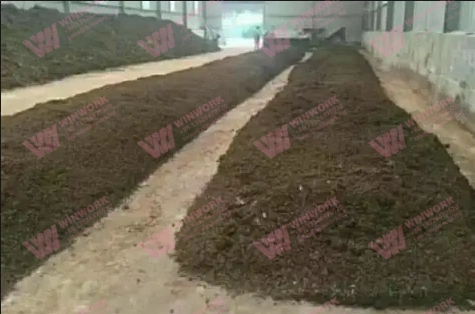
Pile dimensions should match the properties of the material and the capabilities of the turning equipment. Piles that are too large may develop uneven conditions, while piles that are too small may lose heat too quickly.
Site planning should also account for drainage, access roads, runoff management, and separation between raw materials and finished compost. These considerations become increasingly important when processing large quantities of livestock manure.
Step 4: Turn the Compost Regularly
During sheep manure composting, turning redistributes material within the pile and helps introduce oxygen. It can also reduce temperature and moisture differences between different sections of the windrow.
The appropriate turning frequency depends on temperature, oxygen availability, moisture, and the stage of decomposition. Excessive turning can consume unnecessary labor or energy, while insufficient turning may leave poorly aerated areas.
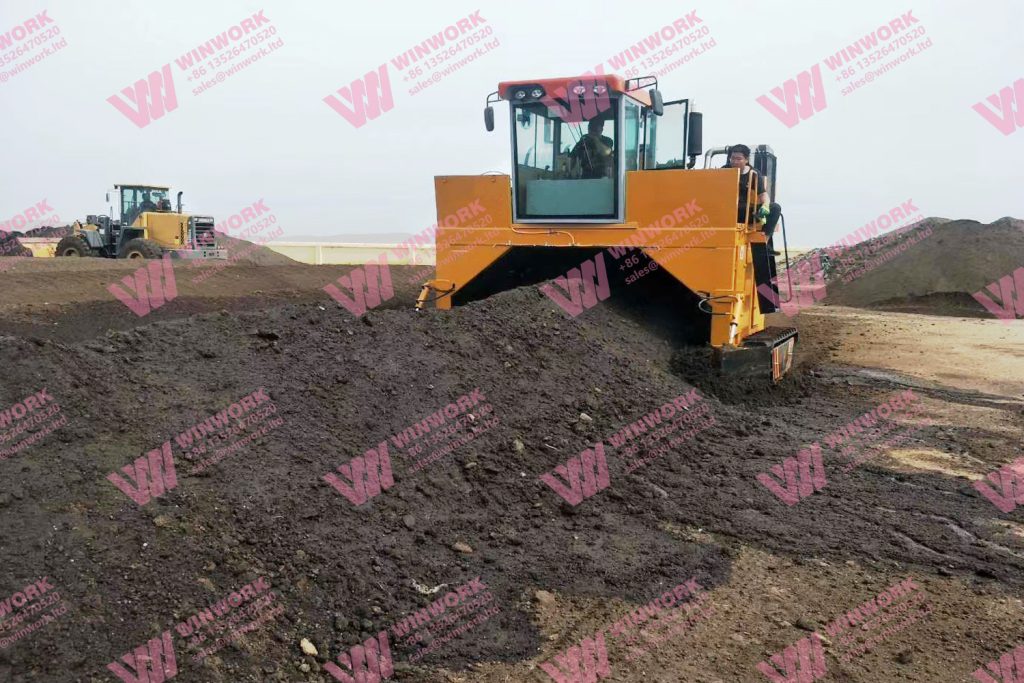
For small operations, manual tools or small machines may be adequate. Larger facilities may benefit from a mechanical compost turner designed for their windrow dimensions and daily workload.
Step 5: Monitor Temperature and Allow Curing
Temperature monitoring provides useful information about microbial activity and process conditions. Where pathogen reduction is required, the facility should follow an appropriate validated time-and-temperature process and comply with applicable regulations.
After the active composting stage, the material may need additional curing to improve stability before use or sale. Operators should assess maturity using suitable indicators rather than relying on color or smell alone.
Commercial producers may also need laboratory testing for nutrient content, maturity, salinity, and other quality parameters relevant to their intended market.
3. What Equipment Is Used for Sheep Manure Composting?
The equipment required for sheep manure composting depends on processing volume, raw material characteristics, available space, labor costs, and the intended final product. A basic farm setup may need very little machinery, while a commercial operation may require several coordinated machines.
Compost Turner
A compost turner mixes windrow material and helps maintain aeration during decomposition. Machine selection should account for windrow width, turning depth, ground conditions, and required daily throughput.
Wheel-type and crawler-type compost turners may suit different open-site conditions, while groove-type machines are designed for compatible channel-based systems. Buyers should compare these options according to their site layout rather than selecting equipment based on machine price alone.
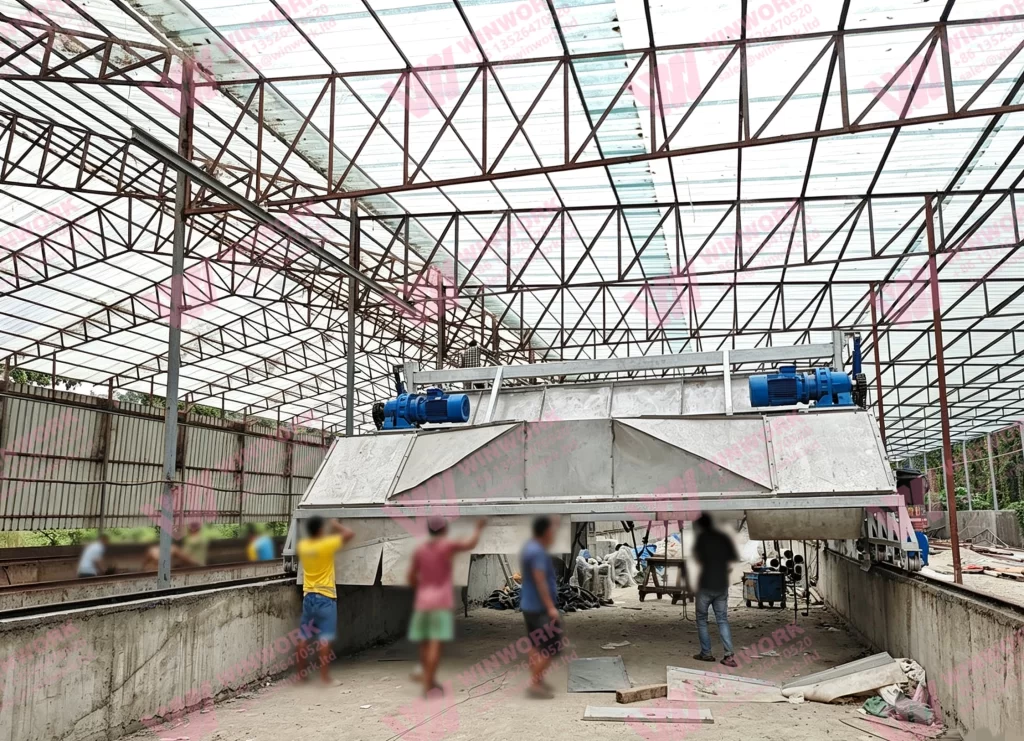
compost turner
For commercial operators, a suitable turner can improve sheep manure composting by reducing manual handling and making the turning process more consistent. However, actual performance depends on the machine configuration, material characteristics, and operating conditions.
Crushing and Mixing Equipment
Some sheep manure mixtures contain coarse fibers or clumps that require size reduction or mixing. A suitable crusher can process compatible materials, while a mixer may help combine manure with other ingredients before composting or further fertilizer production.
These machines are not mandatory for every composting project. Their necessity should be assessed according to the raw materials and the requirements of the final product.
Screening and Packaging Equipment
Screening equipment can separate oversized particles and help produce a more uniform finished material. If the compost is sold commercially, packaging equipment may be added to prepare the product for distribution.
For businesses manufacturing granulated organic fertilizer, additional equipment may be required after composting, including fertilizer crushers, mixers, granulators, dryers, cooling machines, and screening systems. The exact configuration depends on the production process and product specifications.
For a related equipment solution, see organic fertilizer production line.
4. Small-Scale vs. Commercial Sheep Manure Composting
The right sheep manure composting system depends on how much manure is available, how frequently it is generated, the available land, labor costs, and whether the finished compost will be used on-site or sold.
Small farms may process limited quantities using basic tools, a suitable composting area, and regular monitoring. In this situation, purchasing large industrial equipment may not be economically justified.
Commercial facilities have different priorities. They may need to process larger volumes, reduce labor requirements, maintain a consistent workflow, and manage material movement between composting and downstream production stages.
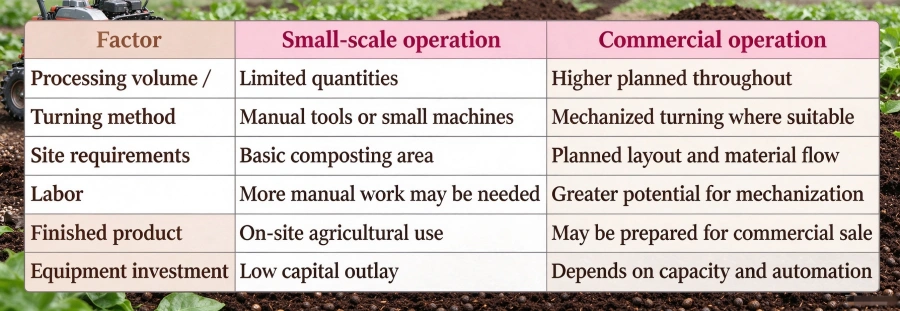
There is no universal machine configuration for every project. Commercial buyers should estimate daily raw material input, working hours, available space, and target output before selecting equipment.
5. How to Choose a Sheep Manure Composting Machine
Selecting a suitable sheep manure composting machine requires evaluating the complete operating environment rather than comparing purchase prices alone.
Processing capacity: Estimate the quantity of manure and other materials handled per day. Clarify whether a supplier’s stated capacity refers to material turned per hour, total input, or finished compost output.
Raw material characteristics: Moisture content, bulk density, fiber content, and the proportion of added bedding materials can affect equipment selection and performance.
Composting method: Determine whether the project will use windrows or a groove-based system. The machine must match the layout, working dimensions, and site conditions.
Solve Odor Problems Caused by Composting
Available space: Check windrow length and width, turning depth, access routes, drainage, and space for raw material storage and finished compost.
Future expansion: If the project may eventually manufacture commercial organic fertilizer, consider whether crushing, mixing, granulation, screening, and packaging equipment will be needed later.
Operating and maintenance costs: Evaluate energy consumption, wear parts, maintenance access, labor requirements, and the availability of technical support.
Before requesting a quotation, prepare basic information about raw material types, moisture conditions, daily processing volume, composting method, and intended final product. Photos or a site layout can also help a manufacturer understand the project requirements.
6. How Much Does a Commercial Sheep Manure Composting System Cost?
The cost of a commercial sheep manure composting system varies according to processing capacity, equipment type, automation level, site conditions, and the scope of supply. A project that only requires a compost turner will have different costs from one that includes raw material preparation, composting, fertilizer granulation, and packaging.
Buyers should distinguish the price of an individual machine from the total investment required for an operating facility. Depending on the project, additional expenses may include site preparation, drainage, power supply, installation, transport, labor, maintenance, and environmental management.
For projects with limited budgets, a staged investment may be worth evaluating. A business could begin with the equipment essential to its initial processing needs and add downstream production machinery as demand grows, provided the site layout and process design allow future expansion.
Conclusion
Sheep manure composting can help farms and commercial operators turn livestock waste into a more stable organic resource. The appropriate method depends on raw material properties, moisture management, aeration, site conditions, and the intended use of the finished compost.
For small farms, a simple composting setup may be sufficient. For larger facilities and organic fertilizer manufacturers, a suitable compost turner and a well-planned processing system can help improve material handling and operational efficiency.
Before purchasing machinery, buyers should evaluate daily processing volume, composting method, site layout, future production plans, and operating costs. With these factors clearly defined, businesses can select equipment that matches their actual requirements and supports a more practical composting operation.
Get A Quote