

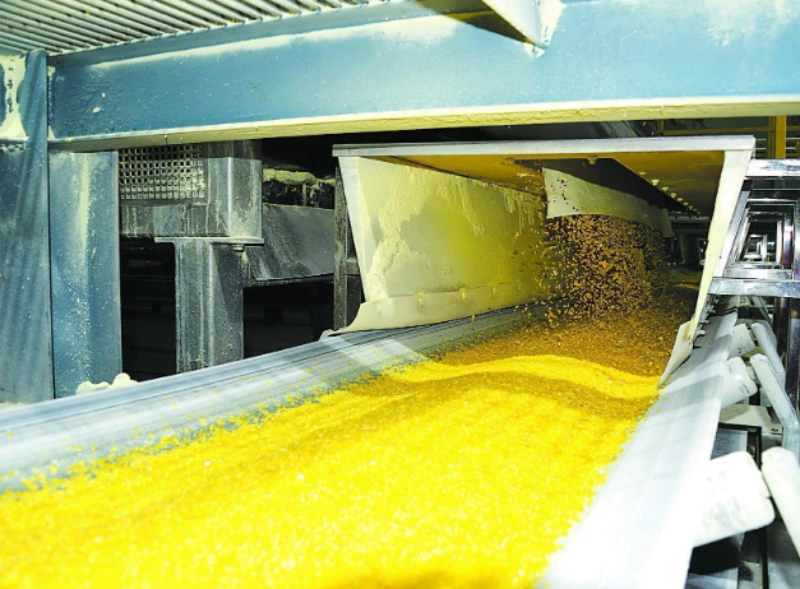
Elemental sulfur is an important industrial material and a valuable source of sulfur for agricultural applications. However, handling fine sulfur powder or bulk sulfur in its original form can create challenges during storage, transportation, dosing, and field application. Granulation converts sulfur into solid particles with more controlled dimensions, making the material easier to handle and distribute.
A properly designed sulfur granulation production line also helps manufacturers control particle size and improve the efficiency of downstream handling.
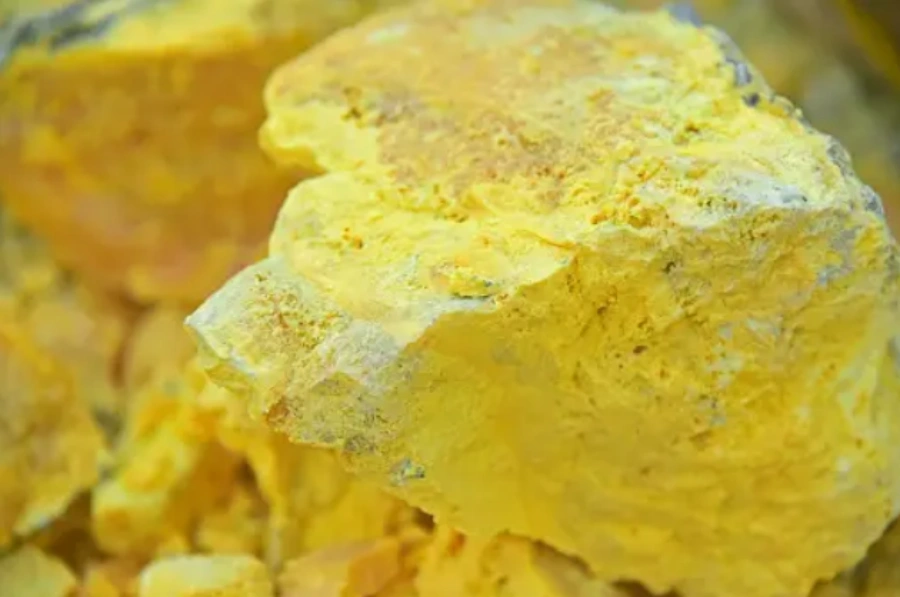
A sulfur granulation production line integrates material preparation, sulfur melting where required, granule formation, cooling, screening, and finished-product handling into a coordinated process. The exact configuration depends on the feed material, granulation method, required particle size, and production capacity.
Understanding the relationship between sulfur’s agricultural role and its processing requirements helps manufacturers plan a suitable production process. This guide explains why elemental sulfur is granulated, how a typical production line works, and which factors influence the quality of the finished granules.
1. Why Is Elemental Sulfur Used in Agriculture?
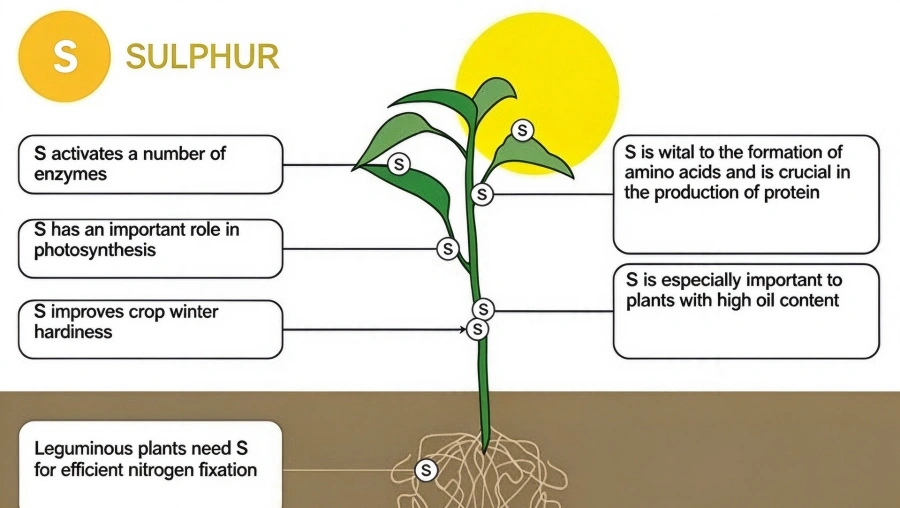
Sulfur is an essential plant nutrient. It contributes to the formation of certain amino acids and proteins and supports several important plant metabolic processes. When the available sulfur supply is insufficient, crops may show reduced growth or other symptoms of nutrient deficiency.
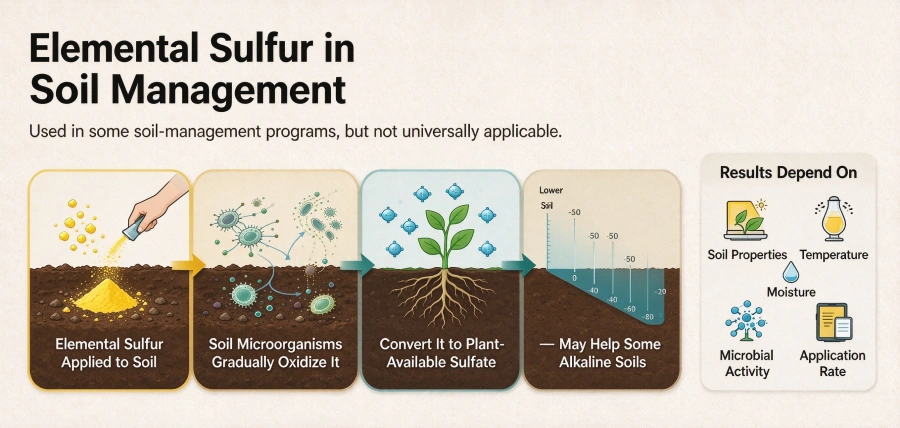
Elemental sulfur is also used in some soil-management programs. After application, soil microorganisms gradually oxidize elemental sulfur into sulfate, the form that plants can absorb. This process can lower soil pH, which may be useful in certain alkaline soils. However, the result depends on soil properties, temperature, moisture, microbial activity, and application rate. Elemental sulfur should not be regarded as a universal soil amendment.
These agricultural requirements explain why sulfur products need suitable physical forms as well as appropriate chemical composition. Granules can be easier to measure, transport, store, and spread than loose powder. Their size and durability also influence how well the product withstands conveying, bagging, and distribution.
For fertilizer manufacturers, granulation is therefore not simply a change in appearance. It is a processing step that helps turn elemental sulfur into a product that is more practical to handle and market.
2. Elemental Sulfur vs. Sulfate Sulfur: What Is the Difference?
Elemental sulfur and sulfate sulfur contain the same essential nutrient, but they differ in chemical form and behavior after application.
Elemental sulfur must generally undergo microbial oxidation before plants can absorb it. The conversion rate depends on environmental conditions and the physical characteristics of the sulfur particles. Its oxidation can also contribute to soil acidification.
Sulfate sulfur, by contrast, is already present in a plant-available chemical form. Sulfate-based fertilizers are therefore commonly used when crops need a more direct supply of sulfur. Their performance depends on the fertilizer compound, soil conditions, and nutrient-management plan.
This distinction matters when discussing granular sulfur. A granule made from elemental sulfur is not chemically equivalent to a sulfate fertilizer merely because both supply sulfur. Granulation changes the physical form of the material; it does not automatically convert elemental sulfur into sulfate.
Particle size also matters. Smaller sulfur particles generally provide more surface area relative to their mass, which can support faster oxidation under suitable conditions. Larger granules may be easier to handle mechanically, but their behavior in soil can differ. The appropriate product specification should therefore reflect both agricultural requirements and practical handling needs.
3. What Makes Elemental Sulfur Granulation Different?
Processing elemental sulfur requires attention to its physical properties and safety risks. Sulfur has a relatively low melting point, so some industrial granulation routes use controlled heating to form molten sulfur before creating and cooling the particles. Other routes may be suitable for different feed conditions or product specifications.
For a molten-sulfur process, temperature control is especially important. The sulfur must remain within the operating range required for stable handling and granule formation. Inconsistent conditions can interfere with droplet formation or cause irregular particles.A sulfur granulation production line must maintain suitable operating conditions to support stable particle formation while avoiding unnecessary heating and safety risks.
Sulfur is combustible, and sulfur dust can present fire and explosion hazards under certain conditions. A properly engineered plant must account for dust generation, ignition sources, ventilation, temperature monitoring, and applicable safety requirements. Equipment layout and protective measures should be determined through a process-specific risk assessment rather than added as an afterthought.
Cooling is another defining part of molten-sulfur granulation. Once droplets or other formed particles leave the granulation stage, they must cool sufficiently to solidify and remain stable during subsequent handling. If cooling and material flow are poorly coordinated, particles may stick together, deform, or become difficult to screen.The cooling section of a sulfur granulation production line should be matched to the granulator’s output to prevent downstream bottlenecks.
These characteristics make elemental sulfur granulation a process that must be designed around the material itself. A suitable sulfur granulation production line should coordinate heating, particle formation, cooling, and downstream handling instead of treating each stage as an isolated operation.
4. How Does a Sulfur Granulation Production Line Work?
The following sequence describes a typical molten-sulfur granulation route. Actual plant layouts may vary according to the granulation technology, raw material condition, and required finished product.
Raw Material Preparation
The process begins with checking the incoming sulfur material. Its physical form, cleanliness, and consistency can affect feeding and downstream operation. Depending on the feed condition, preparation may involve controlled storage, conveying, screening, or other handling steps.In a sulfur granulation production line, consistent feeding helps reduce fluctuations in the downstream process.
Stable feeding helps maintain a consistent supply to the next stage. Foreign particles should be managed appropriately because they can interfere with processing and affect product quality.
Sulfur Melting and Conditioning
Where the selected process uses molten sulfur, solid sulfur is heated in a suitable melting vessel. The system must maintain controlled operating conditions so that the sulfur can be transferred and processed consistently.For this type of sulfur granulation production line, stable sulfur transfer is essential for continuous granulation.
Filtration may be included when necessary to remove insoluble impurities before granulation. Temperature measurement, controlled transfer, and appropriate equipment materials are important considerations for reliable operation.
This stage prepares the sulfur for particle formation. It should not be confused with chemical fertilizer synthesis: in a pure elemental sulfur granulation process, the objective is to shape and solidify the sulfur, not to manufacture a different sulfur compound.
Granule Formation and Cooling
The prepared sulfur enters the selected granulation unit, where it is converted into particles using the method specified for the plant.The granulation method used in a sulfur granulation production line should match the target particle size, required output, and available cooling capacity.
The granulation method, operating conditions, and cooling arrangement influence particle size, shape, and consistency. These factors should be matched to the desired product specification and the required production rate.
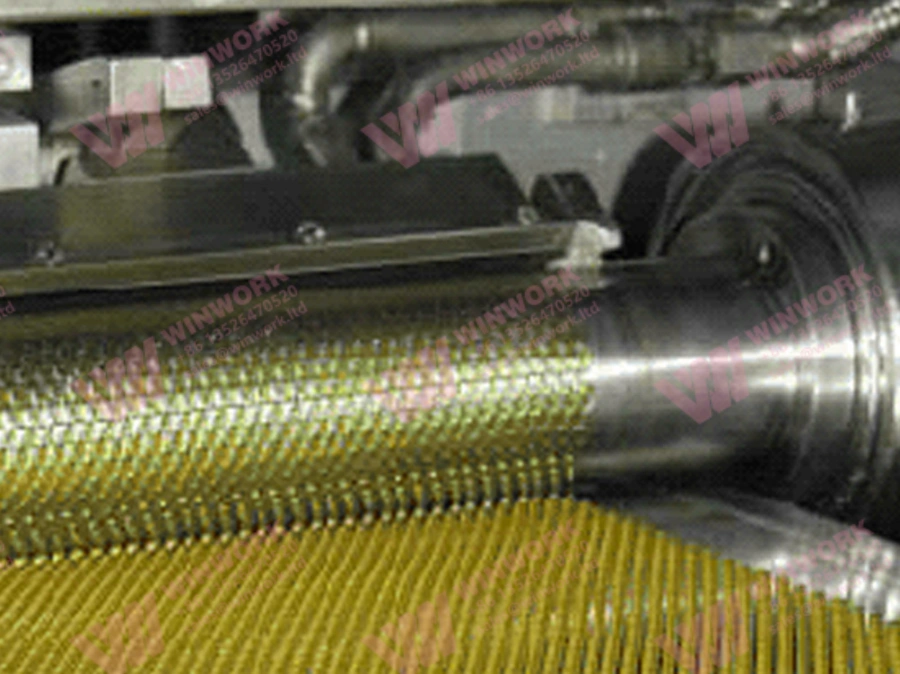
Cooling equipment must handle the output of the granulation stage without creating a bottleneck. Sufficient solidification before screening and conveying helps reduce sticking, deformation, and handling problems.
Screening and Size Classification
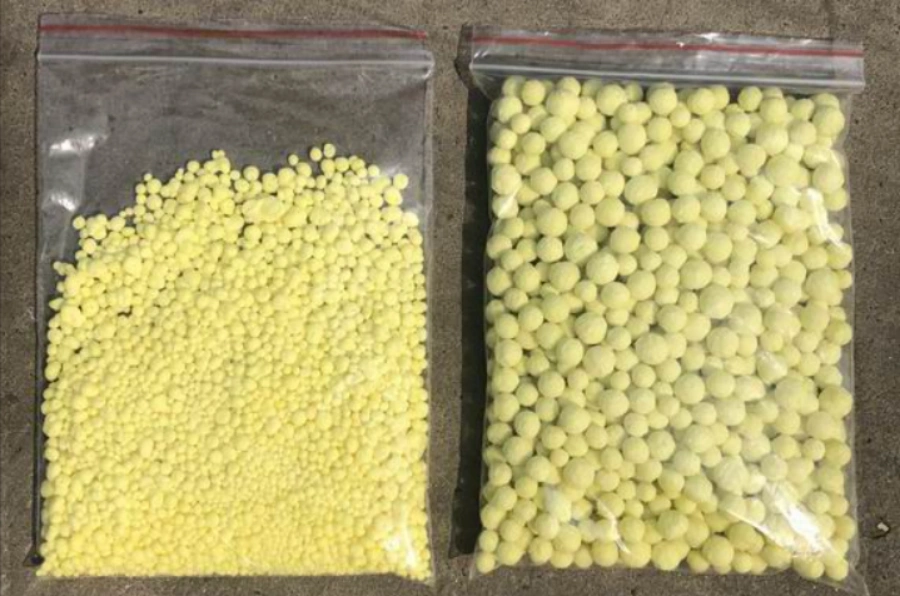
After cooling, the granules pass through a screening system that separates the product according to size. Particles within the specified range can proceed to finished-product handling, while oversized and undersized fractions may be collected for suitable reprocessing where the process allows.A sulfur granulation production line should provide sufficient screening capacity to handle the full output without restricting production.
Screening does more than improve appearance. A consistent size distribution supports predictable packaging and handling, and it helps manufacturers monitor whether the upstream granulation process is operating as intended.
Optional Coating and Packaging
Depending on the product specification, a coating step may be used to improve handling or reduce caking during storage. Coating is not necessarily required for every elemental sulfur product, so the decision should be based on actual performance requirements.
The final stages typically include conveying, weighing, bagging, sealing, and, where needed, palletizing. Dust collection at appropriate transfer and screening points can help control sulfur dust and reduce material losses.
A well-coordinated sulfur granulation production line depends on matching the capacities of the melting, granulation, cooling, screening, and packaging sections. A bottleneck in any one stage can limit the throughput of the whole plant.
5. How to Control Granular Sulfur Quality During Production
Particle Size Control: Check the granule size after screening and compare it with the target specification. If too many fines appear, inspect the feed rate and granulation conditions. If oversized particles increase, check whether material is accumulating excessively in the granulator.Regular sampling helps operators determine whether the sulfur granulation production line is maintaining the required particle-size distribution.
Granule Strength: Collect samples before and after conveying to compare breakage levels. If granules produce excessive fines, check the granulation temperature, binder dosage (if applicable), and forming pressure according to the selected process. Adjust one parameter at a time and test the results.
Cooling Control: Measure the granule temperature at the cooler outlet. If particles stick together or deform during packaging, check the cooling air supply, material feed rate, and residence time before increasing cooling capacity.
Screening and Recycling: Inspect the screen for blocked or damaged mesh and verify that the installed screen opening matches the required particle size. Track the amount of fines and oversized particles returned to the process. A rising recycle rate may indicate that the granulation or screening settings need adjustment.Monitoring the recycle rate also helps evaluate the operating efficiency of a sulfur granulation production line.
Packaging and Storage: Check that granules have cooled sufficiently before bagging. Inspect packaged samples for breakage and caking after storage, and keep bags sealed in a dry, well-ventilated warehouse.
For a sulfur granulation production line, operating adjustments should be based on sample tests, temperature readings, screen results, and recycle rates rather than visual appearance alone.
6. How Should a Sulfur Granulation Production Line Be Planned?
Planning a sulfur granulation production line should begin with the intended product, target capacity, and required granule specifications rather than a predetermined equipment list.
First, define the sulfur feed condition, target particle-size range, expected output, packaging format, and required product properties. These details establish the design basis for the process.
Second, select the granulation route according to the material and product requirements. A molten-sulfur system requires suitable melting, transfer, particle-formation, and cooling arrangements. Other routes may require a different configuration. The chosen method should be validated against the actual feed material and desired output.
Third, evaluate the sulfur granulation production line as a complete system. Feeding, granulation, cooling, screening, recycling, dust collection, and packaging need compatible capacities. An undersized cooling or screening section can limit the output of the entire plant, even when the granulator has sufficient capacity.
Finally, include safety and operating requirements in the initial design. Sulfur handling may involve combustible dust and heated material, so risk assessment, suitable ventilation, temperature controls, equipment selection, and operating procedures are essential. Applicable local regulations and engineering standards should guide the final design.
For more information about integrated processing systems, see WINWORK’s guide to fertilizer granulation systems and its overview of fertilizer granulation equipment. These resources explain broader granulation principles; the equipment and process for elemental sulfur still need to be selected for the specific application.
7. Frequently Asked Questions
Q:What is a sulfur granulation production line used for?
A:A sulfur granulation production line converts elemental sulfur into granules with specified physical characteristics. Depending on the selected process, it may include material preparation, melting, granulation, cooling, screening, and packaging equipment.
Q:Does every sulfur granulation production line use molten sulfur?
A:No. The process depends on the selected granulation method, feed condition, and product specification. A molten route is one option, not a universal requirement.
Q:Why is cooling important after granulation?
A:Cooling allows newly formed sulfur particles to solidify and become suitable for screening, conveying, and packaging. Insufficient cooling may contribute to sticking, deformation, or handling problems.
Q:What information is needed to plan a production line?
A:Key information includes sulfur feed condition, required particle size, target production capacity, finished-product specifications, packaging needs, available utilities, and site-specific safety requirements.
Conclusion
Elemental sulfur has an established role in agricultural nutrient management, but producing a consistent granular product requires more than simply forming particles. The selected process must account for sulfur’s physical properties, granulation method, cooling requirements, particle-size control, and safe material handling.Selecting the right sulfur granulation production line requires matching the processing method and equipment capacity to the feed material and finished-product specifications.
A properly planned sulfur granulation production line coordinates these stages to produce granules that meet defined specifications and can be handled efficiently. The best configuration depends on the actual sulfur feed, target output, and finished-product requirements.
For more details, please feel free to contact us.
Email: sales@lanesvc.com
Contact number: +8613526470520
Whatsapp: +8613526470520
Get A Quote