


What Is Sugarcane Filter Cake Fertilizer?
Sugarcane filter cake is a byproduct generated during sugar production. It contains organic matter and residual nutrients, making it a useful raw material for organic fertilizer production. Instead of treating filter cake as waste, sugar mills and fertilizer manufacturers can process it into sugarcane filter cake fertilizer for agricultural use.
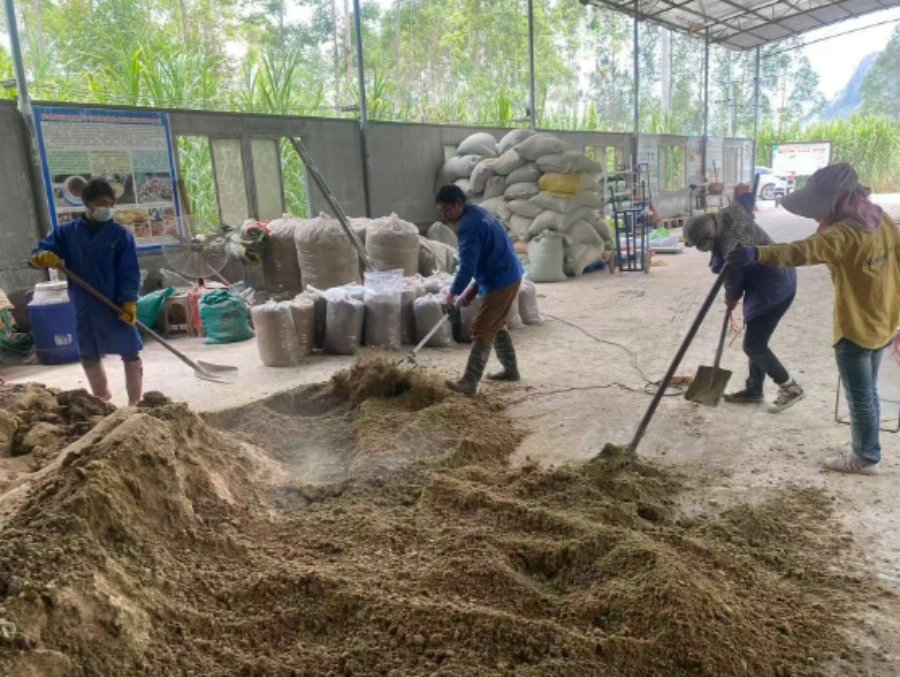
sugarcane filter cake
However, fresh filter cake is usually too wet and unstable to be sold directly as a finished fertilizer. It may have a strong odor, an uneven texture, and a tendency to heat up or decompose during storage. Processing helps turn this material into a more stable product that is easier to transport, store, and apply.
The right production method depends on the condition of the raw material and the type of fertilizer you want to sell. Some producers prefer a composted powder product because it requires fewer processing steps. Others make granular sugarcane filter cake fertilizer because granules are easier to handle, package, and spread with common fertilizer equipment.
What Is a Practical Mixing Ratio for Sugarcane Filter Cake Fertilizer?
Fresh filter cake often contains too much moisture to form a well-aerated compost pile on its own. A dry, fibrous material such as sugarcane bagasse can help improve the structure of the mixture and create more air spaces.
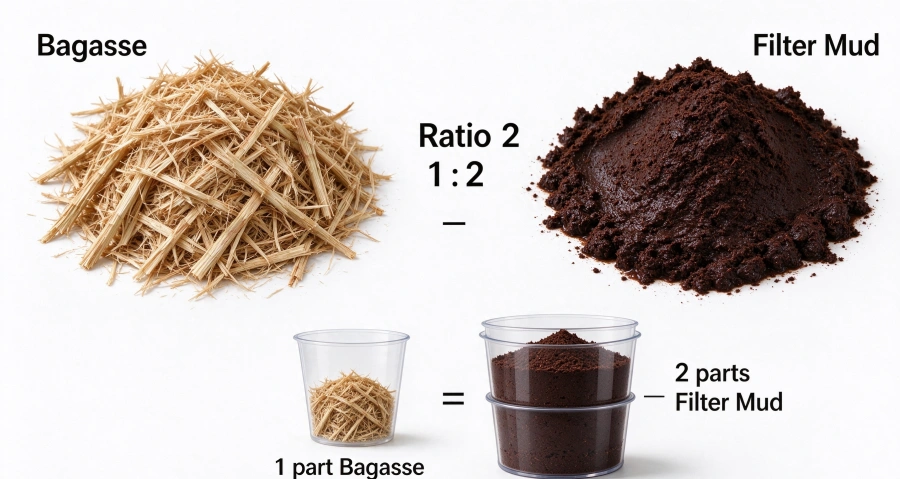
A practical starting point is to mix about 2 parts filter cake with 1 part bagasse by weight. For example, a trial batch could use:
- 1,000 kg of sugarcane filter cake
- 500 kg of sugarcane bagasse
Mix the two materials thoroughly before building the compost pile. Avoid leaving thick layers of filter cake separated from the bagasse, because these areas may become compacted and poorly aerated.
The 2:1 ratio is a starting point, not a fixed formula for every factory. If the filter cake is particularly wet, more dry structural material may be needed. If the mixture is too dry or contains too much coarse bagasse, decomposition may proceed more slowly. Make a small trial batch first and adjust the mixture according to how the pile heats up, smells, and breaks down.
For manufacturers planning commercial sugarcane filter cake fertilizer production, it is better to establish a repeatable mixing method than to rely on the same ratio regardless of changes in raw material conditions.
How to Make Sugarcane Filter Cake Fertilizer: A Practical Composting Schedule
Composting is an important step when the goal is to produce a more stable organic fertilizer. The process allows microorganisms to break down the raw material before it moves to the next stage of sugarcane filter cake fertilizer production.
Step 1: Mix the Raw Materials
Prepare the filter cake and bagasse separately, removing large foreign objects that could damage equipment or interfere with mixing. Weigh the materials so that each batch can be repeated consistently.
For an initial trial, mix 1,000 kg of filter cake with 500 kg of bagasse. Use a loader, mixer, or other suitable equipment to distribute the bagasse evenly throughout the filter cake. The finished mixture should be loose enough to allow air to move through it rather than forming dense, sticky clumps.
Step 2: Build the Compost Windrow
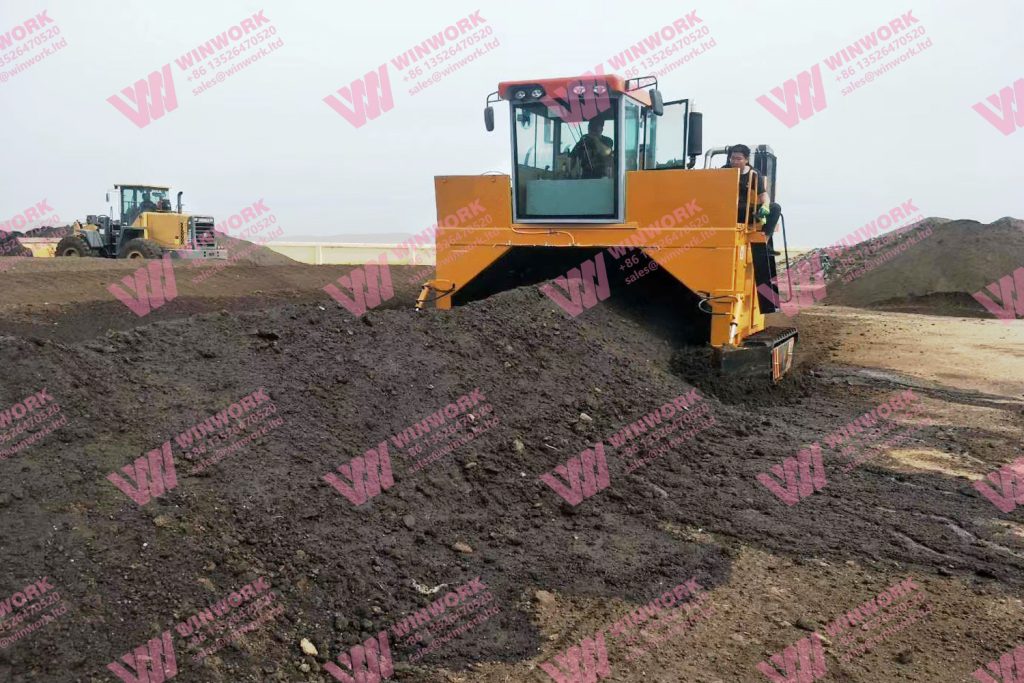
Place the mixture in a windrow on a prepared composting area. As a starting layout, a pile around 1.5–2 m high and 2–3 m wide at the base may be suitable for a small trial. Actual dimensions should be adjusted according to the material, available space, climate, and turning equipment.
Avoid making the pile excessively compact. If the center becomes dense and oxygen cannot reach it, the material may develop unpleasant odors and decompose unevenly. At the same time, a very small pile may lose heat too quickly.
Leave enough space between windrows for a loader or compost turner to operate. Good site layout makes routine turning easier and reduces unnecessary material handling.
Step 3: Turn the Pile Regularly
During the early stage, turn the compost pile approximately every 3–5 days as a starting schedule. The purpose is to introduce oxygen, redistribute heat, and move material from the outer edges toward the center.
If the pile develops a strong rotten smell, has compacted areas, or heats unevenly, check the structure and aeration rather than simply waiting for more time to pass. If the pile is heating well and breaking down evenly, the turning schedule may be adjusted to suit the actual conditions.
A loader can be sufficient for a small operation, while a compost turner can make the process more consistent at larger production volumes. Regular turning helps improve the consistency of the compost used in sugarcane filter cake fertilizer.
Step 4: Monitor Temperature and Decomposition
The compost temperature may rise to around 50–60°C during the active stage. This is a useful operating range to observe, but temperature alone does not prove that the material is mature.
Check several locations in the pile instead of measuring only one point. A large difference between the center and outer layers can indicate uneven decomposition. Also pay attention to odor, texture, and whether recognizable pieces of the original material are still abundant.
If the pile remains cold, check the mixture, aeration, and raw material condition. If it becomes excessively hot or develops persistent unpleasant odors, review the pile structure and turning method. Do not assume that adding more time will solve every problem.
Step 5: Allow Enough Time for Composting
Under suitable conditions, composting may take roughly 2–3 months, although the actual period varies with the raw materials, climate, pile management, and desired product quality.
Before sending the compost to the next stage, check that it has cooled and become more stable. The material should no longer behave like fresh filter cake, and its odor and texture should be noticeably changed. Where the product will be sold commercially, use appropriate maturity and quality checks rather than relying on appearance alone.
Well-processed compost provides a more suitable base for sugarcane filter cake fertilizer. Poorly stabilized material can continue changing during storage, which may affect the finished product and its packaging.
What Equipment Is Needed for Sugarcane Filter Cake Fertilizer Production?
The equipment configuration depends on whether the final product is composted powder or granules. A small producer may begin with basic handling equipment, while a commercial plant may need a more integrated production line.
Typical equipment may include:
- Loader or raw material handling equipment: Moves filter cake, bagasse, and compost around the production area.
- Mixer: Helps distribute bagasse evenly through the filter cake before composting.
- Compost turner: Turns windrows to improve aeration and make decomposition more uniform.
- Crusher: Breaks up hardened compost lumps after the composting stage.
- Screening machine: Removes oversized pieces and helps create a more consistent particle size.
- Fertilizer mixer: Blends compost with other permitted ingredients when the product formula requires them.
- Granulator: Forms the prepared material into granules.
- Dryer and cooler: Used when the selected granulation process requires moisture reduction and cooling.
- Final screening and packaging equipment: Separates oversized or undersized granules and prepares the product for sale.
Not every plant needs all of this equipment. A powder product may only require composting, crushing, screening, and packaging. Granular sugarcane filter cake fertilizer usually requires additional forming and finishing steps.
How to Produce Granular Sugarcane Filter Cake Fertilizer
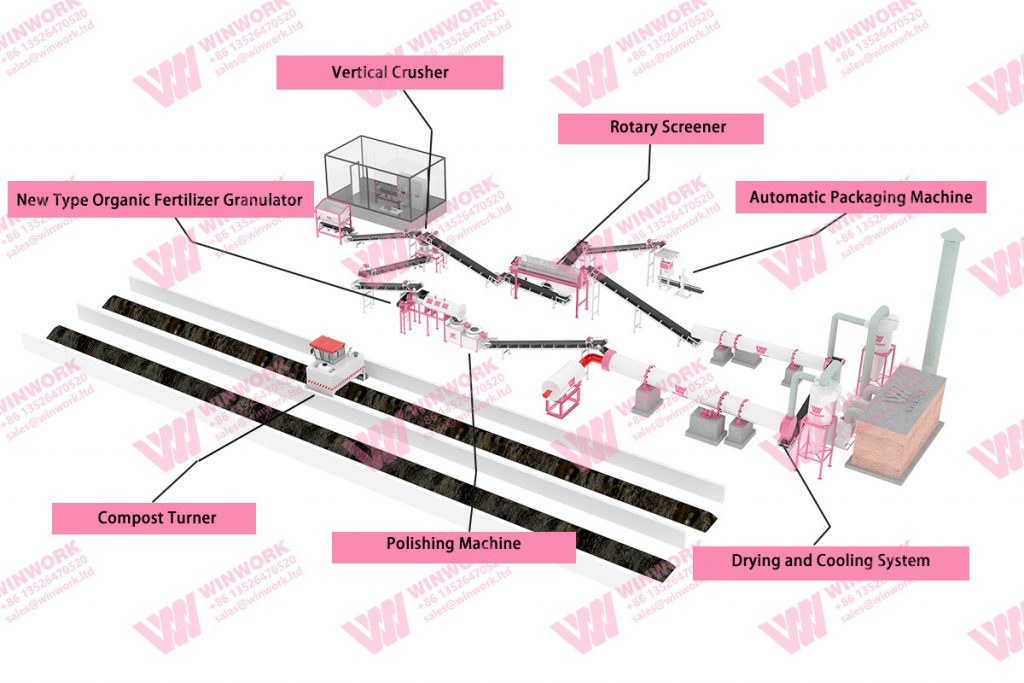
Granules are often chosen when buyers want a product that is easier to spread, package, and handle. However, granulation should generally take place after the compost has been sufficiently processed and prepared.
A typical production sequence is:
- Composting: Process the filter cake and structural material until the compost is sufficiently stable.
- Crushing: Break up hardened lumps so the material can be processed more evenly.
- Screening: Remove oversized particles and return them for further crushing if appropriate.
- Mixing: Blend the compost with other ingredients according to the intended product formula.
- Granulation: Use a suitable granulator to form particles of the desired size.
- Drying and cooling: Apply these steps when required by the process and the moisture condition of the granules.
- Final screening: Separate granules that are too large or too small and recycle them where practical.
- Packaging: Pack the finished product after its condition is suitable for storage and transport.
The best granulation method depends on the compost’s physical properties, the intended formula, and the required granule strength. A material that forms granules easily in a small trial may behave differently at commercial scale, so testing the actual raw material before selecting equipment is important.
For a complete system layout, see the organic fertilizer production line.
Powder or Granules: Which Product Is Better?
Both forms can be suitable for sugarcane filter cake fertilizer. The better choice depends on your customers, market requirements, investment budget, and available production space.
Powder fertilizer usually involves fewer processing stages. It may suit buyers who accept composted organic material in a loose form. However, powder can create dust during handling and may be less convenient to spread with certain types of equipment.
Granular fertilizer is often easier to package, transport, and apply uniformly. It can also be more convenient for retailers and distributors. On the other hand, granulation adds equipment, energy use, and process-control requirements. The final result depends on the properties of the compost and the selected production method.
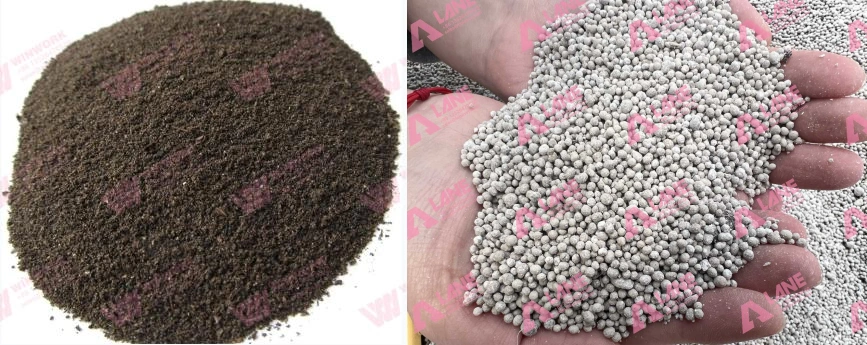
Before choosing a product form, talk to potential buyers about their preferred particle size, packaging, application method, and quality requirements. This can help avoid investing in a granulation system that does not match the target market.
What to Check Before Investing in a Sugarcane Filter Cake Fertilizer Line
Before purchasing equipment, work through five practical questions.
1. How much raw material is available?
Estimate the amount of filter cake available throughout the year, not only during the busiest production period. Seasonal supply can affect plant utilization and finished product output.
2. What product will you sell?
Decide whether the target is composted powder, granules, or more than one product. Each option has different processing and equipment requirements.
3. What is the required production capacity?
Separate the incoming wet-material capacity from the finished-product capacity. Water and organic matter are lost or transformed during processing, so the weight of the final fertilizer will not necessarily match the weight of the incoming mixture.
4. What quality requirements apply?
Confirm the applicable local rules and buyer specifications for nutrient content, maturity, moisture, particle size, packaging, and any required testing. Do not assume that composting alone guarantees that a product meets every market requirement.
5. What space and budget are available?
Allow for raw material storage, composting windrows, turning access, processing equipment, finished-product storage, and vehicle movement. A practical layout can reduce handling time and make daily production easier to manage.
These questions help determine whether a simple composting setup or a more complete sugarcane filter cake fertilizer production line is appropriate.
Final Thoughts
Sugarcane filter cake can become a useful organic fertilizer raw material when it is processed with a suitable method. The key is to manage the material from mixing and composting through to final preparation, rather than focusing only on the machinery.
Start with a small batch, use a repeatable mixing procedure, observe how the pile decomposes, and confirm that the compost is stable before moving to crushing or granulation. Once the process is consistent, equipment selection and production planning become much easier.
If you are planning a commercial project, WINWORK can help you explore equipment options for different organic fertilizer production needs. Visit the WINWORK website to learn more about available solutions.
Get A Quote